
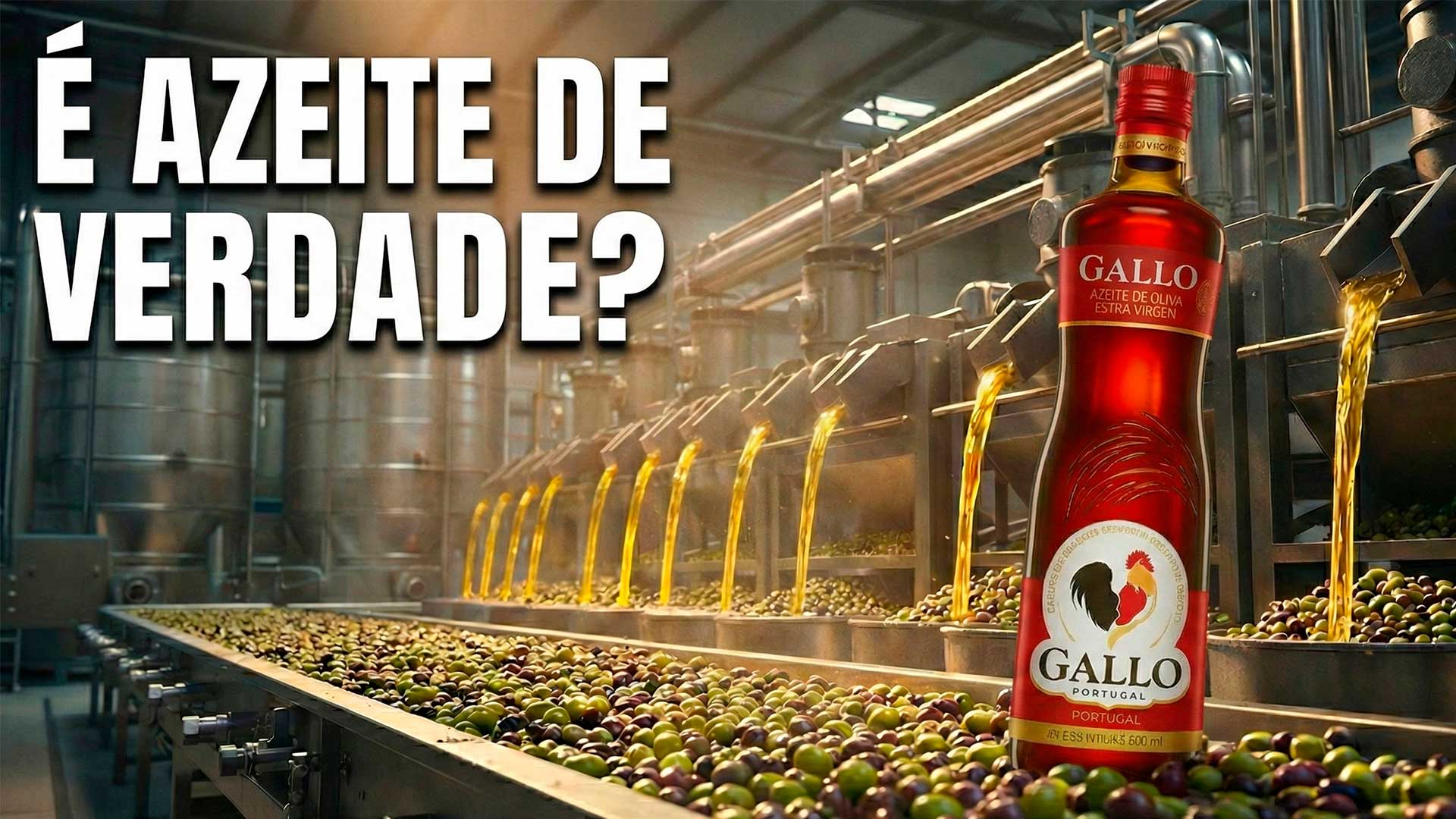
Inside every bottle of olive oil lies a multi-billion dollar global chain that blends cutting-edge technology, age-old tradition, and a growing risk of fraud. Understanding how olive oil is produced helps consumers distinguish authentic products from misleading labels at the supermarket.
Each harvest season the planet produces more than 3 million tons of olive oilRecent projections point to a record of around 3,5 million tons in the 2024/2025 season, following years of crop failures.
This volume supports a A global industry that generates billions of dollars. It connects small Mediterranean farms to supermarket shelves across Brazil. Behind a single bottle lies a long, complex, and highly controlled chain.
What consumers almost never see is the journey that begins with a small, bitter olive and ends in the golden liquid used in salads, pasta, and grilled dishes. Inside a modern olive press, a factory specializing in olive oil, every minute and every degree of temperature counts. A timing error can ruin the aroma, flavor, and freshness of an entire harvest.
— ARTICLE CONTINUES BELOW —
At the same time, this market faces a silent problem. The combination of high demand, high prices, and an extensive supply chain creates opportunities for… adulteration and fraud in olive oil, which range from mixtures with cheaper oils to improper labeling as extra virgin.
It is in this environment that laboratories, sensors, and tasting panels attempt to protect the quality of olive oil.
For Brazilians, who largely depend on imported olive oil, knowing how the product is made and what the critical points of the process are has become a matter of both price and trust. What happens between the orchard and the supermarket shelf can explain why some bottles cost significantly more and why others should. raise immediate suspicion.
Olive harvest: beginning of olive oil production.
the journey of olive oil It begins at harvest time, a stage where everything can go right or very wrong. The olive tree spends the year accumulating energy in the fruit, and the moment of harvesting the olives requires almost surgical precision. Any delay accelerates fermentation and oxidation, reducing the potential for a high-quality extra virgin olive oil.
There are two main harvesting methods. The traditional method, done by hand, uses nets spread under the trees and small tools to carefully knock the fruit down. Mechanized harvesting, on the other hand, uses machines that vibrate the trunk and knock the olives down in a few seconds, ensuring efficiency but with a greater risk of damage to the fruit and premature onset of chemical deterioration.
After harvesting, the olives are transported in ventilated crates to the mill, where the actual industrial processing begins. First, the fruit undergoes intensive cleaning, with fans removing leaves and washing equipment eliminating dust and impurities.
A single crushed leaf along with the olive can make the oil excessively bitter, which is why the screening process is rigorous.
In state-of-the-art olive mills, sensors, vibrating conveyors, and optical systems identify damaged, fermented, or insect-infested fruit. Jets of air automatically discard unsuitable olives, leaving only fresh raw material. For each liter of real extra virgin olive oilYou will need 6 to 10 kilos of olives in perfect condition.
The next step is grinding, now done by high-speed metal discs that transform the pulp, pit, and peel into a homogeneous paste. This is the point where the aromas, antioxidants, and oil still trapped in the cells become available, but the olive oil is not yet ready.
The main transformation takes place during kneading, when this paste is slowly stirred in temperature-controlled stainless steel tanks.
During the kneading process, small droplets of oil merge and form larger droplets that can be separated in a centrifuge. The temperature needs to remain low, around 27 degrees Celsius, to preserve freshness and maintain its classification as… extra virgin.
Next, the horizontal centrifuge spins at high speed and separates three distinct phases in seconds: water, solids, and oil, with almost no contact with air.
Filtration, tanks and bottles: how the industry tries to preserve the freshness of olive oil.
When it comes out of the centrifuge, the olive oil is cloudy, thick, and often a deep green. This appearance debunks the visual myth that color alone indicates quality, since there are excellent olive oils that are more yellow and mediocre olive oils that are very green. The next step is to decide whether the product will be filtered or not, a point that also generates debate among experts.
In filtered olive oil, the liquid passes through cellulose plates or very thin membranes that remove particles and microdroplets of water without altering the important natural compounds.
The result is a brighter, more stable oil with a longer shelf life. Unfiltered olive oil, which is cloudier, may have an intense flavor in the first few days, but it oxidizes and loses its freshness more quickly.
After filtration, the olive oil is stored in stainless steel tanks that function like veritable vaults.
Light does not enter, the temperature is constant, and the empty space is filled with inert gases such as nitrogen, creating a barrier against oxidation. Any improper contact with air or heat can compromise weeks of work.
Sensors monitor temperature, pressure, and potential chemical variations, while laboratories analyze acidity, volatile compounds, and other parameters. According to the International Olive Council and European standards, extra virgin olive oil must have a free acidity of less than 0,8 percent, in addition to being free of sensory defects and maintaining a fruity profile.
The bottling phase only begins after approval. The best factories use dark bottles, metal cans, or opaque containers to block out light.
Many manufacturers use vacuum or nitrogen injection inside the bottles before sealing, expelling residual oxygen and extending freshness until they reach the shelf.
Global supply chain and olive oil market in Brazil
The olive oil, ready for consumption, then begins a journey that often crosses oceans. It may have been produced in Portugal, Spain, Italy, or Greece and, a few days later, it is in climate-controlled containers on its way to Brazil. Spain alone accounts for about 40 percent of world production, consolidating its leadership in global supply.
Many products sold at retail are blends of olive oils from different origins, combining batches from distinct countries to adjust flavor, fruitiness, and spiciness. This blending is a standardization strategy and is not, in itself, fraudulent, as long as it is clearly stated on the label.
The problem arises when inferior olive oils are labeled as extra virgin or when other vegetable oils are included in the composition without being indicated.
For the Brazilian consumer, this context is especially sensitive. The country imports about 99 percent of the olive oil it consumes and is one of the largest markets outside the Mediterranean, with an annual consumption of approximately 100 tons, mostly from Portugal and Spain.
In 2025, the government went so far as to eliminate import taxes on olive oil as part of an emergency package to reduce the impact of food inflation.
At the same time, national olive growing is advancing in cold climate regions, such as the Serra da Mantiqueira, producing small volumes of award-winning Brazilian olive oils. Although they still represent a small share of the market, these labels emphasize traceability and can compete in quality with traditional Mediterranean olive oils.
The market size and added value of extra virgin olive oil This makes the product a permanent target for fraud. Scientific research shows that some of the labels tested in different countries do not meet the standards declared on the label, either due to sensory quality below the required level or adulteration with cheaper oils.
In Brazil, studies with samples of extra virgin olive oil have found significant percentages of adulterated products, often mixed with soybean oil or other vegetable oils, which constitutes economic fraud and can affect consumers with allergies. In a recent survey, approximately 32 percent of the samples evaluated were considered chemically adulterated.
For the consumer, some simple actions help reduce the risk. Being wary of prices that are significantly below average is a first filter, since producing true extra virgin olive oil requires perfect raw materials, rapid extraction, and expensive technology. Preferring dark packaging, checking the harvest date when available, and observing the origin and quality seals are also important measures.
Another point is learning to use your senses. A good olive oil usually has a fruity aroma, herbaceous notes, a clean bitterness, and a slight spiciness in the throat, without any rancid or moldy smell. Although the average consumer doesn’t need professional taster training, paying attention to strange flavors, oil that has been sitting on the shelf for too long, and opaque labels already helps to avoid the most problematic options.
When looking at a bottle on the shelf, it’s worth remembering that inside lies a combination of nature, engineering, tradition, and science. In a market where even experts debate the true extent of… olive oil fraudInformation has become the main tool for making informed choices and rewarding reputable producers.
Do you believe that very cheap olive oil on sale can truly be extra virgin, or do you think the market exaggerates the controversy about fraud to sell premium labels? Tell us in the comments how you choose your olive oil, if you’ve ever had a strange experience with its taste or aroma, and if you trust the cheaper brands you find in Brazilian supermarkets.
Dining and Cooking