
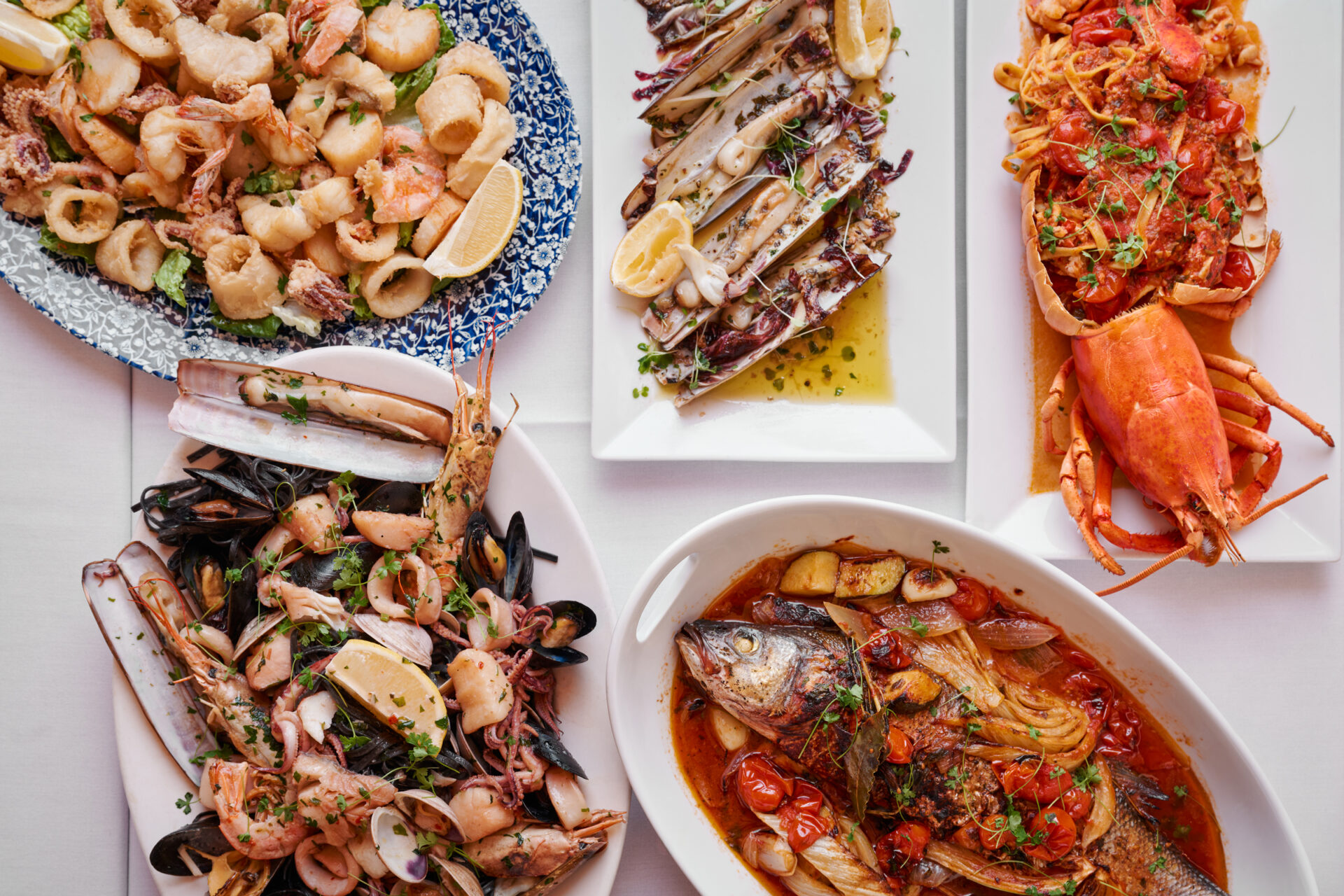
Growing up in a tightly-knit Revere neighborhood surrounded by family, Anthony Caturano was used to the culinary chaos that unfolded every Christmas Eve. Grandparents, aunts, uncles, cousins and even more relatives would descend on that year’s chosen home; in his youngest years his grandmother’s house, while course after course of fish and shellfish would be passed around and devoured—some dishes more than others. “As a kid, I didn’t care for the fried smelts,” laughs the owner of Prezza in Boston’s North End and Tonno restaurants in both Gloucester and Wakefield.
He’s come around though, and today, still adores lobster fra diavolo— pasta with lobster in a spicy, garlicky, tomato sauce—as well as stuffed squid, calamari, and other Italian and Italian American dishes that delight belly, heart, and soul. “It all just brings you back,” says Caturano.
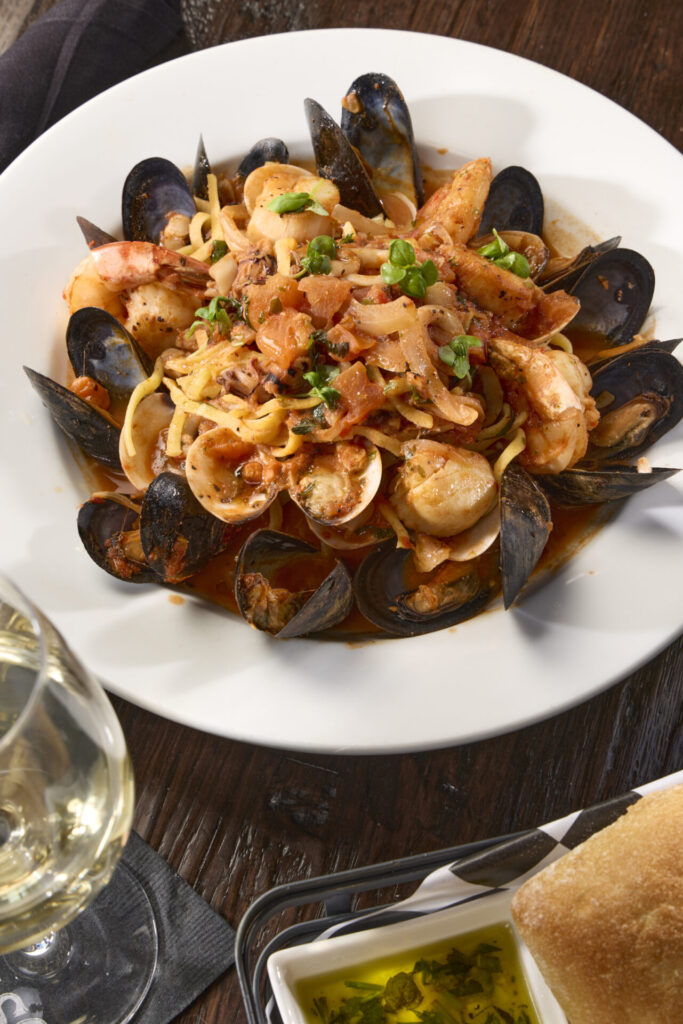 Frutti Di Mare from Toscana Forno | Photograph by Scott Goodwin
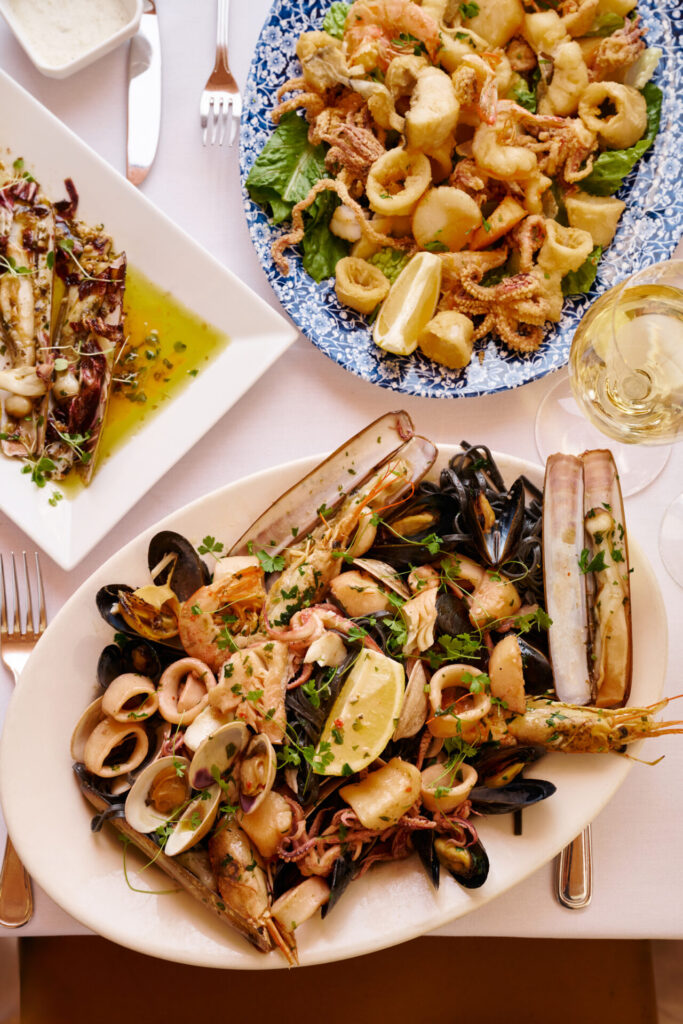 Angelo’s in Stoneham serves up classic fish dishes all year long. | Photograph by Doug Levy
Rooted in Italian Tradition
The culinary celebration is the Feast of the Seven Fishes, a tradition rooted in Italian Christmas Eve custom, even if back in the Old Country, the night didn’t have an official name. Its origins stem from the Roman Catholic rite of fasting and abstaining from meat on high holidays, including Christmas Eve. These observances led to families heavily relying on seafood to sustain themselves, creatively preparing fish, shellfish, and meaty mollusks in a variety of ways. The number of courses, seven, is said to be directly inspired by the many references and events in the Bible associated with the number seven, including the seven sacraments and seven days of Creation.
Often called “La Vigilia” or “Festa dei Sette Pesci,” the Feast of the Seven Fishes is considered Italian-American, so chef Beni Kurti, who owns Il Ponte in Woburn with his wife, Hortenca Sheshori, did not grow up calling Christmas Eve by that name in his native Peru – gia in Italy’s Umbria region, but he definitely enjoyed the traditional fish dishes. “We call it ‘magro,’ [meaning] no meat; no meat for Christmas Eve,” he said. “Usually we do a seafood salad; we cook and we serve it with warm or cold shrimp. As a first course, we might have linguini with clams or seafood risotto.”
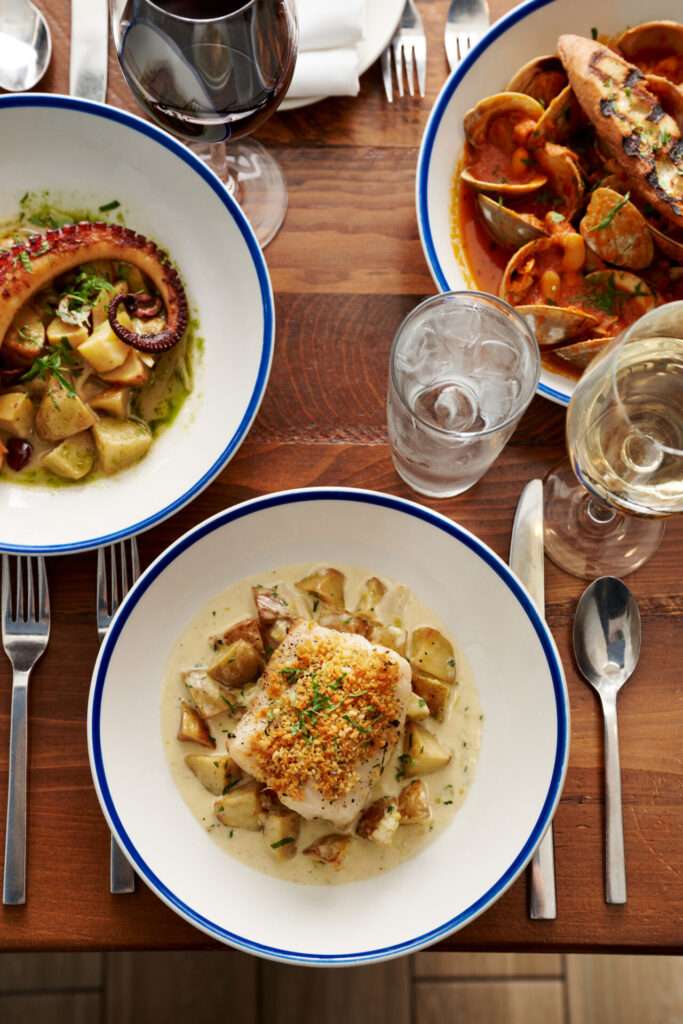 Anthony Caturano grew up celebrating the feast of the fishes Today, the chef/owner of Tonno brings these memories to his dishes. cod orenganata, stewed clams, and octopus la panacha I Photograph by Doug Levy
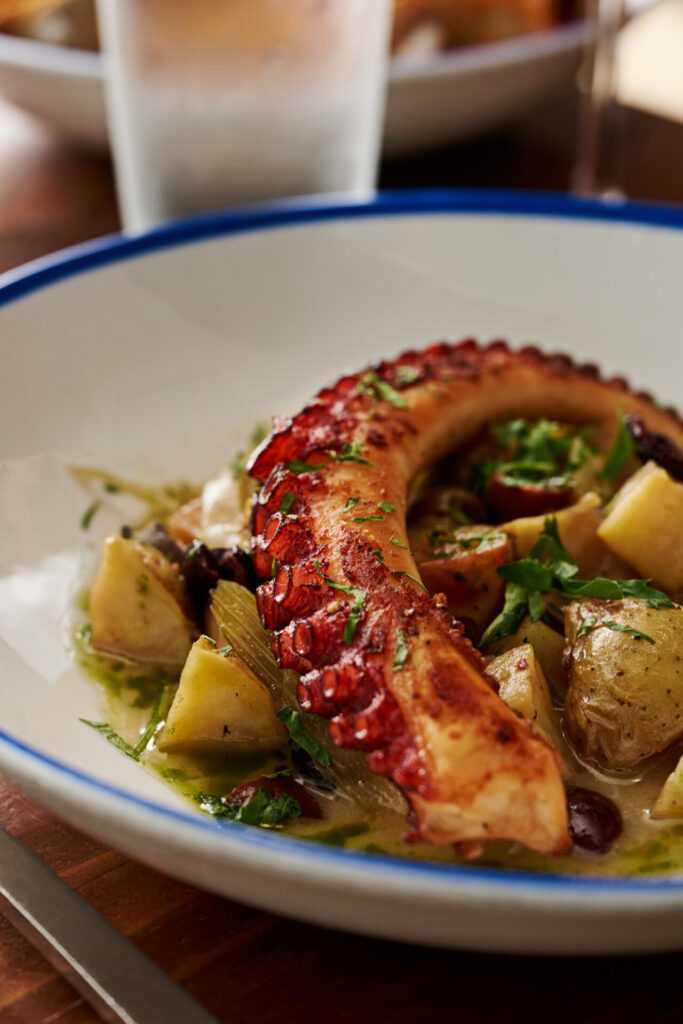 Octopus la panacha. | Photograph by Doug Levy
As landlocked Umbria is to truffles what Tuscany is to wine, Kurti’s family also enjoyed alternatives including tagliolini (a long, thin, spaghetti-like pasta) with black truffle. “It’s common in the mountains and the hill areas,” he explains. “And sometimes, because we are far away from the sea, we use salted cod. Sometimes we even do a squid ink risotto. As a main course, we do Baccalà Alla Perugina, salted cod cooked with tomato, onions, and olives. That is a typical Umbrian recipe.”
A Family Affair
For Angelo Caruso, who emigrated from Italy to the U.S. with his parents in 1972, the Feast of the Seven Fishes has become an extended family affair, so much so, the celebration traditionally unfolds at his namesake restaurant in Stoneham every year.
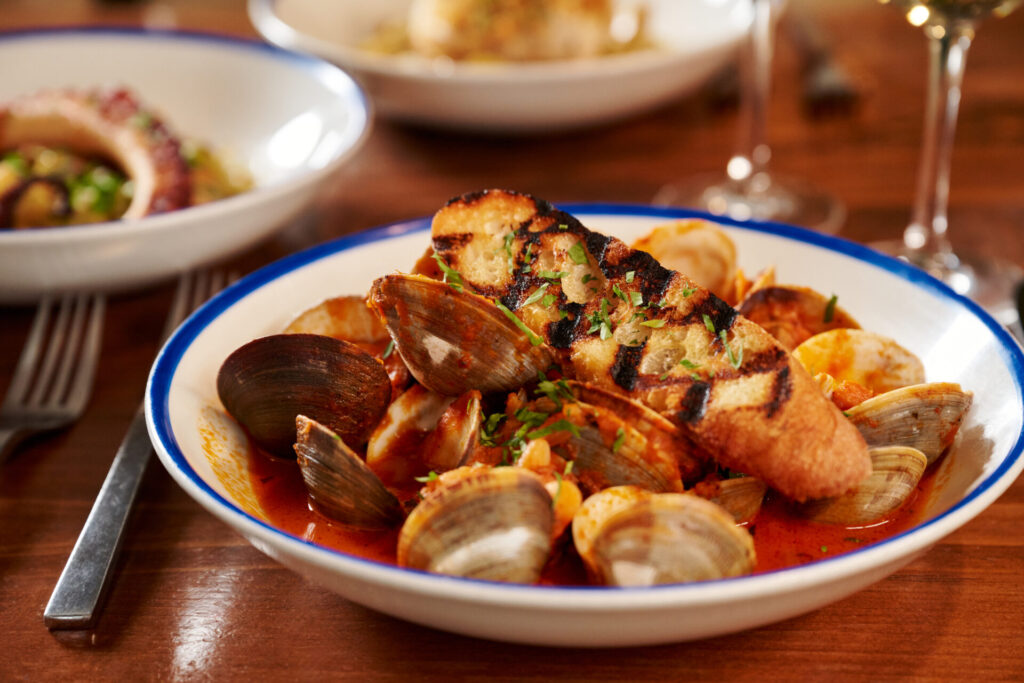 Stewed clams | Photograph by Doug Levy
“We used to do it at my mother’s house, but now we do it here at the restaurant because we’re open Christmas Eve for catering. By the time we’re done, we just set up a table and we do all the fishes—the eel, calamari, smelts, lobster, clam sauce. It’s something that we’ve always done,” he says of the gathering which can welcome upwards of 20 people, including family and friends who are like family.
Caruso, whose father is from Naples and mother is from Sardinia, weaves in culinary traditions from both of his parents’ native Italian regions. “Eels are something that we’ve always gotten. That’s a tradition from Naples,” he says. “We do it on the grill. Sometimes we get them live, sometimes we get them already cleaned up, but as my father gets older, he starts to get squeamish, so we get them cleaned already.”
Caruso grew up cooking alongside his parents, which became the springboard for Angelo’s, but the Feast of the Seven Fishes torch has now been passed down to him. “My mother’s 84, my father’s 85; he’s getting tired and says, ‘I don’t want to do it anymore,’ so I say I’ll continue the tradition. Now I’m starting to take over and my son helps me,” he says. At the restaurant, guests can order fish dishes to take home to their own families, including haddock, clams, and cioppino, a stew with scallops, shrimp, clams, mussels, squid, baby octopus, lobster, and haddock in a garlic, white wine, and plum tomato sauce.
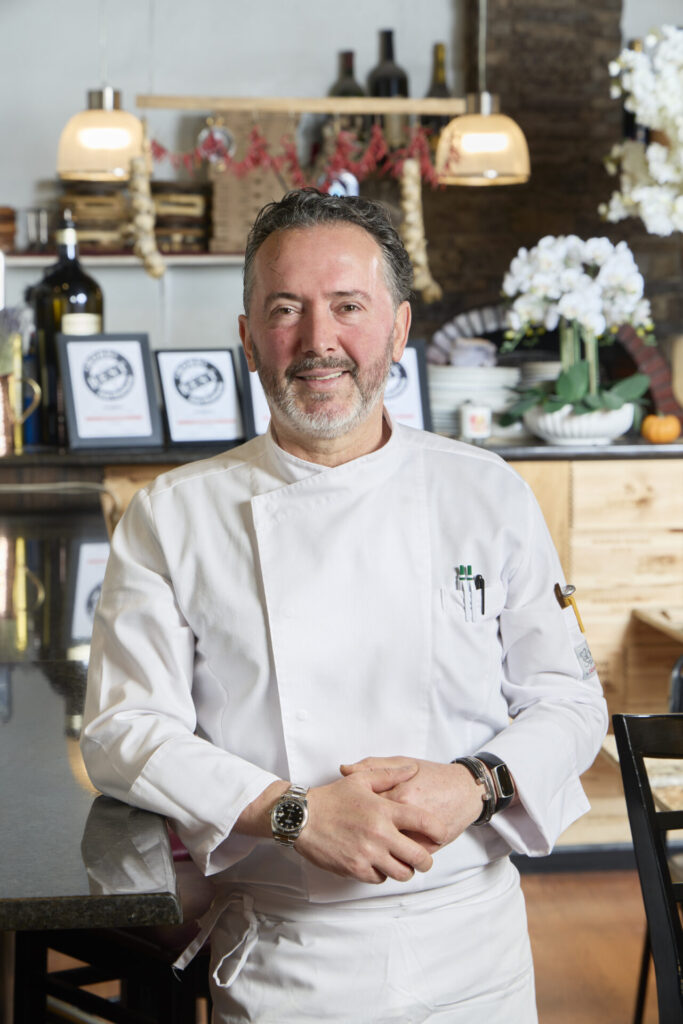 Chef Beni Kurti of Il Ponte | Photograph by Scott Goodwin
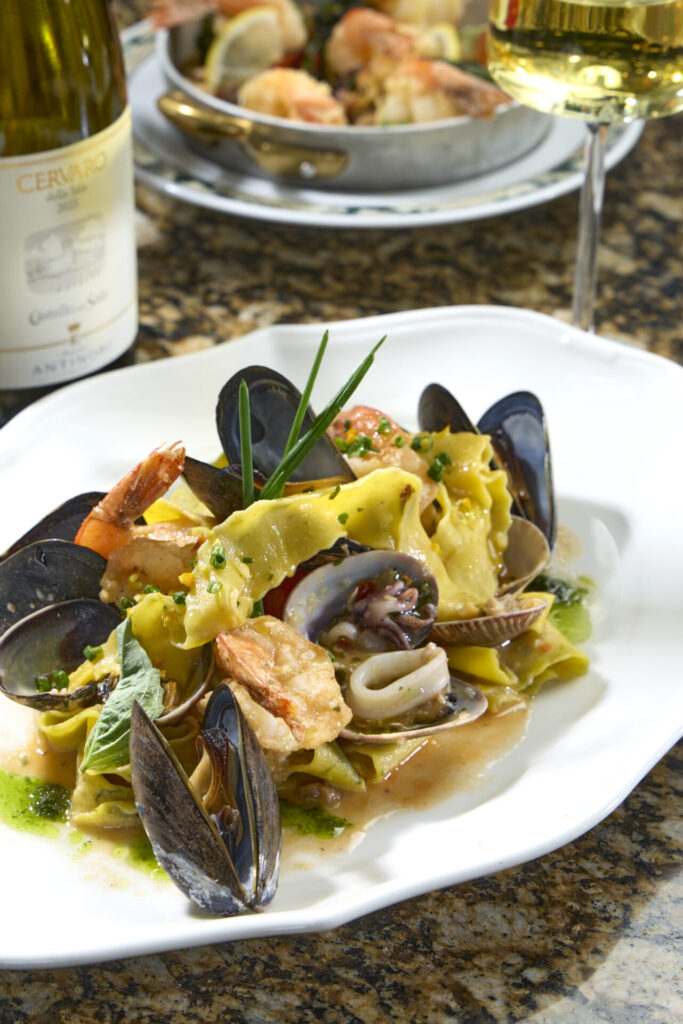 Frutti Di Mare | Photograph by Scott Goodwin
Anthony Caturano also enjoys sharing the Seven Fishes experience beyond just his blood ties, and can welcome as many as 60 guests on Christmas Eve. “I just like exposing other people to that tradition as well,” he explains. You don’t need to be of Italian heritage to indulge, “you just gotta be able to eat seven courses!” he laughs.
Joining The Feast
While restaurant guests can order traditional Italian seafood dinners or platters for catering at Tonno, at Prezza (which is named for the town his mother hails from in Italy’s Abruzzo region), lunch and dinner guests can order à la carte from a newly crafted Feast of the Seven Fishes menu on Fridays in December. Dishes that are a nod to the tradition include yellowfin tuna crudo with blood orange fennel, fried smelts with lemon caper aioli, octopus “carpaccio,” and spaghetti with Nantucket bay scallops, among others.
 Crispy shrimp | Photograph by Scott Goodwin
Before coming to the North Shore, Ciro Langella owned a pizzeria in Italy with his father. Today, he’s the culinary director of ALV Hospitality, which includes Toscana Forno in South Peabody, Toscana Ristorante in Peabody, and Toscana Bar Italiano in Beverly (and a meal delivery company), all with dishes that celebrate Italy’s culinary heritage.
“A lot of those real, traditional, nostalgic dishes that really make you think of Nonna’s house in Italy are translated over to our menus, everything from the actual pizza—it’s a Neapolitan style pizza—to the ingredients that we use,” says Theresa Alves, the company’s director of operations. From-scratch pasta including gluten-free pasta and dough to accommodate dietary restrictions, housemade sauces that include imported Italian ingredients, and locally caught seafood can be found across their menus.
 Chef Ciro Langella from Toscana Forno | Photograph by Scott Goodwin
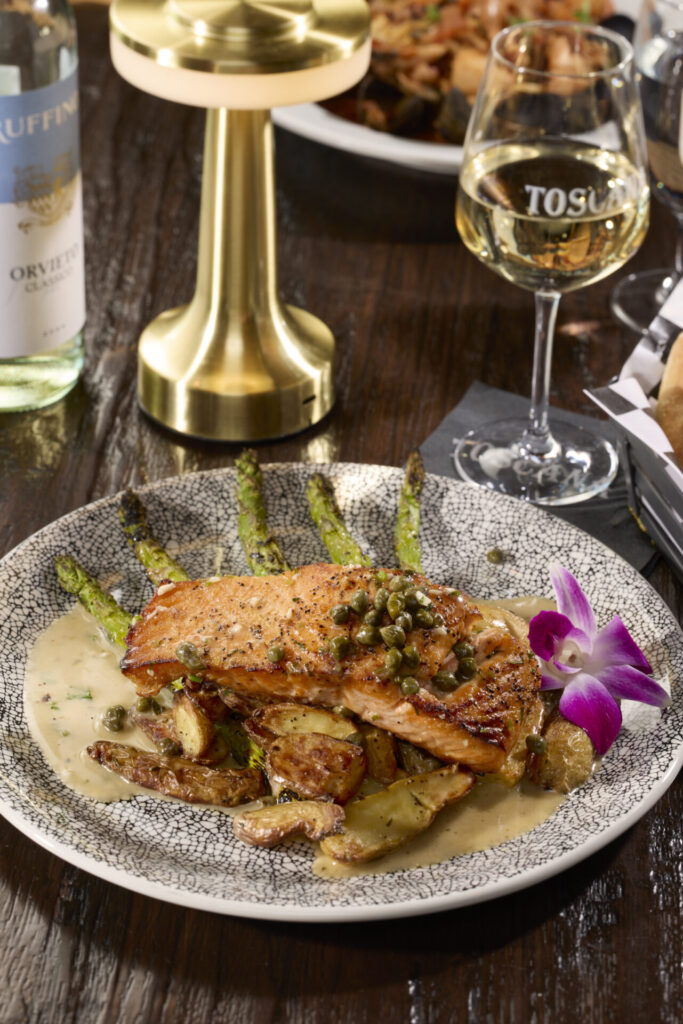 Salmon Picatta | Photographs by Scott Goodwin
Alves says the restaurants’ catering arm is busier than ever leading up to Christmas Eve, when orders of frutti di mare with fresh clams, mussels, shrimp, scallops, and calamari; shrimp scampi; salmon piccata; and linguine con vongole—linguini with clams sauteed in garlic, olive oil and white wine, a hallmark of Neapolitan coastal cuisine—are especially popular. “We have repeat customers that have come to us for up to 10 years for their Christmas Eve order,” she says, attributing the customer loyalty to the talent of Langella and the owners, the Perrina family. “You can tell that it was really cooked by hand, by someone who really cares about the food.”
For these families, and so many more across the North Shore, the Feast of the Seven Fishes, and any adjacent interpretation of the tradition, is more than just a meal. It’s a ritual that bridges past and present, that reminds people through family and flavor what the holiday season is all about.
tonnorestaurant.com
ilpontew.com
angeloristorante.com
alvhospitality.com
Dining and Cooking