
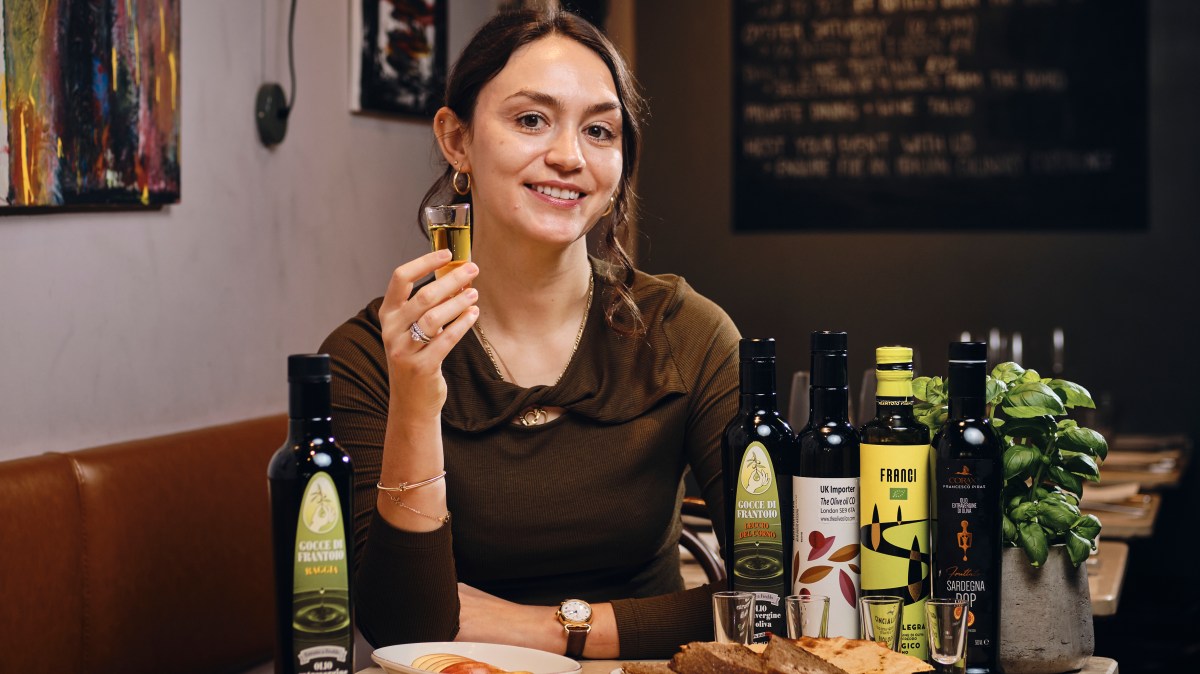
‘On the nose there are notes of red apple and ripe tomato,” the sommelier says. “But on the palate there’s an intense grassy finish.”
If you’re wondering what strange wine this is, it isn’t wine at all but olive oil — extra virgin, of course. I’m at the UK’s only restaurant with a tasting menu that comes with an EVOO (extra virgin olive oil) pairing instead of a wine one. As with a traditional pairing each course is matched with a taste from a different bottle, presented with the same expertise and reverence any good sommelier would bring to their vintages.
Descriptors are just as evocative: thistle, artichoke, “the wild fields of Sardinia”, crisp green apple, fresh hay and banana skin. The pairings are chosen by the chef to highlight the flavours of the dish or create a point of contrast — the kind of playful interaction that always makes food more delicious.
As each course arrives so does a new EVOO, its olive variety, origin and unique characteristics described in passionate detail before the chef deftly drizzles it onto the dish, even the dessert.
• The posh olive oil revolution
“Olive oil has amazing aromas and flavours that can be combined, matched and contrasted with all sorts of foods, both salty and sweet,” says Fabio de Nicola, co-founder and sommelier at Baccala in Bermondsey, southeast London.
The restaurant, which specialises in Italian seafood, has offered its EVOO menu since day one, when it opened in 2019. It costs £75 for five courses or £55 for three, and the whole table has to go for it.
“We always believed in the concept and now we’re getting more and more people asking for it,” de Nicola says.
Data shows that people are becoming increasingly interested in the quality of their olive oil. The Waitrose Food & Drink Report 2025 reveals that sales of extra virgin olive oil are up 14 per cent at the supermarket, compared to this time last year.
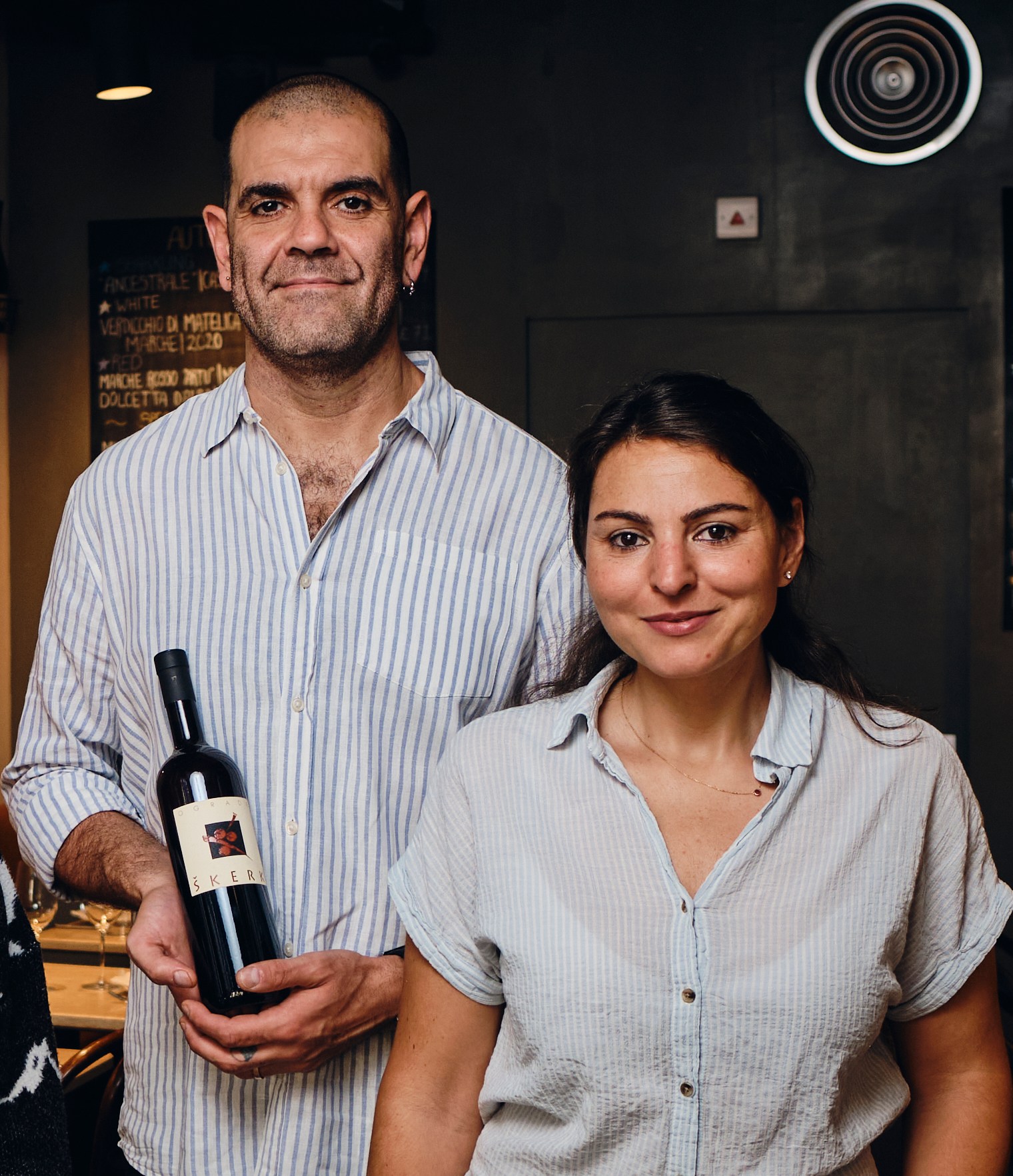
Fabio De Nicola and Ilanit Ovadya, two of the co-founders of Baccala
CHRISTOPHER PROCTOR FOR THE TIMES
Fabio believes one reason for this surge is olive oil’s similarities to wine.
“I began my career focusing on wine but when I was introduced to the world of extra virgin olive oil I immediately noticed the parallels. It’s the same kind of fun with the same complexity and nuance as wine.
• Criminals target Italy’s ‘green gold’ as price of olive oil soars
“Both develop specific characteristics depending on the terroir, the producer, the harvest, the technique. You can get notes of banana, apple, artichoke, asparagus, mushroom.” One time they tried an EVOO that tasted like blackberries.
The restaurant also offers an olive oil tasting without the food where you sip EVOO neat from shot glasses and compare the flavours while learning about how it’s made and how to properly taste it. It costs £18 per person and is suitable for groups of four to 14.
To try olive oil like a pro, warm the glass between your hands to release its aromas, then take a deep sniff. When you taste it, draw in the “liquid gold” with an unladylike slurp to let in some oxygen, then swill it around your mouth like a very expensive mouthwash.
“There is a huge world of flavour to discover,” de Nicola says. “And once guests taste different oils with different foods, it completely changes their understanding.”
First up on the five-course menu is a classic way to enjoy good EVOO — with good bread. The pane e olio arrives with an oil from Marche, the eastern Italian region on the Adriatic coast where Moreno Polverini, Baccala’s head chef and co-founder, grew up. “The smell is one of basil and green olives and on the palate you get the distinct flavour of artichoke,” he says. “It’s bitter, with a pleasing, spicy finish.”
• Plant oils reduce risk of dying early — while butter increases it
Moreno has always understood the importance of good olive oil — “To make good food you need good olive oil,” he says — but the idea of making it central to Baccala’s concept came to him while eating a steak in Italy.
The oil served on top of the meat, made from the Raggia variety, had a striking, vivid green colour and is produced only in small batches by Il Frantoio del Piceno. “I was blown away,” Moreno says. “It’s really intense but also very fresh-tasting. It has notes of raw almonds and this spicy, pungent aftertaste.” He was so impressed that he visited the producer the very next day and has used the oil in his restaurant since opening. “It’s an explosion of flavour but also, because it’s so high in polyphenols, it’s like a medicine.”
Polyphenols are plant compounds that act as antioxidants and feed our gut microbes. As a general rule, the fresher the oil, the higher the levels.
“Olive oil is a seasonal product,” Moreno explains. The harvest runs from October to January in the Mediterranean each year and to get the maximum flavour and health benefits, good oil should be consumed quickly. “It’s not like wine,” he says. “It doesn’t need to mature. It doesn’t get better with time, it only gets worse. So the best olive oil is the one that’s just been produced.”
• Could Essex olive oil be the new English sparkling wine?
He has some new-harvest oils just in, which he lets me try. They smell intensely fresh, like just-cut grass — nothing like the dull, flat scent of supermarket oil. The restaurant always throws a party to celebrate the arrival of the new season’s oils, where they blind-taste them to see if they can identify the origin from smell and flavour alone.
“It’s always emotional when the new harvest comes in,” Moreno says. “Customers are increasingly knowledgeable and ask when the new harvest is in.”
Elsewhere on the tasting menu is a pasta dish with salted cod, potato, turnip tops and bottarga, paired with Moreno’s favourite, the Raggia EVOO. The bitterness cuts through the carbs, complements the saltiness of the fish and enhances the dark, leafy greens.
“This is the magic of good EVOO,” Moreno says — it can bring out the flavour of such a wide range of foods.
• Going to a Christmas dinner? Take a £180 bottle of olive oil
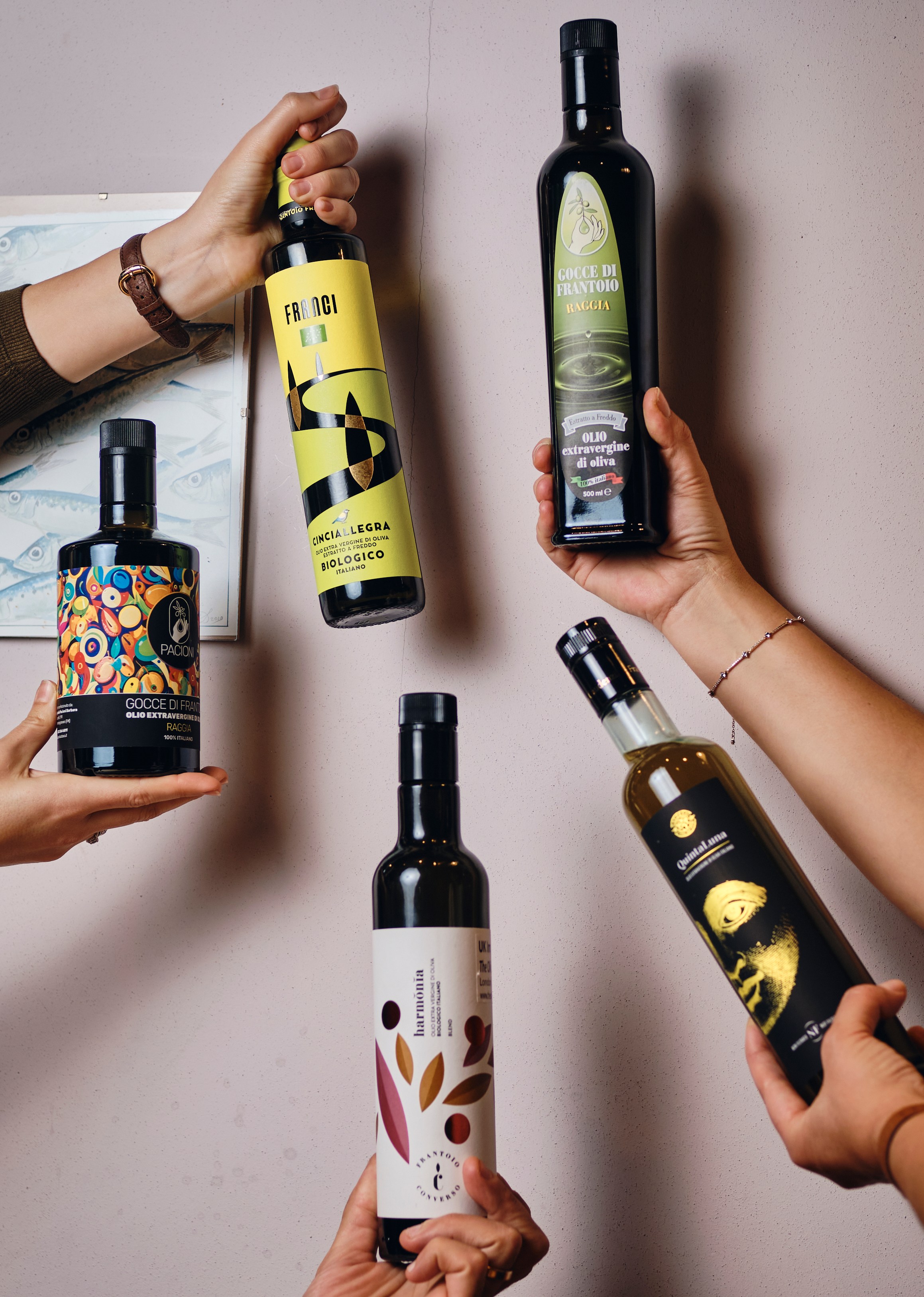
A few of the olive oil brands on the menu at Baccala
CHRISTOPHER PROCTOR FOR THE TIMES
The next EVOO smells of red apple and ripe tomato and is served with perfectly grilled prawns and squid. It comes from Calabria and, as Moreno explains, the further south you go in Italy, the more the olive oil exhibits this quality. “Olive oil from central Italy tends to have notes of artichoke and almond but in places like Sicily and Campania it often smells just like the leaf of a ripe tomato,” he says.
The final dish, an almond milk panna cotta with tonka beans, lemon and pear, is finished with a Tuscan oil at the table. “It smells of fresh hay and banana, and on the palate you’ll get sweet apples harmoniously balanced with bitterness and a spicy aftertaste,” Moreno says.
The combination — the refreshing, light panna cotta dotted with sweet pear and the fragrant, bitter oil — couldn’t be better. The balance of sweet milkiness with the complex oil is addictively good, leaving you forlorn at the thought of the dish being over.
• Why is olive oil so expensive? The liquid gold that took over the world
“EVOO goes brilliantly with desserts,” says Ilanit Ovadya, another of the restaurant’s co-founders, as well as its communications manager. “I love it with chocolate. It’s herbal and grassy and always enhances cacao. It’s like earth meets earth. We’re seeing more guests who want to experiment with different flavours and learn about EVOO. I think it comes from an increased interest in healthy eating — of course EVOO is very healthy — but also because a good one can enhance everything you eat.”
The restaurant even adds it to a negroni.
Moreno thinks it’s also due to the romance of it all. “We choose oils that tell a story: a region, a grower, a harvest. Our role is to help guests taste that story.”
Dining and Cooking