
🍚✨ How to Make Creamy Risotto | Chef Brian’s Classic Technique | Culinary Institute Lenotre Houston
Master the creamy, savory risotto base that pairs perfectly with chicken in this classic dish! In this video, Chef Brian from LENOTRE walks you through the step-by-step process of building rich, velvety risotto. 👨🍳🔥
What you’ll learn:
✅ How to properly toast rice to build flavor
✅ The technique of adding stock gradually for creamy texture
✅ Finishing tips to balance richness and achieve perfect consistency
At LENOTRE, students practice foundational techniques like risotto in professional kitchens—building skills that translate to confidence, creativity, and excellence.
📅 Ready to elevate your cooking?
👉 Learn more: https://culinaryinstitutelenotre.edu
#LenotreHouston #CulinaryInstituteLenotre #ChefBrian #RisottoRecipe #CulinaryArts #FutureChefs #HoustonCulinary #LenotreFamily__________________________________________________________________________
The Culinary Institute Lenotre® – Changing lives one chef-student at a time.
Located in Houston, Texas, the Culinary Institute Lenotre® (LENOTRE) is dedicated to training the culinary experts of tomorrow. Founded in 1998 by third-generation French chefs Alain and Marie Lenotre, our school is recognized worldwide for excellence in French cuisine, pastry arts, and hospitality education.
At LENOTRE, students receive hands-on training from internationally experienced chef-instructors, learning both classic and modern culinary techniques. Our programs include associate degrees and diplomas in Culinary Arts, Baking & Pastry Arts, and Hospitality & Restaurant Management, as well as specialty seminars in wine, artistic pastry décor, and advanced French chocolate and sugar showpieces.
Whether you dream of becoming a professional chef, pastry artist, or hospitality leader, our intensive programs, small class sizes, and flexible scheduling help you succeed on your culinary journey.
👉 Learn more about Culinary Institute Lenotre and how to start your career in the culinary arts today: culinaryinstitute.edu
#CulinaryInstituteLenotre #CulinarySchoolHouston #PastryArts #BakingAndPastry #ChefTraining #CulinaryEducation #HoustonCulinarySchool #LearnToCook #FutureChefs #HospitalityManagement #FrenchCuisine #CulinaryArtsHouston
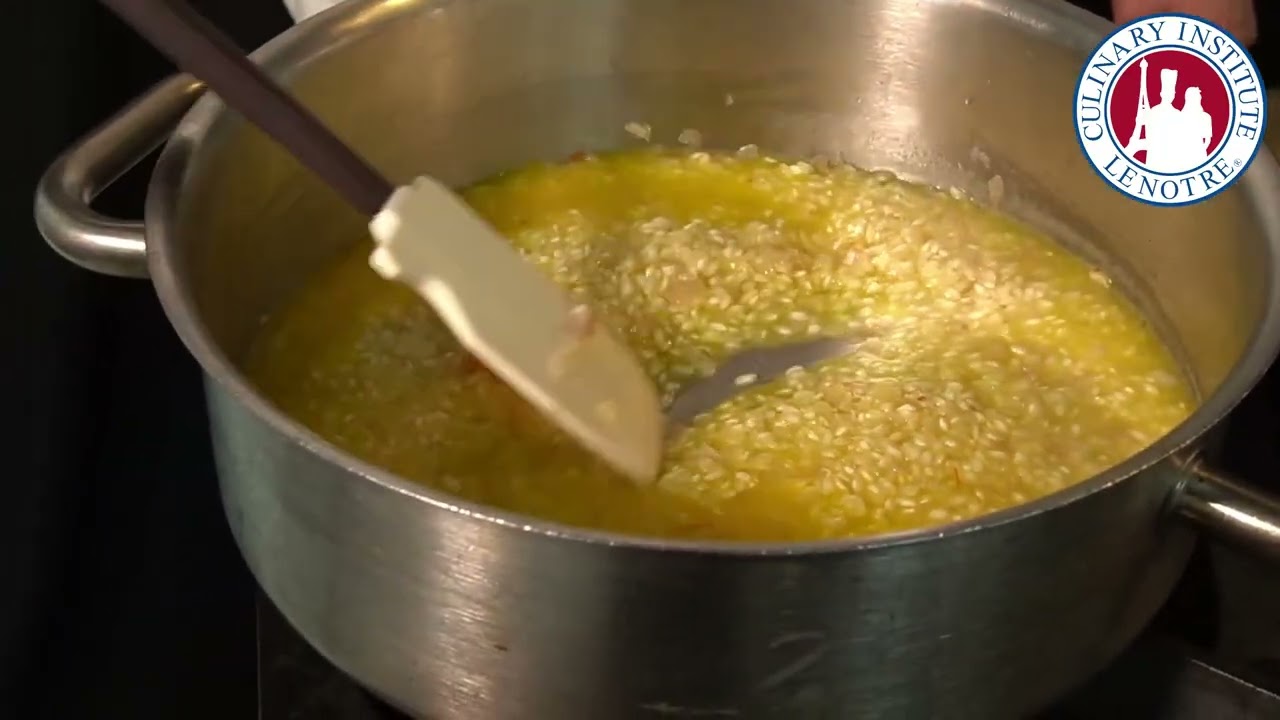
We are going to start on our risoto. Now, uh risoto is a very uh specific technique. Uh it’s not like other rices that we do. So, we’re going to kind of cook everything in stages. And the important part that you must remember about risoto is that you got to add your liquid in stages. Most time we make rice, we put a bunch of liquid in the pot. We cook the rice until it’s done and that’s it. But that doesn’t give us the gravy, the sauce, the kind of feel of the risoto. So, what we got here is we got a nice flat pot right here. Here I got some butter melting inside the pan. And so I’m going to take the uh shallots that I have chopped up right here. You can use onion if you don’t have shallot. Totally fine. It’s going to be the same flavor. And we’re going to drop those in the pan. Okay. Now, you don’t hear any sound. And there’s a reason for that. We don’t want to go too fast with the shallots. Okay? We want to be nice and slow and kind of letting them cook uh and get soft, okay? Because that’s going to keep them sweet and it’s also going to keep it so we don’t have a lot of color on them. All right? Because with risoto, you want to have a nice even coloring. All right. So, we’re going to cook that and while we’re waiting, we’re going to kind of go over some of the ingredients that we got so we can kind of see how those look and get a kind of feel for what we’re doing. Okay. So, we have right here some chicken stock with some saffron inside. And you’ll kind of notice that color. It’s really great, right? It’s like a nice golden bright orange. And so, you don’t need to have saffron. You can use turmeric. You can use curry. You don’t even need to use anything. You can just use chicken buan and water. Okay? Uh or if you don’t like chicken, you’re vegetarian, also fine. You can use a nice vegetable stock or vegetable broth. Okay. The key here is that you have the right amount of liquid, not necessarily that you have a certain kind of liquid. Okay? You can make this be whatever you want it to be. Okay? So, we’re going to let that go. And then the next thing we have to have is we have to have this right here. Okay? So, this is orio rice. Okay? This is the specific rice you got to use for risoto. Okay? So, if you tried to make risoto before and it didn’t come out right and you were using Uncle Ben’s or jasmine or sushi rice, that was your problem. Okay? You got to have this specific rice because of its shape and because of the amount of starch that it has inside it. That’s what’s going to really make the risoto happen. Okay? So, we’re going to make sure that when we’re doing the risoto, it’s kind of a nice relaxing process. All right? So, everything should happen kind of slowly, right? Slow little sizzle. You can kind of hear it in the pan and see that little bit of bubbling, right? We’re not looking for a lot of color here. We’re looking to get kind of sweet. Okay. So, we’re going to be kind of stirring this around slowly. All right. And getting that even heating. Okay. And you can kind of see as they go forward and you can kind of smell when you know you’re ready for the next stage. Okay. And remember, you can’t smell what I smell cuz you’re watching this online. But if you were here at the Culinary Institute, Lenote, then you could be learning it, tasting it, and experiencing it firsthand because that’s how you learn how to cook. So, we’re getting a nice good sizzle right here. Smells sweet and delicious. All right. So, we’re getting that little bit of sweat going on and just a little bit of sound. So, then the next stage we’re going to be is we’re going to take our arboreio rice. We’re going to drop that in here. Okay. So, we’re going to shake that on. We don’t want to get too crazy. Nice and slow. All right. And we’re going to kind of toast the rice. All right. So, we’re going to stir this around. All right. And you’ll notice that the butter will kind of disappear. All right. And that’s fine with what we want to happen. Okay. We’re going to get a little bit of absorption here. All right. And what we’re looking for is that rice gets shiny on the outside. Okay. And just the kind of little bit of the corners will start to get a little bit of kind of clear or translucent property to them. All right. This stage isn’t going to take very long. All right. we really want to do is just get all this coated because what you’re not looking for in risoto is that it sticks to itself. Okay, the whole dish will be sticky, but we don’t necessarily want it to stick to itself. Okay, so we’re looking pretty good right there. Nice and shiny. All right, well coated. So, the next thing is that we’re going to use white wine. Okay, now you don’t have to do this step, but it is classic and it does create a nice sweetness and a little bit of acidity. So, it really does help with the full body of flavor that you get when you make risoto. Okay. So, to pour that in there, a little bit of a sizzle, a little bit of a steam, right? And then we want to make sure we kind of get all that rice mixed up with that wine. Okay? And what’s going to happen next is it’s going to start kind of evaporating and absorbing. Okay? So, what that’s called is acry. All right? So, we want to get it to where the wine is almost dry. And that means that it’s absorbed into the rice and it will kind of we want to kind of make sure that we keep that risoto nice and flat. All right. And just giving it kind of a gentle stir. And you’ll kind of start to notice after you stir this around a little bit that the liquid itself will start getting kind of uh milky or opaque. Right. And that’s when the starches are starting to release from the risoto and the rice itself. And that’s really what the stage um that we’re looking for to make risoto begins is to get that starch release and to start that kind of delicious um you know amalgamation of the rice and the ingredients. Okay. So right here where I’m at right now is if you kind of look and see I’m stirring around and there’s really no more liquid left over. Right? So we are at the ak or almost dry stage. Right? So from here we’re going to start with a ladle of our stock. All right. So, we’re going to start with two to begin with. Nice big ladle full because we got to get this to amalgamate really nicely. Okay. So, that’s one. And then we’re going to go one more. That’s two. Okay. And I have it on the stove here because obviously I need to have both hands to do this. But also, you want to kind of keep this warm cuz what you don’t want to do is you don’t want to put cold stock in a hot pot because it’ll start to splatter up the sides. All right. And then from here, we’re just going to kind of gently stir slowly. All right. So, some people may find this cathartic. Some people will find this really annoying. No answer is wrong here, but this is the way that you make risoto. So, just gentle kind of stirring, making sure nothing sticks to the bottom. And we kind of keep it going back and forth until all this liquid absorbs. And then we repeat the process. Okay? And so that’s how we’ll make our risoto. Slowly, peacefully, comfortably. Done here. So, it’s important to remember that when we’re doing the risoto, there’s a term called al dente. And you may have heard that term before when we’re talking about pasta. The term is actually from risoto. Uh, and it means to the tooth, right? Dental dente. Al dente. And what it’s talking about is you want to have that perfect chew, right? So, you don’t want it to be crunchy. You don’t want it to get caught in your teeth, but it shouldn’t be too soft. Okay? So, it should a little bit of a bite to it. And that that texture against your tooth is what al dente means. And it gives you uh a lot more body than your average rice. Okay. So I think there were about one and maybe a little bit more right there. And then we’re going to be good to go. All right. So in risoto, if you can see the difference now, I just added that last little bit. But we’re real creamy now. We’re looking really kind of nice. And so this dish is fantastic uh for anytime you have cold weather. So thing is that it goes really well with just about everything that you put it with. So it’s just a question of flavor and seasoning, but it can go with fish, it can go with meat, it can go with pork. It it really does everything for you. And that’s why the Italian cooking you see a lot of risotto depending on the region that you’re in, even sometimes more so than pasta because that is kind of their standby side dish. So, uh, always want to make sure, right, when we’re doing our cooking, we don’t just guess, we know. So, we take a little bit of a bite here. And what I’m checking right now is I just want to see, do I have the right texture with my rice? So, nice little bit of chew. So, from here, the only thing we have left to do is really do our flavoring and our seasoning. So, it’s important that we have a little bit of So, from here, the only thing we have left to do is really do our flavoring and our seasoning. So, it’s important that we have a little bit of liquid still left in the pan while we’re doing this because we don’t want to burn it while we’re getting our other ingredients going. So, I’ll take my salt right here. Give a good healthy bit of salt cuz just like most any rice, you’re going to need a little bit of flavor there. Okay. And then we’re going to need a little bit of pepper. All right. We’re going to use white pepper here because it doesn’t show up as much. So, if you were to use black pepper here, you’d see those little dots all in your risoto. Whereas this, once I drop it in there, give it a quick stir. Poof. it disappears and it’s gone. Okay, so um it just depends on what you’re trying to accomplish. And then finally, most people’s favorite part of the risoto is we’re going to put in the Parmesan cheese. So the Parmesan pizza here, we do want this for a couple of reasons. Number one, it’s going to give us kind of that little bit of extra saltiness and flavor, but also it’s going to act as a binding agent. So what you’ll see is it’s going to give it just a little bit of string as we’re kind of stirring it in there. And you want to make sure that you can use the powdered Parmesan, but preferably you use that nice shredded Parmesan um because it’s going to give you the qualities that you want. It’s not been used with a bunch of anti-caking agents and things like that. Okay. So, get that in there. And then, of course, we’re doing a little bit of that nice European cuisine. So, we’re going to add in from this magical place that you can’t see some butter. All right. We’re going to stir in that butter as well just to finish that off. Okay. Okay. And the butter again will kind of lend to that creaminess and also give you uh a little bit of shine inside your risoto. Again, we’re doing a very kind of savory, delicious dish. And so that butter really kind of lends to that both mentally and on your palette. It really gives you what you’re looking for with that. Okay. So, we’ll stir that in through. And then we should have risoto. Cut it.
Dining and Cooking