
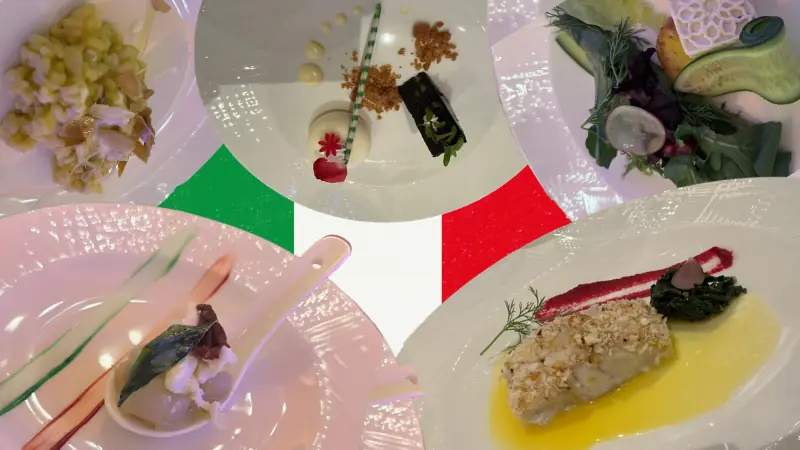
When you receive an invite to a gala dinner celebrating Italian cuisine, you don’t ask questions; you go. And that’s exactly what I did after receiving an invite from the Italian Ambassador to Pakistan, Marilina Armellin, and Domenico Polloni, for a seated gala dinner in Islamabad marking Italian Cuisine Week.
The theme of this 10th anniversary dinner, Italian Cooking: Culture, Health and Innovation, had me curious, especially the inclusion of the word ‘innovation’, meaning we were in store for something new!
“A brainchild of the Ministry of Foreign Affairs and International Cooperation, in Roma, Italy, the event facilitates a capillary reach and visibility all over the world through its embassies and consulates to bring to the table Italian gourmet meals cooked with organic Italian herbs and seasoning by the maestro chefs especially flown from Italy around the world,” an Italian diplomat told me at the event.
The Shamadan Hall at the Serena Hotel was aesthetically decorated, with guests dressed to the nines greeted by elegantly dressed Italian hosts and Aziz Bolani, Global CEO of Serena Hotels.
While thanking the guests, Ambassador Armellin explained why the theme of the 10th Italian culinary week emphasised the importance of culture, health and invocation and how they are integrated. “Three words that, together, tell the whole story: culture, because every recipe carries centuries of family memories; health, because eating well is the oldest and kindest form of medicine; innovation, because a living tradition knows how to surprise itself,” explained the ambassador.
There is no doubt that Italian cuisine has one of the most beloved and widely-recognised gastronomical footprints. The secret behind this addiction is the simplicity in its fresh organic ingredients and traditional cooking methods passed on from one generation to another. Be it a creamy risotto, or majestic charcuterie board, lobster linguine, or the omnipresent pizza, pasta or paninis, Italian food, intertwined with conviviality, culture and family, is beyond doubt contagious.
The guests, by now, were comfortably seated with eyes fixed on the pantry doors as servers navigated the tables. A white tablecloth with multi-coloured runners in green, white and red, representing the Italian flag, made the dining experience more homely.
The hors d’oeuvres from the seafood menu arrived after the aperitifs, which were amuse-bouche, fingertips with Mediterranean red shrimp wrapped in burrata and basil chlorophyll. The pièce de résistance was the burrata cheese. The shrimp looked well protected by the cheese, which is made from mozzarella and cream.
The finger bite vanished in nanoseconds, leaving its creamy marks in the palette. It was hard to decide whether it was the herbed shrimp or the creamy burrata or the Midas touch of the basil that left the tongues tangling with different flavours all delivered in a spoonful.
The second course was not far behind. Polenta Terrina of Sea Bass emulsion accompanied by passion fruit salad, toasted pepper biscuit with crumbles. The presentation was too good to be true. The first thought which crossed my mind was how to disfigure this manicured presentation.
“I love to dress my plates with fruits. I am from southern Italy, and we use fruit in many of our dishes. Both my parents and my sibling are chefs,” explained chef Giuseppe Di Bella, who has years of experience working with the crème de la crème of the Italian culinary industry. He is a winner of numerous national and international awards.
The moment for the all-time favourite arrived; eyes sprinkled with joy and mouths filled with water as the risotto was served. For Pakistani guests, al dente is an acquired sensibility, but this is how Italians like to eat; this creamy textured height of delight infused with pumpkin puree, toasted almond leaves, and fondue. It was the jewel in the crown. The crunch of almonds, complementing the risotto, was simply stupendous.
“I belong to the Reggio Emilia, located in the northern region of Italy and my specialties are mostly pasta, ravioli, risotto, with childhood love for parmesan cheese” said the thirty-something chef Micoli Marie, who is a lecturer at a culinary institute, training aspiring chefs while pursuing her undergraduate degree in Food and Wine Sciences and Culture at Roma Tre University.
Interestingly, both chefs are working at a very high-end catering service catering to corporate shindigs organised by Italian plutocracy, as well as many state dinners at the prime minister’s house and the Presidential Palace. “The best thing about this job is that I can design my own menu, as costing is never an issue with the clients. So, I do experiments, infusions and choose the best quality ingredients, shipping them from all parts of Italy,” Marie said excitedly.
“What is Italian Prime Minister Meloni’s favourite dish?” I asked. “She prefers mostly vegetable dishes with lots of herbs and seasoning. Although the menu does include meat items like fish and chicken, but her personal liking is mostly veggies,” Marie shared.
It seems the south had dominated the menu as chef Bella crafted wild sea bass fillet with bread crumbs flavoured with citrus fruits from the southern islands. What was more amazing was the nest of chicory scented with aglione (garlic from the south of Tuscany) and olives bathed in a sea reduction with saffron pistils — it was copacetic.
The finale of the Shamadan hall, which by now felt like a temple of gastronomy, was yoghurt mousse embellished with orange resting on a crunchy sea salt, cinnamon base with dark chocolate, and marinated wild berries. The first bite packed a punch as a burst of flavours was unleashed in my mouth.
The scent of yoghurt infused with a hint of fresh orange, the aroma of cinnamon wafting through the air, was the best tribute and true definition of culture, health and innovation showcased by chefs Bella and Marie.
Dining and Cooking