
It is lunchtime in a rough-edged suburb of Naples, and hungry children are pouring out of a primary school.
Many make a beeline for the kiosk yards from the gate selling chocolates, but Salvatore Russo, seven, heads straight across the piazza to the takeaway which sells his favourite pizza.
“I like it because it’s got chips on it,” he reports as his dad buys him a 500-calorie slice (it also has hot dog sausage and lots of cheese). With more kids arriving, the owner brings out a freshly baked tray of pizza topped with just tomato sauce, olive oil and oregano — a far healthier option — but admits: “The children always add mayonnaise, they go mad for it.”
Italy gave birth to the Mediterranean diet, a shining example of healthy living, but lunchtime in Ponticelli offers a clue to why the country’s children are now among the most overweight in Europe.
As the world lives the Italian ideal, buying expensive olive oil, cherry tomatoes and boutique pasta, 37 per cent of eight-year-olds in Italy are now overweight, second only to Cyprus in Europe, and 17 per cent are obese.
Things are even worse in the south of the country — where the Mediterranean diet evolved. In Campania, which has Naples as its regional capital, 43 per cent of children aged eight to nine are overweight and 18.6 per cent are obese.
Pizza with chips and hot dog slices is a far cry from the Mediterranean diet documented in the 1950s by the American nutritionist Ancel Keys — a mix of vegetables, fruit, beans, nuts, good olive oil, whole grain bread and rice, fish and hardly any red meat.
Experts once poured into the south of Italy to study what poor locals ate that made them so wiry and fit. Now they are back to figure out how modern eating habits are making them obese — and this time they are heading for Ponticelli.
“Ponticelli probably has the highest rate of infant obesity in the world,” said Vincenzo Bottino, the director of the local Villa Betania Evangelical Hospital, which carries out 350 stomach-reducing operations a year and has a 12-month waiting list.
Sonja Chiappetta, the head of surgery, said: “We saw a 16-year-old weighing 172kg [27 stone] who already had the health issues like diabetes and hypertension which we normally see in 40 to 50-year-old obese patients.”
The hospital also sees plenty of rectal and breast cancers which are linked to obesity.
The doctors at Villa Betania have been joined by obesity researchers from a foundation started by Valter Longo, an expert at the University of Southern California. “Just like peacekeepers have to be where the war is, we have to be in Ponticelli,” said the foundation’s chief executive, Antonluca Matarazzo.
Once a poor farming community, Ponticelli was concreted over in the 1980s to make way for new council flats to house homeless people forced out of Naples by damage from an earthquake in 1980. A scrappy collection of housing estates and busy roads, it is a contrast from the charming churches, eateries and alleys in central Naples which are such a hit with tourists.
Grabbing her coat, Chiappetta heads down to the café inside the foyer of the hospital which offers shell-shaped, cream-filled sfogliatella pastries, mini pizzas, fried calzoni and pastries stuffed with ham and cheese called pariginas — among the local specialities which make eating in Naples so irresistible.

Sonja Chiappetta at a food stall in Ponticelli
TOM KINGTON
“We tried to get them to sell salads too, but they told us no one bought them,” she said.
Heading out to a bakery near the hospital she spots a “Neapolitan sandwich” on sale — a wrap filled with provola cheese, chips and hot dog chunks. All of these treats can cost as little as one euro.
“It’s not actually very Neapolitan, but the kids love them,” says the woman behind the counter.
The habit of adding chips to pizzas — perhaps a more serious culinary crime than adding pineapple — has quietly taken off in Italy in the past decade. “Putting two starches together is as bad as it gets, especially if they are combined with saturated animal fats,” said Longo.
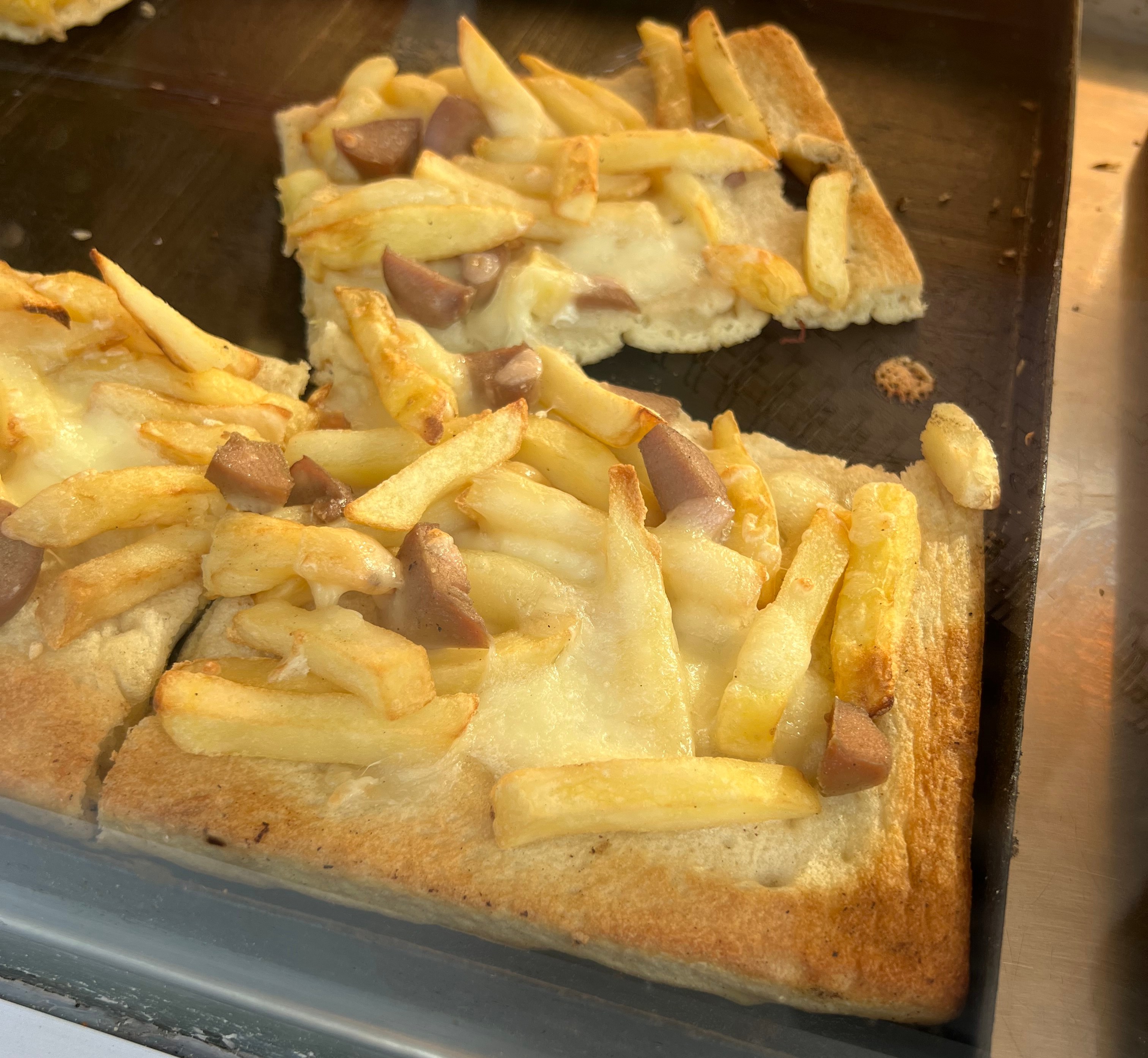
Pizza with chips and sliced hot dog is estimated to contain 500 calories a slice
TOM KINGTON
He claimed southern Italians were getting bigger because they eat more processed foods such as hot dogs and take less exercise. But those habits are common in other countries too: what is pushing Italy to the top of the obesity charts?
The answer, said Longo, is the habit of eating far too much pasta, pizza and bread — all starchy foods that turn to fat. “They eat more of these foods than northern Europeans, conveniently believing it’s part of the Mediterranean diet, while they avoid the vegetables and beans which are also contained in the diet. It’s a recipe for disaster,” he said.
A recent study revealed that 73 per cent of Italian parents of overweight or obese children were convinced their children were eating just the right amount of food. Another survey found that only 5 per cent of Italians stick to the true Mediterranean diet.
Researchers looking into the secrets of the original Mediterranean diet are still drawn to Acciaroli, in the Cilento region south of Naples, where they recently suggested that a large intake of rosemary is helping to ensure heart conditions, Alzheimer’s and even cataracts are almost unheard of.
But locals — often in their nineties and still spry — also describe how they grew up eating less, often grabbing chicory from the ground and munching on it while they picked olives.
“The real Mediterranean diet means moderation in what you eat and we’ve lost that,” said Marco Silano, from Italy’s National Institute of Health. “We should be eating 80g portions of meat three times a week, yet I go into supermarkets and see 240g burgers on sale,” he said.
As southern Italians pick and choose the bits of the Mediterranean diet they want to eat with disastrous results, Giorgia Meloni, the prime minister, has seized on Italian food and its health benefits as a way to promote her country around the world.
Italy’s cheese, wines, salamis, pasta and pizza are, she claims, “an extraordinary part of our identity”.
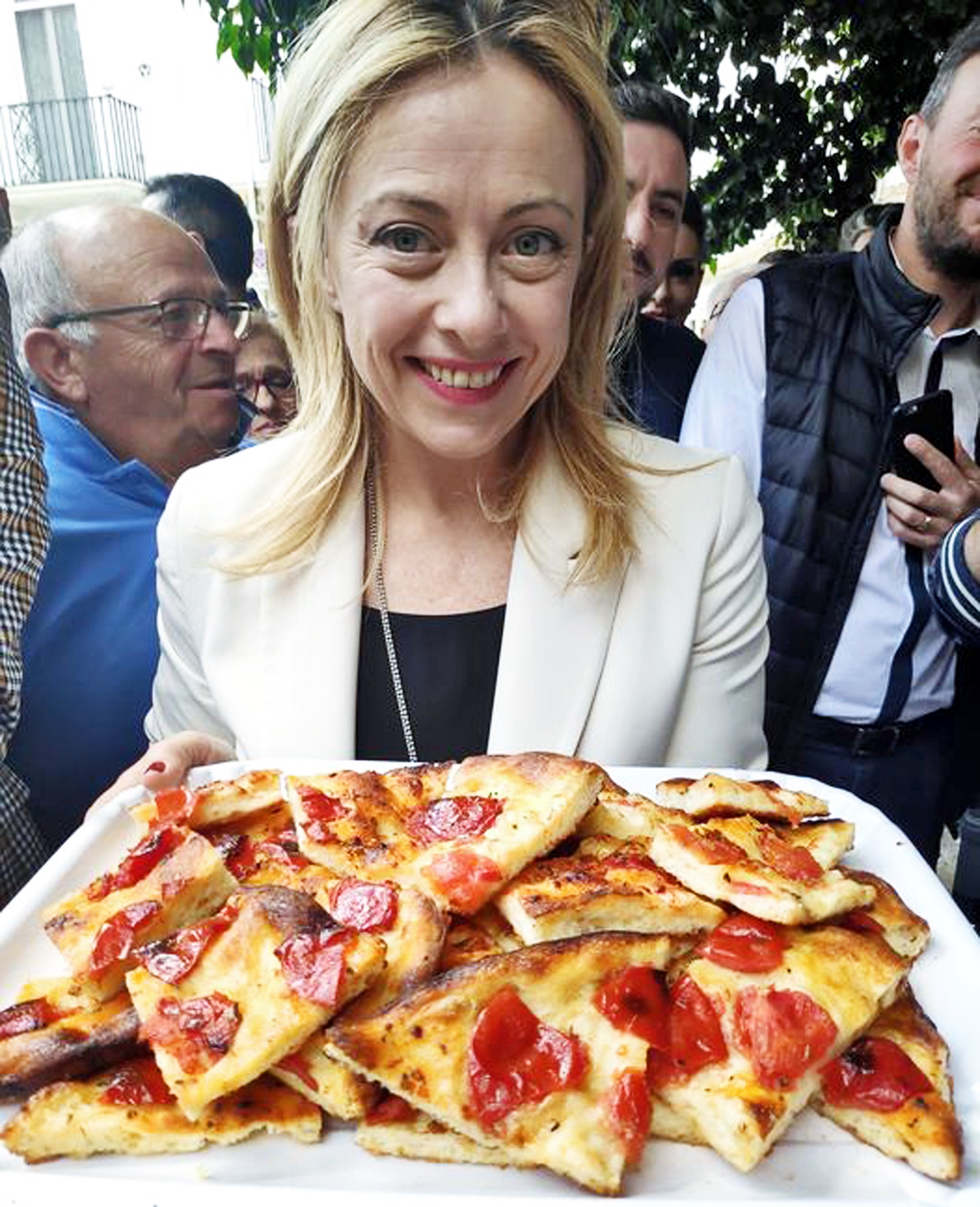
Giorgia Meloni wants to use Italian food to promote the country
Claudio Vernieri, an oncologist at the University of Milan and laboratory leader at the city’s IFOM cancer research centre, said: “Italy has an amazing variety of foods from fruits and vegetables to whole grains, but if no one eats them the country risks becoming a museum of healthy food.”
There are pockets of resistance to be found in Ponticelli. At a bustling street market last week, Luigi Capasso, 39, was manning a stall selling everything needed to do the Mediterranean diet right, starting with sacks of chestnuts, dates, figs and seeds as well as beans and cereals for hearty soups and purées. “I am fighting TV advertising which tells impressionable people to eat processed foods,” he said.
He is also up against the takeaway bar opposite the primary school. As children drifted home last week, Germano D’Antonio, the owner, pointed to another calorie-packed children’s favourite he sells alongside his chip-topped pizzas.
“It’s a hot dog with chips and mayonnaise inside a bun which has been fried,” he said. “Yes, it’s fattening, and there are many overweight kids here. But it’s because the food is good.”
Dining and Cooking