
Open this photo in gallery:
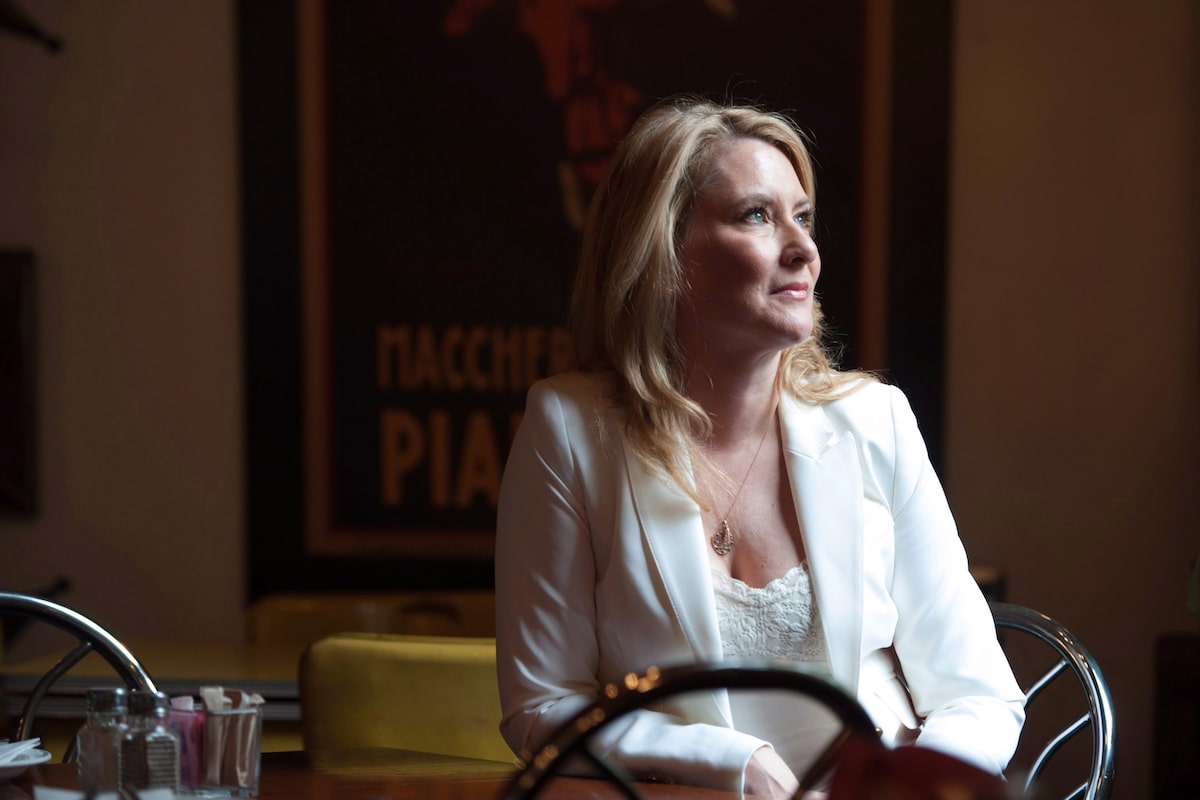
Eleanor McCain, pictured in 2017, has triggered an agreement that she says requires her siblings, cousins and their offspring to purchase her stake in the holding company that owns McCain Foods.Galit Rodan/The Canadian Press
A second generation of New Brunswick’s McCain clan has rekindled a long-standing family feud over a multibillion-dollar fortune.
Thirty-one years after brothers Wallace and Harrison McCain fought for control of McCain Foods Ltd. – a battle for the world’s largest French fry maker that Harrison won – Wallace’s daughter, Eleanor McCain, has kicked off a showdown with her relatives by demanding they buy her out of one of the country’s largest privately owned companies.
Eleanor, a 56-year-old musician who lives in Toronto, recently triggered an agreement that she says requires her siblings, cousins and their offspring to purchase her stake in the holding company that owns McCain Foods.
Based on the value of comparable publicly traded food companies, McCain Foods is worth at least $20-billion and Eleanor’s investment could be worth more than $1-billion.
Family control affords six-generation Burnbrae Farms freedom to invest in long-term goals
“Eleanor McCain is seeking to exit her stake in the company co-founded by her father to focus on philanthropy, and for portfolio diversification and estate-planning purposes,” Wojtek Dabrowski, a spokesperson for Ms. McCain, said in a statement.
“Ms. McCain has consistently engaged constructively, in good faith, and would like to conclude this matter in a fair, timely and confidential fashion,” the statement said.
In response, Andy Lloyd, a spokesperson for the family’s holding company, said in a statement: McCain Foods “is committed to treating all shareholders fairly, including any shareholder seeking an exit, with a view to balancing the interests of all stakeholders and the long-term interests of the company.”
Eleanor’s relatives have refused her request to cash her out for reasons sources trace back to the 1990s dispute over succession between the co-founders, who both died more than a decade ago. The Globe and Mail is not naming the sources because they are not authorized to speak for the family.
The multiyear contest between Wallace and Harrison McCain, ultimately decided in October, 1994, after 10 weeks of arbitration in a Fredericton courtroom, left wounds that have not healed after 31 years, the sources said. Harrison McCain’s offspring are still angry with some of Wallace’s children.
The fight is also rooted in the challenge of setting a value on each family member’s stake in McCain Foods, which is growing rapidly as ownership moves into a fourth generation of the founding family, sources say.
Each side has hired corporate lawyers from firms such as Torys LLP and Norton Rose Fulbright Canada LLP to sort out what everyone involved describes as a messy relationship, and a family shareholder agreement that is open to interpretation.
Eleanor McCain argues the stance against a payout is at odds with a previous decision involving her older brother, Michael McCain. He and his father, Wallace, left the family company and took control of Toronto-based Maple Leaf Food Inc. in 1995.
Open this photo in gallery:
Michael McCain, pictured in 2019, is executive chair of Maple Leaf, one of Canada’s largest packaged protein businesses.Fred Lum/the Globe and Mail
Wallace McCain’s family restructured its holdings after the patriarch died in 2011, which resulted in Michael’s interest in the holding company falling significantly, sources say, while Eleanor’s share increased.
In the early 1990s, Michael McCain was running the family company’s U.S. operation. His father’s push to designate Michael the next chief executive officer of McCain Foods, succeeding Harrison McCain, sparked the fight for control.
Michael McCain is now executive chair of Maple Leaf, one of the country’s largest packaged protein businesses, and pork producer Canada Packers Inc., spun out of Maple Leaf in October. His stakes in the two companies are worth approximately $1.4-billion.
Eleanor McCain has never worked at the family company. After earning an undergraduate degree in music at New Brunswick’s Mount Allison University, she built a career performing as a singer and released seven albums. She has an adult daughter, Laura.
Maple Leaf Foods spins off its pork business to focus on high-protein goods
In 2020, Eleanor bought a home near downtown Toronto’s High Park with a 2.3 acre lot for $10.6-million. She also owns properties in Peggy’s Cove, N.S., and plans to build an art gallery and museum in the tourist town if she can win government approvals.
The McCain clan owns McCain Foods through a holding company. The family controls the holding company’s seven-member board of directors, and Eleanor McCain is attempting to sell her stake in this entity. The founders’ offspring refer to this as the “baby board.”
Heirs of Wallace and Harrison McCain – who died in 2004 – each have two seats on the holding company board. Offspring of the other two brothers, Andrew and Robert McCain, each appoint one director and there is one independent director.
Eleanor McCain has two brothers, Michael and Scott, and a sister, Martha, who focuses on philanthropy. Her 91-year-old mother Margaret, a former lieutenant-governor of New Brunswick, is also a significant shareholder in the holding company. On the other side of the family, Harrison McCain and his wife Marion had five children.
McCain Foods is overseen by a separate, operating company board. The majority of its directors are independent, including the former chief financial officer of Toronto-Dominion Bank and CEO of Goldman Sachs Canada, along with company executives. The two-tier structure, common in European family-owned companies, keeps the food business at arm’s length from family disputes.
Prior to his death in 2004, Harrison McCain created a “thick document” and a two-tier board structure meant to guide the family’s affairs, said Eleanor McCain’s brother Scott McCain in a 2018 interview with former Globe and Mail reporter Gordon Pitts. The concept is meant to separate the business owned by the family and the “business of the family.”
“Our family business is potatoes and appetizers and trucking; the business of the family is the family office,” Scott McCain said in the interview. He worked with his father and brother at Maple Leaf until retiring in 2014.
After leaving Maple Leaf, Scott McCain reconciled with his relatives and he is now chair of the operating company’s board.
Eleanor McCain and her relatives are at odds over a food giant that ranks as one of Canada’s few global champions. Founded in the farm town of Florenceville, N.B., in 1957 by four brothers, the company has doubled sales since CEO Max Koeune took the wheel in 2017.
Open this photo in gallery:
An employee works on the french fry assembly line at the McCain factory in Matougues, France, in 2019.MARTIN BUREAU/AFP/Getty Images
McCain Foods’ 22,000 employees now sell $16-billion of frozen potatoes, Pizza Pockets and Deep’n Delicious cakes a year in 160 counties. The company owns 54 factories on six continents. It sources potatoes from a network of 3,500 independent farmers, spread across 16 countries.
McCain Foods started out with four shareholders, all sons of a potato farmer. In 1957, Harrison and Wallace McCain each contributed $30,000 to building a frozen French fry plant and agreed to run the business together. Two older brothers, Robert and Andrew McCain, chipped in $20,000 each to support their siblings.
While McCain Foods is private, other publicly traded companies with comparable sales, such as cheese maker Saputo Inc., cereal producer Kellogg’s and chocolatier Hershey Co., are worth between $17-billion and $51-billion.
McCain Foods’ largest publicly traded peer is Lamb Weston Holdings Inc., based in Eagle, Idaho. The Canadian company sells twice as many potatoes each year as its U.S. rival, which has a US$8.3-billion market value.
In 1995, shortly after the family split, Harrison McCain stepped down as CEO of the company he co-founded and brought in outside leaders with global experience. McCain Foods recruited its current CEO, Mr. Koeune, from French food giant Danone SA.
Two-thirds of businesses don’t have a succession plan. Here’s why they should
Family-owned companies that successfully pass control from one generation to the next consistently have clear shareholder agreements that include rules for paying out anyone who wants to exit, according to a study led by Peter Jaskiewicz, chair in family enterprise at the Telfer School of Management at the University of Ottawa.
The two key elements of these family agreements are how they deal with ownership and leadership across generations, according to Dr. Jaskiewicz, who chose to study the dynamics of private companies after his parents’ family business failed to navigate succession issues. In Europe and Asia, his study showed there are multiple examples of successful 20-plus generation family companies, with thousands of shareholders, all guided by written contracts.
Some of the world’s wealthiest families are multigeneration owners of food business. Their ranks include the Mars family, whose 114-year-old candy and pet food empire is worth more than US$100-billion, and the Cargill-MacMillan clan, whose stake in agriculture company Cargill Inc., founded in 1865, is valued at US$61-billion.
Dining and Cooking