
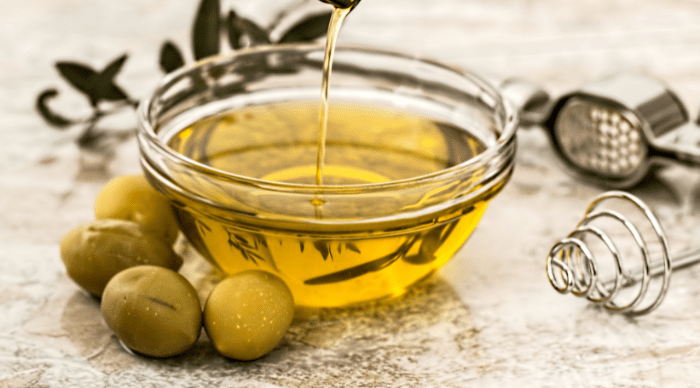
Moroccans are closely watching this year’s olive harvest with expectations of a strong production season that could finally ease olive oil prices after several years of drought-driven shortages that sent the price of olive oil soaring past MAD 120 (USD 13) per liter a year ago.
Many consumers, however, remain skeptical that any decline will filter through to retail shelves, citing the role of intermediaries, rising harvesting costs, and a persistent labor shortage.

According to Rachid Benali, the President of Morocco’s Interprofessional Federation of Olive Production, the 2025-2026 season is on track for a significant rebound. Speaking to Barlamane.com, he said early estimates point to a harvest of 2 to 2.5 million tons of olives, equivalent to 200,000 to 250,000 tons of olive oil.
Benali said prices are already trending lower and could stabilize around MAD 50 (USD 5.4) per liter in the coming months. He described that level as reasonable for consumers and still viable for farmers, despite rising labor costs and a longer-than-usual harvest, which may stretch into late January or early February 2026 because of delayed rainfall.
Benali pointed out that pricing ultimately depends on domestic and international market dynamics. Global olive-oil prices are currently close to the same MAD 50 range, he said, limiting the likelihood of Morocco diverging significantly from world trends. “Farmers cannot control prices,” he said. “Only abundant production can push prices down.”
This year’s expected recovery follows a difficult 2024-2025 season, when output fell to about 950,000 tons, down from 1.05 million tons the previous year. Severe drought and high temperatures disrupted flowering and reduced yields across growing regions.
Dining and Cooking