
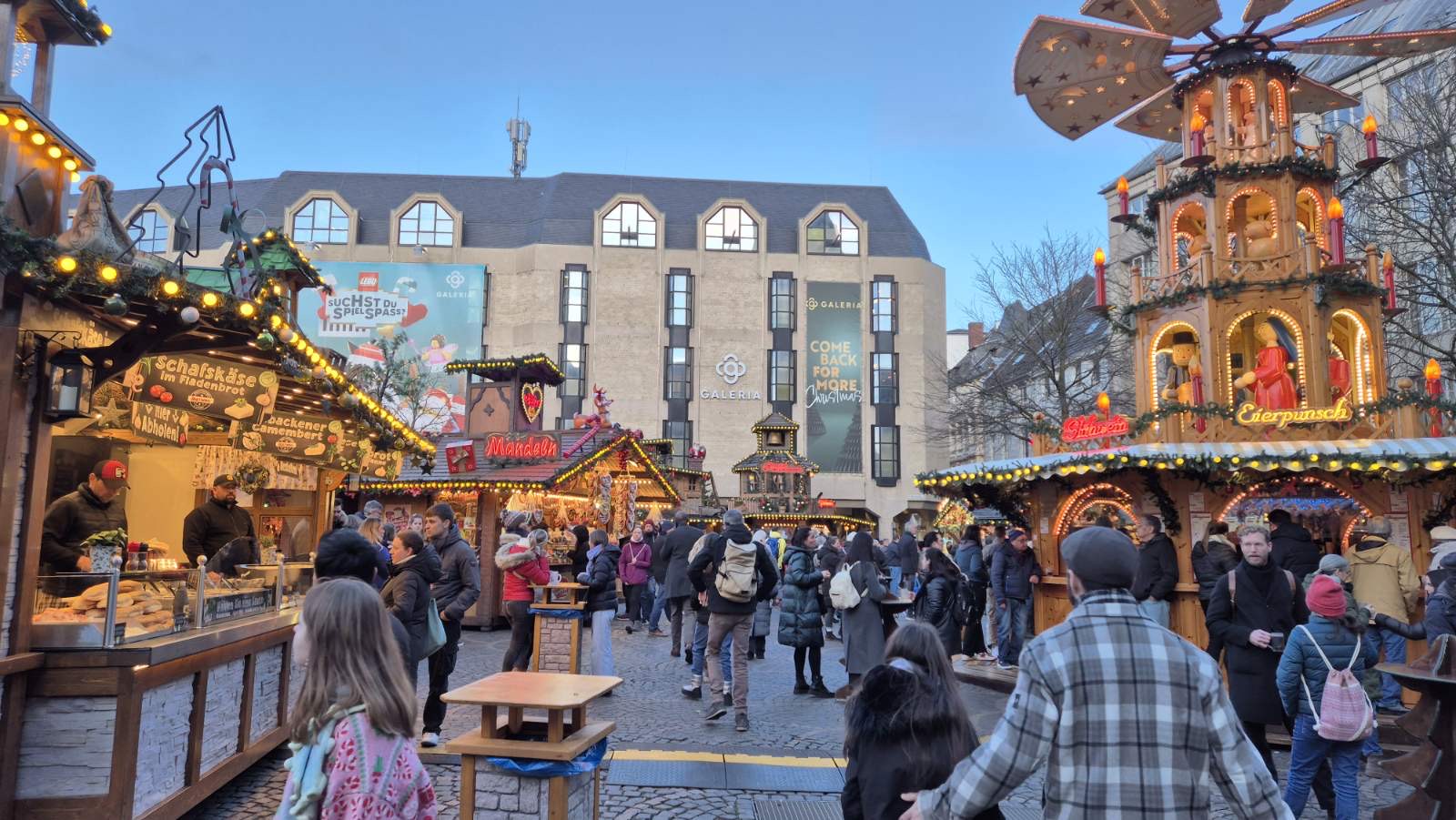
Carousels and wooden houses with the same handicrafts every year, socks made of alpaca wool, for example, or wooden figurines or soaps with olive and rosemary. And the same smells – roasted sausages, mushrooms, salmon on an open flame…
And of course, mulled wine, without that in Germany it doesn’t work. There is black and white, there is cinnamon and clove in the air.
But, in recent years, German Christmas fairs – from the end of November until Christmas Day – added something else to their “tradition”. These are barriers that should prevent some kind of terrorist or madman from driving into the crowd with a vehicle, writes DW.
Bonn has the most expensive and supposedly the best ones! They look like mobile recumbent cops, but the wide ones that won’t blow off the shock absorber. It’s just that they have steel plates in the middle that stand up. A vehicle cannot pass, but pedestrians can, between the plates.
Such obstacles are certified and expensive as hell. In the city of Heilbronn, for example, they gave 250.000 euros just for the rental of such professional barriers – and only for the duration of the fair.
A tractor is also possible.
There are some weird scenes. For example, in Augsburg the tram tracks run through the city center. And what did they remember? To put up poles weighing 450 kilos and remove them every few minutes with a manual crane, so that the tram can pass, and then put them back.
He has heard all kinds of comments, but he has not yet heard a better and more practical idea, says Frank Pinch, a representative for security in the city. The fact that this bizarre incident became news throughout Germany doesn’t bother him: “From our city marketing they say that every attention is worth its weight in gold.”
Smaller local governments have neither the money nor the will for such measures. In the town of Grimen in the northeast of the country, they simply parked giant tractors on the approaches to the fair, and decorated them with lights.
In Kilsheim near Frankfurt, old concrete anti-tank barriers were found in the former barracks – a relic Cold War. They painted them nicely in white and red – the price for the paint and the hands is a total of one thousand euros, please.
They say, the prices of special obstacles have jumped outrageously. Previously, one of these cost 800 euros, but now manufacturers are asking for ten times as much! This is what Simone Hickle-Seitz from the municipal administration claims. “They know exactly that all cities need it. But the coffers are empty.”
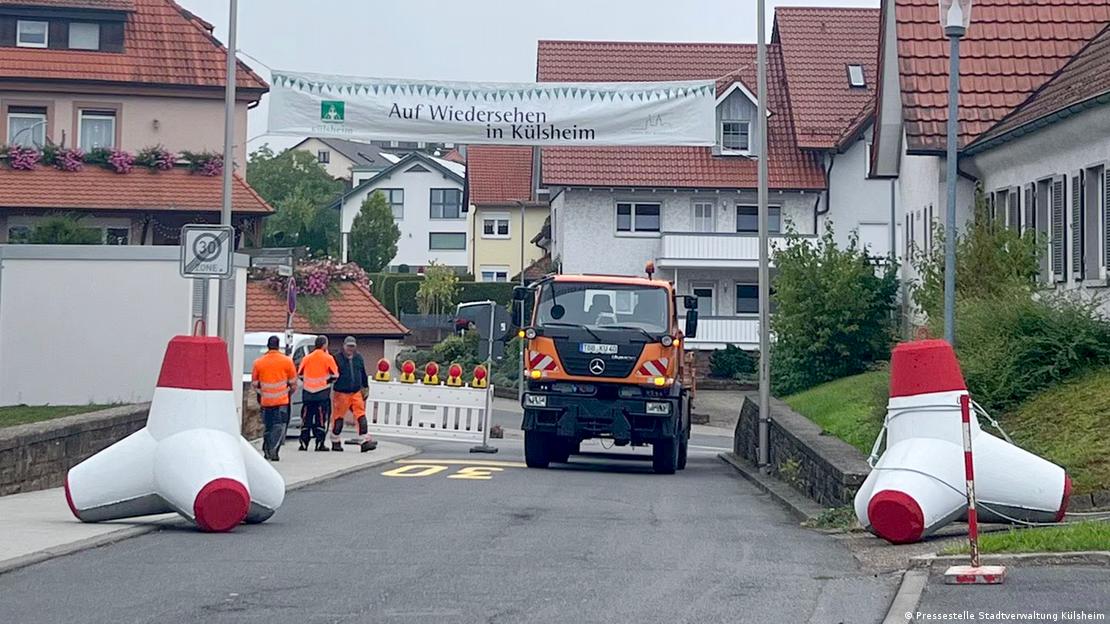
Photo: Pressestelle Stadtverwaltung KülsheimAnti-tank barriers in Kilsheim
Two-thirds of Germans are afraid
People generally say that it’s sad that everything has to be like this – obstacles remind us of danger, and that spoils the atmosphere. Others say that right now we should celebrate, in spite of the terrorists. Because if it is not celebrated, then they are terrorists won.
The idea of barriers for vehicles began to be thought of after the horrific crime on Berlin’s Breitscheidplatz. In 2016, Tunisian Islamist terrorist Anis Amri drove a truck through the crowd. He killed 13 people, injured 67 others.
Last year, Germany was similarly shaken, in Magdeburg. There, a Saudi citizen – who was not an Islamist, it is even speculated that he was a right-winger with mental problems – killed six people with his car and injured over three hundred because he drove for a long time through the crowd. He is currently on trial.
“Christmas markets are safe,” said federal police minister Alexander Dobrint. “There is a threat in principle in Germany, but there are no concrete indications that there is a plan for an attack.”
Police and services believe that Christmas fairs are an attractive target for Islamists because they represent tradition, many people go to them and the media effect of the attack is much greater.
Anyone who wants to worry more can easily find reasons. For example, Dennis Eichenbrenner, president of the Federal Show Safety Association, says there is too much focus on a possible vehicular attack. “When you look at the statistics, we are much more at risk of knife violence.”
Overall, 62 percent of Germans are worried about safety at Christmas markets, according to a recent YouGov poll. One third will not go at all. However, as the main reason they state – overpriced food and drinks.
How to spend money
Vašari are big mamipara. According to the survey of the Association of Exhibitors, last year 24,5 euros went out of the wallet per visitor and per visit!
And mostly on food (7,9 euros), drinks (6,4), gifts, souvenirs and small works of art (6,5), merry-go-round (2). Interestingly, a visitor to the fair on average leaves even more money outside the fair – as much as 28,7 euros, because, for example, he first dines in a restaurant or buys a gift in town.
A little over three thousand Christmas fairs in Germany turned over 4,17 billion euros last year – and this is growing every year, with an interruption in the year of the pandemic.
For the sake of comparison, that is three and a half times more than the whole of Montenegro earns from tourism all year, and almost twice as much as Serbia earns from foreign tourists.
Therefore, there is generally no winter for fairs, even with the feeling of insecurity due to possible attacks.
But these two things are somewhat related. Security measures – although city budgets also help – raise the costs of organizing the fair. This again raises the price of rent, and this, of course, is passed on to consumers, just like the high inflation of previous years.
And a lot of people would swear that they spend even more than they should, that is, that merchants and restaurateurs use the opportunity to earn even more.
On a reporting assignment in Bonn, this journalist ate one langoustine – a type of Hungarian piroshka – in six bites at his own expense. With some garlic and cream cheese, it cost five euros.
Mulled wine in Bonn costs about four euros, and there are fairs where it is as much as five. Bratwurst, a typical German sausage, is usually five euros even though it’s just put in a small bun and comes with mustard, ketchup or mayonnaise. One visitor to the fair in Essen paid 8,5 euros for a small bowl of lentil soup in which she counted exactly four pieces of hot dog.
Who cares about his wallet, it’s best to avoid fairs, and then he also avoided the danger of terrorism.
Dining and Cooking