
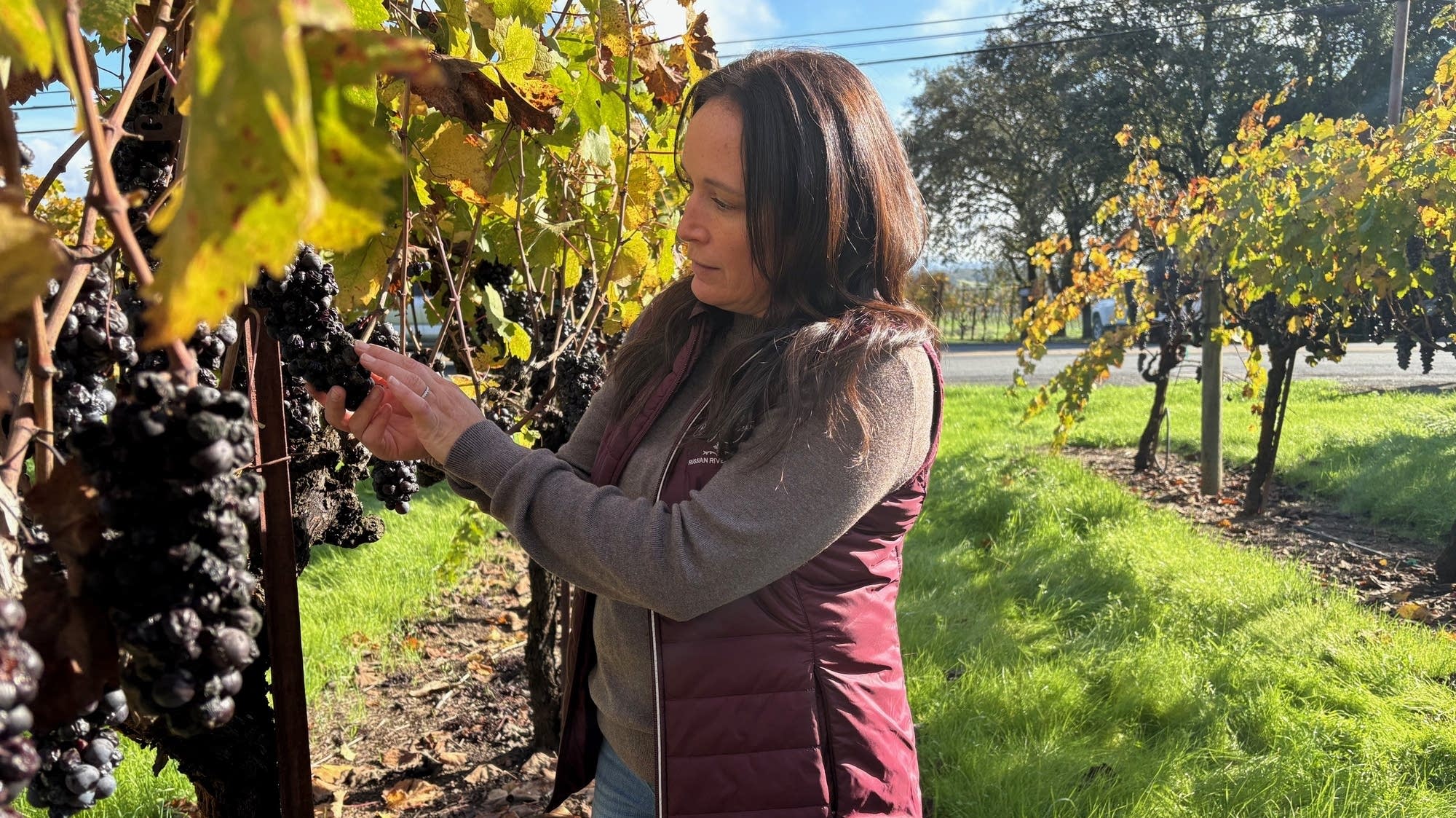
These days, Americans are drinking less alcohol. While that may be a good thing from a health perspective, it’s not great news for California grape growers. Industry groups predict that 2025 will be the smallest harvest since the mid-’90s. Per-capita wine consumption is down about 12% since 2019, and for the last few years, that decline has translated to thousands of tons of grapes left rotting on the vines.
At Bacigalupi Vineyards in Healdsburg, California, not all of the grapes found a buyer this year. That means they went unpicked. Although harvest wrapped up a couple of weeks ago, some of the grower’s Zinfandel vines were still heavy with fruit — shriveled and moldy after recent rains.
That was a real shame, considering the high quality of the crop, said third-generation grape grower Katey Bacigalupi Row.
“We could not have asked for a better vintage,” she said, “which also makes it kind of a little bit more unbearable that they’re left on the vine.”
Row said her family is also planning to rip out a whole section of vines — something they never do unless the plants are diseased.
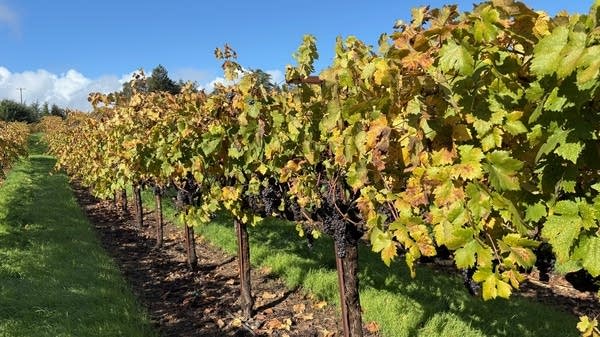
Grapes left hanging on the vine at Bacigalupi Vineyards in Healdsburg.
Tina Caputo
This kind of thing is happening across California, said Kyle Collins, an operations manager at Allied Grape Growers in Fresno. Collins said growers in the state ripped out almost 40,000 acres of vineyards in the last year.
“Without question, this was the most challenging thing that I’ve seen in an agricultural industry, be it grapes or anything else, since I’ve been here,” Collins said. “I mean, it is a crisis.”
At the heart of the issue, he said, is declining demand for wine. Wine has taken a hit in recent years due to competition from other alcoholic beverages and a lack of interest in wine from younger consumers.
Adding fuel to the fire, Collins added, are federal government policies that put domestic grape growers at a disadvantage.
He wasn’t referring to tariffs, which could actually help U.S. growers by driving up the cost of imported wines. Instead, he pointed to regulations that allow big California brands to blend up to 25% cheap foreign bulk wines into their “American Appellation” products.
The practice is legal, he said, but it cuts into demand for local grapes.
“The reality is,” Collins noted, “we’ve kind of hit the wall here.”
Aaron Lange is one of the growers hitting that wall this year. He farms vineyards near Lodi, California, and said that 2025 is the hardest year his family has experienced in almost two generations.
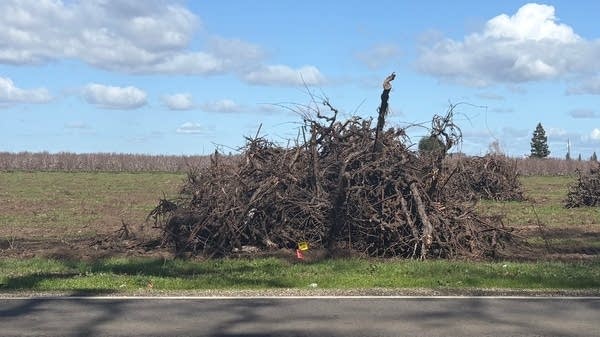
Ripped out vines in Lodi, California.
Tina Caputo
“Over the past 30 years,” Lange said, “the cost to farm vineyards has tripled, while the price that we’ve been paid for our crop, for our fruit has fallen to just one-third of what it used to be.”
To keep their farms going, he added, many of the region’s grape growers are replacing some of their vines with more profitable crops. Lange is planting olive trees.
“Frankly,” he said, “it’s the first time in multiple generations that we haven’t been just grape growers.”
Lange said it’s a necessary — but bittersweet — transition.
Related Topics
Dining and Cooking