
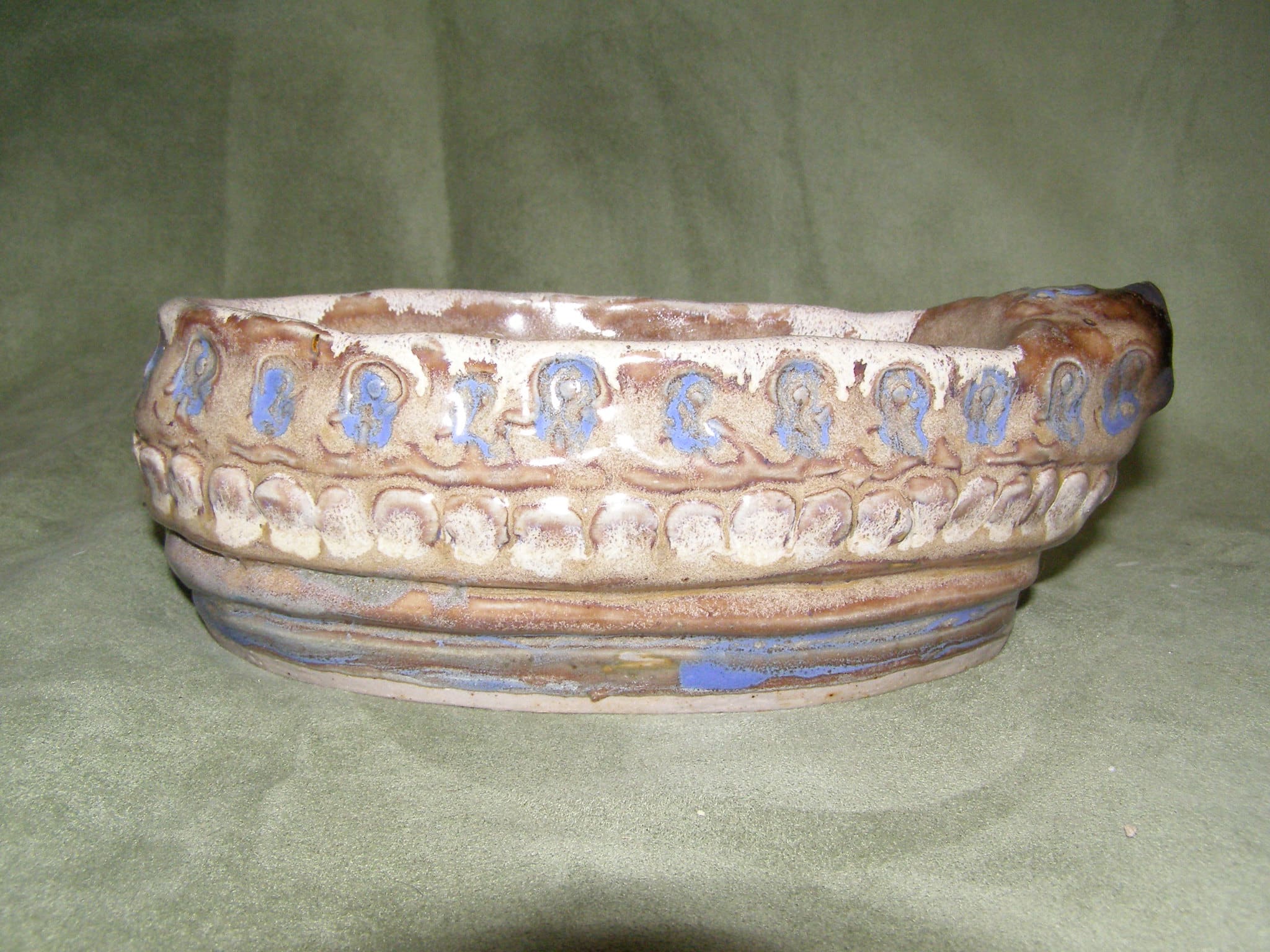
An ancient olive oil lamp. Credit: RNCB / Flickr / CC BY-NC 2.0
Olive oil served many purposes in the ancient world, from cooking to household repair. Its cultural and economic weight has led archaeologists to treat traces of olive oil in Mediterranean pots as evidence of trade, agriculture, and daily life. But new research suggests some of these interpretations may be far less certain than once believed.
A study from Cornell University shows that olive oil may not preserve well in the very soils where much of ancient history unfolded. The team found that plant-based oils degrade rapidly in calcareous, alkaline soils—conditions common throughout the Mediterranean basin. This means some vessels long assumed to contain olive oil may have instead held other substances.
Poor preservation could distort thousands of years of Mediterranean history
The findings, published in the Journal of Archaeological Science, raise questions about decades of archaeological claims. For years, researchers have identified olive oil residues in ceramics and used them to reconstruct everything from household practices to regional trade networks. But the new study shows that soil chemistry can erase the chemical markers that distinguish olive oil from other oils.
In many cases, the signature molecules that archaeologists rely on simply do not survive in Mediterranean soils. The study demonstrates that olive oil biomarkers—including dicarboxylic acids—break down rapidly in calcareous soil. Once those markers disappear, the remaining residue becomes difficult to identify with confidence.
This means some of the most widely cited evidence about ancient Mediterranean diets, economies, and exchange systems may need to be revisited.
Cyprus provides a critical test case
The research focused on soil from Cyprus, a key hub of Mediterranean trade and cultural interaction. The island’s calcareous soils are widespread across the region, making them representative of conditions affecting countless archaeological sites, including those tied to major periods such as the Late Bronze Age from about 1650 to 1100 BC.
Objects from these periods have often been interpreted as evidence of olive oil production, storage, or transport. The new study suggests that some of these conclusions may rest on insecure chemical identifications.
Cornell researchers found that olive oil breaks down fast in Mediterranean soils, making it hard to detect in ancient pots. Many long-held archaeological claims may be on shaky ground.#oliveoil #mediterranean pic.twitter.com/EHE7JnaBZt
— Tom Marvolo Riddle (@tom_riddle2025) December 8, 2025
If olive oil signatures degrade beyond recognition, the archaeological record becomes less clear. A vessel viewed as proof of olive oil commerce might instead reflect the movement of other plant products. Pottery linked to household cooking or ritual practice may need reinterpretation. Entire economic models built around olive oil distribution could be more complex than assumed.
A controlled experiment reveals how quickly olive oil signatures disappear
To test the issue, the researchers examined how olive oil breaks down under different soil conditions. They found a stark contrast between mildly acidic soils—such as those in New York—and the alkaline Mediterranean sample. In the Cyprus soil, olive oil residues degraded significantly faster and with far greater loss of identifiable biomarkers.
This rapid breakdown helps explain why scholars have struggled to confirm olive oil in many ancient vessels. In some cases, even if olive oil was originally present, its chemical traces may not survive long enough to be detected.
Findings push archaeologists to reconsider long-accepted narratives
For archaeologists, olive oil is more than a food ingredient. It is tied to identity, economy, religion, and daily life throughout the ancient Mediterranean. Gerdes notes that researchers often hope to find olive oil because it fits a familiar story—one grounded in its prominence across Greek, Cypriot, and broader Mediterranean culture.
But the study demonstrates how easily that narrative can be distorted. When olive oil breaks down, it becomes chemically indistinguishable from many other substances. Without secure biomarkers, residue analysis cannot confirm what a vessel once held.
The results suggest that the history of olive oil—its production, distribution, and role in ancient societies—may be more complicated than the archaeological record has indicated. And for regions like the eastern Mediterranean, where calcareous soil dominates, many long-held assumptions may need fresh evaluation.
Dining and Cooking