
Buenos Aires looks like Paris but with the greenery of Oslo. Its residents keep the hours of New Yorkers but have the laid-back attitude of the Spanish. It is, perhaps, the perfect city.
Left to my own devices I would have stayed there for all 11 days of our trip. In fact, left to my own devices I’d still be there now. But given that I hadn’t been to South America before it seemed important to travel a little further, so our itinerary included Cordoba and Mendoza as well.
My partner, Josh, and I arrived in Buenos Aires last month, and soon became aware that we’d hit the magical point in the year where the weather starts to turn and everyone goes slightly feral with the realisation that summer is finally here. Could there be a better time to visit a city? You could walk around Buenos Aires for days at this time of year, staring at it, and we did, taking in all the French and Spanish influences in the architecture, the leafy green canopies enveloping every street.
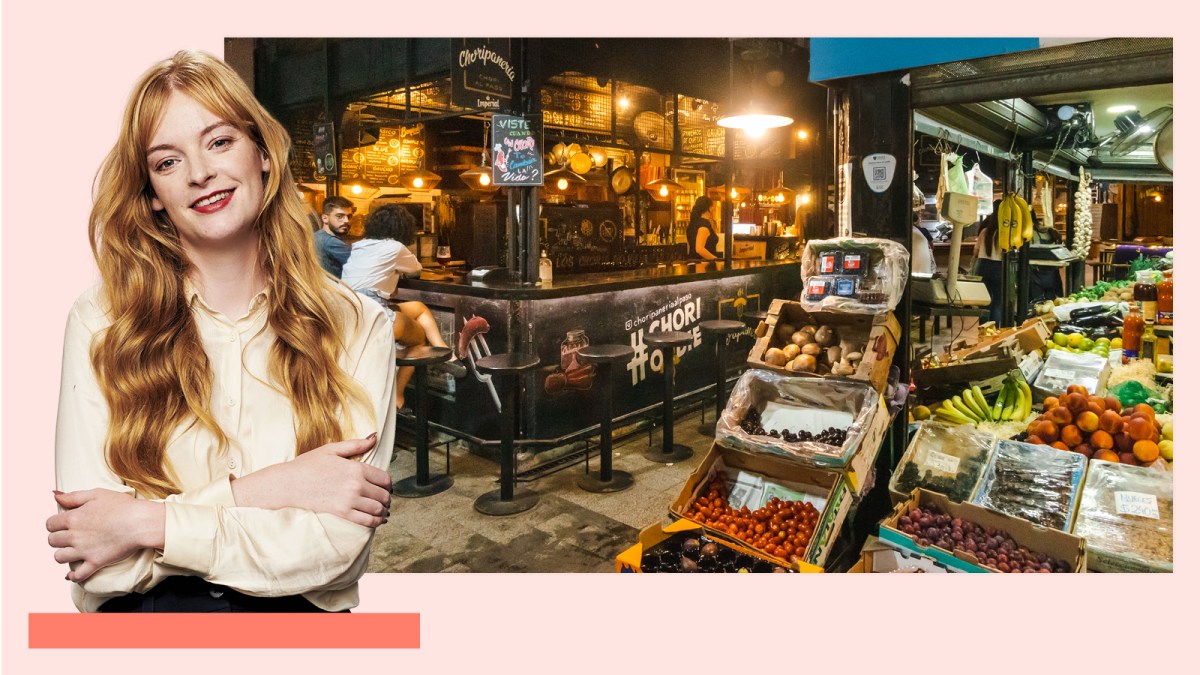
La Boca is the neighbourhood everyone will tell you to go to: famous for its brightly coloured houses, its football team and their overexcitable fans. But there are many less well-known areas worth a visit. We spent a glorious (and rainy — sometimes, as in Britain, the summer is a false dawn) afternoon on a food tour of San Telmo, the city’s oldest neighbourhood, with a small company called Parrilla Tour, visiting the covered market there and trying choripans (chorizo hot dogs, to all intents and purposes, but better) and the first of an astonishing number of empanadas we would consume that week (tours from £52; parrillatour.com).
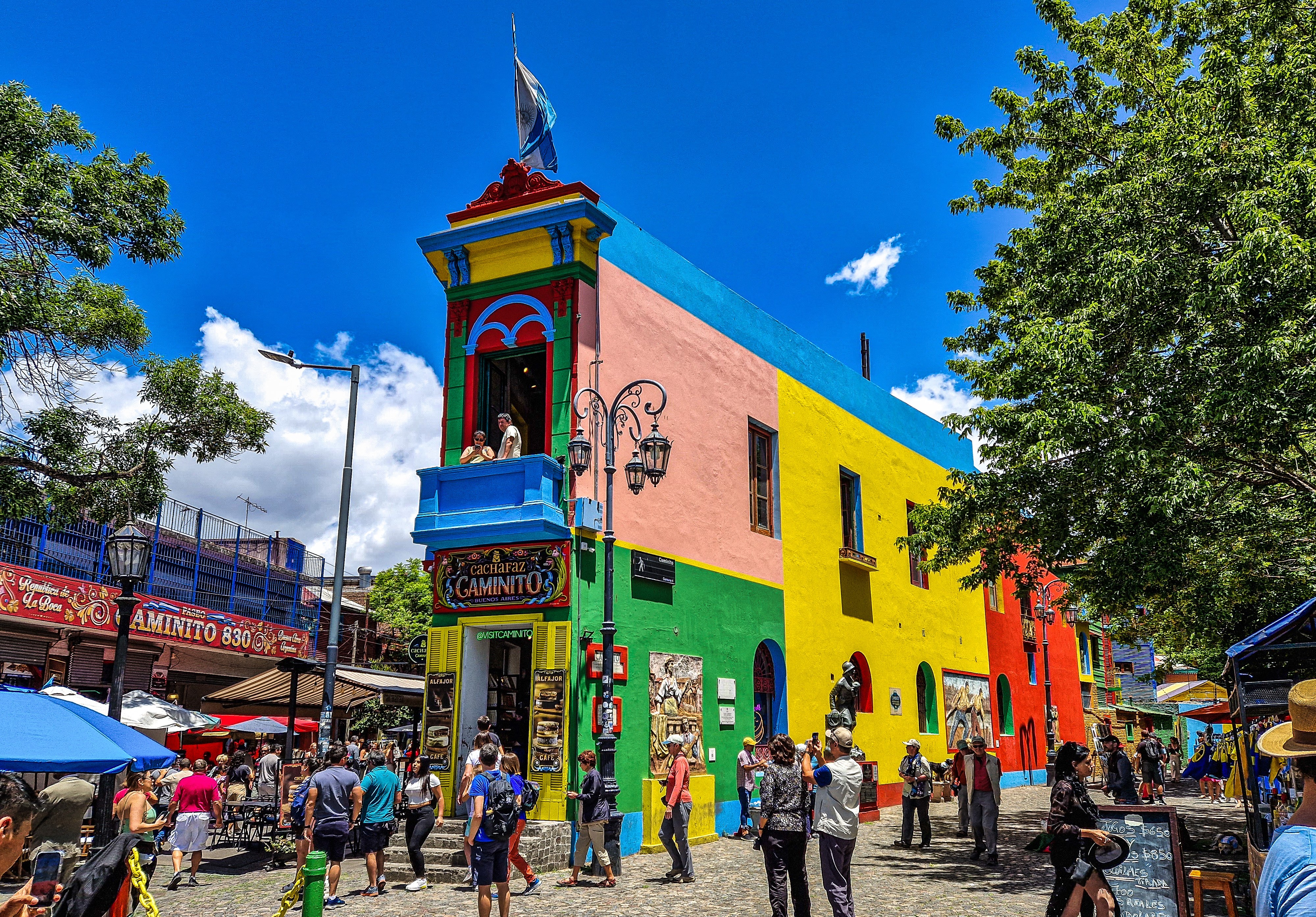
The colourful buildings in Caminito Street in La Boca
GETTY IMAGES
It was on this tour that we learnt something essential to the Argentinian character. An Argentinian wanting you to try his malbec will offer you half a bottle, not a delicate sip. People here seem to have an almost infinite appetite for food and wine, and will expect you to keep up. Our booking that evening at the elegant bistro Anafe, in the Colegiales neighbourhood, was rather wasted on us after the astonishing amount of meat and red wine we had consumed on the food tour. This was perhaps my only regret from the week.
Anafe is very much a locals’ restaurant. Usually I am deeply resistant to eating anywhere that may be considered a tourist destination, but I was very pleased that we followed the recommendation of the city’s tourism minister to head to Fogon Asado. Asado is the Argentinian barbecue, the central tenet of the country’s social life. At Fogon nine courses are theatrically prepared on open flames in front of you. The food is exceptional and it’s a great bit of theatre (nine-course tasting menu £87; fogonasado.com).
What you need to knowWhere is it? Buenos Aires; a gaucho ranch near Cordoba; MendozaWho will love it? Gourmet travellers, wine lovers, horsey folkInsider tip Swerve the malbecs and focus on pinot noirs and chardonnays from under the shadow of the Andes
The tourism minister sent us to the Trade Sky Bar as well. I am usually equally resistant to the idea of a rooftop bar, on the grounds that you are paying for the view, not the drinks. But what a view of the city you get from that place. And the exchange rate being what it is, the drinks feel perfectly reasonably priced. After some time at Trade you may tire of watching the beautiful people of Buenos Aires queue up to have their photograph taken against the skyline. However, I have an almost infinite fascination with watching influencers posing in the wild. I could have stayed there all night.
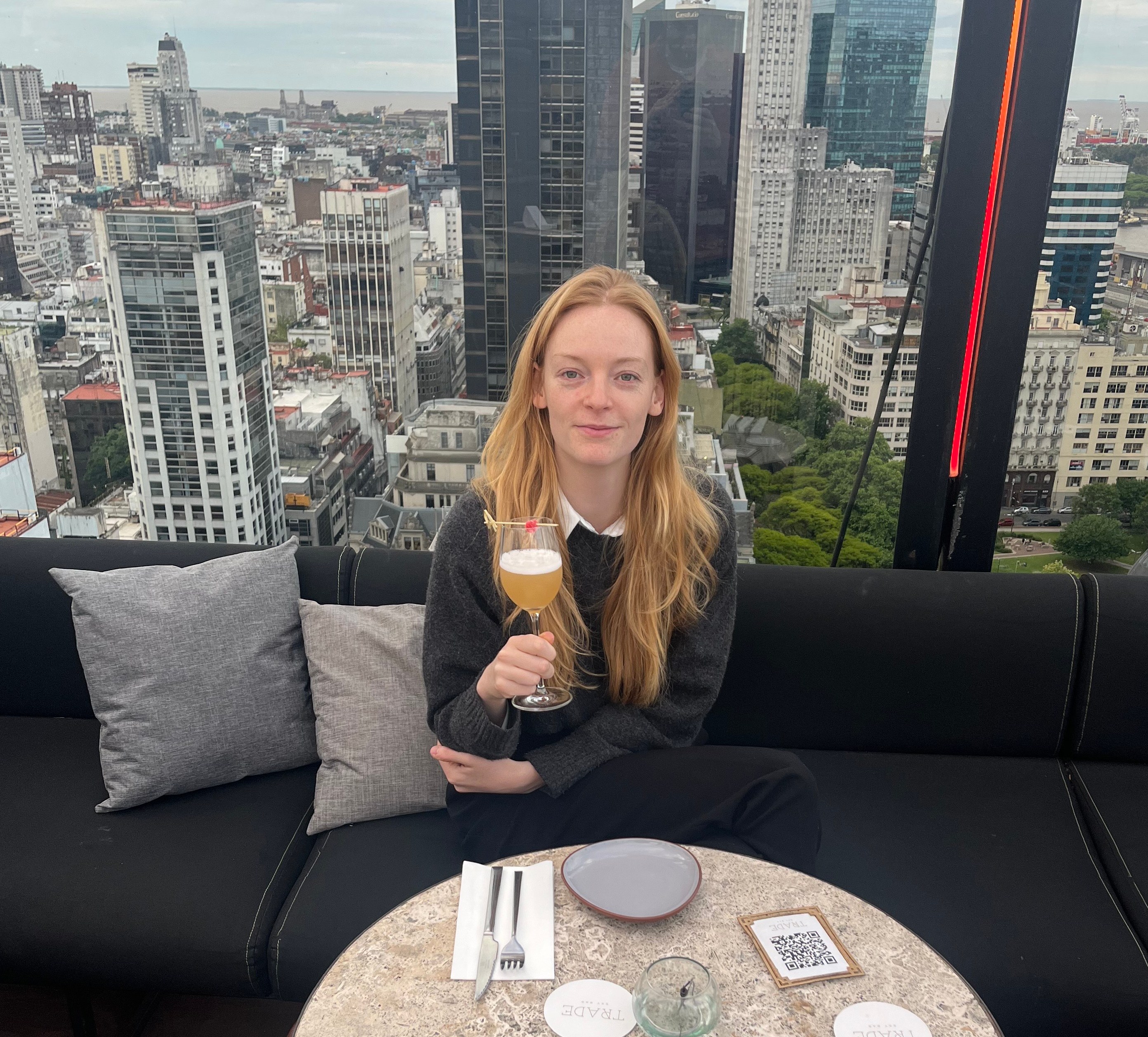
The Trade Sky Bar offers superb views of the city, as well as ample people-watching opportunities
For our first couple of nights in the city we stayed in Recoleta, an affluent Parisian-feeling neighbourhood with easy access to the museums, the famously beautiful El Ateneo Grand Splendid bookshop (it sells some books in English) and the Recoleta Cemetery, a quite remarkable, maze-like Catholic graveyard where Eva Perón and other notable Argentinians are buried.
When we returned to Buenos Aires at the end of the trip we had a night in the Palermo Soho neighbourhood, which is a younger, more vibrant part of town, full of restaurants and bars. We stayed at the Mine Hotel Boutique, a small hotel with a wonderfully tropical indoor garden and compact but comfortable rooms with a double spa bath. I’d have liked to have spent more time in this neighbourhood, which is where the city’s nightlife is centred. That said, Recoleta would be a better shout if you’re looking for a more sedate, relaxed break.

Recoleta Cemetery is hailed as one of the most beautiful in the world
GETTY IMAGES
In between these two stints in the city, however, was the part of the trip I will remember most. If you had suggested to me as our flight took off from Heathrow that my highlight would be rounding up cattle on horseback I would have laughed in your face, and perhaps insisted that the plane return to the runway.
• 14 of the best things to do in Argentina
From city to Cordoba gaucho ranch
It only really began to sink in that I’d let Journey Latin America sign me up for three days of horse riding as Kevin — the owner of the Estancia Los Potreros — picked us up at Cordoba airport (a 90-minute flight from Buenos Aires) and drove us about 50 miles north out of the city. Los Potreros is one of the last ranches in Argentina to employ gauchos. It is a working farm and they take in guests to make the place financially viable, while other farms move towards modern technology and abandon the traditional ways.
As a travel experience it is immensely satisfying: this is not a Disneyland simulacrum of gaucho culture. This is the real thing. By day two at Los Potreros we were careering round on our horses, helping the gauchos to round up the cattle (I say helping, I think it may have been rather a 95-5 split in terms of who the cows were listening to, but nevertheless).
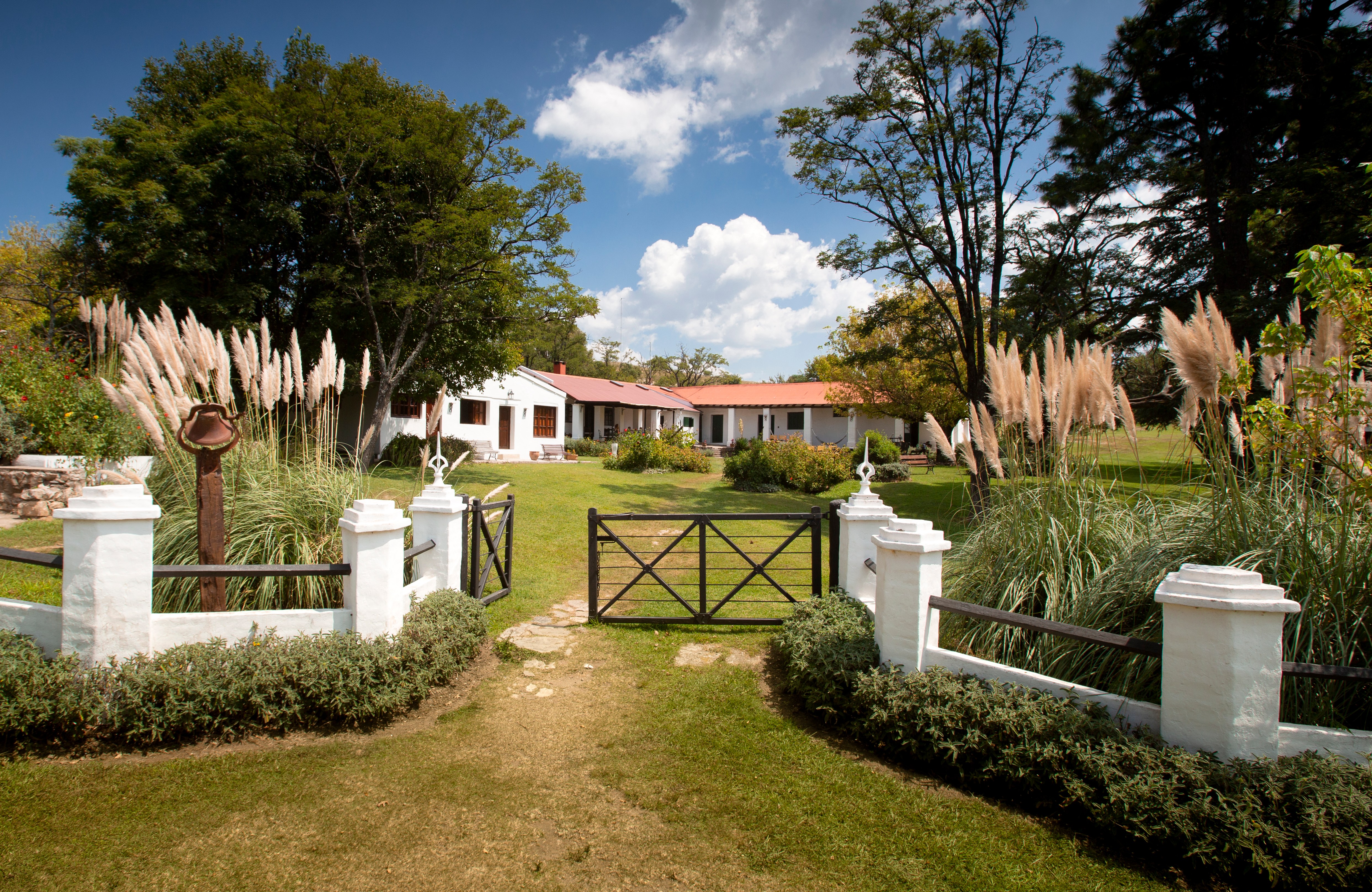
Estancia Los Potreros is a ranch that offers gaucho courses
I would never and could never go riding in Britain. I’ve always found the culture around it rather unappealing. To ride a horse, I presumed, would be to spend several hours walking slowly round a paddock while a snobby woman yelled at me to correct my posture and get my heels down.
Here, however, the horses are so well trained that they trust their guests — even uncoordinated newbies like me — to go out on a proper ride through rough terrain after a three-minute briefing. Fifteen minutes in we were cantering. Once I got over my initial instincts (“Ah, good, this is how I die”) it was exhilarating. It was practical too. We crossed more difficult terrain and saw far more of the sweeping countryside — which, honestly, looks rather like the Yorkshire Dales — than we could ever have seen on foot.
Meals at Los Potreros are taken communally — in the little central farmhouse, surrounded by rustic yet comfortable cabins where you sleep — and are almost entirely beef-based. You may have been deterred from visiting on hearing that in Argentina they eat their steak extremely well done. They do not age their beef and instead rely on cooking it into submission to make it tender. This was traditionally the case, and remains so in rural communities, who keep to the old ways: the gauchos here eat their beef that way. However, in the cities — and anywhere a tourist is likely to pop up, including the main kitchen at Los Potreros — they now cook and prepare steaks much as you’d expect in Europe.

Cooking over fire at Los Potreros
If you do not like beef I’d strongly recommend pretending to be vegetarian for the duration of your time in Argentina; it’s still highly possible you will end up being served pork and chicken. Even as two people who love beef, by a few days in Josh and I were actively seeking to avoid it. Congratulating ourselves on a beef-free day over dinner one night at our hotel in Mendoza, we looked up to find a waiter approaching with a complimentary amuse-bouche: beef. Ah well. Try again tomorrow.
• Read our full travel guide to Argentina
And onto vineyard-filled Mendoza
Mendoza (about an hour’s flight southwest from Cordoba) was our final stop: wine country, in the foothills of the Andes, famous for its malbec. But as several sommeliers in the region pointed out to me, you can drink Argentinian malbec at home: here it’s worth trying the excellent high-altitude pinot noirs and chardonnay instead. We stayed at the new Awasi hotel. Awasi is one of the most luxurious hotel chains in South America and it has recently taken over what used to be the Cavas Wine Lodge, just outside Mendoza city.
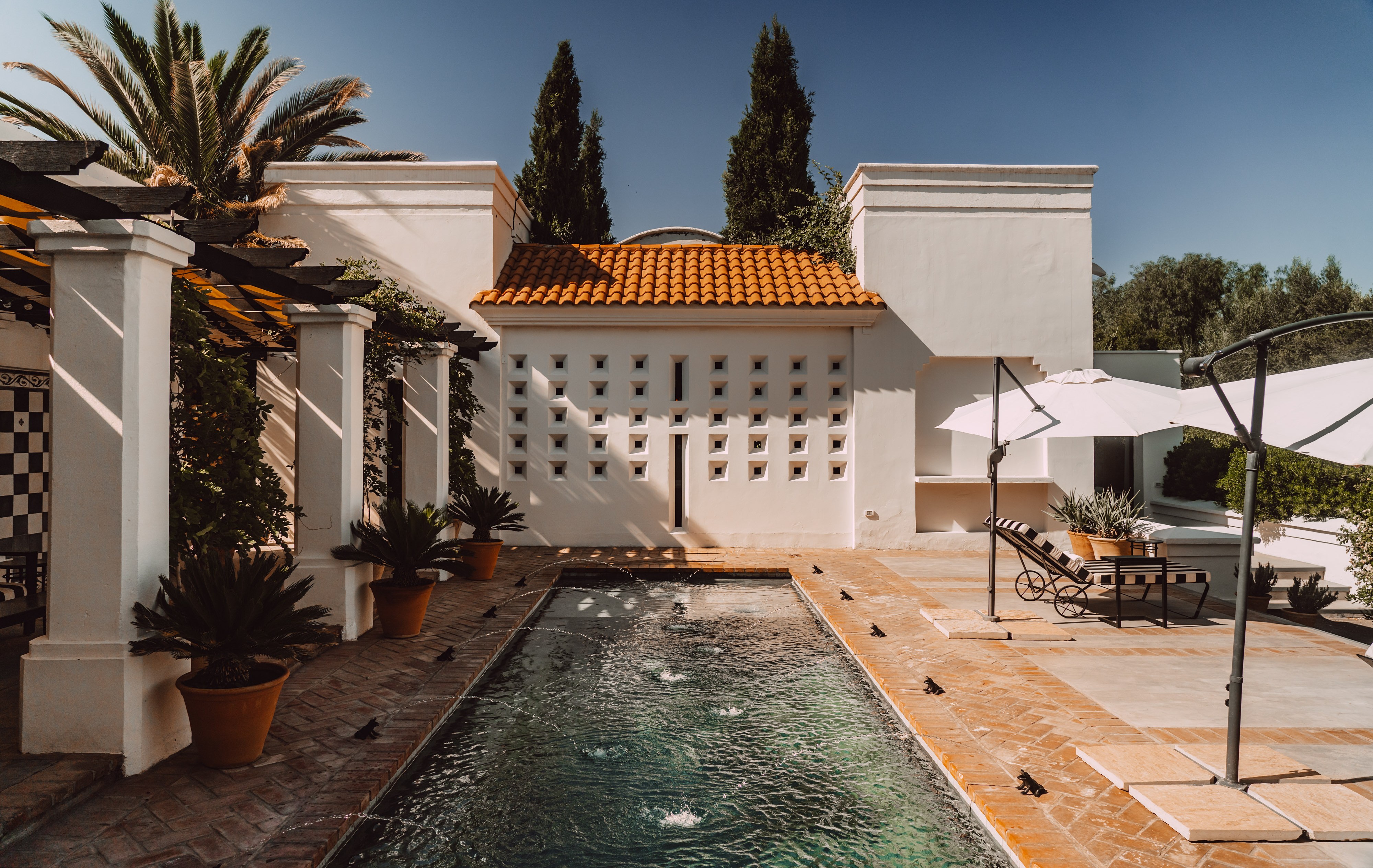
Awasi Mendoza has the feel of a grand Italian country home
The result is one of the most remarkable hotels I have seen: surrounded by vineyards and with the Andes mountains beyond. After the last few days spent trotting round on horseback, to be able to sink into a luxury spa and wine hotel was immensely relaxing.
The main hotel — pure white, reminiscent of a grand Italian country home — consists of a beautiful spa, a wine cellar where you can enjoy tastings, and a restaurant. The rooms are scattered throughout the surrounding vineyard: odd stone buildings with large chimneys that seem to blend into the landscape. Inside, they are all cool sandstone and natural wood, and each has a private rooftop with an open fire, from where you can watch the sun set over the Andes and the vineyards stretching into the distance.
We could happily have spent the next three days doing nothing but reading in the dappled light of the vines, but we made for the hills, where we met the Cruz family, who run the Estancia Vivacs del Plata out of their family home. We set out on horseback with Juan — the eldest son — and on arrival on a hilltop were presented with charcuterie and as much pinot noir as we cared to down, before returning down the steep hills on horseback.
Again, we enjoyed the pleasingly cavalier attitude the Argentinians have towards horse riding. Again, when we returned to the estancia, we found ourselves benefiting from a truly vast beef barbecue, before going back to the hotel for a cookery lesson, where further beef followed. We made our own empanadas, grilled our steaks, then sat out in the vineyard by candlelight to eat the dinner we had made.
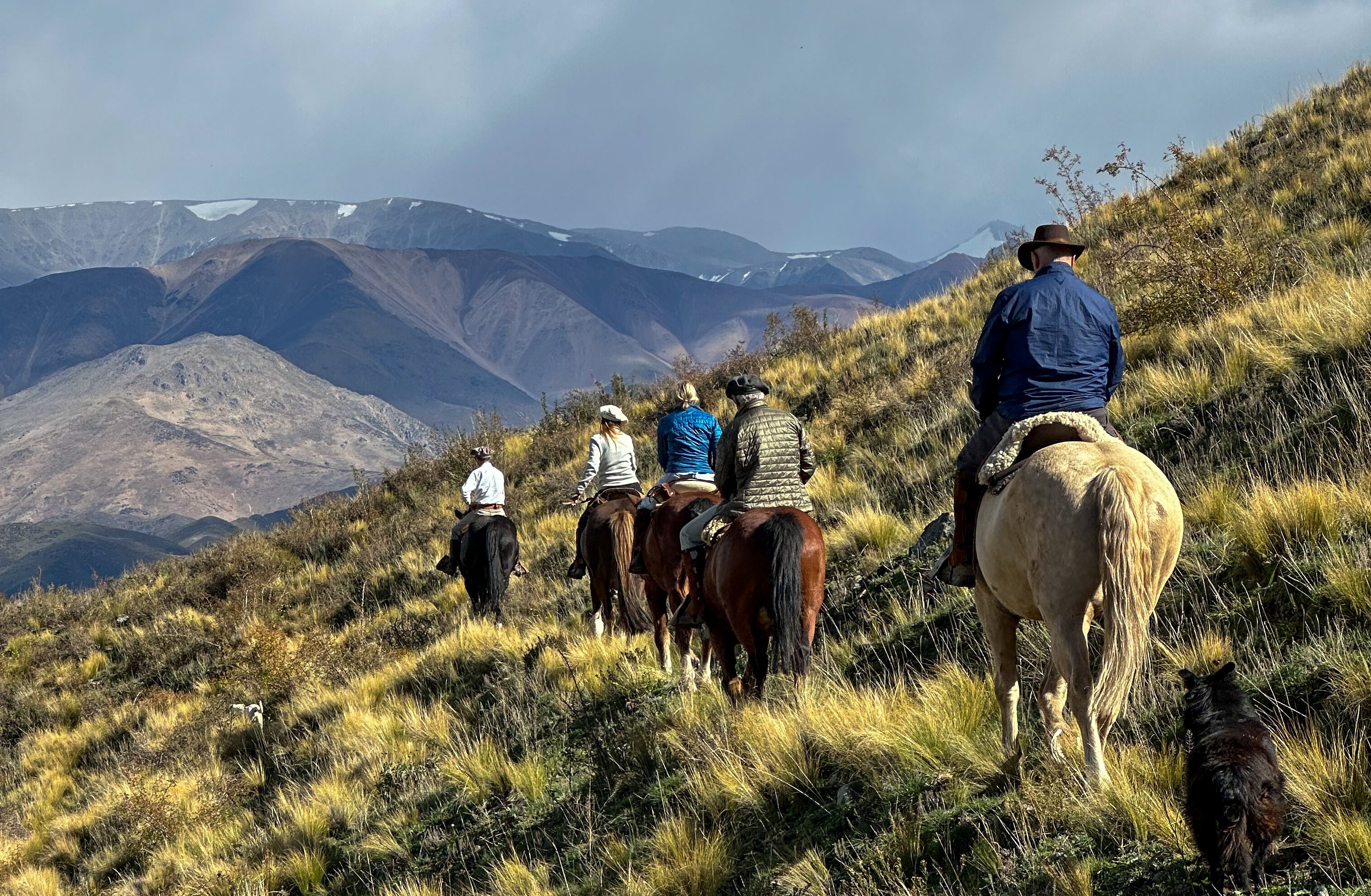
You can explore the hills of Mendoza on horseback when staying at Estancia Vivacs del Plata
The next day we were driven half an hour to the Kaiken vineyard, where Francis Mallmann — the greatest living Argentinian chef — has an open-air restaurant hidden among the vines, and ate lunch in a vineyard of even more astonishing beauty than the last (mains from £49; wineobs.com.ar). I would go back in a heartbeat. I wish I was still there now. There’s a bottle of red that we brought home sitting in our kitchen. I’ll open it at the darkest point of the English winter, and maybe that will feel a little bit as if we’re back there again: surrounded by mountains and sunshine and vines, trying to work out how to say “please, I beg, no more beef” in Spanish.
Charlotte Ivers was a guest of Journey Latin America, which has nine nights — B&B in Buenos Aires, full board at Estancia Los Potreros in Cordoba and Awasi Mendoza — from £8,286pp, including flights, transfers and daily guided excursions (journeylatinamerica.com)
Dining and Cooking