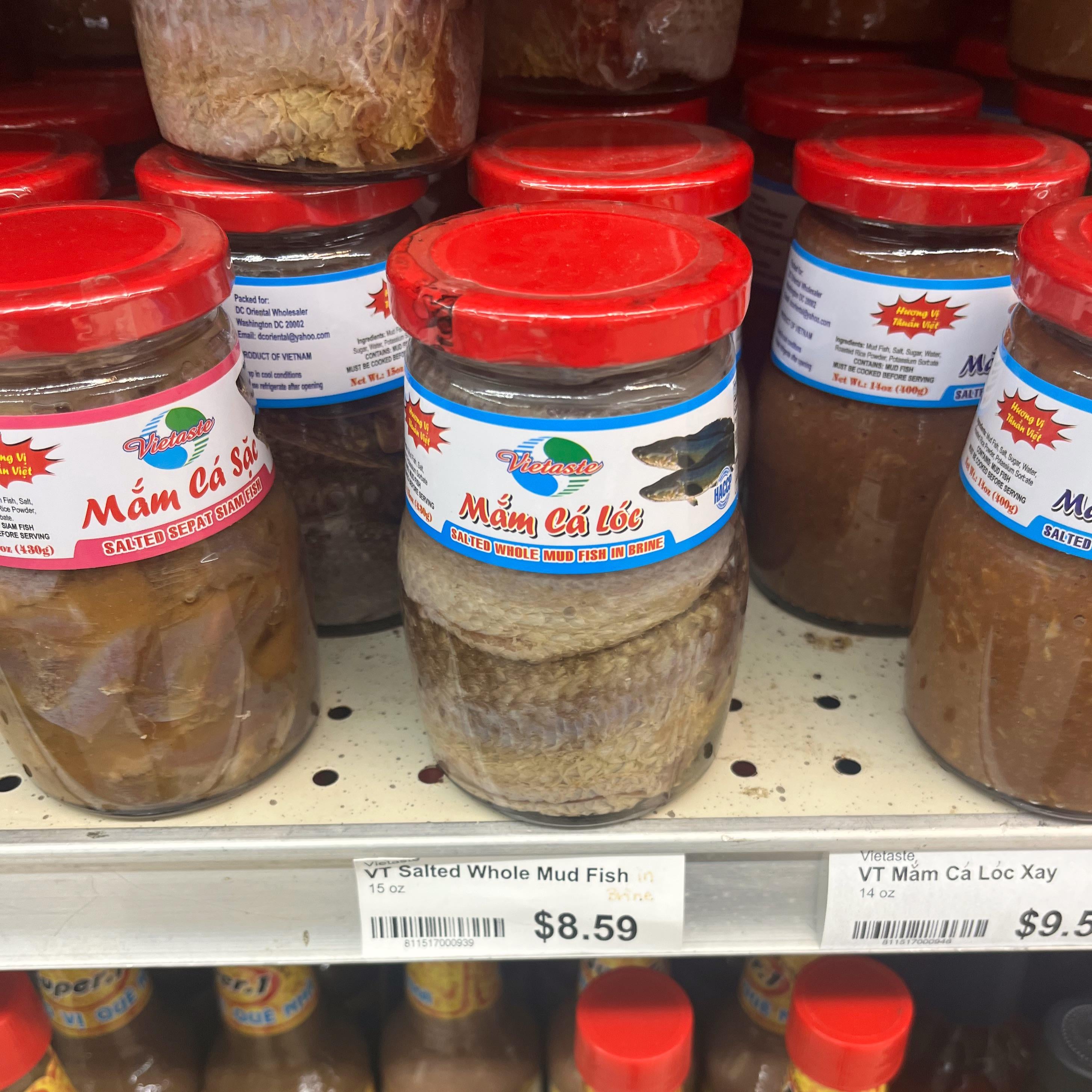
To pull out some of this nasty looking mudfish, and put it down?
by Da-grim-one
11 Comments
BluesBlacksmith
not sardine
billnyethefoodguy1
😬. Looks like an intense experience. I would love to hear the reviews from others.
Perky214
OP – Let’s not be rude about other culture’s fish. That’s not what we do here.
I look at these jars every time I’m in an international market – they intrigue me, but I’ve never had the courage to get some.
These pickled or paste-style mudfish are used as seasonings or marinade in Asia, especially in Thai and Vietnamese cuisine. African cuisines also use this fish, usually fried fillets or curries
Anything originating from SE/East Asia of the fermented & salted seafood variety is almost always the basis for some of the most amazing iconic dishes in multiple SE Asian (and some east Asian) cultures.
It’s not necessarily used straight out of the can or by itself but forms the base umami factor of the dish or noodle soup/soup. Not used by itself because its simply too powerful in the sodium dept, done traditionally as a means of preservation before refrigeration was invented (like how kimchi is fermented and stored underground or canning/pickling is done in the west).
What OP has posted is usually used in that method. The jar to the right is the paste version that makes the base salt/main flavour factor in many Vietnamese traditional dishes (ex: [bun mam](https://i.pinimg.com/736x/7a/fa/21/7afa2151d6211d7e54fcaf7e57c548fc.jpg)). It is the solid preliquified/prefiltered version of Thai/Vietnamese fish sauce essentially.
These high sodium fermented seafoods shouldn’t be eaten like western canned sardines/herring on a cracker (I mean you can but you’ll become a sodium bloated marshmallow in an hour). I’ve even seen people use the Thai/Vietnamese minced crab tins for crab pasta successfully.
Growing up eating dishes made with salted and fermented fish/crab/shrimp, you always have this childhood moment of trying it as is, then you never do it again because you realize it’s just pure seafood flavoured salt.
rosiecrane
i really like these in certain vietnamese foods! they’re just funky enough to add really good flavor
AcornWholio
My question is do you consume it whole or is the intention to chop/shred it up?
I’m assuming this is an ingredient in a dish rather than meant to be eaten as is, but does that mean you use it all in one go or you divvy it up?
rdldr1
At the Asian grocery store I’d rather get the cans of fried dace with black beans. FYI the can is meant to be several servings 😆
anchoviecheesepizza
You strain this into bone broth to make a dish called bun mam lol. This is the base of the broth to give it the distinct flavor of bun mam
Flshmn23
You make broth out of it and strain out the bones. They don’t just pull it out and eat it like a sardine.
call_sign_viper
I would try a small bite but yeeeesh
cherrysparklingwater
“Mắm” is a category of “fermented seafood” in Vietnam and is used as a flavor base, is not eaten by itself and is the base to so many Vietnamese dishes (if you’re cultured), that you’ve probably had like: Bún Bò Huế, Chả Cá Lã Vọng (Turmeric Fish), Bún Đậu Mắm Tôm, Bún Mắm, Nem Nướng Cuốn (Grilled Pork Rolls), Bánh bèo.
It’s like the unfiltered precursor to fish sauce. Smashed, pulverized and disappears into a dish, and sometimes strained thru a strainer.
They also appear sometimes in braised claypot dishes, caramelized pork belly, and stir fries.


11 Comments
not sardine
😬. Looks like an intense experience. I would love to hear the reviews from others.
OP – Let’s not be rude about other culture’s fish. That’s not what we do here.
I look at these jars every time I’m in an international market – they intrigue me, but I’ve never had the courage to get some.
These pickled or paste-style mudfish are used as seasonings or marinade in Asia, especially in Thai and Vietnamese cuisine. African cuisines also use this fish, usually fried fillets or curries
http://vietspices.blogspot.com/2010/02/steamed-pickled-mud-fish-mam-ca-loc.html?m=1
https://www.bemindfulbehuman.com/index.php/cambodian-pickled-mud-fish-and-chicken-dip/
https://m.youtube.com/watch?v=EF1DyU8DHHY
Anything originating from SE/East Asia of the fermented & salted seafood variety is almost always the basis for some of the most amazing iconic dishes in multiple SE Asian (and some east Asian) cultures.
It’s not necessarily used straight out of the can or by itself but forms the base umami factor of the dish or noodle soup/soup. Not used by itself because its simply too powerful in the sodium dept, done traditionally as a means of preservation before refrigeration was invented (like how kimchi is fermented and stored underground or canning/pickling is done in the west).
What OP has posted is usually used in that method. The jar to the right is the paste version that makes the base salt/main flavour factor in many Vietnamese traditional dishes (ex: [bun mam](https://i.pinimg.com/736x/7a/fa/21/7afa2151d6211d7e54fcaf7e57c548fc.jpg)). It is the solid preliquified/prefiltered version of Thai/Vietnamese fish sauce essentially.
Every now and then someone posts they got a can of [crab paste](https://encrypted-tbn0.gstatic.com/images?q=tbn:ANd9GcQgHYvrNRO9CNFSd-6_r3u-sdyT9CRX27meib3vkdoUKQ&s=10) and don’t know how to use it, it’s to be used as an addition into a dish, it makes the basis for Vietnamese [bun rieu](https://www.cooking-therapy.com/wp-content/uploads/2018/09/Bun-Rieu-4.jpg) (tomato crab noodle soup) as an example and other Thai/SE Asian dishes, even basic crab fried rice is a great use for those cans.
These high sodium fermented seafoods shouldn’t be eaten like western canned sardines/herring on a cracker (I mean you can but you’ll become a sodium bloated marshmallow in an hour). I’ve even seen people use the Thai/Vietnamese minced crab tins for crab pasta successfully.
Growing up eating dishes made with salted and fermented fish/crab/shrimp, you always have this childhood moment of trying it as is, then you never do it again because you realize it’s just pure seafood flavoured salt.
i really like these in certain vietnamese foods! they’re just funky enough to add really good flavor
My question is do you consume it whole or is the intention to chop/shred it up?
I’m assuming this is an ingredient in a dish rather than meant to be eaten as is, but does that mean you use it all in one go or you divvy it up?
At the Asian grocery store I’d rather get the cans of fried dace with black beans. FYI the can is meant to be several servings 😆
You strain this into bone broth to make a dish called bun mam lol. This is the base of the broth to give it the distinct flavor of bun mam
You make broth out of it and strain out the bones. They don’t just pull it out and eat it like a sardine.
I would try a small bite but yeeeesh
“Mắm” is a category of “fermented seafood” in Vietnam and is used as a flavor base, is not eaten by itself and is the base to so many Vietnamese dishes (if you’re cultured), that you’ve probably had like: Bún Bò Huế, Chả Cá Lã Vọng (Turmeric Fish), Bún Đậu Mắm Tôm, Bún Mắm, Nem Nướng Cuốn (Grilled Pork Rolls), Bánh bèo.
It’s like the unfiltered precursor to fish sauce. Smashed, pulverized and disappears into a dish, and sometimes strained thru a strainer.
They also appear sometimes in braised claypot dishes, caramelized pork belly, and stir fries.