
– Paris Kit is a food startup founded by Jung-gyu Lee that brings authentic French cuisine to Korea by creating meal kits using local Korean ingredients, aiming to make gourmet French dining accessible and convenient for everyone.
– The company emphasizes sustainability and regional collaboration, sourcing ingredients directly from local farms and developing products like French Onion Soup and Gangjin Shiitake Mushroom Spread, while also preparing a 5-course French meal kit for home dining.
– Paris Kit aspires to foster cultural exchange by introducing ‘K-F Cuisine’—a blend of Korean and French culinary traditions—to global markets, and ultimately serve as a bridge between the two food cultures.
Meal kits are convenient food packages that provide pre-portioned, prepared ingredients and detailed recipes, capturing the benefits of both ease and high-quality dining. They have successfully captured the modern consumer’s busy table. But what if these convenient kits offered a taste of authentic, gourmet French cuisine?
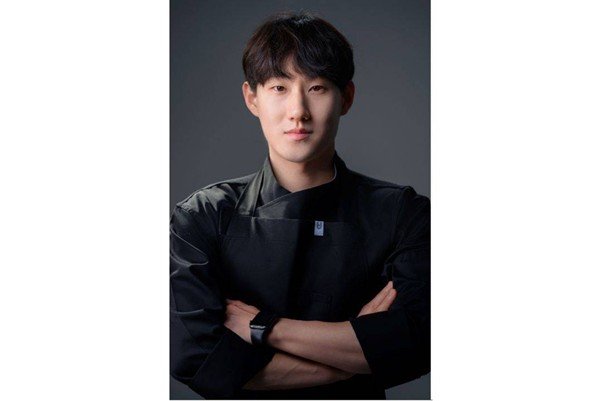
Jung-gyu Lee, CEO of Paris Kit / source=Paris Kit
This concept is the foundation of Paris Kit, a food startup that reinterprets authentic French dishes using Korean local ingredients. The company focuses on minimizing food additives and preserving the natural flavors characteristic of French cooking, while simultaneously striving for mass appeal so that anyone can easily enjoy the cuisine. Beyond the meal, Paris Kit aims to become a global brand that offers consumers a cultural experience, allowing them to indirectly explore a country’s food culture through its dishes.
Bringing French Dining Beyond the Metropolitan Area
Paris Kit CEO Jung-gyu Lee has a strong background in culinary arts, having managed kitchens and developed menus in both domestic dining restaurants and in Paris. His firsthand experience fueled his determination to globalize Korea’s excellent local ingredients and popularize French cuisine. Returning to Korea, he founded Paris Kit with the goal of providing an accessible dining experience that maintains the quality and value of authentic French cooking.
“French cuisine pursues a naturalistic approach that emphasizes the inherent flavor of raw ingredients. It is subtle and light, not overly stimulating, and offers a wide variety of menus,” Lee stated. “I believed the value of French cuisine would resonate with the modern trend of prioritizing health.”
He also noted a key market opportunity: “Around 85% of domestic French restaurants are concentrated in the Seoul metropolitan area, making it difficult for people in other regions to experience them. However, consumer surveys in these regions revealed that French cuisine was the most desired cuisine to experience. This insight led me to conceive the meal kit format to make French food more accessible.”
French Dishes, Crafted with Korean Ingredients
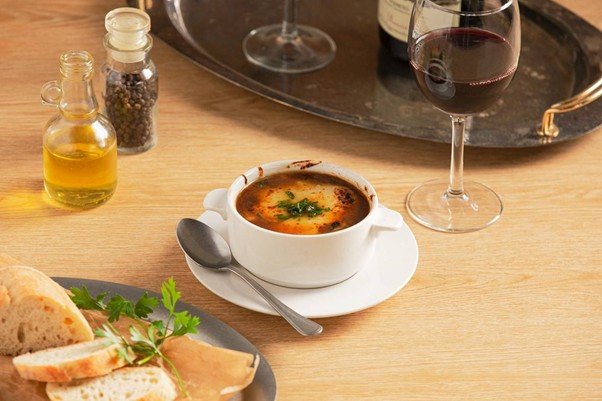
Paris Kit French Onion Soup Meal Kit / source=Paris Kit
Paris Kit offers French meal kits utilizing Korean local ingredients. Its main products include French Onion Soup, Red Jerusalem Artichoke Soup, and Gangjin Shiitake Mushroom Spread. A French course meal kit is also under development.
Lee explained the product selection: “Soup is a familiar menu item that embodies the essence of French home cooking. People often associate French food with unfamiliar haute cuisine like Escargots, but we debuted with the Onion Soup so everyone could approach it comfortably.”
Paris Kit’s distinguishing strategy is its focus on ‘Local’. This goes beyond simply using domestically sourced ingredients; it involves a deep understanding of Korea’s seasonal ingredients and regional Terroir characteristics, which are then combined with authentic French cooking methods.
“I believe that ingredients grown healthily on our land are the secret to making the most delicious food,” Lee said. “Furthermore, we seek to create sustainable value through mutual growth with domestic agricultural, fishery, and livestock producers.”
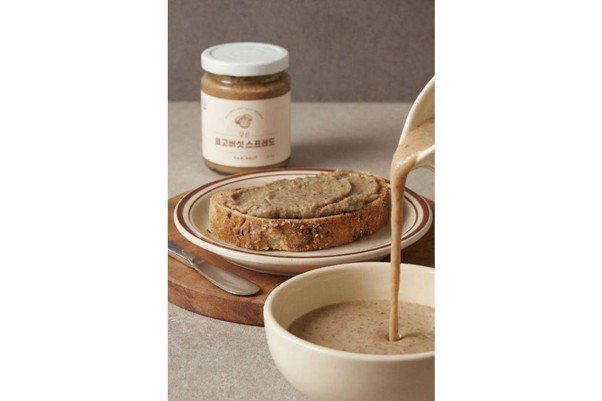
Paris Kit Gangjin Shiitake Mushroom Spread / source=Paris Kit
This strategy is concretely implemented in their key products. Lee explained, “Changnyeong onions, grown in fertile soil, are very sweet, while Muan onions, grown in red clay, have a deeper flavor and are rich in dietary fiber and minerals. We combine the characteristics of both regions’ onions to achieve a new texture and taste.”
Regarding the spread, he noted, “The Gangjin shiitake mushrooms used in our spread boast superior flavor and texture thanks to Gangjin’s large diurnal temperature range and abundant sunshine.” He added, “We avoided traditional ingredients like butter, jam, and sugar typically found in spreads, and developed a sweet and savory spread using plant-based ingredients.”
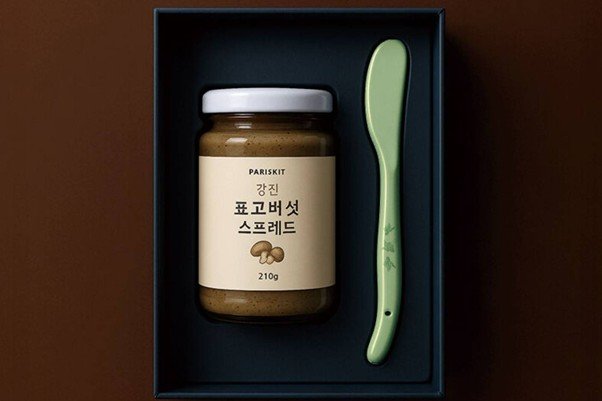
Upcoming Paris Kit Gangjin Shiitake Mushroom Spread Gift Set / source=Paris Kit
To support this local focus, the company visits Gangjin farms directly to source ingredients and communicate with farmers, practicing regional coexistence. Paris Kit also plans to launch a premium gift set featuring a spread knife inspired by Goryeo Celadon—a cultural asset of Gangjin. Recognizing that tableware is as important as the food in fine dining, this initiative aims to blend the beauty of Korean cultural heritage with French gastronomy.
Sharing Culture Beyond the Meal
Paris Kit aspires to be a brand that shares the unique French dining culture. Lee explained, “France pursues the aesthetics of slow dining, where course meals are enjoyed for over three hours. This fascinating dining culture is not easily accessible, and through the Paris Kit meal kits, I wanted consumers across the country to experience the charm of relaxed French gastronomy.”
To this end, they are preparing a French course meal kit. Lee detailed, “This product, consisting of five courses from appetizer to main dish and dessert, serves as a means for consumers to bypass the high barrier of fine dining and indirectly experience French food culture at home.”
He added, “Crucially, we provide detailed, step-by-step guidelines containing the know-how needed to reproduce restaurant quality even in a home kitchen. This allows the consumer to participate in the cooking process and fully immerse themselves in the French food experience.”
Scaling Up as a Global Brand: Aiming for Two-Way Cultural Exchange
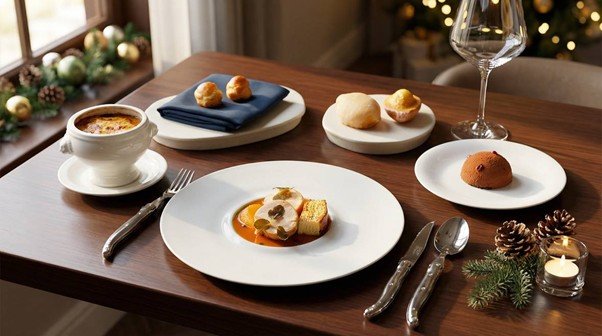
Paris Kit plans to launch premium gift sets, the Gangjin Shiitake Mushroom Spread, and the 5-course meal kit in the first half of next year / source=Paris Kit
Founded in 2024, Paris Kit currently sells its first product, French Onion Soup, through major channels including its online store, Naver Smart Store, and Coupang. The premium gift sets, Gangjin Shiitake Mushroom Spread, and the 5-course meal kit are slated for release in the first half of next year. The Gangjin Shiitake Mushroom Spread recently achieved 700% of its initial fundraising goal of 500,000 KRW on the Wadiz crowdfunding platform.
“Our top priority is lowering the barrier for first-time customers, as our brand awareness is still low,” Lee stated. “We will build domestic market recognition through channel diversification and aim for a monthly revenue of 100 million KRW next year, continuing our growth trajectory.” The company is also moving toward expansion into domestic hotels and premium department stores.
Lee credited the SBA Seoul Startup Hub’s various support programs for helping him navigate the business operations. “The SBA Seoul Startup Hub provided us with a product development space called the Kitchen Incubator and offered networking opportunities with other founders starting around the same time,” he said. “Although we faced initial difficulties, we were able to grow through the various support programs. The testing opportunities, such as product review sessions where we could gather consumer feedback after product completion, were also immensely helpful.”
Overseas expansion, beyond the domestic market, is Paris Kit’s grand vision. The goal is to introduce a new culinary category, ‘K-F Cuisine (Korean-French Cuisine),’ to the European, American, and Asian markets, showcasing the new possibilities of Korean cuisine. This is not mere fusion but a novel attempt to combine the essence of two culinary cultures through the encounter of each country’s local ingredients and cooking techniques.
Lee expressed his ambition: “Just as we created French cuisine with Korean ingredients in Paris Kit, I want to present a ‘Seoul Kit’ that expresses Korean cuisine using local French ingredients.” To this end, he is personally studying and researching Korean food, seeking ways to convey Korean flavors in a way that appeals to the French palate.
Ultimately, Paris Kit aims for two-way cultural exchange. Lee concluded, “Through Paris Kit, we will serve as a bridge connecting Korean and French culture. We aim to contribute to the mutual enrichment of each country’s food culture and further expand this gastronomic experience to other cultural spheres.”
By Ye-ji Kim (yj@itdonga.com)
Dining and Cooking