
One of the best things about wine is the conversations it can spark. On a recent trip to Abruzzo, Italy, the local Cerasuolo d’Abruzzo was a topic of debate at every table.
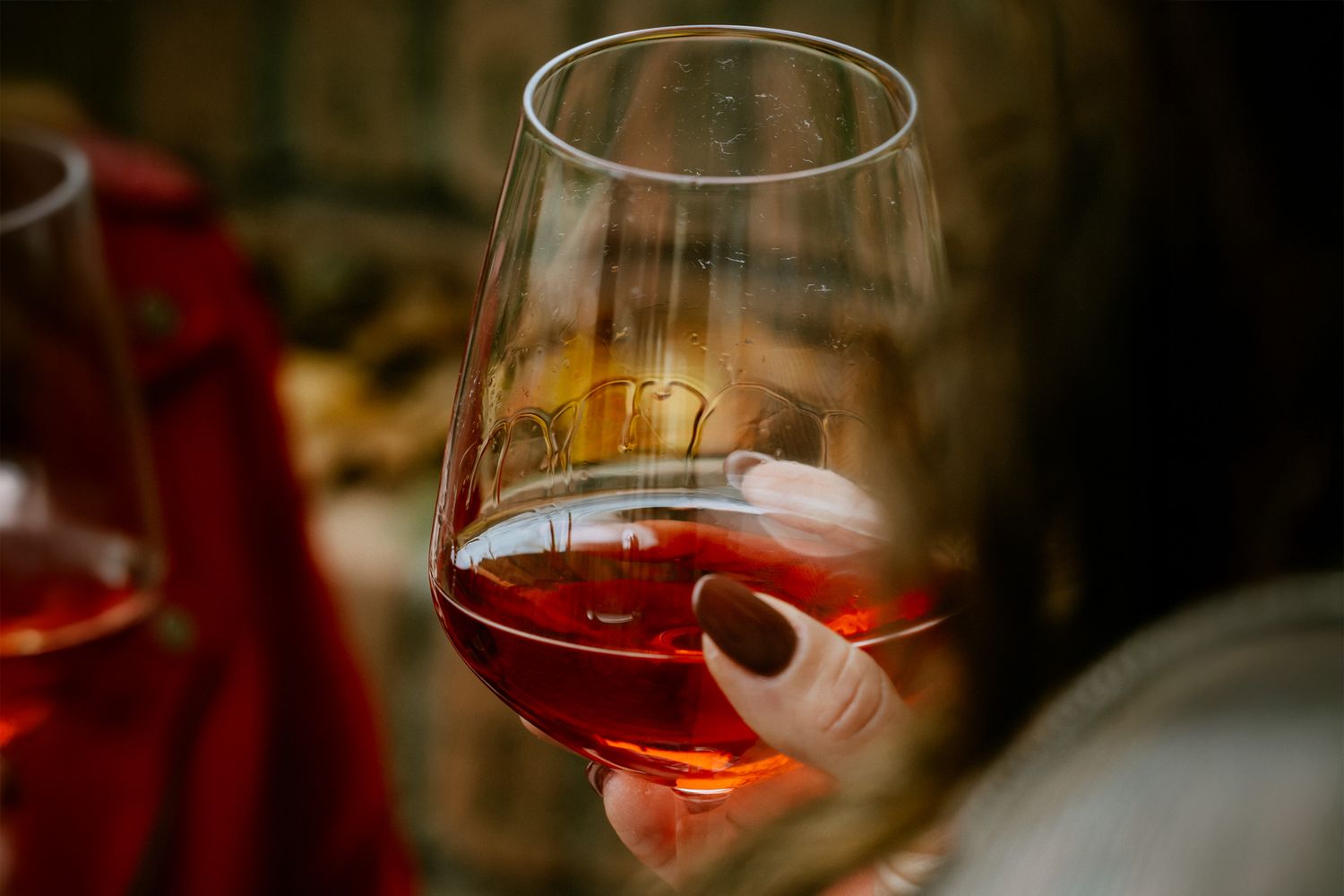
With its bright acidity, pronounced minerality, and fruit-fueled notes of strawberry and cherry, at first blush it could be a dark rosé. Yet its vivid deep-cherry color, lush body, fine structure, and versatility make you rethink that assessment and wonder if this shape-shifting wine is actually a light red.
“In the last 20 years, we’ve categorized Cerasuolo as a rosé, and this has penalized it,” says Federico De Cerchio, fourth-generation winemaker and owner of Famiglia De Cerchio. “To change that, we are working to push Cerasuolo as an alternative to classic summer red wines. I believe this is a game-changer for Cerasuolo, making it a very versatile wine, able to compete in any international market.”
One thing is certain: no matter if you fall in the rosé or red camp, this gastronomic gem has flown under the radar for far too long.
A quick Cerasuolo primer
The Italian region of Abruzzo is located just two hours east of Rome. But somehow, this lush green area, surrounded by the Adriatic Sea and the Apennine Mountains, has somehow remained off the international tourist trek. With rolling hills, charming hilltop towns, and more than 250 wineries, Abruzzo has Tuscan charm, authenticity, and a wine scene waiting for oenophiles to discover.
Courtesy of Torre Zambra Winery
The region is most known for its inky red Montepulciano d’Abruzzo, but it’s Cerasuolo that captures hearts.
Cerasuolo d’Abruzzo is made from the Montepulciano grape, which must represent at least 85% of the wine. The wine is made using a direct-press method and usually fermented in stainless steel or concrete.
In 2010, the appellation was promoted to its own Denominazione di Origine Controllata (DOC), the first in Italy exclusively for a rosato style wine. Finished Cerasuolos are released no earlier than January 1 after harvest and have a minimum alcohol content of 12%, while Cerasuolo Superiore wines are released no earlier than March 1 and contain at least 12.5% alcohol by volume (abv).
A perfect pairing
Food and wine are meant to interplay and elevate your gastronomic experience, but too often one ends up outshining the other. In Abruzzo, Cerasuolo is enjoyed alongside pizza, white fish, pasta with red sauce, and a variety of cheeses. Surprisingly, it pairs well with each.
“My favorite pairings with Cerasuolo reflect its full-bodied profile, phenolic grip, high acidity, and overall complexity, which make it incredibly versatile at the table,” says Riccardo Brighigna, winemaker for Feudo Antico. “Its structure and freshness open up a wide range of culinary possibilities, making it a true gastronome’s wine.”
For Italian food lovers, Cerasuolo is a dream because it pairs exceptionally well with tomatoes, a staple of the cuisine.
“Tomatoes are hard to pair in general, but Cerasuolo works well with them,” says Jason Hedges, director of Beverage for LT Hospitality. “It’s a no-brainer for me.”
Hedges has some of Abruzzo’s most well-regarded Cerasuolos, including those from Valentini and Emidio Pepe, on the wine list at New York’s L’Amico restaurant.
Courtesy of Cantina Tollo Deivai.
The red versus rosé debate
Officially, Cerasuolo is classified as a rosé, but it’s a wine that proves labels can be deceiving.
“Listen to the wine rather than the category — Cerasuolo can sit anywhere along the spectrum from vivid rosé to pale, savory red,” says Brighigna.
In general, Cerasuolo is characterized by a bright red color, with aromas of red fruit, herbal undertones, and notes of wildflowers. On the palate, the red berries burst, sometimes accompanied by a minerality or spiciness. The signature color is achieved by keeping the skin in contact with the must for up to a day.
As a rosé, Cerasuolo perhaps best compares to Tavel from the Rhône Valley of France; as a light red, it’s an alternative to Gamay or Pinot Noir.
“If we place it within the rosé category, with over 9 million bottles sold, it’s among the most recognized and appreciated,” says Davide Acerra, marketing manager of the Consorzio di Tutela Vini d’Abruzzo. “Yet it truly deserves a category of its own — a light red to be served chilled, for instance. It’s an utterly contemporary wine: it combines the freshness of a white with the structure of a red.”
Courtesy of Torre Zambra Winery
A new day for Cerasuolo
As if defining Cerasuolo wasn’t already a conundrum, Podere Castorani introduced a new Cerasuolo style in the late 2000s.
“We love preserving the beautiful tale of the traditional Cerasuolo, which represents generations of regional history,” says Castorani winemaker Angelo Molisani. “We are equally proud to have taken the first step in our region toward a new, clearer rosé version of Montepulciano.”
Castorani’s Amorino Cerasuolo looks like the pale, Provence-style pink wine we often associate with rosé today. To achieve its clarity and hue, Molisani picks the grapes up to a month before harvesting for their traditional Cerasuolo and ensures that maceration is quick.
“This Cerasuolo unlocks the unbelievable versatility of the Montepulciano grape,” says Molisani. “It yields a world-class, single-varietal rosé — not a blend — that we confidently rank among the finest in Europe. To drink it after four or five years of aging is, quite simply, stunning.”
As wine lovers, especially younger drinkers, yearn to try more unique wines that reflect the story of where they come from, no matter the color, Cerasuolo is perfectly positioned to put Abruzzo on the map.
Whether you call it a rosé or a light red, it’s easy to agree that Cerasuolo is an extremely adaptable wine that can take you from an aperitif through the main course. It’s a crowd-pleasing bottle that is a foodie’s dream.
“Cerasuolo is so unique in its essence and color intensity that it can be seen as a fifth color of wine, alongside red, white, rosé, and orange,” says Acerra. “For us, it is the contemporary, gastronomic, and versatile wine that tells the story of Abruzzo with authenticity — yet speaks, today more than ever, the language of the world.”
Five Cerasuolo to try
Cerasuolo d’Abruzzo can be a challenge to find, but these are a few of our favorite labels that are imported to the United States.
Food & Wine / Tenuta I Fauri Pecorino
Tenuta I Fauri Baldovino
In Italy, the Gambero Rosso Vini d’Italia is the definitive wine guide, so winning the 2026 Best Rosé of the Year is quite an accomplishment for this Cerasuolo from Tenuta I Fauri. The wine is an intoxicating mix of salty, citrusy, savory notes, with traditional red-fruit tones throughout.
Food & Wine / Cerasuolo d’Abruzzo Emidio Pepe
Emidio Pepe Cerasuolo d’Abruzzo
This legendary producer showcases the warmth and light of the 2024 vintage in its latest release. It’s made from 100% Montepulciano d’Abruzzo, with notes of red fruits and flowers.
Food & Wine / De Fermo
De Fermo Le Cince
Named for the local cinciallegra bird, known for its loud chirping, Le Cince from De Fermo does its own talking with an intermingling of herbal and smoky notes mixed amongst the red fruit core.
Food & Wine / Cataldi Madonna
Cataldi Madonna Malandrino
Produced by a small, family winery in the interior of Abruzzo near L’Aquila, this Cerasuolo has an intense nose of red fruits and almonds. It’s made exclusively with Montepulciano grapes from vines over 50 years old.
Food & Wine / Passo Sacro
Torre Zambra Passo Sacro
This wine from Famiglia De Cerchio flirts with summer memories — an aroma of rhubarb, watermelon Jolly Rancher candy, strawberry and cherry. Produced in the highly sought-after Villamagna wine region, red fruits and nuttiness dance on the tongue.
Dining and Cooking