
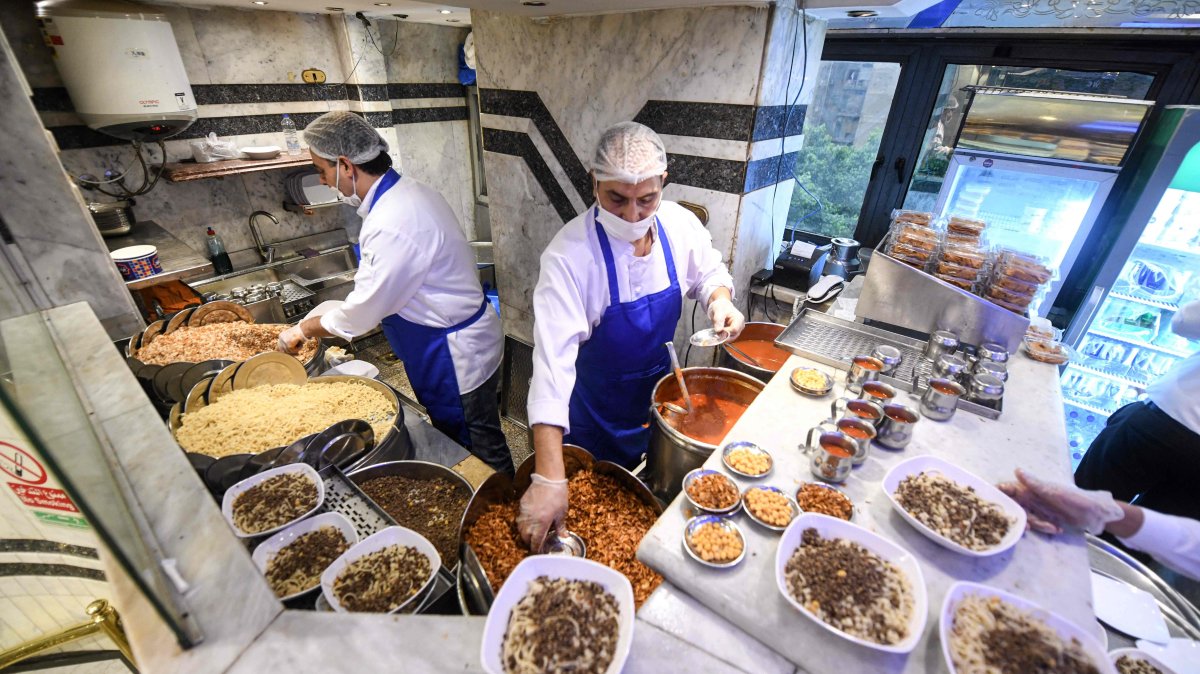
Italian cuisine and Egypt’s beloved koshary both earned global cultural recognition Wednesday as UNESCO added the culinary traditions of Italy and Egypt to its prestigious list of intangible heritage, spotlighting how food, identity and centuries-old rituals shape national pride.
Italian food, famed worldwide for its fresh ingredients and simple but evocative flavors, now has another reason to celebrate. UNESCO on Wednesday added the rituals surrounding Italian cooking and eating to its list of the world’s intangible cultural heritage, honoring the tradition of families gathering around the table, grandmothers teaching pasta-making techniques and the cultural storytelling embedded in every meal.
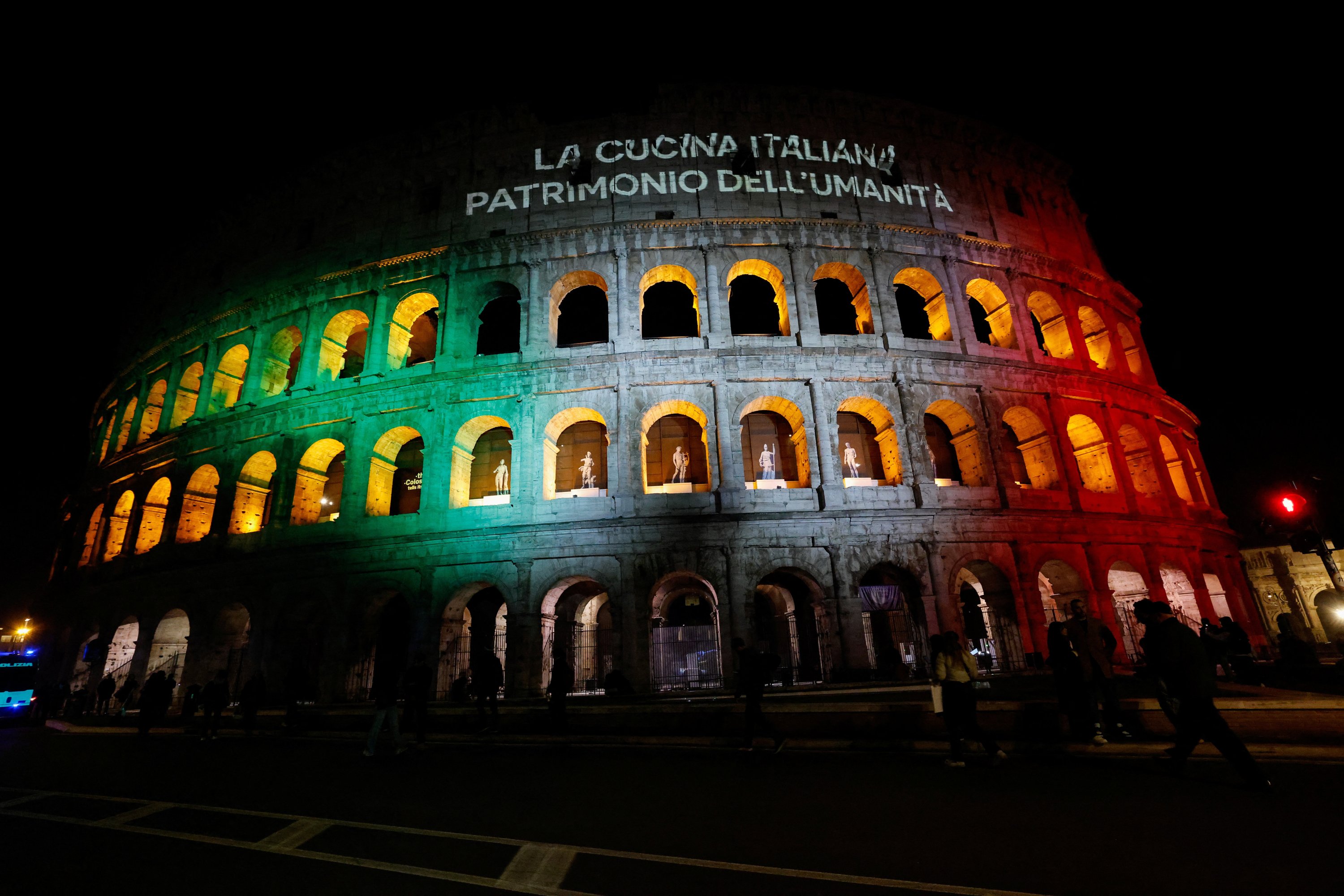
The Colosseum is illuminated during a special light installation, after Italy won a place on UNESCO’s cultural heritage list for its culinary traditions, in Rome, Italy, Dec. 10, 2025. (Reuters Photo)
The U.N. cultural agency highlighted the importance Italians place on the social and emotional act of dining, from leisurely Sunday lunches to elaborate dinners marking major life events. “Cooking is a gesture of love,” said Pier Luigi Petrillo, a member of Italy’s UNESCO campaign, noting that the care put into food reflects how Italians connect with one another. Premier Giorgia Meloni hailed the designation as a celebration of Italian identity, calling cuisine “culture, tradition, work, wealth.”
Italy’s recognition joins previous food-related nods, including the Mediterranean diet and Naples’ famous pizza-makers, which prompted a surge in culinary schools and tourism.
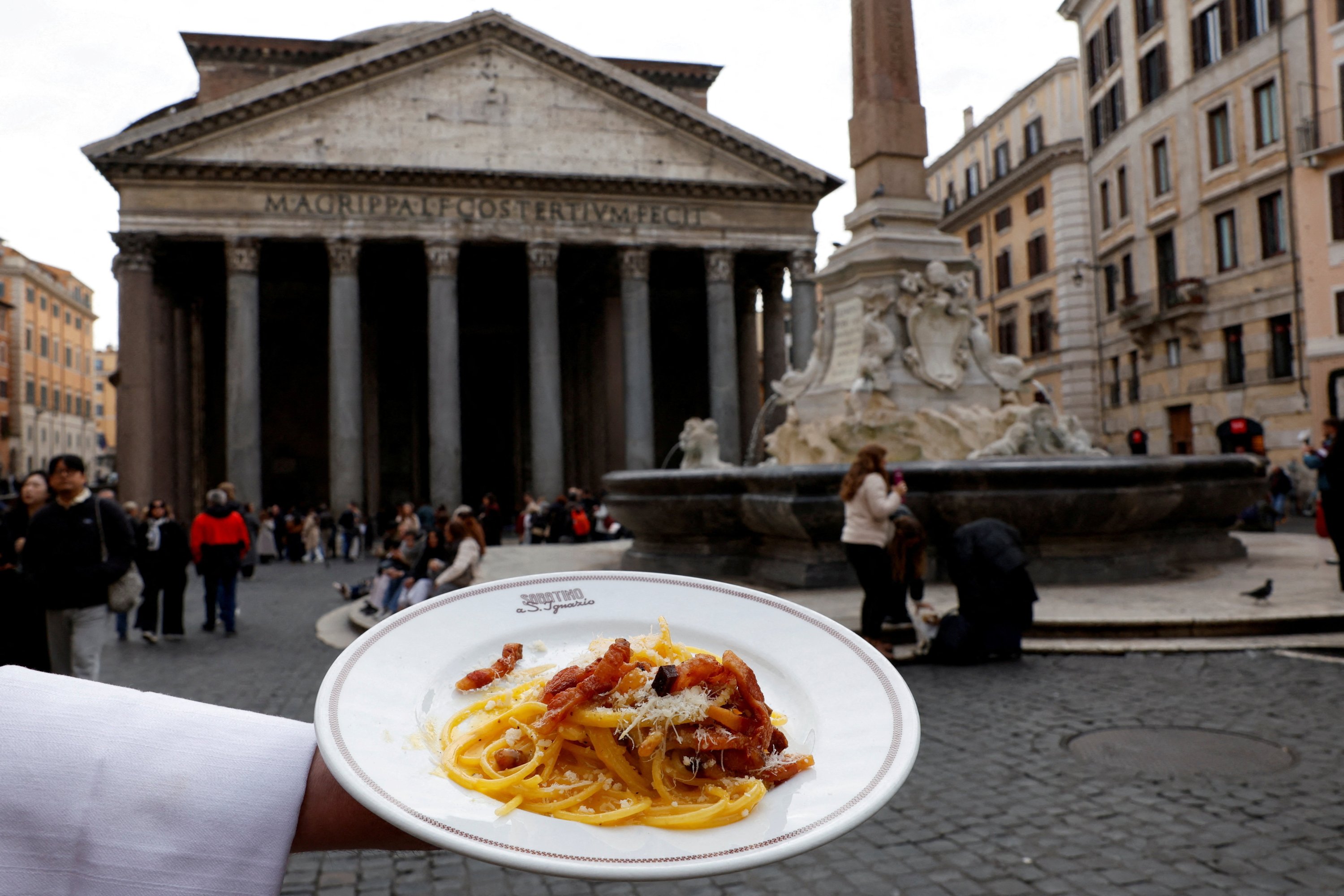
A waiter shows a plate of traditional pasta Carbonara in front of the Pantheon as Italian cuisine awaits a crucial UNESCO decision that could recognise it as an Intangible Cultural Heritage of Humanity in this illustration picture taken in Rome, Italy, Dec. 3, 2025. (Reuters Photo)
In parallel, UNESCO recognized another culinary giant close to the hearts of millions – Egypt’s koshary, the spicy, carb-loaded staple sold on bustling street corners and cherished as a national symbol of comfort and resilience. Made from noodles, rice, lentils and fried onions drenched in tangy sauces, koshary has fed generations and evolved with economic shifts, trade routes and urban growth.
“We grew up eating koshary in plastic bags. It’s a heritage we grew up with,” said Emad Yassin, taking a break during the lunch rush in downtown Cairo. Spanish tourist Irina agreed, calling the UNESCO designation fitting: “When you’re eating koshary, you can taste the country.”
Food archaeobotanist Mennat-Allah El Dorry said Egypt’s culinary recognition reflects rising respect for a rich food heritage long overshadowed by other regional cuisines. The dish’s origins, traced along historic trade routes, highlight Egypt’s position as a crossroads of cultures and flavors.
Both Italy and Egypt now join hundreds of cultural traditions worldwide that UNESCO says must be preserved not simply as recipes, but as rituals that carry history, community and identity forward.

The Daily Sabah Newsletter
Keep up to date with what’s happening in Turkey,
it’s region and the world.
SIGN ME UP
You can unsubscribe at any time. By signing up you are agreeing to our Terms of Use and Privacy Policy.
This site is protected by reCAPTCHA and the Google Privacy Policy and Terms of Service apply.
Dining and Cooking