
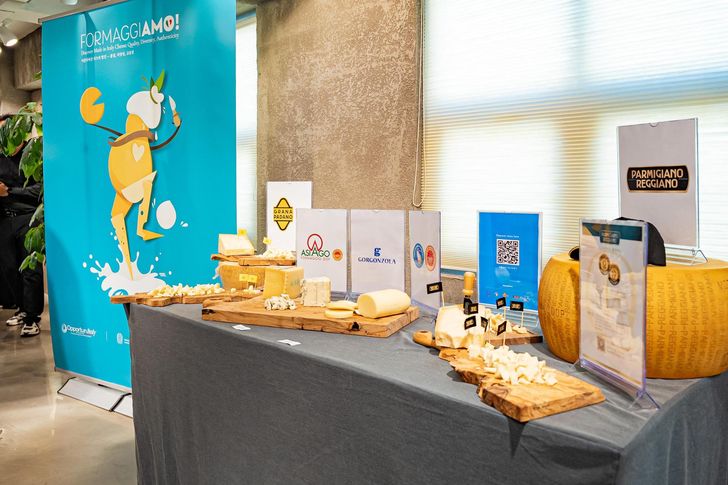
Various Italian cheese are on display at the “Formaggiamo!” event commemorating the Week of Italian Cuisine in the World, at High Street Italia in southern Seoul in November. Courtesy of Diary R
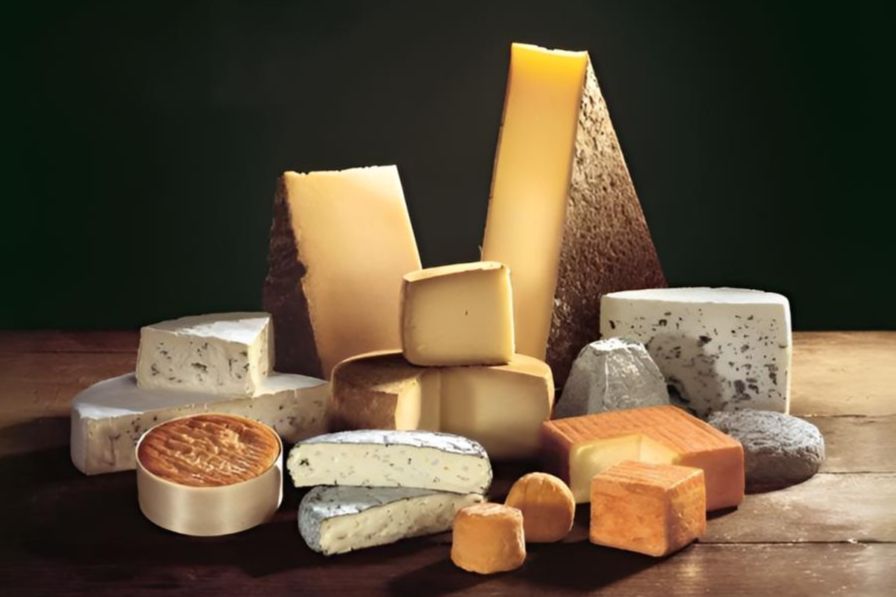
Italian cheese is having a moment in Korea. While mozzarella has long been around as an essential for pizza, now a wider world of Italian cheese — from Parmigiano Reggiano and Grana Padano to burrata and ricotta — is capturing the attention of Korean food lovers.
To support this growing interest, the Italian Embassy and the Italian Trade Agency (ITA) have been actively promoting authentic Italian cheese through chef‑led masterclasses and tasting sessions. These programs introduce Korean audiences to authentic Italian flavors while offering practical tips on how to incorporate cheese into everyday cooking.
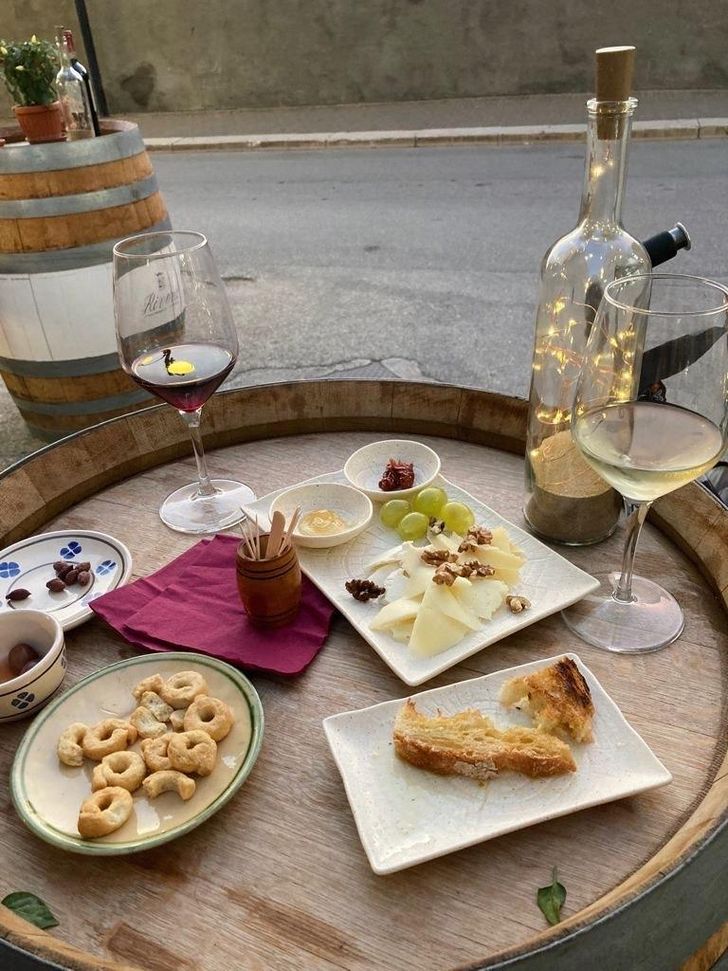
A cheese plate with bread and fruit is served with wine. Experts urge customers to avoid purchasing fake Italian cheese by checking the label and origin. Courtesy of Han Sang-hee
Authenticity matters
Italian cuisine is admired worldwide, but it faces a persistent challenge: imitation.
“Koreans can appreciate the quality and excellence of Italian cuisine. It is one of the most important markets in Asia, but we need to let you discover more and recognize the real deal,” Ferdinando Gueli, the head of ITA, said.
These imitations, often packaged to make a product appear to be Italian, use Italian-sounding names, colors or imagery to market items with no genuine connection to Italy, misleading consumers and undermining authentic Italian craftsmanship.
Cheese is no exception, according to Gueli. Counterfeit versions of parmesan and mozzarella are the most common, and experts encourage shoppers to learn how to tell the real deal from imitations.
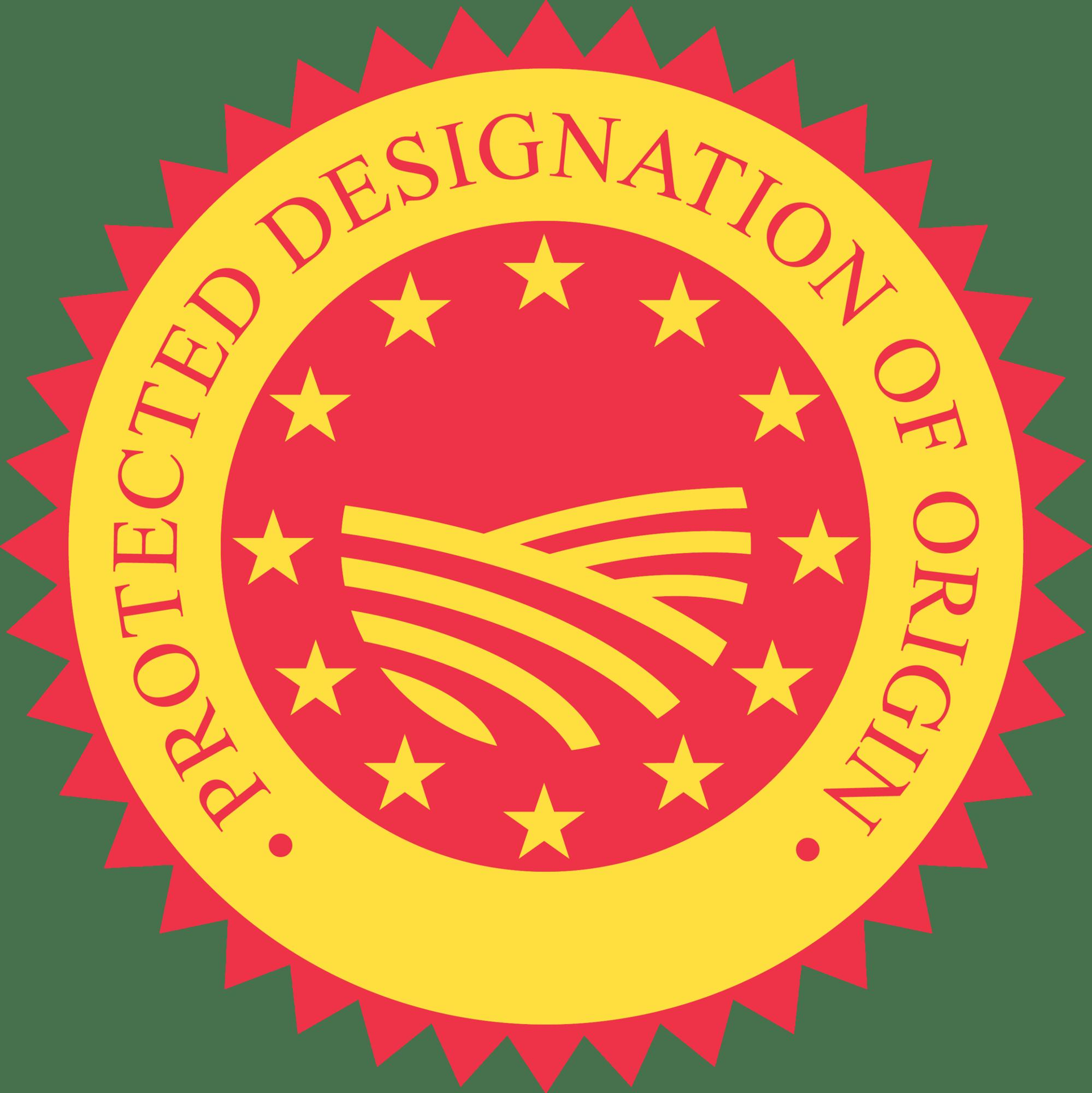
Packaging featuring the symbol for Protected Designation of Origin (DOP) is used for products where all stages of production are carried out in a specific geographical zone. Courtesy of Diary R
“First, you have to check the label and origin. Check the label and flip the cheese over and try to find these two symbols: Protected Designation of Origin (DOP) or Protected Geographical Indication (IGP),” Gueli explained.
These two labels are special certifications recognized by the European Union (EU). While IGP requires only one step in the production, processing or preparation to be linked to a geographical area, DOP needs all stages to be carried out in a specific geographical zone, making it a stricter certification. Both, however, indicate that the cheese is an authentic Italian cheese.
“Eighty percent of the cheeses in Italy are certified by law with DOP and IGP. There are some 480 varieties and around 300 are certified. We take Italian cheese history and production very seriously,” said Gueli.
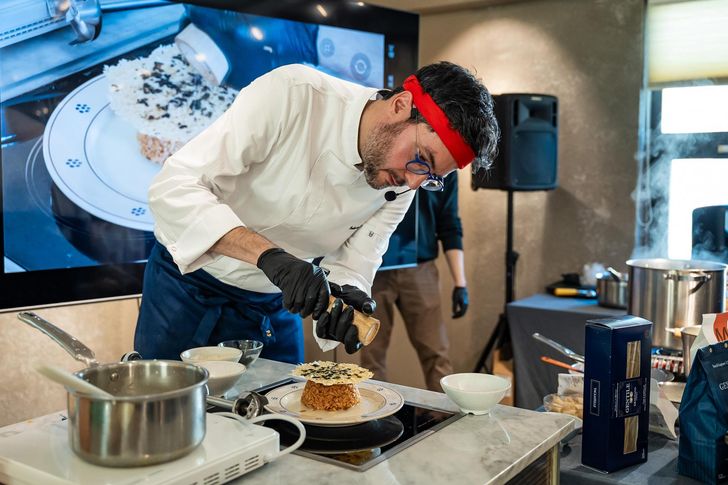
Italian chef Fabrizio Ferrari demonstrates cooking with cheese during the “Formaggiamo!” event commemorating the Week of Italian Cuisine in the World, at High Street Italia in southern Seoul in November. Courtesy of Diary R
Cheese as culture
Celebrity chef Fabrizio Ferrari, who appeared in “Culinary Class Wars,” understands the importance of cheese in Italian cuisine, just as he understands the symbolic importance of “jang” (fermented sauces) for Korean cuisine.
“I believe the Italian counterpart of Korean jang is cheese. They are both fermented and gives that extra something to the dish. Whenever I see ‘meju’ (dried fermented soybeans) or ‘doenjang’ (soybean paste), I instantly think of cheese,” Ferrari said, explaining the various types and uses of Italian cheese in one of his master classes during the Week of Italian Cuisine in the World in November.
According to Italian Ambassador to Korea Emilia Gatto, while the two countries have much in common, there is always room for further cooperation.
“Korea is leading in soft power with K-pop and K-dramas, while Italy is re-emerging itself as a technology powerhouse. We need to collaborate to bring both strengths together to create something more,” Gatto said. “We will bring the authenticity and quality. Korean consumers need to know and acknowledge what they are eating is real.”
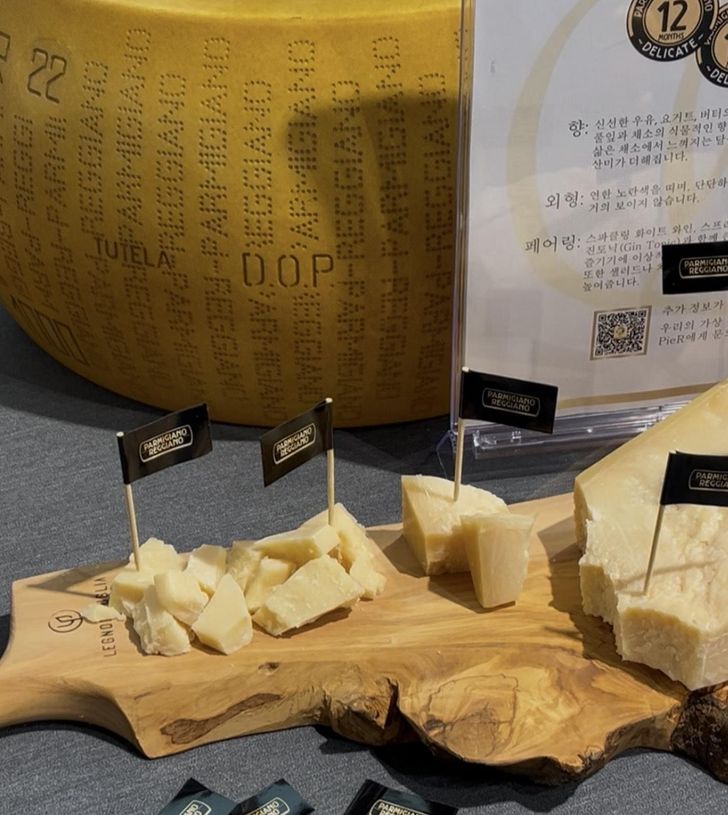
Parmigiano Reggiano is sometimes called the “king of cheeses” thanks to its versatility and popularity. Courtesy of Han Sang-hee
Here is a quick guide to key Italian cheeses and where to enjoy them in Seoul.
Parmigiano Reggiano
Parmigiano Reggiano is sometimes called the “king of cheeses” for its versatility and depth of flavor. This hard cow’s milk cheese must be produced and aged in specific areas, but especially the provinces of Parma and Reggio Emilia, and matured for at least 12 months. Both Parmigiano Reggiano and the more general name “parmesan” are protected by the DOP in both Italy and the EU. Its nutty, savory flavor makes it perfect grated over pasta, stirred in soups or simply enjoyed in chunks with wine and dried fruit.
Grana Padano is very similar to Parmigiano Reggiano but is produced in Lombardy under slightly less strict rules and can be enjoyed after an aging process of nine months, giving it a milder profile.
Mozzarella
Mozzarella’s popularity in Korea has soared alongside the rise of Neapolitan-style pizza.
This fresh cow’s milk cheese has many variations, the most popular being burrata from the Apulia region and mozzarella di bufala from Campania. Bufala is made of buffalo milk and has a supple texture and distinct flavor, while burrata is made from cow’s milk and has shredded cheese and cream inside a pouch made of mozzarella.
Both should be eaten very fresh and soon after being made, and are excellent simply dressed with olive oil and salt or on top of a salad.
Pecorino Romano
Pecorino Romano is a sharp, salty sheep’s milk cheese dating back to ancient Rome. As a DOP cheese, it must be produced in specific areas, including Sardinia and the province of Grosseto.
Traditionally grated over pasta dishes like cacio e pepe or amatriciana, it can also be enjoyed on its own with bread and good olive oil.
Gorgonzola
Gorgonzola, Italy’s famous blue cheese, hails from the town of the same name and is made from cow’s milk under DOP regulations. It is produced in two main styles: “dolce,” which is softer, creamier and milder, and “piccante,” which is firmer, more crumbly and more pungent thanks to longer aging than dolce.
In Italy, gorgonzola is used on salads, pizzas and in rich sauces, or simply paired with wine. In Korea, it is often paired with honey for a sweet-and-savory combination that appeals to local palates.
Ricotta
Fresh and versatile, ricotta is a soft cheese made using leftover whey from making other cheeses, like mozzarella. It is widely used in spreads, salads, desserts, baked dishes like lasagna and even as an alternative to Greek yogurt.
Only a handful of ricotta varieties are DOP-certified, such as Ricotta di Bufala Campana and Ricotta Romana, which are made from the whey of mozzarella di bufala and Pecorino Romano, respectively.
A variety of cheese offered at Le Friand / Courtesy of Le Friand
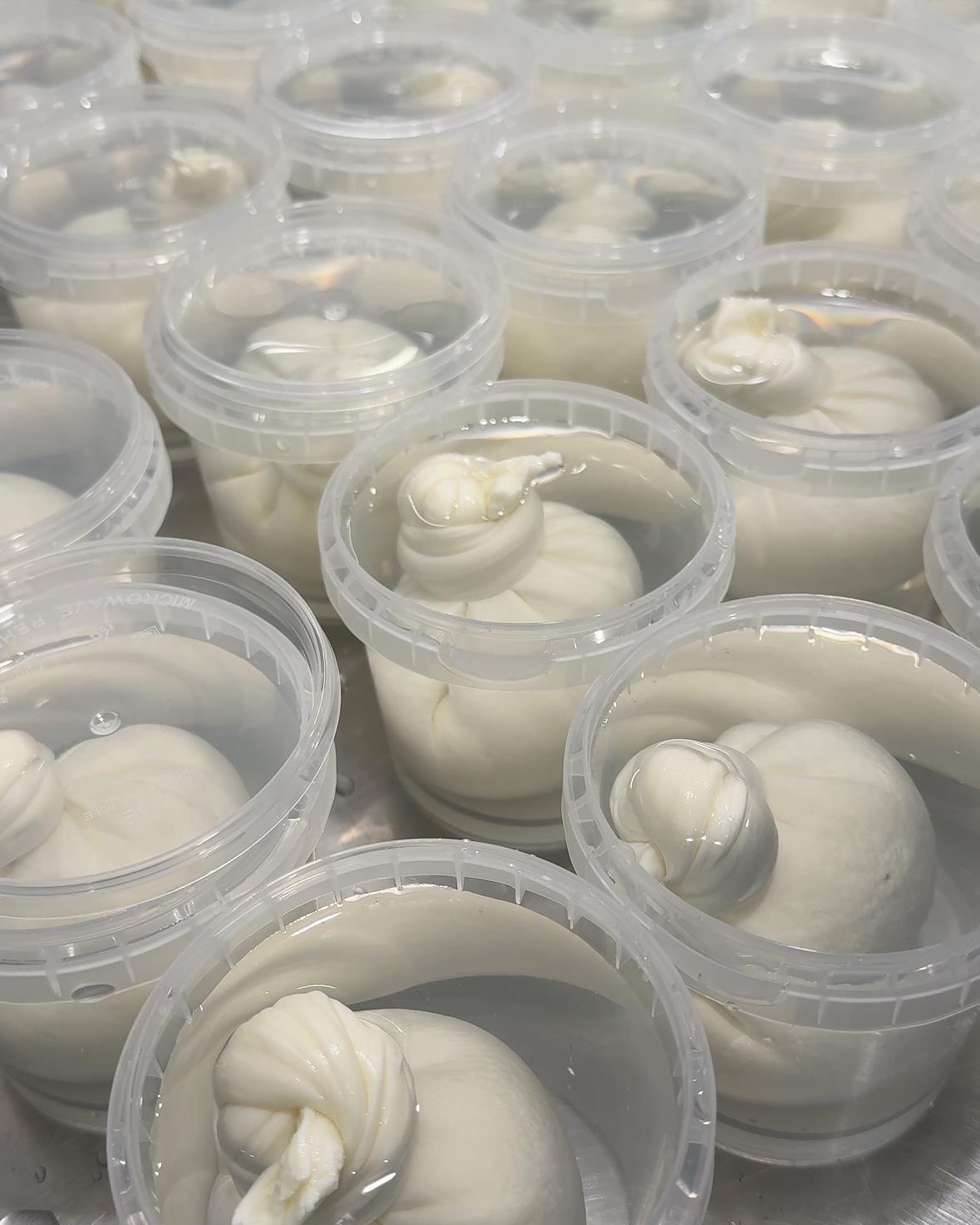
Freshness is everything when it comes to mozzarella, one of the most popular Italian cheeses in Korea. Moo.vement in southern Seoul produces and sells fresh cheese, guaranteeing the same freshness as that in Italy. Courtesy of Moo.vement
Where to find cheese in Seoul
Moo.vement
■ Address: 20 Seolleung-ro 145-gil, Gangnam District, Seoul
■ Phone: 0507-1457-0372
■ Hours: 9 a.m.-4 p.m.
■ Instagram: @moo.vement_latteria
Moo.vement functions as a small urban dairy in the heart of Gangnam, producing mozzarella and burrata fresh every day at the shop. The ground floor shop sells homemade cheese, while the lower floor is a deli and restaurant offering dishes built around their cheeses, making them a great place to experience truly fresh mozzarella and burrata.
Cheeseflo
■ Address: 19 Itaewon-ro 49-gil, Yongsan District, Seoul
■ Phone: (02) 794-7010
■ Hours: 11:45 a.m.- 9 p.m.
■ Instagram: @cheeseflo
Located near the Leeum Museum of Art, Cheeseflo combines Korean dairy and European expertise to offer an union of tastes and experiences. Chef Cho Jang-hyun is a cheese maker who has studied in New Zealand, France, London, Australia and Italy. The shop offers more than 30 types of cheeses, in addition to in-house cold cuts such as salami. Cheese lovers can also join their Flo Salon events and cheese tastings every month.
Hans N Gretel
■ Address: 212-1 Hannam I-Park, 46 Dokseodang-ro, Yongsan District, Seoul
■ Phone: (02) 749-0120
■ Hours: 11 a.m.- 8 p.m.
■ Instagram: @hans.n._.gretel
Hannam-dong’s Hans N Gretel has no in-store dining, but the take-out shop offers a wide selection of European cheeses, including Italian and French varieties. There’s often a queue, but it moves quickly. Small tastings are available before purchase, a helpful perk when navigating new cheese territory.
Le Friand
■ Address: B1, 176 Sinbanpo-ro, Seocho District, Seoul
■ Phone: 0507-1446-0324
■ Hours: 10:30 a.m.-8 p.m.
■ Instagram: @lefriandcheese
Inside Shinsegae Department Store Gangnam, Le Friand caters to shoppers seeking a wide selection of cheeses. The new shop offers a wide variety of cheeses and can create customized cheese plates. Choose your cheese, add garnishes like olives, cured meats and dried fruits, sauces or jams, and you have a personalized party ready to go.
Han Sang-hee is a former staff reporter at The Korea Times and a former editor at CNN Travel. She is based in Stuttgart, Germany, but now lives in Seoul with her Italian husband and two daughters and shares stories on her Instagram @rachelsanghee.
Dining and Cooking