
Italian cuisine has officially been recognized as UNESCO Intangible Cultural Heritage, marking a historic moment not only for Italy, but for the global culinary community that celebrates and preserves its traditions every day. It is the first time a nation’s entire culinary identity — not a dish, not a practice, but the whole cultural system behind it — receives this level of recognition.
The UNESCO acknowledgment celebrates what Italians have always known: their cuisine is more than food.
It is identity, ritual, history, and emotion — a living heritage passed hand to hand, table to table, generation to generation.
A heritage made of gestures, stories and hands
Italian cuisine is a mosaic.
North to South, island to mainland, each region carries its own dialect, ingredients, aromas.
A pesto prepared in Genoa has a different soul from one made in a foreign kitchen — not for lack of skill, but because heritage is tied to territory, memory and context.
Yet, despite regional differences, a thread unites everything:
• respect for ingredients
• simplicity brought to excellence
• seasonality as a compass
• the table as a place of connection
These values are why Italian food is universally loved — and now officially protected.
When UNESCO includes a cultural expression, it is not just a celebration.
It is a promise to safeguard practices at risk of fading under globalization and fast-food homogenization.
Italian cuisine, however strong worldwide, is still rooted in fragile, intimate rituals: a grandmother’s hand correcting the thickness of tagliatelle, a baker rising at dawn for the dough, an aroma that defines childhood.
This is what the world has chosen to protect.
Chefs abroad as cultural ambassadors
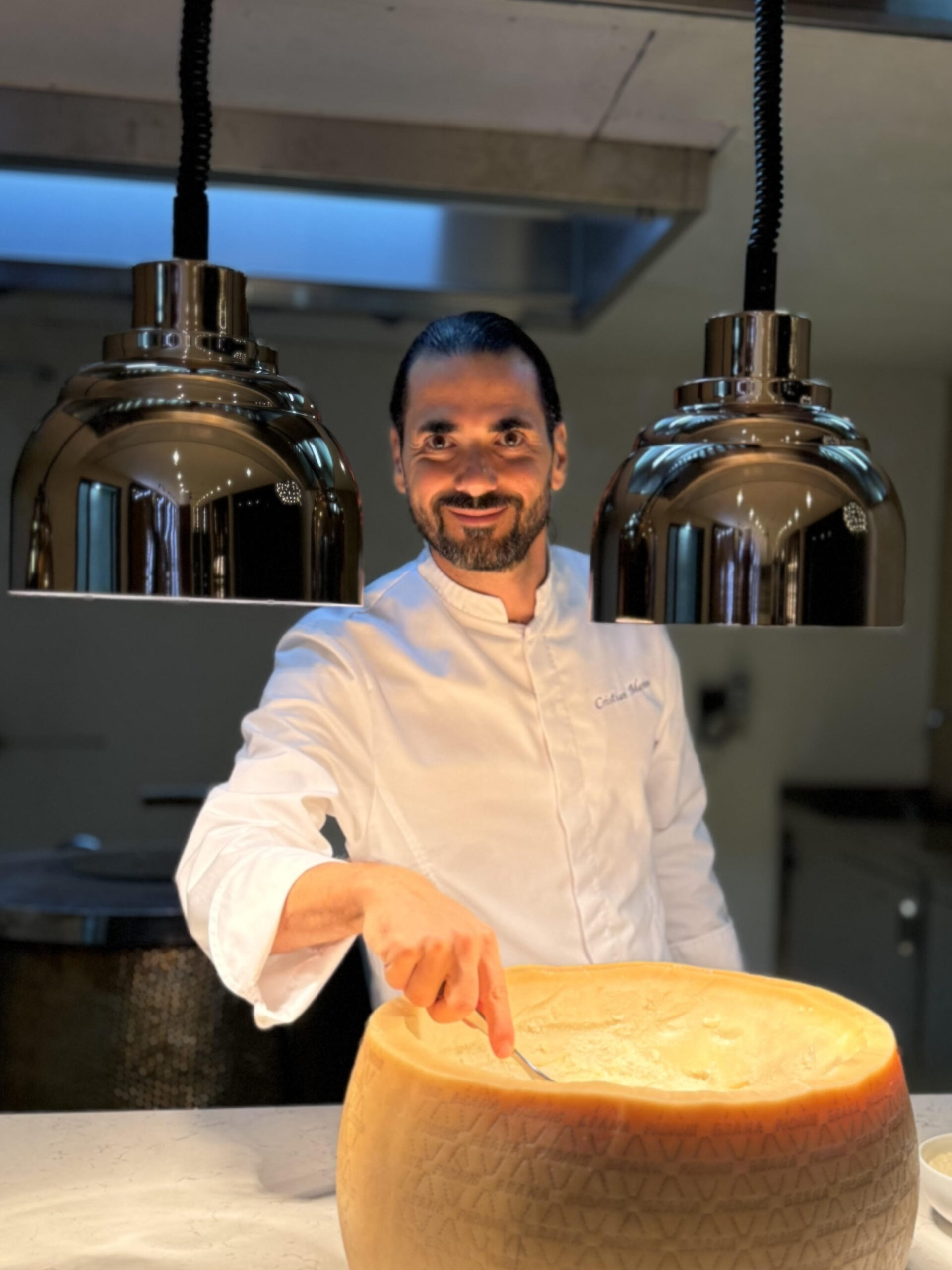
Among the many professionals who bring Italy beyond its borders is Cristian Marino, an Italian Executive Chef and Culinary Consultant with an international career across Europe, Asia, the Middle East and the Maldives. Far from home, chefs like Marino become guardians of authenticity, interpreting classic recipes with integrity while adapting respectfully to local cultures and ingredients.
During the now very popular Italian dinner night in the Maldives, Marino prepared a creamy risotto inside a wheel of Grana Padano, letting the starch bind naturally to the cheese as he stirred with calm, deliberate movements.
There was no molecular smoke, no dramatic theatrics — only the warm simplicity of rice, stock, butter, and cheese. Tourists from different parts of the world gathered around, captivated not by complexity but by familiarity.
A French couple said: “It feels like watching Italy in front of us.”
A moment of pure connection — and a perfect representation of what UNESCO has recognized.
Italian cuisine travels through people, not through marketing campaigns.
Through hands, not through trends.
Chefs abroad do not merely cook.
They preserve memory.
Beyond gastronomy: a social ritual
Italian cuisine is not defined by ingredients alone, but by how we live food:
• meals eaten slowly, as conversation
• lunch as a pause, not an interruption
• food as presence, not consumption
• celebration as part of daily life
In many cultures meals are fuel.
In Italy they are relationship.
This recognition reminds the world that cooking can be culture, not just industry. It invites nations to protect culinary diversity, support regional production, value traditional knowledge, and teach younger generations not only what to cook, but why.
A toast to those who keep the flame alive
To farmers saving heirloom seeds.
To fishermen respecting the sea.
To bakers kneading dough at dawn.
To grandmothers who cook without measuring.
To chefs abroad carrying Italy in their hands.
Italian cuisine is now officially part of humanity’s cultural heritage —
a legacy made of flour, memory, and love for the table.
Heritage is not only what we inherit, but what we choose to continue.
Dining and Cooking