
In France, the English have a reputation for knowing “nothing about anything”. It was all the more insulting, then, to suggest that they could have invented one of France’s proudest exports: champagne.
At an event in Troyes last week, members of the champagne wine-growing association had expected a speech extolling their glorious past. Instead, Jean-Robert Pitte, the chairman of the Academy of Moral and Political Sciences, provoked a “stir” by attributing the invention of champagne to 17th-century English merchants, according to L’Union newspaper.
Pitte, 76, a former president of the Sorbonne University in Paris, and one of France’s most eminent historical geographers, said: “In general, the French have a lot of trouble accepting this idea. They think it’s not possible that the English, who [they think] know nothing about anything, could have invented champagne. They were all very polite during my speech but afterwards, they came up to me and said: ‘You’ve gone a step too far’.”

Jean-Robert Pitte
IAN LANGSDON/AFP/GETTY IMAGES
Pitte, a self-professed anglophile and a renowned expert on the history of wine and food, said he had been writing and speaking about the English role in the development of French wines, from Bordeaux to Champagne, for two decades.
In his speech, he explained that 17th-century English merchants imported barrels of wine from the Champagne region of eastern France. But the wines were still or perhaps only slightly fizzy when they crossed the Channel and had none of the sparkle now associated with champagne.
The English merchants broke with French custom by selling them in bottles. In France, the practice was illegal at the time — the authorities having decided that wine should be sold in barrels and not bottles, which were seen as a contributor to tax fraud and smuggling, and a risk to life and limb, given their tendency to explode during secondary fermentation.
• Inside the secret tunnels that power London’s champagne habit
In England, there was no such restriction. Indeed, the bottles were particularly resistant, because English glassmakers had started to use coal-fired furnaces after a parliamentary decree restricting the use of the wood.
The other English innovation was to add sugar to wines from Champagne, which Pitte said were “acidic” and “undrinkable” during the Little Ice Age. “They were like lemon juice,” he said. The sugar produced bubbles, which were trapped inside bottles by the corks that were another English discovery. Pitti said the result was, in effect, the first champagne as we know it today.
Pitte said the earliest recorded mention of bubbly was by Christopher Merret, an English physician who delivered a paper to the Royal Society in 1662 entitled Some Observations concerning the Ordering of Wines.
“Our wine coopers of later times use vast quantities of sugar and molasses to all sorts of wines to make them drink brisk and sparkling, and to give them spirit,” Merret wrote in a document unearthed by Tom Stevenson, the British wine writer. Bubbly is also referenced in The Man of Mode, a restoration comedy by Sir George Etherege, an English dramatist. Pitte said: “The English liked wines that were fresh and exhilarating and bubbles came to be associated with joie de vivre, love, success and victory,” he said.
• A sparkling history of bubbly
It took the French several decades to catch on to the benefits of adding sparkle to champagne.
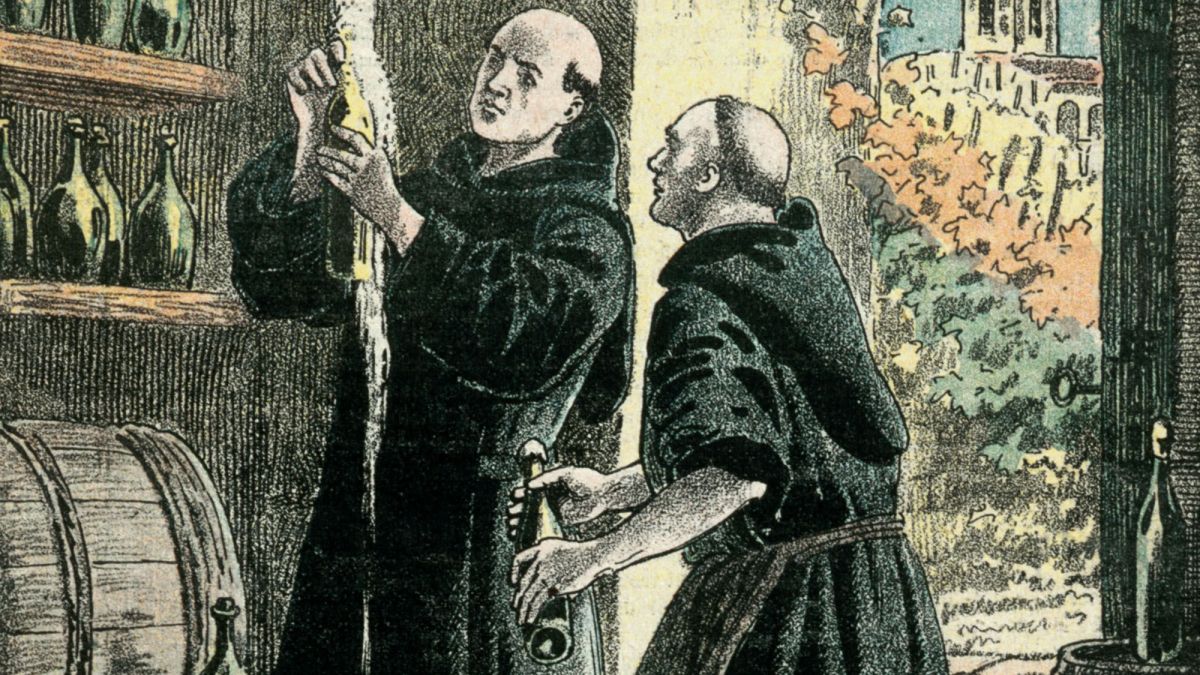
Yet Pitte said residents of the Champagne region clung to the belief that bubbly was invented by one of their own: Dom Pérignon, a 17th-century Benedictine monk. The notion is largely a myth. Pérignon played a pivotal role in blending grapes and improving wine-making practices, but sought to halt the secondary fermentation that caused wines to sparkle.
Dining and Cooking