
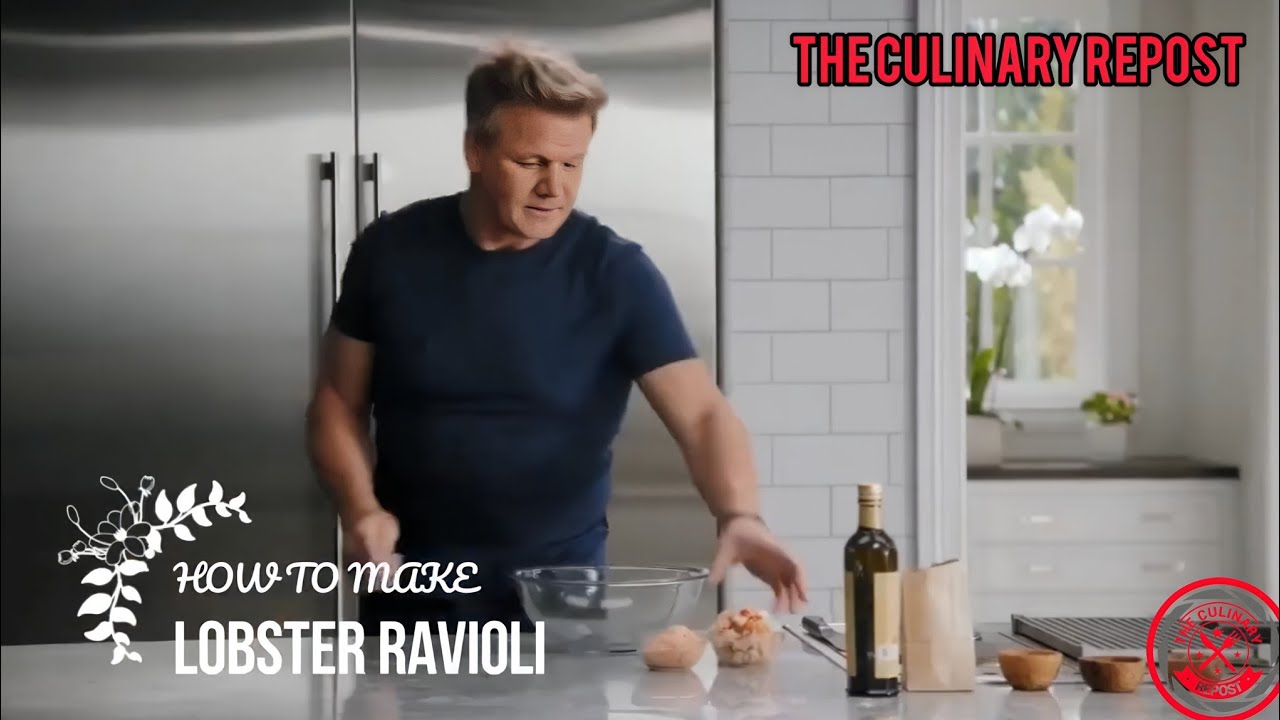
In this masterclass, Chef Gordon Ramsay reveals his professional secrets for turning lobster trimmings, claws, knuckles, and even the dainty legs into a show-stopping, perfectly seasoned Lobster Ravioli. This isn’t just a recipe; it’s a lesson in kitchen economics and respecting your ingredients a philosophy crucial for both professional chefs and dedicated home cooks.
Chef Ramsay demonstrates how to create the rich, cohesive filling using a salmon puree and egg white to bind the lobster pieces, ensuring zero waste and maximum flavor. You’ll learn essential techniques like the proper way to chiffonade fresh basil without bruising it, how to extract maximum juice from a lemon, and the critical role of acidity in seafood dishes. Discover why rolling the lemon is key and how to avoid those pesky pips!
The video continues with a detailed guide on rolling and sealing the delicate, non-porous pasta sheets using an egg yolk wash for the strongest “glue.” Master the unique technique for shaping the ravioli and giving them a “haircut” for a professional finish. Finally, Chef Ramsay walks you through the 90-second cooking process in a rich lobster stock, plating them beautifully with a fresh tomato chutney, a vibrant vinaigrette, and a signature lobster glaze. Elevate your culinary skills and transform your leftovers into a Michelin-star experience!
Perfect for chefs, students, and serious home cooks who want restaurant-quality results and zero-waste cooking discipline.
RECIPE (Serves 2–3)
Filling
• 6 oz (170 g) lobster meat (claws/knuckles/legs), chopped
• 2 oz (55 g) raw salmon, blitzed
• 1 egg white
• 6–8 basil leaves, chiffonade
• 1 tsp lemon zest + 1–2 tsp lemon juice
• Fine salt, black pepper
To seal & pasta
• Fresh pasta sheets, rolled very thin (00 flour & egg dough)
• 1 egg yolk (for sealing)
Tomato chutney (bed)
• 1 cup chopped tomatoes, olive oil, salt; stew 20 min, finish with basil
Lobster glaze
• 3 cups lobster stock (from roasted shells with fennel, carrot, onion) reduced to ~⅓ cup syrup
Lemon vinaigrette
• 2 Tbsp olive oil + 1 Tbsp lemon juice + pinch salt
Method
1. Mousseline: Blitz salmon + egg white to a paste; fold in lobster, basil, zest, lemon juice; season; chill 10 min.
2. Cut rounds; add ~1 Tbsp filling; brush edges with egg yolk; seal, expelling air; trim (“haircuts”).
3. Cook in gently boiling salted water ~90 sec; swirl so they don’t stick.
4. Toss briefly in a bowl glazed with vinaigrette; a touch of salt + zest.
5. Plate on tomato chutney; nap with lobster glaze; finish micro basil/sorrel.
TIMESTAMPS
0:00 Intro: zero-waste luxury & mindset
0:17 Salmon mousseline binder (salmon + egg white)
1:58 Herbs that flatter lobster; basil chiffonade technique
3:11 Acidity matters: lemon zest & pip-free juicing
5:31 Chill the filling; seasoning & texture check
6:08 Why egg yolk (not egg wash) seals pasta
6:32 Roll, cut & manage thin pasta sheets
7:50 Fill, seal, twist & keep ravioli non-porous
9:27 “Haircuts”: trimming for clean edges
10:46 Cook gently (≈90 sec) in seasoned water
12:26 Glaze in lemon vinaigrette; handle with a spoon
13:58 Plate on fresh tomato chutney
14:28 Nap with lobster reduction glaze; micro herbs finish
15:35 Final plating & service cues
🔥 Love Culinary Content? Join the Journey! 🔪
If you’re passionate about food, fine dining, and the brilliant minds behind the kitchen — you’re in the right place.
🍽 Subscribe for exclusive chef interviews, culinary storytelling, and inspiring reels from around the world.
📲 Follow me on Instagram for daily inspiration, beautiful plating, and behind-the-scenes moments:
👉 @theculinaryrepost
https://www.instagram.com/theculinaryrepost/
Watch Next:
Your support helps shine a light on the chefs who inspire us all.
Don’t forget to like, comment, and share — let’s grow this food-loving community together!
#lobster #ravioli #pasta #seafood #cheftechniques #culinaryarts #zerowastecooking #stockreduction #basil #plating
[Music] Um, I’m going to do a lobster ravioli. I’m going to use the trimmings of the lobster, the claws, the knuckles, and those nice little dainty legs that you thought were just for the bisque. No chance. When you squeeze the lobster meat out there, you’ll be surprised. So, start off one spoon of the pured salmon. And it’s literally blitzed in a blender or finely chopped. And you add one egg white to it, which forms this really nice strong sort of mousse. And then we bring the lobster knuckles, the claws, and all the unwanted bits. And I think this is the most important part from a chef’s point of view is that, you know, every ounce of ingredient that comes into that kitchen, we need to make money on. You could be the best chef in the world. How stupid would you look 5 years later going bust? Every product, every herb, every protein, every bottle of wine needs to have a sellable tangible value on it in order to keep that business aloat. And it’s just as important if you’re a home chef as well. You buy $150 worth of groceries every week, then that needs to stretch to a family of six, a family of four, depending on what you’re doing. And so, you cannot afford to waste. There’s one thing that I grew up with very early on, and that was respecting ingredients so much that you wasted nothing. Now look what’s happened. I’ve got my lobster, let’s call them scraps, lobster knuckle, lobster claw, bound together now by the salmon. So the little bits of salmon that we didn’t use, blend, mix that with an egg white, and then puree the salmon. And look, it holds as this wonderful glue for your ravioli mix. Now from there, lightly season it. lightly. Salt, pepper, lemon, and let’s just take it up a notch with some herbs. Now, what goes beautifully with lobster? It could be a basil, shervel, cilantro. We’d never put rosemary or thyme in there. It’s too strong, too powerful. So, I like getting some basil leaves. And from there, literally find your largest leaf and then stick the little ones inside. And I’ll show you why. So, lay them on top like that. And then literally roll them up nice and tight, almost like a cigar. And then slice it nice and finely. I would like the basil to perfume the inside of that ravioli mix. I don’t want to bruise it. Razor sharp knife. And look, I got these nice thin shards of fragrant basil. But when cutting herbs, look, I want the goodness left in the herb. I don’t want the darkness on the board. Every time you see chefs over chop herbs, this dark green board is the most fragrant board anywhere in the world. And the herbs give you nothing. So, slice them, chop them once into the mix, and then what else does it need? It needs acidity. So roll your lemon. When you roll a lemon or a lime like this, it makes it so much more juicy. It bursts those wonderful little cells inside and creates so much more juice. And it’s easier to squeeze. But first, I’m a big stickler in wasting nothing. So I take the zest off everything from oranges to lemons to limes, you name it. Um even if I’m not cooking with it, I’ll season my salt with the zest. So we got this fragrant salt. Now, lightly grate the zest of the lemon in. You know, cooking fish is rich. It’s extraordinary. The texture is amazing. But what it does need is acidity because it brings out that natural flavor of the fish and it lifts up the flavor of the fish. And always squeeze fresh lemon juice into the mix at the last minute. Okay? And when you slice lemon, I always prefer slicing here, here, and here. So we avoid all the pips. So every time we squeeze lemon in there, there’s definitely no pips rather than slicing the lemon directly in half. So much easier. Lemon juice give that lobster. It sort of it wakes it up. It gives it that nice sharpness to it. And then finally mix in. And look, already that mix smells incredible. Looks delicious. And look at it. Ready to go. Now I’m making a lobster ravioli out of the scraps and the leftover bits of lobster. You could do a prawn one. You could bind this with a fresh scolop. Beautiful prawns chopped up, bound together with an egg white. Sticks it all together. You need that mixture to stick in the middle so as it holds together in the middle of that ravioli. But the secret behind any ravioli is making sure that it’s non-porous. That’s basically meaning that there’s no water that seeps through. And so when we come to roll that pasta, it’s really important. Now set that. Just show you there. Look at that. Beautiful. You can identify the chunks of lobster. You can see that salmon barely, but when you smell it, it smells like the sea. It’s slightly salty. It’s got that fragrance from the basil, and it’s beautifully seasoned. Now, set that in the fridge for 10 minutes to get nice and firm while we roll the pasta. Everything gets set. Got my lobster mix there. Got my cutter here. And I’ve got a little egg yolk. An egg yolk as opposed to an egg wash which is made with a whole egg. Sometimes milk. I need that that glue. I need that touch of yolk that really helps to stick that pasta together. Also, think how rich my pasta is. Think about the olive oil and the egg yolks in there. So, egg yolk fits the bill. You don’t want water there. You don’t want milk there. You don’t want an egg whipped up. It’s just egg yolks that’s nice and strong. Now, the exciting part. Lightly season the marble and your hands with the flour. At this point, because the pasta is so thin, be careful not to add too much flour, otherwise it will dry the pasta out. pull the clim film back and then look, pick up your sheets and literally start cutting. Now, that’s the size cutter I’m going to be using today and keep them close together. Let’s start off with four. I’m going to show you the basic technique on how to manipulate the pasta together. Now, the secret is literally in the twisting and turning. So get set up. Top, bottom, top, bottom, top, bottom. And then you can see how transparent that pasta is. Keep that literally covered. Okay, that stops it from drying out. Get your mix and spoon the mix into the center of the disc. Really important. Okay. Shape it on the spoon first. Try not to shape it on the pass, otherwise you’ll move it all over the place. Shape. Shape. Shape first on the spoon. and it protects your pasta. Now, I didn’t start out making lobster ravioli. You’re joking. Uh I needed to practice for months on end with mashed potato because I couldn’t afford to get one wrong. So, I was never allowed to be let loose on the actual lobster. I had to start off with mashed potato. Once I mastered the mashed potatoes, then I went to shrimp. After shrimp, I went to salmon. After salmon, I was finally allowed onto the lobster. So delicate. Egg wash around the outside. Very, very quickly. No seasoning in egg wash. It doesn’t need it. Got all the seasoning inside. But from there, take up the disc. Thumb on the top there. Up and over and lift up into the air and nip together. But I’m feeding it with this thumb. I’m pulling back with this thumb. So I’m spinning it around, feeding and pulling. So I’m pushing with this thumb and with my right thumb, I’m pulling it back. Pull. Pull. Pool B. Turn it over and look. You can see how thin those pasta sheets are cuz you identify the lobster. You can see the basil there. You actually smell the lemon as well. Now from there back over up into the air and you nip. You nip very carefully and make sure you do not pierce those sheets of pasta. Now raviolis we take to another height in Chelsea where we trim them, cut them. But if I was doing this at home, you wouldn’t need to trim them. And then look back on top. Too much mix in there. Be careful. You’ll burst them. So start off with an average amount of mix and then go for the maximum. Get the confidence first. Feel the pasta. You’re going to screw these up. Don’t worry about it. So please don’t stress out. And then finally, look, keep that height on top. and that height on the bottom as well. So when it sits on the plate, it’s got that beautiful round style. Now once you’ve shaped these beautiful raviolis, give them a little bit of a haircut. That means basically taking off any excess pasta that you don’t require. If I was doing this at home, I’d be cooking it like that. Beautiful. In the restaurants, then we take our cutter. We just come over the top, push down, spin it around. So you got these nice little sort of large I call them lobster eyeballs. So you’ve got that nice sort of quirky beautiful shaped delicate ravioli. Again, come in there, shape it beautifully, turn it around and give it a little trim. We call this haircuts. You can see a beautiful shape now. So, look, let’s pretend my marbles are plate for a minute and look already how they’re sitting. And so, last one. Come in, push down. Turn it around. Now, you can go fluted edge. You can go a little bit fancier if you wanted. I just like the plain edge. And look, I want those points hitting the side. One, two, three. Beautiful raviolis. [Music] [Applause] Now for the cooking. You’ve gone through all that work. You need to treat these things with the utmost respect. They’re going to take literally 90 seconds to cook cuz all we’re cooking is a pasta and reheating that filling in the center. So, I’ve got a beautiful lobster stock here that was made out of all those shells, slowly roasted, water, fennel, carrots, onions, and it’s this amazing stock. From that stock, we’ve taken out three cups and reduced down to a sort of almost like a lobster bisque essence. And you just reduce it down like a syrup. And that’s what’s going to go over the ravioli. But first off, don’t boil the ravioli rapidly. You’ll burst them. So you get a gentle boil. Get the temperature rolling beautifully. Season the water nicely. Lift up the raviolis in your hand. And then very carefully sort of put them in and spin them. That stops them from sticking to each other. And then really important, just turn the pan. That stops anything from sticking on the bottom. Bring the temperature of the water back up. And literally, you’ll see them float gently. Don’t boil them rapidly. Literally 90 seconds. Because the magic of a ravioli is that burst of flavor in the middle. For me, the secret is making sure no water seeps in. Even though it’s a lobster stock it’s been cooked in, it will help stain the pasta, but you want that magic inside. Really important. Now, as they’re cooking, get your plate ready. My bowl, the ravi comes out. We’re going to season them in the bowl, glaze them with vinegaret, and then set them on. Now in here I’ve just got a beautiful sort of fresh tomato chutney and it’s basically chopped tomatoes lightly roasted and then almost stewed for about 20 minutes. Finished with some fresh basil. So stop turn down. Be careful. You can see the ravioli starting to lift. Now the plate. We’re going for three raviolis on the plate. I’m going to go on one. That’s my bedrock. That’s the base. Two, never slide food on a plate. Look at it, position it, and be confident it stays there. You start sliding food around, it goes all over the place. 10 seconds, and the rearies are coming out. Now, spider. We can go in, lift up into the bowl. Inside the glass bowl, classic vinegarette, olive oil, lemon juice, and a touch of salt. Glaze the bowl with the vinegaret. Gently come underneath. Gravies out. And then lightly, and I mean lightly, season. Touch of salt. A light sprinkling lemon zest. That’s natural cuz the lobster again. And then finally, look, you roll them round that vinegarette. You let those raviolis sort of steep in there for 10 seconds. And then very carefully, not with a fork, not with a knife, but with a spoon cuz it sits in beautifully with that ravioli. Look, you lift them up. You place each one on top that wonderful fresh tomato chutney. I want the points coming in to each other. And that’s my little bedrock I said earlier. That’s the bit that gives my plate the height. Turn the plate round towards you. Don’t go over the plate in case you drip into it. And just get those points sitting in. Now from there, you’ve got your lobster stock. Go over each ravioli once. And it’s a sort of lobster glaze. And then finally with your vinegarette. And this is the classic vinegarette that literally just cuts in to the richness. And then we got our micro sorrel, our micro herbs. And look, you just let that sit beautifully. When I say sit, I want a bit of height. Micro basil, micro sorrel, and just give it a touch of elegance. Literally two things on the plate. Your fresh tomato chutney and your beautiful ravioli. But give it some finesse. Let it sit naturally. That for me is how to perfect a beautiful ravioli of lobster. Beautiful.
2 Comments
3:49 thats areally good tip
This os a most try