
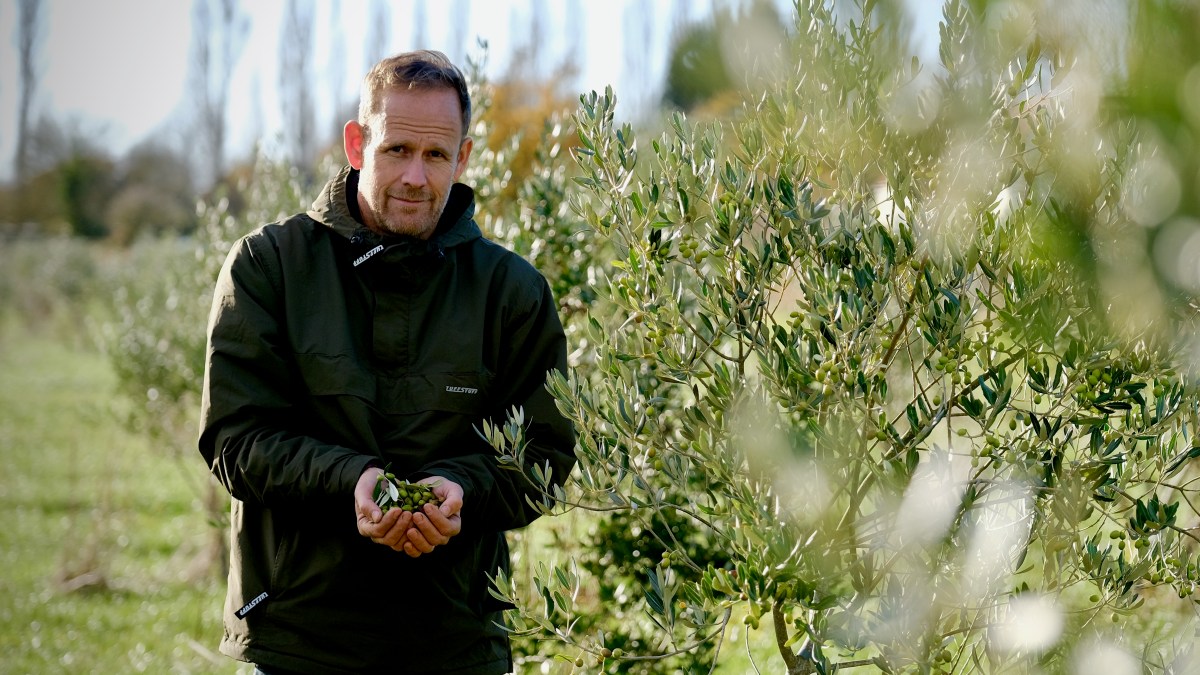
Neat rows of olive trees with their unmistakable narrow leaves line a field. But they are not on a hillside above the sea in Crete or in the rolling hills of Tuscany. Instead, these trees are braving the English winter on a peninsula in Essex.
A similar sight can also be found near the coast in Cornwall and on the low-lying ground of the Fens.
Europe’s olive groves have been rocked in recent years by drought, floods, heat and disease which have pushed olive oil prices up.
Meanwhile, as temperatures in England have crept upwards, the extended British summer has seen three growers in a race to produce the first English extra virgin olive oil.
Last year ValleRuan in Cornwall was the first to sell English olive oil with its Winter Press virgin olive oil sold at £15 for 250ml. But commercial extra virgin olive oil is the target for them all.
• Italian food’s a con: protect our fine English fare
Extra virgin olive oil is processed mechanically with limited treatment and its acidity should be no more than 0.8 per cent, according to the International Olive Council.
The optimal conditions to grow olives are very hot summers and winters that are not too cold, says Judy Ridgway, a British olive oil expert. Small amounts of rain in spring and autumn are welcome, but too much, too little or at the wrong time can prove disastrous. Ridgway said the most concerning variable for the English growers would be “how erratic the weather will be”.
Pete Thompson, whose oldest trees have been in the soil in Great Oakley in Essex for seven years, said: “When you first speak to an Italian or Spanish or French person about olives, they just laugh you out of the room.”
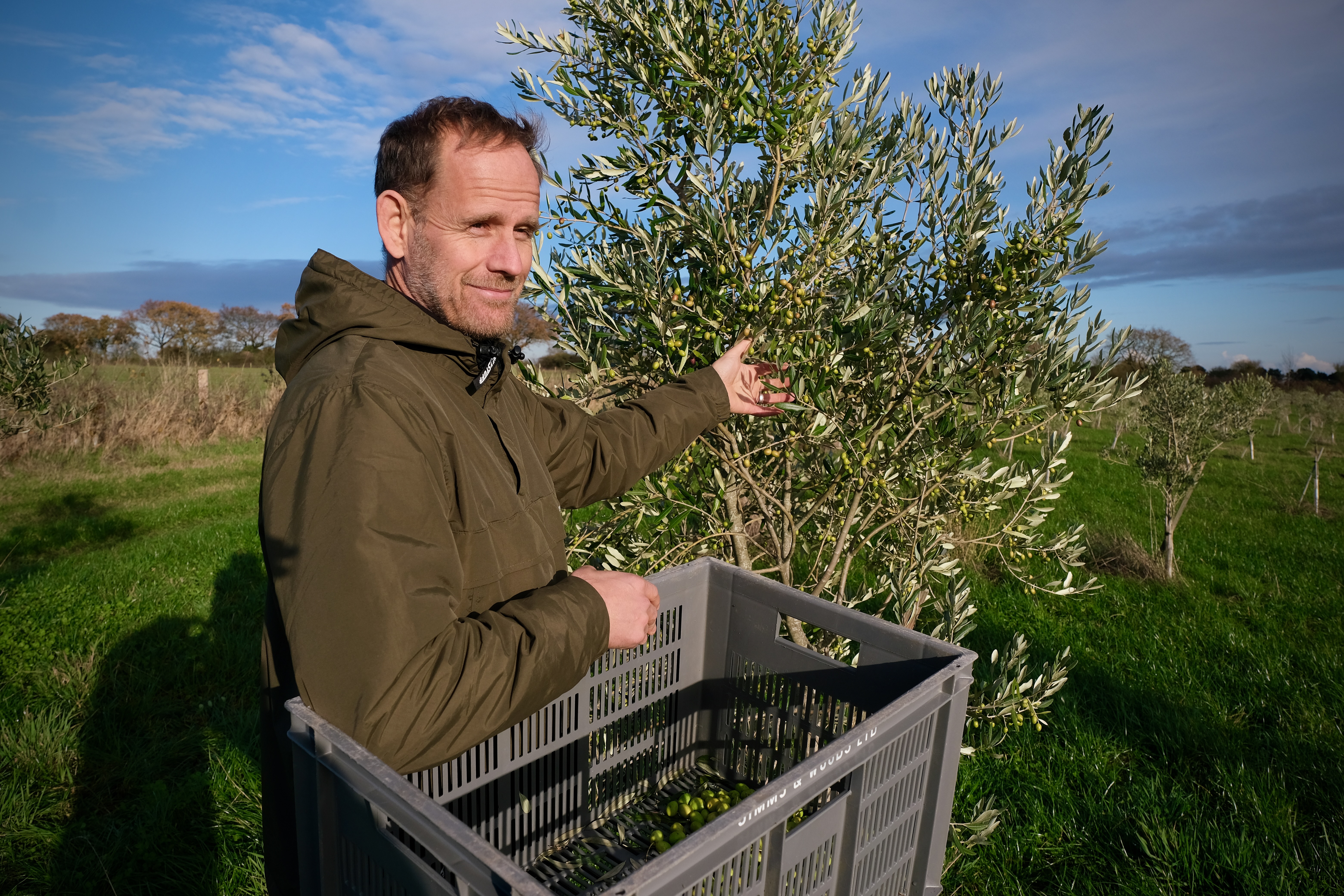
Pete Thompson in Great Oakley, Essex
NICHOLAS STRUGNELL FOR THE TIMES
Research on growing olives this far north is limited, but Thompson says he has proven that the trees not only survive, but “thrive”.
His 1,700 trees are planted in a microclimate in what is believed to be the driest part of the UK with high light levels thanks to the sea.
Thompson admits that the lower heat and sunshine levels mean his trees are not “as advanced” as those in the Mediterranean. But the trees have managed to survive temperatures as low as minus 7C, which researchers say should have killed them.
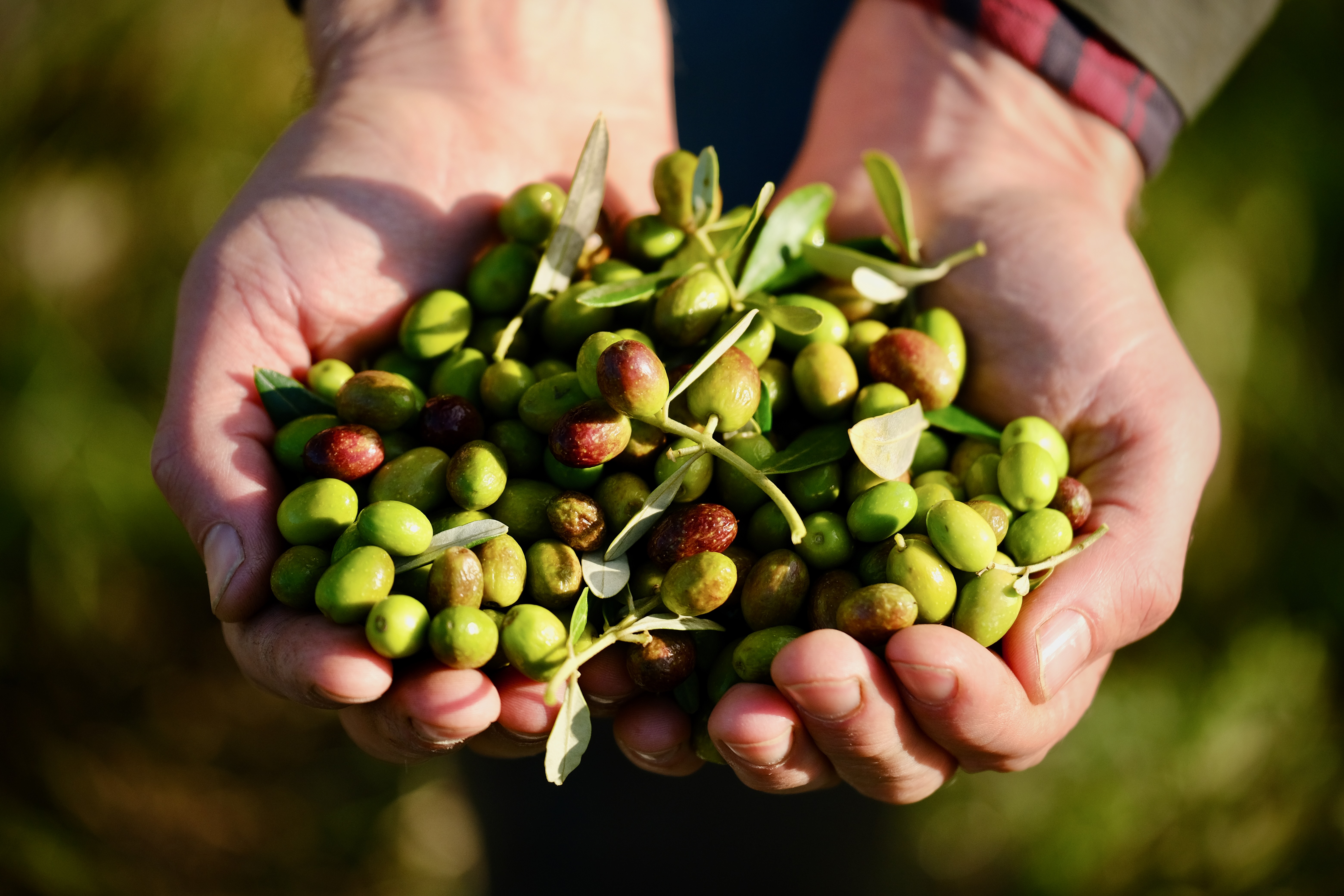
“The trees will quite happily produce olives, but knowing exactly when to pick and then understanding this process of milling, millaxing, pressing, centrifuge filtration, it’s a bit of an art,” Thompson said.
NICHOLAS STRUGNELL FOR THE TIMES
David Hoyles, a grower near Long Sutton, in Lincolnshire, has acquired a mill and after harvesting last week he and Thompson both put some olives through it, emulating the spirit of the co-operative mills in places like France. Each grower’s oil has been sent off to be be tested to establish whether it is extra virgin.
Hoyles, who planted 18,000 two-year-old olive trees on his family farm last year, is selling some of this year’s olive oil on his website, The English Olive Company, in small batches of 250ml bottles for £20 each. Each batch has sold out within 30 minutes.
His stock is limited as although the trees “came on really well” in this year’s warm, sunny and dry summer, he lost about half his olive crop to frosts and strong wind in recent weeks while waiting for the mill to arrive. Olives need to be processed immediately after picking to maintain the best-quality oil. Further crop was lost while experimenting with the new mill.
Hoyles hopes to be able to sell more oil next year after learning from this year’s mistakes.
His farm is also in a microclimate and on naturally fertile reclaimed silt soil. But Hoyles recognises that he will never compete with large brands which are growing on thousands of hectares in the Mediterranean, especially with the English climate which could limit yields.

Production at Hoyle’s English Olive Company
He believes he could stand a chance against the more artisan producers in Europe. “We can certainly compete in all other aspects in terms of our effort, our passion, our packaging, our offer to the consumer,” he said. “It’s a very big risk, but also a very big opportunity.”
Thompson says his vision is to replicate the success of English sparkling wine, which also became viable thanks to climate change and has begun to challenge champagne in reputation.
• Aroma of thistle! My dinner at the restaurant with an olive oil sommelier
“We want people to buy it because it is a really, really good olive oil and for it to be a repeat purchase,” he said.
He hopes to sell some oil next year and if his oil is extra virgin, Thompson plans to expand his project, which is supported by Belazu, a premium ingredients brand which started selling Provençal olives in England in 1991.
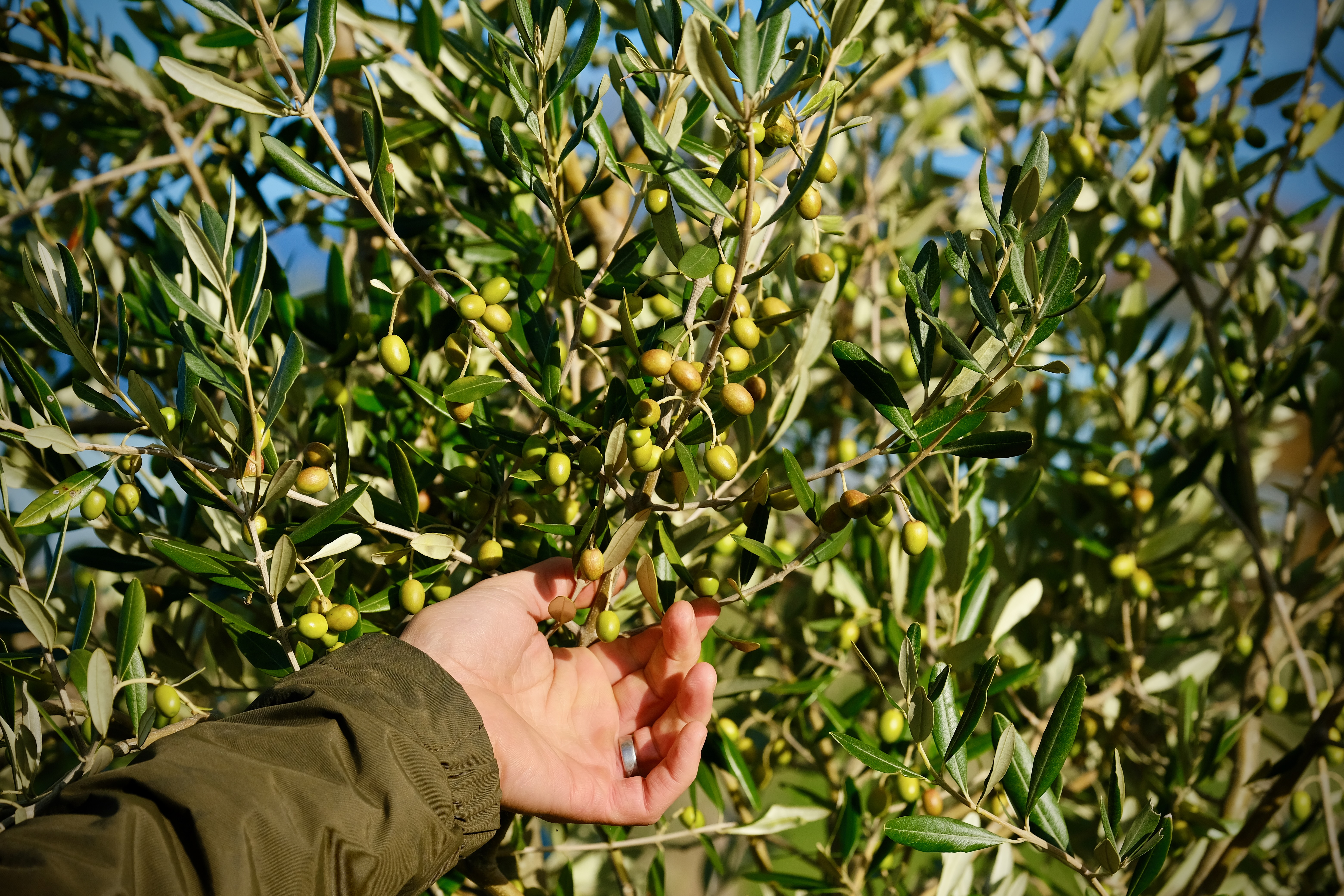
The olives at Thompson’s farm
NICHOLAS STRUGNELL FOR THE TIMES
Thompson described his oil as very grassy and peppery. Ridgway says those are two of the taste characteristics of olive oil, as well as fruitiness. A good olive oil has both complexity and harmony of flavours, she says.
Hoyles described his oil as quite grassy with a hint of wood and pine flavours and peppery undertones. He believes the polyphenol content, which is said to have health benefits, should be high, a benefit of the olives being less ripe than they would be in the Mediterranean.
The taste test
Most people think of olive oil as a commodity — a basic kitchen staple without much character (Giulia Crouch writes). But real extra virgin olive oil is as nuanced as wine, shaped by the land and environment it comes from.

Giulia Crouch tests Pete Thompson’s olive oil
JOHN NGUYEN FOR THE TIMES
This usually means the sun-soaked hills of Tuscany, a balmy corner of the Greek Peloponnese, or the vast, fertile plains of Andalusia — not Essex.
I have a sample of Pete Thompson’s Essex olive oil in front of me. It has a striking, vibrant green hue — lovely to look at, though the colour of olive oil is no indicator of quality.
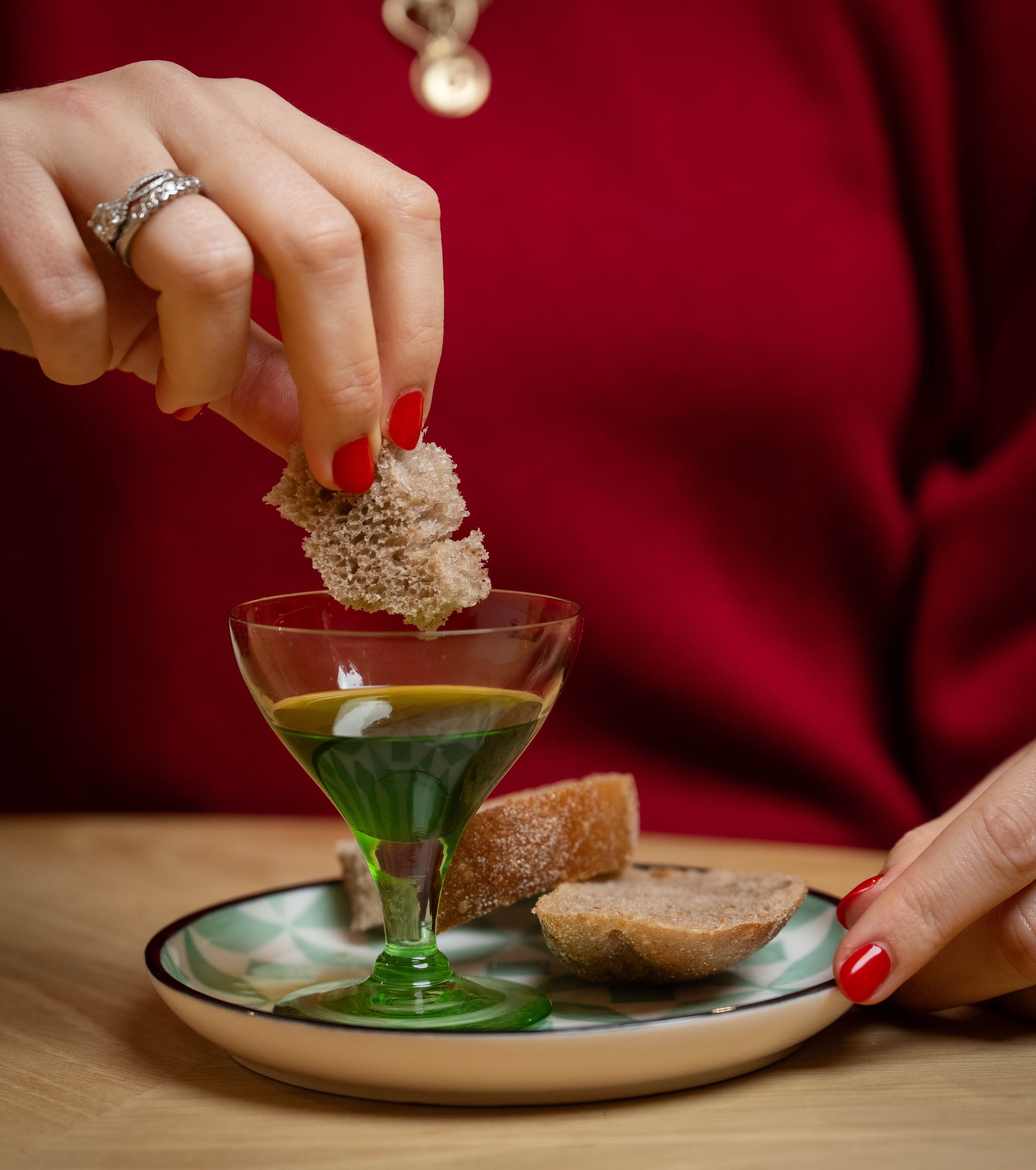
JOHN NGUYEN FOR THE TIMES
There are technical parameters an oil must meet to be classed as extra virgin — for example, an acidity no higher than 0.8 per cent— but lab tests aside, there are still ways a layperson can judge its quality.
Firstly, the smell. Proper, carefully made extra virgin olive oil smells alive — like a field of just-cut grass on a warm day. You should be able to smell the olive tree itself: a bright, herby, intense freshness that awakens the senses.
Taking a whiff of this oil, I’m hit with an intoxicating, grassy, and complex aroma — a promising sign that it’s going to taste good, since flavour is so much about smell.
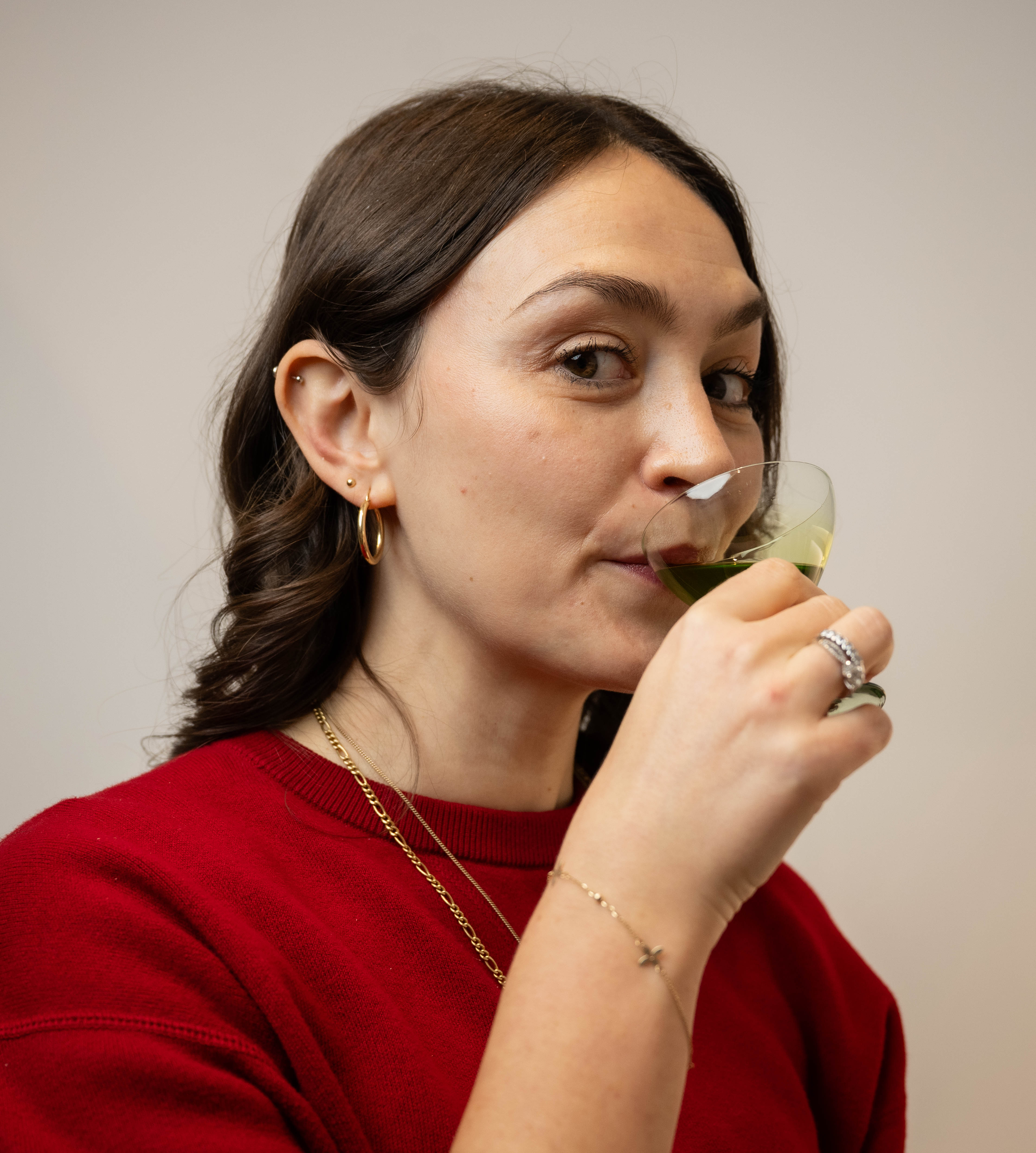
Another way to gauge a quality extra virgin is the cough test. That tickly feeling at the back of your throat after tasting an extra virgin olive oil isn’t a defect — it’s a sign the oil is rich in polyphenols, plant compounds with numerous health benefits.
JOHN NGUYEN FOR THE TIMES
I take a slurp of the English olive oil and I have to say, I wasn’t expecting much — but I am blown away. It’s exceptionally creamy and smooth, with fruity notes and a wonderfully savoury, nutty edge. A mild bitterness and gentle spiciness linger at the back of the palate, making it very moreish. I’ve tasted a lot of olive oils, and I am genuinely impressed.
Dining and Cooking