
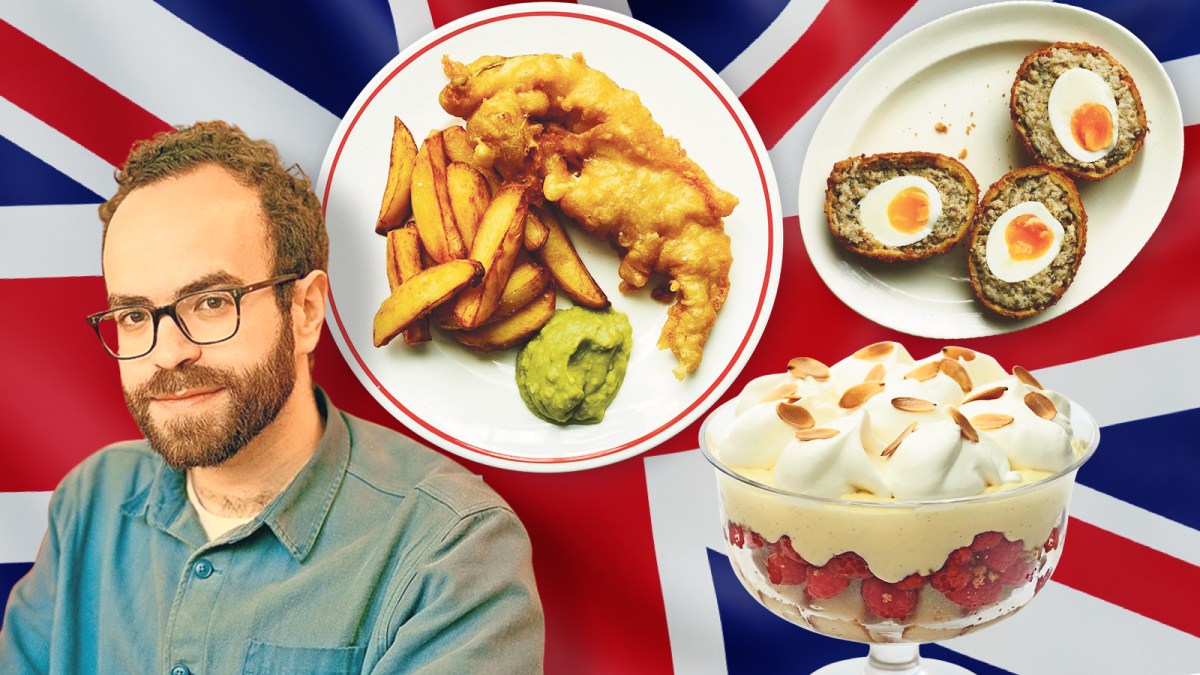
When The British Cookbook, a tome containing 550 of the UK’s most quintessential recipes, was published in France this month, its author Ben Mervis was sceptical.
Mindful that British gastronomy has a poor reputation on the other side of the Channel, he wondered whether the French really wanted to know how to make purée de pois (mushy peas), oeufs à l’écossaise (Scotch eggs) or anguilles en gelée (jellied eels).
“I wasn’t 100 per cent sure how it would be received,” said the American food writer, who has become an ambassador for British cooking.
He need not have worried. His work — Le Livre de la Cuisine British, as it is in French — has gone down remarkably well among Parisian critics who seem to be shedding longstanding prejudices. “No, British cuisine is not that vile,” wrote Le Monde after consulting Mervis’s recipes for such dishes as leek and potato soup, grilled kippers, Bakewell tart and sticky toffee pudding.
Noting that the French viewed British cooking as “too fatty, not sophisticated enough and even a bit strange”, the newspaper hailed the publication of the cookbook as a chance for “the reader to take a new look at this cuisine and to discover that it is far richer, more diverse and singular than it seems”.
The Libération newspaper said the book had been published in France amid an upsurge of interest in British cuisine, with chefs like Calum Franklin enjoying success with his new Parisian restaurant, Public House. The paper asked whether it was time for France to put aside its “scornful” view of British cooking, which it said had been summed up by Jacques Chirac, the late French president, who claimed at a G8 summit in 2005 that it was “the worst that exists, apart from Finland’s”.

The cookbook contains a glut of quintessential recipes, such as Battenberg cake
SAM A HARRIS
Mervis begs to differ. “I think it’s delicious,” he said. “When I was growing up in the US, you heard all the clichés about British food and weather. But since coming here, I see it very differently.”
• Read more: Is French food dead? Oui, top chefs think so
For centuries, British and French cuisines were similar in many ways, as Mervis’s book demonstrates. In the early 1700s, for instance, the French developed a recipe for crème brûlée, while in England — notably in Cambridge — cooks started making the same dish, which they called burnt cream. Mervis noted that the British seemed to have forgotten that it was originally one of their own national dishes, and have taken to calling it crème brûlée themselves.

Scotch eggs, or oeufs à l’écossaise, make an appearance
SAM A HARRIS
French cooking started to diverge from Britain’s in the 19th century, largely under the guidance of the likes of Auguste Escoffier, the chef and culinary author nicknamed “the King of Cooks and the Cook of Kings”. Mervis said Escoffier had pushed the cuisine served in French restaurants to new pinnacles of sophistication. “I’ve read Escoffier and you’re hard pressed to find a recipe that doesn’t have caviar, truffles or lobster,” he added.
In Britain, it was different. “Escoffier’s contemporaries were essentially domestic cookery writers writing for middle-class housewives,” said Mervis. Their recipes were not so glamorous, although often just as pleasurable. “British food was seen as hardier, less elegant, less about presentation and more about enjoyment,” Mervis said.

No British cookbook would be complete without a nod to roast beef
SAM A HARRIS
For decades, Britain’s cooking was eclipsed by its showier continental counterparts, including in the minds of the British elite which came to treat it “without the seriousness or thoughtfulness” that it afforded to French and Italian cooking, Mervis believes. But he says attitudes are changing in the post-Covid era, as demonstrated by the positive response to his book.
“If these last years … have taught us anything about being nourished, it is about the enjoyment of food and British food is all about enjoyment,” he said. “The main reason we are moving in this direction is we want to be true to what we want and not so much to all these pretences about what things should look like. That direction is aligned really well with British food.”
Britain’s culinary future is even more exhilarating than its past
Hannah Evans, Deputy Food Editor

Move over Delia Smith… while Britain boasts an admirable tradition of hearty home cooking, the restaurant scene is increasingly sophistiqué
FRED MOTT/EVENING STANDARD/HULTON ARCHIVE/GETTY IMAGES
Thirty years ago, it was French cities that boasted about having a delightful bistro or brasserie on every corner. They had French butter, French cheese, French baguettes, French wine — c’est bon! What wasn’t to like?
But anyone who enjoys restaurants today — be they chefs or diners — will know that the experience of eating in a restaurant in Britain is something that can’t be matched. The tables have turned: Britain does it better. I’ve been to France three times in the past ten months and, while the meals out I had were good, it all feels very samey.
Meanwhile, in Britain, innovation and diversity are the order of the day. Yes, we still have British restaurants such as St John Bread and Wine, which is celebrating its 30th anniversary, but the past five years have also seen the rise of gastropubs, artisanal bakeries where people still queue every weekend, ramen spots and trendy wine bars with small seasonal menus, British bottles and chef residencies.
Right now we’re even doing French food better than the French. Last weekend I had lunch at the new Café François — the little sister restaurant of St James’s power-lunch restaurant, Maison François, which does its own riff on French cuisine. I had an impeccable French onion soup, moules marinières and frites. Where was I? Right next door to London Bridge — and it doesn’t get more British than that.
Earlier this year, Bavette, a small French bistro in Leeds, was crowned Britain’s best local restaurant by the Good Food Guide; ten of the 100 restaurants shortlisted centred around French cuisine, up 50 per cent from the year before. “We do better French restaurants sometimes than the French,” Elizabeth Carter, the editor, said. Was I surprised? No — in fact, I agree.
Dining and Cooking