
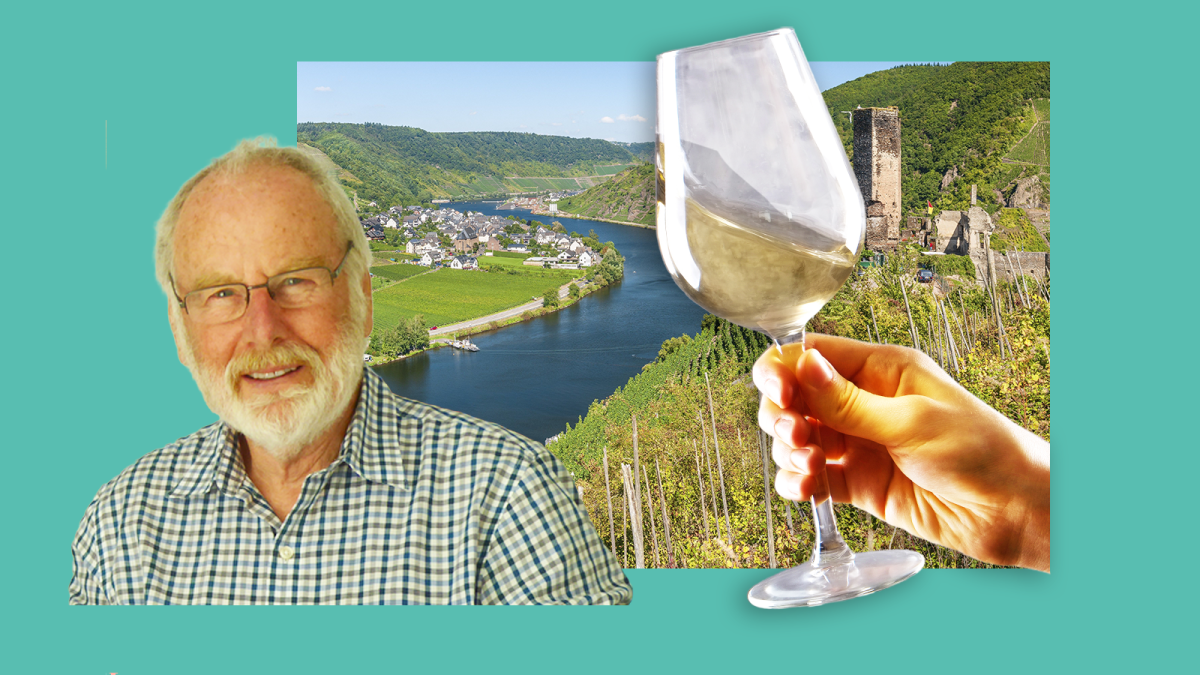
No one can follow the hairpin meanders of the River Mosel through western Germany and fail to be struck by the precipitous slopes of the vineyards in its valley, some of which are steeper than ski runs.
Its rieslings are celebrated for the mineral, flinty or even schieferig (slate-ish) taste that the underlying formations of blue, red and grey slate are supposed to impart to the wine. Yet a book by a British geologist has caused a stir in the region and beyond by arguing that this is little more than a fanciful marketing construct.
Alex Maltman, professor emeritus at Aberystwyth University, notes not only that slate tastes of nothing, but also that even if it did taste of something, there is no mechanism known to science through which it would pass into the bottle.
“When you taste the wine, you cannot literally taste slate,” he said. “It’s as simple as that. Slate has no taste, it can’t get into the vines, it’s not there in the wine, but people love to say, ‘Oh yeah, I’m getting slate, there’s slate here in the wine.’”
Taste the Limestone, Smell the Slate, a collection of the geological essays Maltman has published in The World of Fine Wine magazine, takes issue with the entire concept of minerality.
Up until two or three decades ago, the word was almost never mentioned in connection with wine.
After the turn of the millennium, however, it became intensely fashionable, turning up on labels from Sonoma to Sardinia, and seemingly describing anything from acidity and freshness to the absence of pronounced fruity notes.
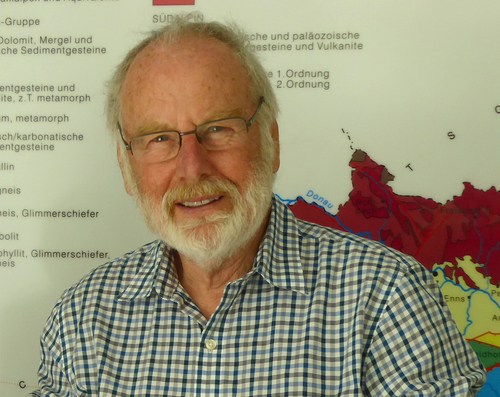
Professor Alex Maltman says you cannot taste slate
Eventually, it became so ubiquitous that it started to fall out of style, although the equally unscientific term “salty” has increasingly been taking its place in German wine criticism. “One of the reasons the word minerality has been so successful, so quickly is because it means what you want it to mean, so people can use it with confidence,” said Maltman. “No one can say, ‘Well, no, you’re wrong.’ Nobody can agree on its definition.”
• Fancy a tipple? For the latest in wine trends, just pass the salt
From a scientific perspective, it is at most a metaphor, and a fairly woolly one at that.
Minerals do play a role in winemaking. The vines take up more than a dozen basic nutrients from the soil, including calcium, potassium and magnesium, and trace quantities find their way into the grapes.
A more influential factor is the yeast and the fermentation process, which meaningfully alter the balance of minerals in the wine.
Apart from the core roster of nutrients, however, the chemicals from the soil and the underlying rock do not make it into the grapes, according to Maltman.
The book has raised some eyebrows in the Mosel Valley, where slate is often integral to the branding of the wine and helps to distinguish the region from Germany’s other riesling-growing areas, such as Rheingau and the Palatinate.
The German Wine Institute has accused Maltman of “linguistic nitpicking”. The Mosel Wine Society said it did not dispute Maltman’s account of the science but insisted that the slate did affect the terroir of the wine.
Maltman does not dispute this. He said there were various ways in which the slate was “tremendously important” for the profile of the wine, such as its excellent drainage properties and its capacity for absorbing and retaining the warmth of the sun, which is sometimes described as a kind of underfloor heating for vines. “I’m not saying otherwise for one moment,” he said. “All I’m saying is that you can’t taste that slate in the wine.”

Slate can absorb and retain the warmth of the sun to the benefit of the grapes
ALAMY
Ernst Loosen, whose Dr Loosen winery is one of the region’s largest and makes several slate-branded wines, shared Maltman’s scepticism about the concept of minerality and said they only used the term in marketing material as a metaphor.
“I can understand it if someone says ‘well, you can’t taste a stone or a patch of soil’. If people say ‘go on, have a lick of the slate and then you’ll see the minerality’, that’s all stuff and nonsense,” he said.
“But you need descriptive terms. Even if you can’t really grasp what minerality is, you still have a lot of customers who have positive associations with this term. So we’ve been happy to use it. You could regard it as a kind of code … At the end of the day, we have to describe wines and we try to use terms that are comprehensible and evoke positive connotations.”
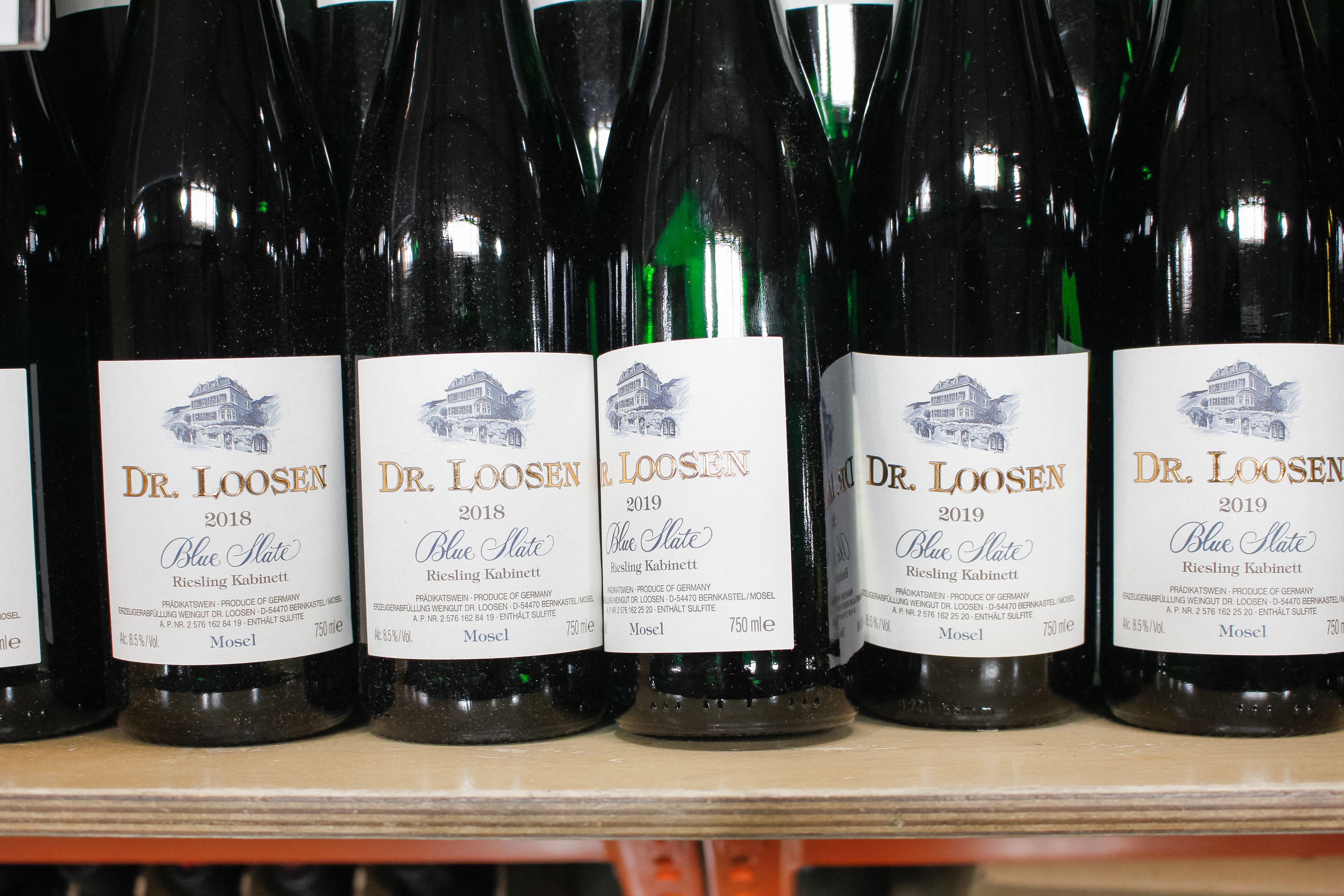
Ernst Loosen’s slate-branded wines
ALAMY
However, Loosen added: “Terroir is of course more than just the dirt beneath our feet. In principle it’s the whole interplay of the vineyard’s microclimate: the degree of exposure, the altitude and, of course, the soil, including its drainage. At the end of the day, there are so many factors that play into the taste of the wine, and the ground is one of them.”
Our wine critic’s verdict
The jury is out on the precise relationship between soil and wine (writes Jane MacQuitty). Experienced tasters, including me, register the smoky twang of volcanic soil in the distinctive wines of Sicily’s Mount Etna and the stony notes of the special fossil-rich Kimmeridgian slopes in Chablis — and, it has to be said, the steely, mineral zing found in top Mosel and Saar rieslings.
No one quite knows why these descriptions pop up endlessly in the wine world because clearly vines grown in a particular patch of dirt do not transport elements of that soil directly into the final wines, despite wine descriptions suggesting otherwise.
Everyone agrees that climate, grape variety and the viti and viniculturist’s input are more important than the influence of soil on a wine’s taste. Yet for all that, there must be a link somewhere between soil and taste. Is it due to micronutrients or the microbial life in the soil? Your guess is as good as mine.
Dining and Cooking