
This article is part of our F1 Origin Stories series, an inside look at the backstories of the teams, drivers, and people fueling the sport.
In its evolution over the last 75 years of the world championship, Formula One has become about so much more than racing on a Sunday afternoon.
The sport has built a reputation for exclusivity and high-end hospitality. A core part of the latter is the food cooked for guests in the paddock on a race weekend, often requiring orders of 3,000 lobsters and kitchens as big as four football pitches.
The teams also have their own culinary operations that must cater not only for their partners and guests, but the drivers, mechanics, engineers and wider team staff tool. Food options are tailored to keep energy levels high to aid peak performance.
But there was a time in F1 when catering within teams was barely a consideration. This is what made the appointment of the first team chef, Luigi Montanini, at Ferrari in 1979 a landmark moment.
“It was back in 1979, thanks to Piero Ferrari,” Montanini, now 72, told The Athletic. “He asked, ‘do you want to cook for my people here at Ferrari?’ The first GP was Jarama, Madrid, back in 1979.
“I started out with bread, ham and cheese, and then started to cook pasta. The connection was built off that.”
Born in Maranello, Ferrari’s home, Montanini was never far away from the Scuderia’s famous red colours. As a 12-year-old, he worked in a bakery that would be visited by Ferrari’s founder, Enzo Ferrari. “He used to come into the bakery and leave a big tip,” Montanini recalled.
It was in the bakery where Montanini gained the nickname ‘Pasticcino’ — translating as ‘Pastry’ — which stuck professionally after his appointment by Piero, Enzo’s son. His friends called him Gigi.
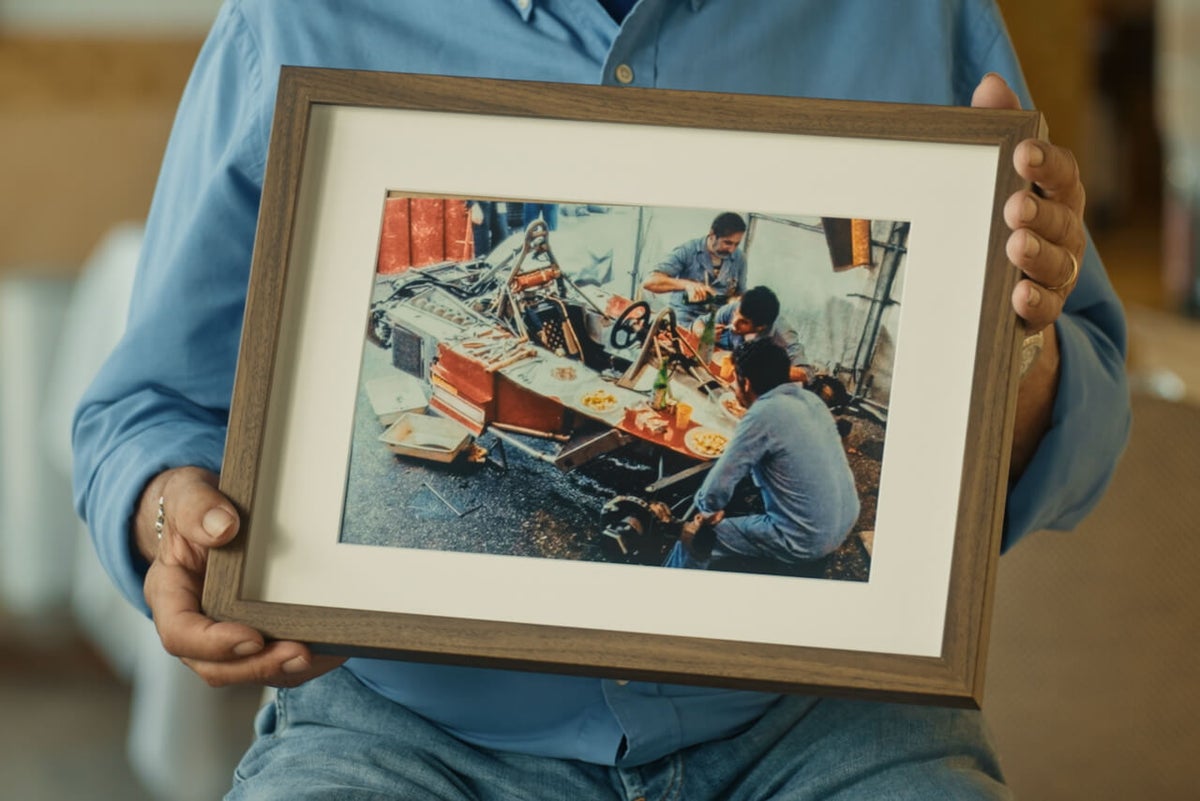
In the late 1970s, F1 paddocks were still fairly rudimentary — the focus was on car preparation in the garages instead of the huge hospitality structures that exist today. This left little room for Montanini to cook, but he would find space under the various Ferrari awnings to set up stoves, pots and pans, and start making meals.
“We were travelling around the world, but there was a thing that I always found in every place around the world: pasta, tomatoes and cheese,” Montanini said. “So spaghetti with tomatoes and parmigiano was my favourite recipe.”
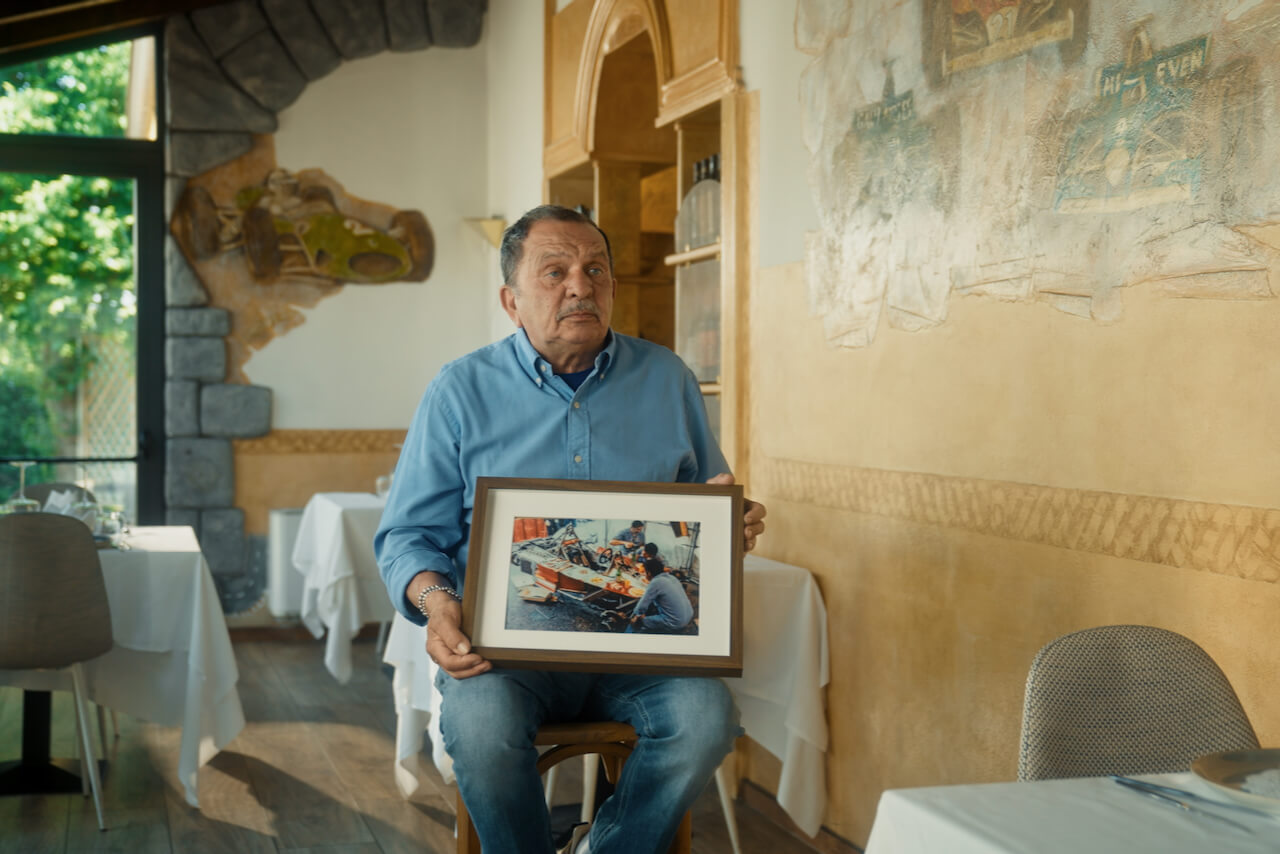
Luigi ‘Pasticcino’ Montanini in 2025 (Barilla)
Word of a chef cooking freshly-made food at the track quickly spread around the paddock, bringing down barriers between rivals. “Food had the power to create this family in the paddock,” Montanini said. “Drivers from different teams would come to me for some spaghetti, not just Ferrari.”
At the 2025 Italian Grand Prix, the Barilla pasta producer arranged a special lunch to honor Montanini — inviting F1 driver legends including Sir Jackie Stewart, Jacky Ickx and Jean Alesi, as well as F1 CEO and president Stefano Domenicali and Paolo Barilla, another ex-F1 driver, and now the deputy chairman of the Barilla company.
Together they shared plates of pasta cooked by Massimo Bottura, the famous Italian chef whose Osteria Francescana restaurant in Modena has three Michelin stars, and took time to pause during the busy bustle of a race weekend.
“The drivers of the other teams, they were going out to win,” Barilla told The Athletic. “In a way, you say that is a good life, because they must compete, but they must be friends. He had the personality to bring people together, so we are inspired even by those events of the past.
“Right now, if you even see how teams build the team structures, it’s more to divide than to come together. They’re closed off with security. The message you deliver is not being together.”
Ferrari won both world championships in Montanini’s first year travelling with the team, as Jody Scheckter and Gilles Villeneuve finished first and second in the 1979 standings. He would go on to cook for many greats in his time at Ferrari, and was quick to recall American legend Mario Andretti, who closed out his F1 career with two appearances for Ferrari at the end of 1982.
“I cooked for Mario in Monza and Las Vegas, he was on pole position (at Monza),” said Montanini. “He was the number one, it was very special.”
Montanini would also be called upon to cater for some of Enzo Ferrari’s most important dinners. He remembered having to cook dinner for Ferrari and Jean-Marie Balestre, the powerful FIA president from 1978 to 1991, at the team’s Fiorano base. “I didn’t have the chance to get things wrong!” he said.
After Ferrari, Montanini moved to Benetton, where he worked with drivers including world champion Nelson Piquet, grand prix winners Gerhard Berger and Riccardo Patrese, and a young driver by the name of Michael Schumacher.
Schumacher won his first two of seven F1 titles with Benetton in 1994 and 1995. Flavio Briatore, who was the Benetton team boss at the time and has since returned to the team, now known as Alpine, as an executive advisor, was delighted to meet with Montanini again at Monza in September.
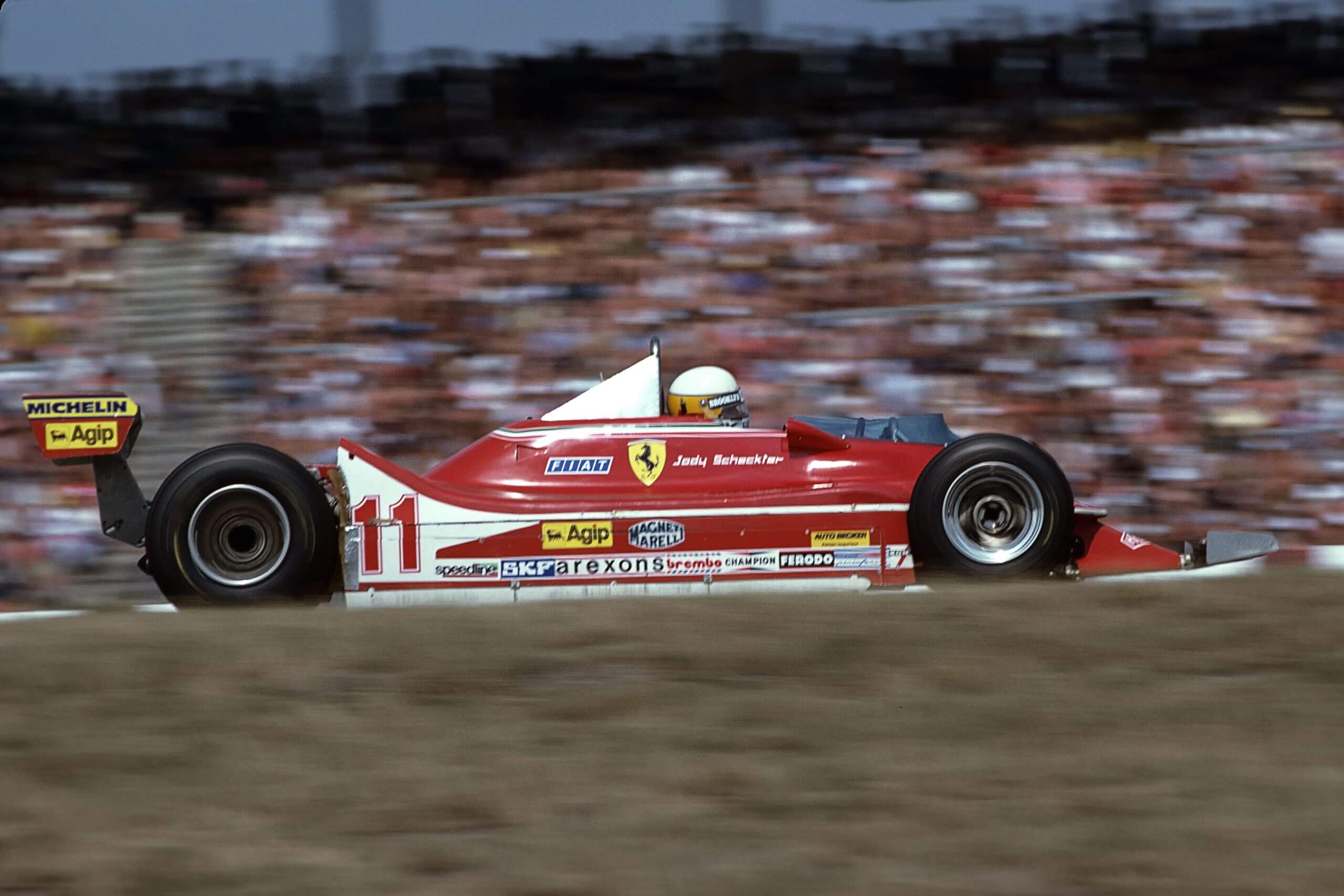
Jody Scheckter at the 1979 German GP, during Montanini’s first season working for Ferrari. (Bernard Cahier/Getty Images)
Montanini stopped working in F1 after being diagnosed with throat cancer. Once he recovered, he opened his own restaurant called “Da Pasticcino” on the outskirts of Maranello.
To this day, it specializes in traditional Italian dining. The interior features nods to Montanini’s F1 career, including newspaper clippings and photos from his time in the paddock, plus a Ferrari black prancing horse on the wall.
Cooking continues to bring Montanini just as much joy as it did all those years ago. “I’m still working in my restaurant,” he said. “I still have this passion for food.”
Returning to the buzzing paddock at Monza, Montanini was able to observe just how much things had shifted within F1, with its huge emphasis on hospitality in the modern era. It’s a far cry from cooking out of a few pans in what space he could find around the Ferrari crew putting its car together.
“The world has changed, and obviously the level of hospitality,” Montanini said. “I feel that back in the 1970s and the 1980s, they were more like family. There was this bigger sense of conviviality and camaraderie.”
The F1 Origin Stories series is part of a partnership with Chanel. The Athletic maintains full editorial independence. Partners have no control over or input into the reporting or editing process and do not review stories before publication.
Dining and Cooking