
I’ve conquered laminated dough in the name of buttery croissants. I’ve battled the onset of gluten development in my Thanksgiving pie dough. And I’ve triumphed over the yeast in my overnight cinnamon rolls. But none of that compares to the task of making panettone, the most revered of Italian Christmas breads.
To achieve that yolk-hued loaf studded with candied citrus rinds and raisins, one requires a level of patience and skill that I simply do not possess. The whole process usually involves two doughs, days of fermentation, and expertise in shaping. And that’s all before you actually bake the bread and then hang it upside down—like Italian bakery bats—only to hope the whole thing doesn’t collapse and you have to start all over again. It’s no wonder that panettone is often dubbed the “Mount Everest” of baking.
For some bakers, however, that challenge is part of the thrill. “Honestly, I’m crazy about it,” says Nicola Olivieri, the fifth-generation baker who runs Olivieri 1882 with his brother Andrea. “Making a normal biscuit is fine, it’s part of the job, but it’s not exciting to me. If you can make panettone, you can make anything.”
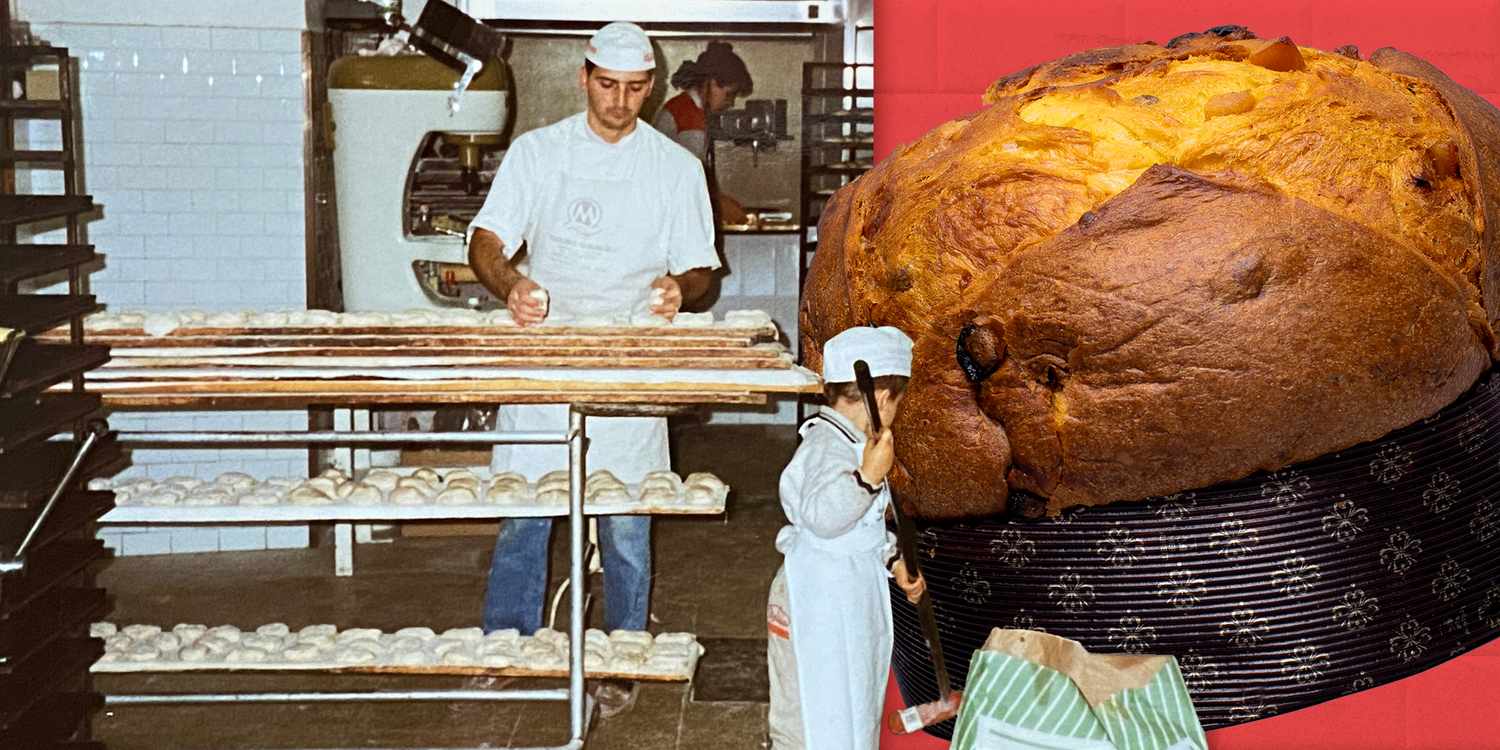
Based in Arzignano, Italy, Olivieri 1882 started—you guessed it—in 1882, when Luigi Olivieri started selling loaves of daily bread. For 143 years, the business has stayed in the family, with each generation adding its own touch to the operation, including the addition of panettone in the 1970s. In 2016, Nicola and Andrea Olivieri took over the bakery from their father and have since transformed it from a local mainstay into a global brand, regularly topping the “best” panettone lists online, including the New York Times and The New Yorker.
Nicola and Andrea Olivieri with their father, Oliviero.
Olivieri 1882
When I visited the bakery this fall, I got a behind-the-scenes look at their process, from the buckets of sticky, candied orange pieces that are tucked in like jewels in their classic panettone; to the concrete room filled with their signature black and white boxes. And what struck me most, besides the perfume of bubbling yeast, was that even with so much stacked against them—the arduous process of actually making the bread, the fact that the majority of sales happen around Christmas—they were able to find a whole lot of success by doubling down on their craft. “If you do everything, you can’t be the best at it,” Andrea explains. They now sell their panettone in 76 countries, and have grown their revenue 20-fold in the past decade.
For the Olivieri brothers, tradition is a living, breathing thing—they lean on their family history, combine that with panettone’s artisanal roots, and package it all up for a global audience. This is their magic.
“If you can make panettone, you can make anything.”
Dating back to at least the 15th century in Milan, panettone follows the same story as its global, holiday counterparts, such as the British Fruitcake and German Stollen. The history of these breads is cloaked in luxury: a holiday treat made with expensive ingredients like eggs and sugar, which were not afforded to most.
In the 1950s—20 years before the Olivieri family started selling panettone—this changed. According to Michael Krondl, author of Sweet Invention: A History of Dessert, the Bauli company started selling industrial versions of the bread en masse in supermarkets all throughout Italy. This accomplished two things: It made panettone more accessible to everyone, and it popularized the bread. “In post-World War II Italy, panettone is the commercial, store-bought item that is associated with Christmas,” Krondi emphasizes.
It’s only in the last number of years that there’s been a return to the artisan variety, made by hand instead of solely by machine. “Sales of the artisanal version exceeded those of the industrial version in value for a couple of years now,” says Stanislao Porzio, author of Panettone and the creator of Re Panettone, a national fair for artisan panettone.” After all, artisan panettone is, on average, much tastier than industrial ones.”
Olivieri 1882 has a front seat to this growing trend, but they’re also not beholden to their own history. Nicola doesn’t have any sort of nostalgic obligation towards his father’s recipe. After studying with other bakers, he says that he “completely changed everything,” ultimately landing on the recipe the bakery has been using for the past decade.
Their classic panettone really is that good. The cloud-like crumb melts in your mouth, the whisper of caramel and a bitter-sweet punch from the candied fruit balancing the richness of the bread. It’s panettone in its more ideal form—a far cry from the sad excuses wrapped in red cellophane that you might find at your local grocery store. And yes, at over $100 for a single panettone, Olivieri 1882 continues the bread’s history as a luxury item, but sometimes the good stuff is simply worth more.
Nicola Olivieri inspects a panettone in his family’s bakery.
Olivieri 1882
The Olivieri brothers didn’t stop with the classic—they climbed to the top of Mount Everest and asked, “What’s next?”
“When we started expanding internationally, we understood that tradition alone wasn’t enough,” Nicola explains. “We had to reinterpret panettone in a way that stayed true to its roots but spoke to new audiences. Testing new flavors allowed us to show the versatility of our craft.”
They’ve experimented with leaning into their Italian heritage, adding a limoncello panettone to their lineup, or playing with more global flavors, like in their matcha, yuzu, and white chocolate loaf. They’ve also introduced a summer panettone, which is a bit smaller than the traditional bread, with lighter flavors like peach and basil, or a simple citrus-forward panettone without raisins. Nicola’s current favorite is the dark chocolate and rum panettone, speckled with Bourbon vanilla.
As a result of these efforts, Olivieri has grown alongside the global interest in panettone. According to Alessandro Fucile, VP of Merchandising at Eataly North America, “Panettone sales have been growing steadily year after year, and the excitement now starts as early as October.” Fucile says social media and an increased passion for slow-crafted products drive the rise in interest. “Our guests love hearing the stories of family bakeries that still ferment the dough for over 48 hours.” Lucky for Eataly fans, they sell Olivieri panettone.
More interest means more bakers means more competition for Olivieri 1882, but the brothers couldn’t be happier with the idea. “I think we’ve inspired a lot of other bakers to make panettone, and that’s what we want,” Nicola explains. Now that’s the holiday spirit.
Dining and Cooking