
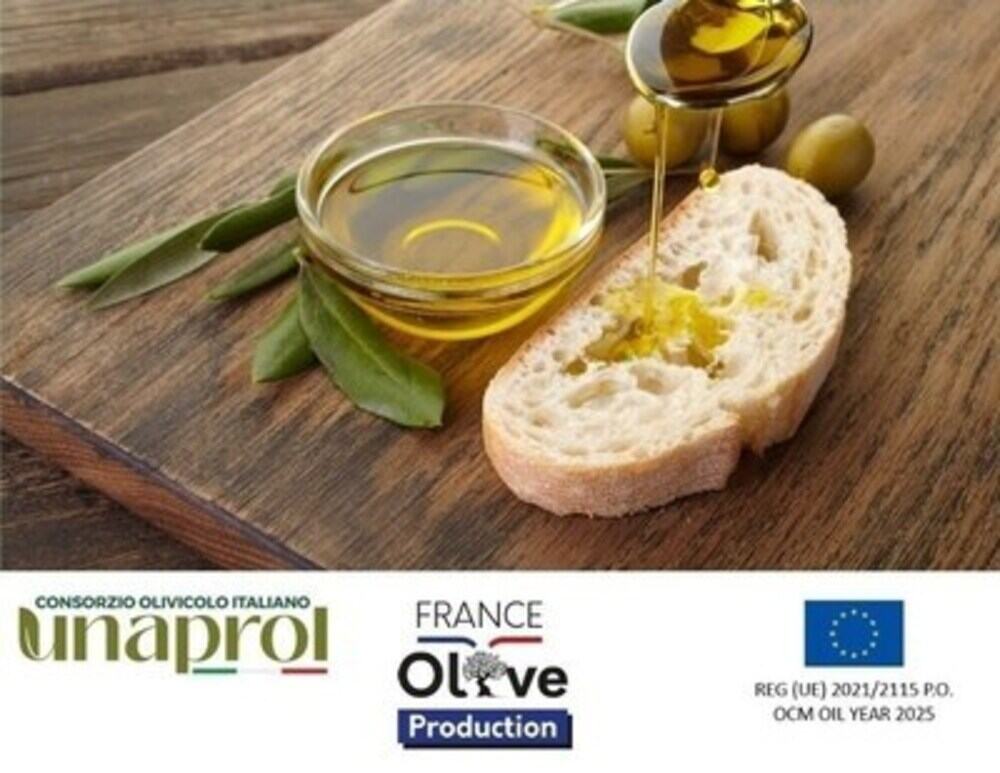
In a significant cross-border effort to safeguard consumer health and reinforce the prestige of Mediterranean exports, Unaprol (the Italian Olive Consortium) and France Olive Production have announced a joint strategic monitoring project. The initiative aims to guarantee the highest standards of food safety and quality for extra virgin olive oil (EVOO) produced in Italy and France.
The project, funded under EU Regulations 2021/2115 and 2021/2116, focuses on implementing advanced traceability and certification systems to verify products before they reach the final consumer.
At the heart of the initiative is an in-depth analysis of a large panel of samples representative of both nations’ total production. This multidisciplinary approach addresses the complex balance between ensuring total food safety and supporting sustainable agricultural practices.
The monitoring activity specifically targets a wide range of molecules and potential contaminants, including plant protection products and pesticide residues, heavy metals, plasticisers, and mineral oils such as mineral oil saturated hydrocarbons (MOSH) and mineral oil aromatic hydrocarbons (MOAH). The data collected from this risk analysis has allowed the organizations to develop comprehensive guidelines designed to help supply chain actors prevent contamination. These guidelines can be translated into a certifiable technical production document (DTP) for individual companies.
A key component of the project is the focus on products traced in accordance with the UNI EN ISO 22005/08 standard. By aligning monitoring with recognised quality systems and Critical Control Points (HACCP), the project ensures that “liquid gold” maintains its organoleptic properties while meeting modern safety profiles. Results from the initial monitoring phase have already confirmed that French and Italian products maintain a high food safety profile, reinforcing their status as pillars of the Mediterranean diet.
Beyond industrial standards, the project seeks to educate consumers on how to identify high-quality EVOO. The organisations have issued several recommendations for buyers to ensure they are purchasing genuine, safe products. Consumers are advised to scrutinise designations to ensure the label explicitly states “Extra Virgin Olive Oil” and to verify geographic indicators by looking for PDO (Protected Designation of Origin) or PGI (Protected Geographical Indication) seals.
Furthermore, buyers should check for standards and seek out voluntary certifications such as ISO 22005/08, GSFS, or IFS. It is also important to consider production methods, giving priority to oils with organic or integrated production certifications. Finally, shoppers should maintain price awareness and be cautious of unusually low prices, which often indicate poor quality or a lack of rigorous safety testing.
Dining and Cooking