

It seems like only yesterday that we crowned 2024 the year of the tiny, practical restaurant. What we hadn’t predicted was that, just one year later, big restaurants would come roaring back. But not just any big restaurants — specifically, big Italian restaurants.
In the post-pandemic years, San Francisco restaurants shrank so they could run skeleton crews. They leaned into counter service and prix-fixe menus — anything to keep labor predictable and food costs in check. But in the past year, something shifted. A handful of seasoned operators are gaining the confidence to take a swing at sprawling footprints. And the equation they’re betting on is as ubiquitous and safe as red sauce: pizza + pasta = success.
The trend arguably kicked off last year with Italian American Little Original Joe’s in the Marina — whose success serving meatballs and martinis has been the talk of the town and, frankly, the envy of half the industry. But over the last 12 months, the Italian slice of the restaurant scene has gotten even bigger.
La Connessa opened in Potrero Hill, with wood-fired oven pizzas and handmade pastas. Piccino had a 200-seat second coming in the Presidio. Bosco — a 5,000-square-footer — opened in SoMa, and Original Joe’s (the precursor to Little Original Joe’s) expanded to a 10,000-square-foot, 200-seat behemoth in Walnut Creek. And the marinara sauce tsunami looks like it’ll continue well past December: Come 2026, the Ferry Building will welcome to the mix Lucania, from the people behind A16.
 Seafood bucatini at Piccino Presidio.
 Alexis Moreno stretches dough at Che Fico Pizzeria.
  A spread of plates at Bosco.
Notably, none of these establishments is a firstborn. They are second, third, and even fourth restaurants opened by seasoned vets making calculated moves.
Matt Brewer and chef David Nayfield — who have two popular Che Fico locations, in SF and Menlo Park — have the most ambitious project on the list: Via Aurelia, the 200-seat, 8,000-square-foot Tuscan-inspired restaurant that opened in September in the glossy Mission Rock development.
For Nayfield, another Italian restaurant was an extension of his lifelong obsession. The pastas at Via Aurelia are treated as works of art; even the rice-sized orzo is house-made. “Anyone who knows me knows that I’ve dedicated my life to pizza and pasta. I’ve spent months traveling in Italy, working for a butcher shop in Puglia, a pizza shop in Naples,” he said. Even when he was in New York working at Eleven Madison Park, he wasn’t rushing to eat at Per Se. “I found myself going to Roberta’s and Franny’s.”
But passion explains only part of it. There’s a spreadsheet logic to the Italian boom, too.
Tim Stannard, founding partner of Bacchus Management Group, built the 100-seat La Connessa around the idea of optimism. He decided that with minimum wage hikes slowing, and technology like handheld point-of-sale systems creating more turns, midlevel restaurants — the beloved category he’d feared was on its way to extinction — were viable once again. Making the menu Italian would clinch the deal.
“It’s kind of like solving a Rubik’s cube,” he said of the profitability puzzle. “Italian is the kind of food that allows you to have a little antipasti at the bar, maybe bring the kids for pizza, have some salads, some pasta, some wine.” Plus, there’s the built-in appeal of carbs and cheese, with acidity from tomatoes or lemons: comfort.
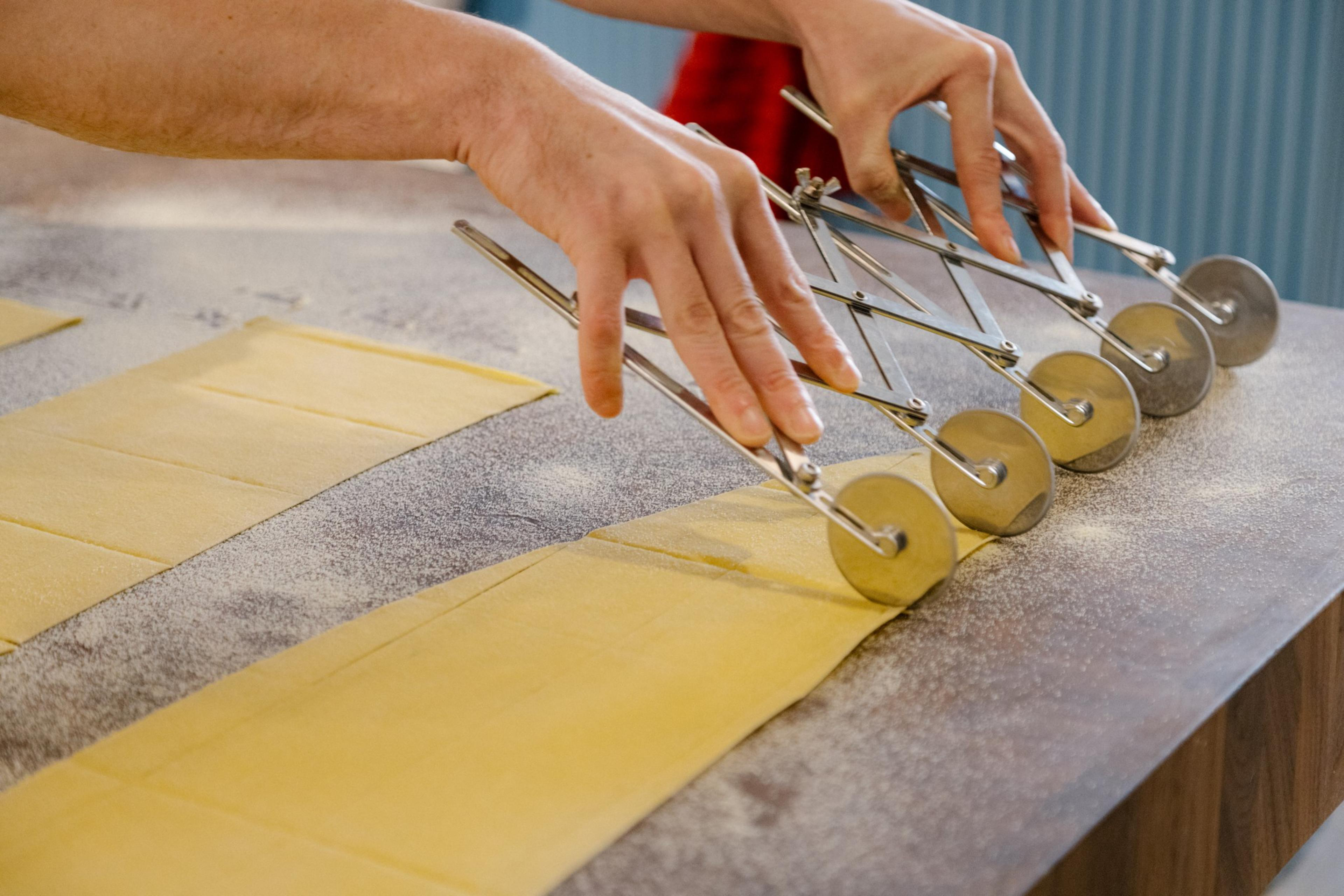 Cutting pasta at 7 Adams.
 John Duggan Sr. greets diners during lunch at Little Original Joe’s on Chestnut St.
This appealed to Eric Vreede, too. The owner of the Absinthe Group had a problem to solve when he opened Bosco in Showplace Square. The sweeping, 180-seat space had been inhabited by his group’s Spanish restaurant Bellota in 2016, a time when the city was in a different economic place, and the Airbnb building, where it’s located, was bustling. But the menu of cured meats, saffron, and paella was too expensive for a city facing a drastically reduced workforce and daytime population.
“We decided to see if we can rebrand the restaurant space in a way that makes sense for today,” he said. “Keep the prices reasonable, get people in the door.” The correct answer, of course, was Italian.
And so the city’s newest trend is actually one of its oldest: a lot of tomatoes, a shameless amount of gluten, and a business plan that doesn’t require a Ph.D. in economics to understand. “Though it takes labor, Italian can be less expensive to produce,” said Vreede. “Especially pasta — because it’s just flour and water.”
Dining and Cooking