
Summary 
Tèra de Prie, located in Liguria, cultivates Taggiasca olive trees on terraced orchards, maintaining dry stone walls and traditional agricultural techniques to mitigate climate change effects. The company’s commitment to environmental sustainability and quality production has earned them recognition, with a focus on preserving a healthy environment for wildlife and providing a serene work environment for their collaborators.
Between alpine summits and the Mediterranean coast, the Taggiasca olive tree has long thrived on the steep terrain of western Liguria, becoming a distinguishing feature of the landscape.
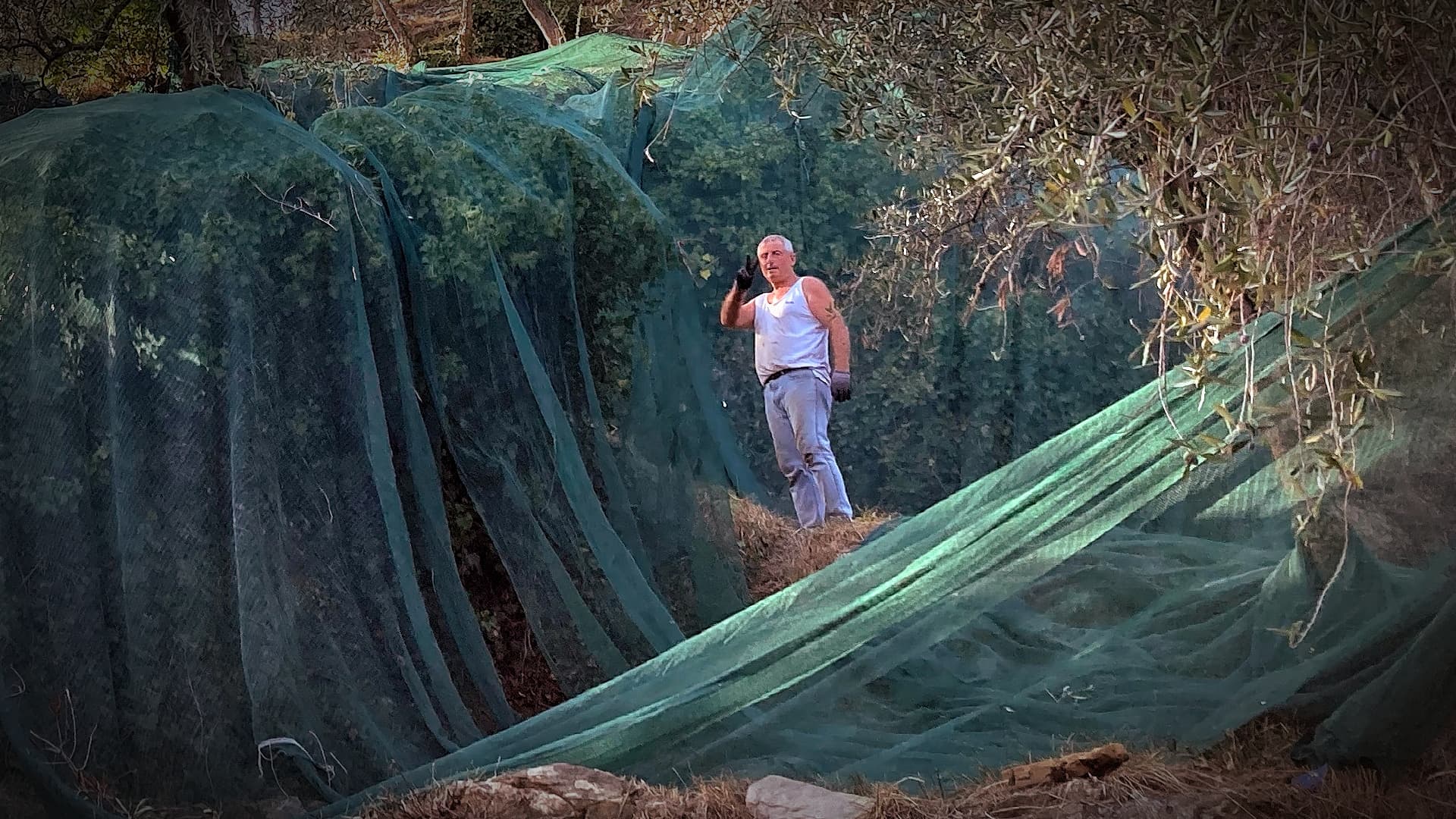
On the foothills of Mount Guardiabella, an offshoot of the Prealps, Tèra de Prie cultivates 4,500 trees scattered over 15 hectares of terraced orchards at 300 to 400 meters of altitude.
The groves are located throughout the hamlets of Aurigo, Borgomaro and a few other villages of the Impero Valley, near Imperia.
“This area has always been rich in stones and trees,” co-owner Nicola Ferrarese told Olive Oil Times. “The first peoples who arrived here, the Ligurians and then the Romans, started using the tree wood to build their boats and collected the stones to create the terraces, turning a problem into a resource.”
See Also:Producer Profiles
Hence, the name of the company, Tèra de Prie, which in the Ligurian language means ‘land of stones’ or ‘land made of stones.’ The company logo depicts a stylized human figure wielding a magaglio, a local word indicating a type of three-toothed hoe. It can be seen as a farmer hoeing, gearing up for the olive harvest or struggling to fix a retaining wall.
The latter image evokes the constant maintenance required by the terraced plots, whose slope gradient is at least 45 degrees. Every year, the company restores between 180 and 200 square meters of dry stone walls on the property.
The result of this commitment towards the territory, shaped by a thousand years of heroic farming, is Tèra de Prie Biologico Monocultivar Taggiasca, which earned a Gold Award at the 2025 NYIOOC World Olive Oil Competition.
“Our work of preservation has not only a historical and cultural value – just consider that UNESCO recognized the art of dry stone walling as an Intangible Cultural Heritage of Humanity – but it also has other major implications,” Ferrarese said.
“A good maintenance of the dry stone walls drastically reduces the hydrogeological risk,” he added. “Due to the importance of this activity, the European Union covers part of the cost necessary for their restoration. However, well-done work always requires an extra amount of expense, as well as additional efforts.”
The use of traditional agricultural techniques, such as dry-stone terraces, is widely recognized as an adaptation measure to mitigate the effects of climate change.
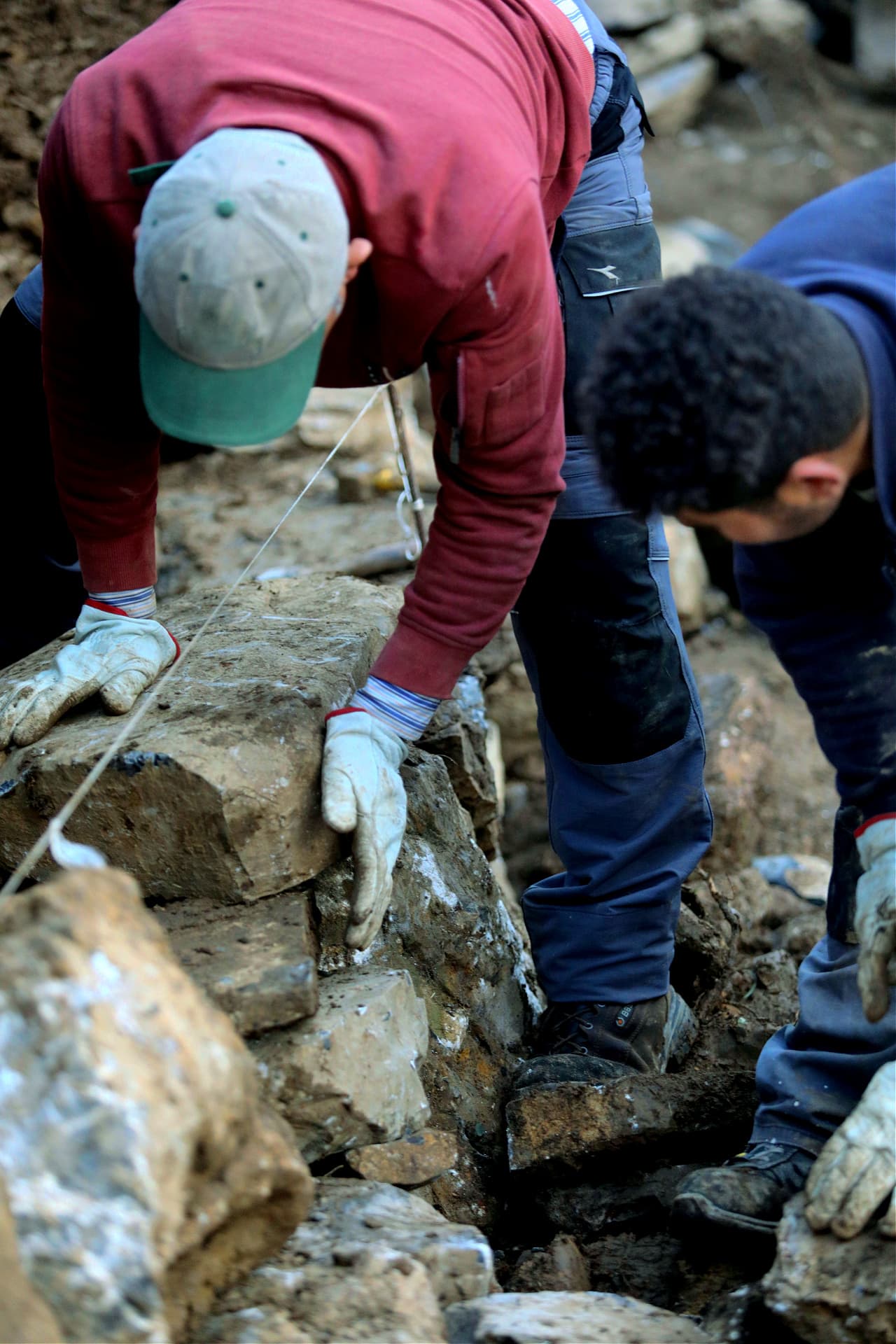 Despite E.U. funds, recovering of dry stone walls takes an enormous amount of time and money. (Photo: Tèra de Prie)
The E.U. manages funding programs, such as “Using Dry-Stone Walls as a Multi-purpose Climate Change Adaptation tool,” the goals of which are to restore and maintain dry stone walls in a long-term manner, as they enable excellent water drainage and effectively minimize the risk of landslides and floods.
“Among their environmental benefits, these walls provide a specific natural ecosystem for many species,” Ferrarese said. “Moreover, they act as temperature regulators, creating a microclimate, thanks to the stone’s ability to store the heat of the sun and then to release it.”
Ferrarese manages the company alongside his father, Franco, and last year, his wife, Sonia, joined the team to oversee marketing and business initiatives. The couple has two children, eight-year-old Andrea and six-year-old Francesca, who has already shown interest in the family’s commitment to olive production.
“Every year, our kids are the first tasters of our extra virgin olive oil, and they love getting involved in the harvest, which for them is an exciting experience,” Ferrarese said. “Speaking of the link between generations, most of these lands have been passed down to us from our ancestors. Both my mother’s and my father’s families were, in all likelihood, olive growers since 1700.”
The origins of their entrepreneurial venture date back to the mid-1980s, when Franco Ferrarese began revitalizing an abandoned olive grove.
“He then recovered other plots and we started making oil for household consumption,” Ferrarese said. “After purchasing some neighboring land, at the end of the 1990s, he established a small mill, and in 2000, he created a company.”
In 2011, the farm was certified organic. In 2016, Ferrarese joined his father in managing the business, and together they founded Tèra de Prie.
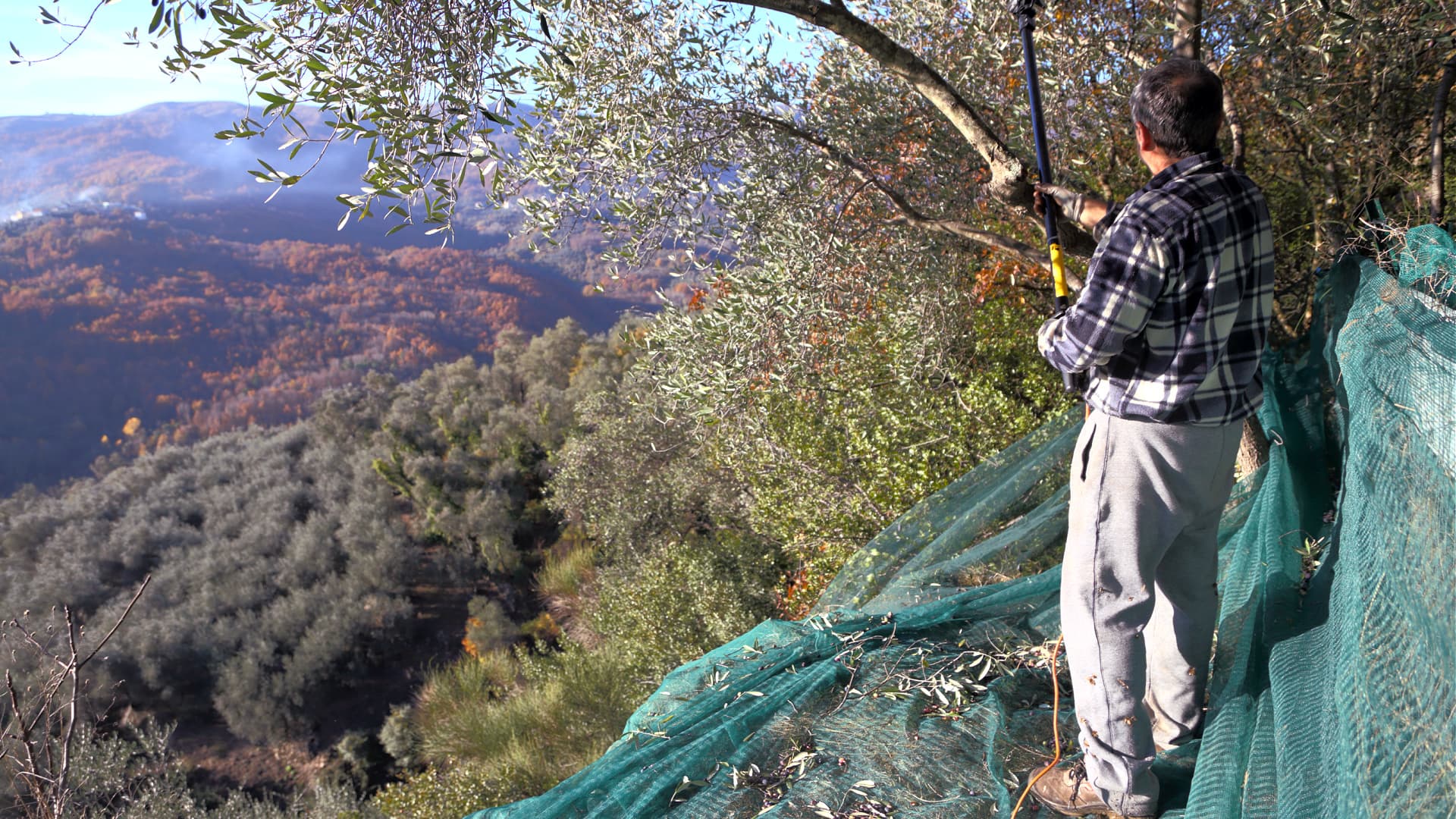 The territory of Tèra de Prie is shaped by thousands year of heroic farming (Photo: Tèra de Prie)
“We have a precious collaborator, Emad Balat, who began working with us 25 years ago, and today he is a true expert in the construction of dry stone walls. His skill is invaluable. Building this type of wall without using binding material not only takes effort but also calls for great expertise,” Ferrarese said. “Emad and I also take turns in managing the company mill, equipped with advanced Mori-Tem technology.”
“Another great collaborator, Zeka Ilmi, works in the olive groves all year, and in the summer he takes care of our vegetable garden,” he added. “This is where we source the vegetables for our hotel’s restaurant.”
The Ferrarese family manages a hotel in Diano Marina, whose catering section is supplied with extra virgin olive oil and other fresh, organic agri-food products from their farm. The hotel guests can participate in olive oil tastings and tours of the farm and mill.
“We organize events for our guests and for all those who want to visit our olive groves and the milling facility, which is regularly updated with the best technical innovations,” Ferrarese said. “We make an olive oil tasting, and I give them some information about these terraces and the history of Ligurian agriculture, trying to convey both our passion and some useful information to recognize a good extra virgin olive oil.”
The company’s pursuit of quality has always been closely tied to its commitment to environmental sustainability. Before applying for organic certification, the Ferrarese family began focusing on organic methods of production.
“We minimize tillage and let the spontaneous herbs grow on our terraces to improve biodiversity and attract beneficial insects,” Ferrarese said.
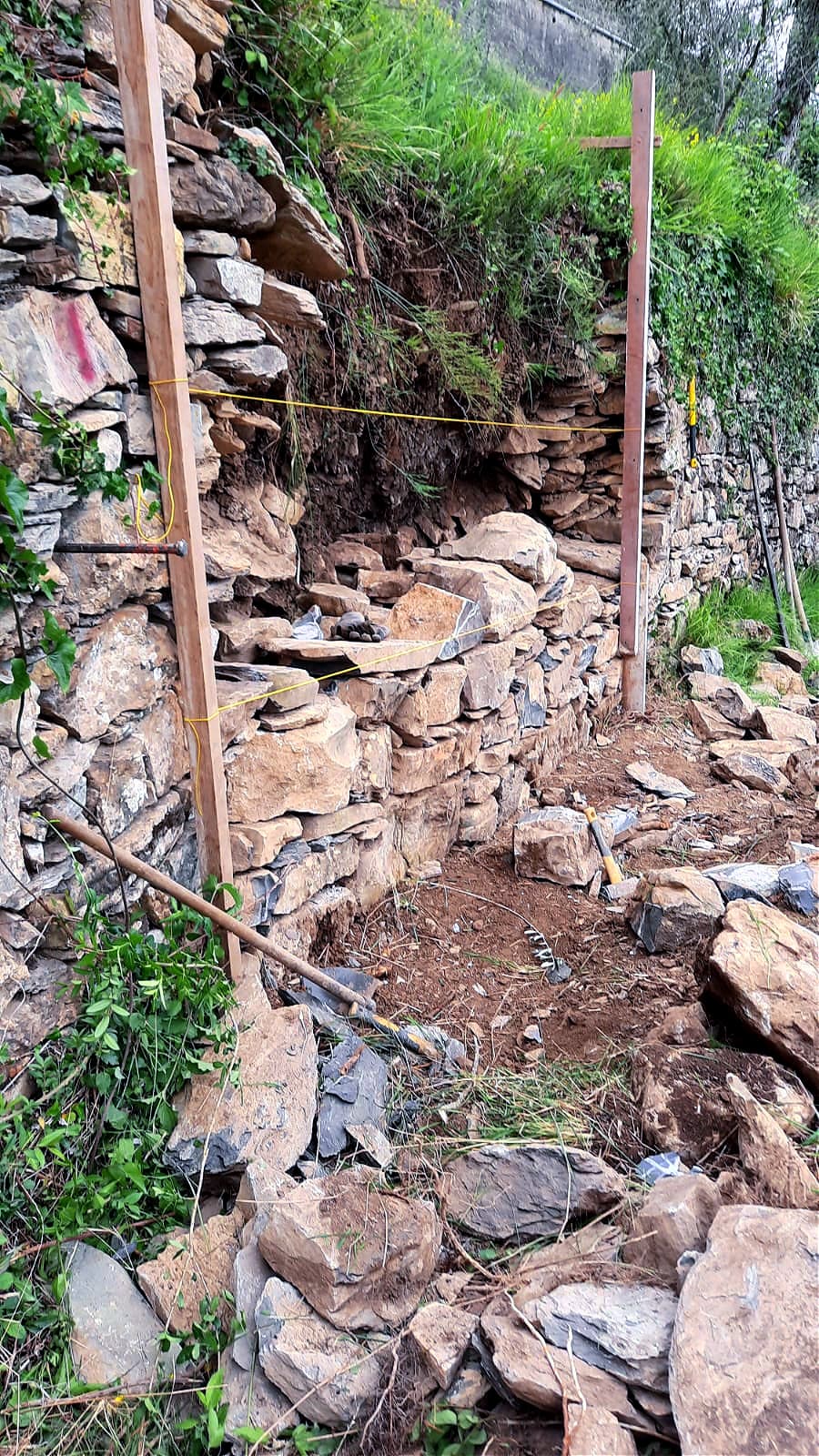 Tèra de Prie restores between 180 and 200 square meters of dry stone walls on the property each year. (Photo: Tèra de Prie)
“We mow grass just once a year before harvesting, and actually, I can say that the wild boars help us practice green manure, as they loosen up the soil under the trees while in search of food,” he added. “Indeed, our olive groves are rich in wildlife, and we aim to preserve this healthy environment.”
Most of the plots face southwest, offering excellent exposure to the sun that benefits the Taggiasca olive trees. The orchards also include a few dozen trees belonging to yet unknown varieties, which ancient farmers used to improve pollination. The company is currently studying them in collaboration with a university research group.
The average width of a terrace is approximately three meters, but in some cases, it can be as little as two meters. As a result, each terrace typically contains one row of olive trees, while only a handful have sufficient space for two rows. For optimal use of space, due to logistical and safety reasons, the company conducts regular and meticulous pruning of its olive trees.
“The activities on these orchards can often be strenuous, and especially for this, our collaborators deserve to work in a serene and pleasant environment,” Ferrarese said. “I believe that the respect for the land cannot be separated from the respect for and enhancement of people who work and live in it.”
“Every time we hire someone, even just for a season, the first oil that comes out of the mill goes to them, because they helped us create something unique like a high-quality extra virgin olive oil,” he added.
“True quality is not an end in itself, but aims at everyone’s well-being. It seeks the common good and acts in the best interest of the entire community. This is what we strive to do, and it is reflected in the care with which we protect this fascinating territory.”
Dining and Cooking