
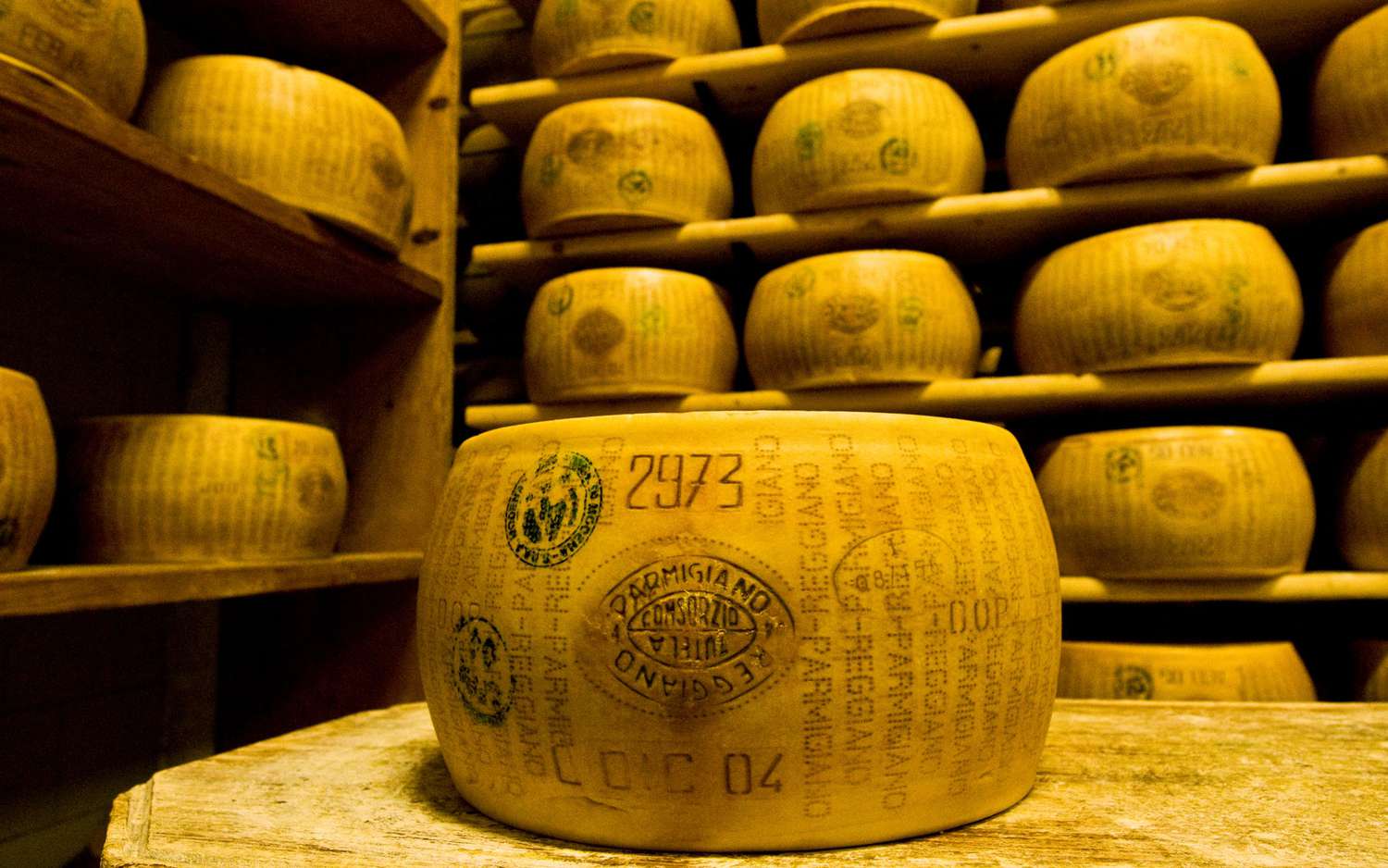
Discover authentic Parmigiano-Reggiano cheese, only produced in Italy’s Emilia-Romagna region, on the Parmesan Cheese Trail.
Explore Parma’s rich culinary history, including 44 PDO products, making it Europe’s leading food region.
Take guided tours of local dairies to witness traditional cheese-making techniques and enjoy tastings of fresh Parmigiano-Reggiano.
“Parmesan” is what most people ask for when craving a sprinkle of cheese over their pasta, but outside of Italy, “parmesan” could be made out of any type of hard cheese. Inside Italy, only “Parmigiano-Reggiano” is the real deal. Just as Champagne must come from a specific region in France, and Port from Portugal, authentic Parmigiano-Reggiano is cultivated exclusively in Emilia-Romagna. In fact, its title was among the first protected designations of origin (PDOs) established in the European Union. The region is well worth seeing for yourself, especially for self-respecting gourmands who will enjoy a pilgrimage to the Parmesan cheese trail.
“This strip of land crossed by the Via Emilia, from the river Po to the Apennines, has birthed some of the most iconic products of Italian cuisine,” explained Nicola Bertinelli, president of the Parmigiano Reggiano Consortium, the trade council tasked with protecting the designation. “Parmigiano-Reggiano, Parma ham, Balsamic Vinegar of Modena, even the fresh egg pasta all come from here. They have their origins in the mists of time. Just think: the first document mentioning a cheese made in Parma dates back to 1254.”
tirc83 / Getty Images
Today, the region is known as the “Italian Food Valley” and boasts about 44 PDO products. That’s more than any other region in Europe. The U.S. does its fair share to promote its stature. Each year, we buy more than 10,000 tons of Parmigiano-Reggiano, making us the second biggest consumer after France.
Any exploration of the region typically begins in Parma, a mid-sized city with a population of 190,000 residents and a history dating back 3,500 years. Getting here requires a 90-minute drive from Bologna or a two-hour excursion out of Milan’s Malpensa Airport (MXP).
Once you arrive, park your bags at the Grand Hotel de la Ville, a five-star accommodation within easy walking distance of downtown attractions. This is also the perfect jumping-off point to explore dozens of dairies in the surrounding countryside—where the cheese is crafted—and Michelin-starred outposts where it is worked into elegant cuisine. Take your first meal at Parizzi for an example of how Parmesan, aged up to four years, can influence varied components throughout a three-course tasting menu.
Tom Stoddart / Contributor / Getty Images
Sleep off the jet lag before heading out on the trail. Then start your journey at the Museo del Parmigiano Reggiano. Dedicated to the namesake cheese, the museum is open to the public on Saturday and Sunday. Nearby, along the eastern outskirts of the city, you can also book a guided experience at Latteria Sociale San Pier Damiani. You’ll receive a two-hour tour showcasing a handmade technique that’s remained largely unchanged for generations. Skilled laborers stretch and sculpt curds, eventually hanging 100-pound wheels from a cloth suspended above copper-lined vats. Afterward, you’ll get to taste several examples of the finished product.
Further south, stop at Caseificio San Bernardino for a compelling illustration of how integral aging is to premium Parmesan. Among the bigger dairies in the region, the producer maintains a vast storage room where wheels are stacked 24 high and 90 long. A guide walks you through the tight rows, with thousands of pounds of cheese towering overhead. After a minimum of 12 months, an inspector will tap every one of these specimens, testing for uniform density and the absence of fissures.
AGF / Contributor / Getty Images
The consortium maintains the most rigid standards in all of Italian cheese manufacturing. And it is evident in each bite, particularly when procured from the source. Fresh from the aging warehouse, blocks of Parmigiano-Reggiano have a crystalline grittiness — a signature crunch that inferior knockoffs lack. “It is the perfect umami,” said famed chef Massimo Bottura in describing the rich, protein-laced flavors of his native delicacy.
David Silverman / Contributor / Getty Images
Sadly, you’re probably not getting into his three-Michelin-starred restaurant Osteria Francescana in neighboring Modena, which books up more than three months in advance. But don’t despair. The smaller town of Reggio Emilia boasts plenty of comparable outposts, attracting far less international fanfare. Ca’ Matilde is a prime example, where the local ingredients are spun into dazzling displays of modern wizardry.
Masticabrodo is a quaint and cozy family-run trattoria where housemade pasta, such as anolini and tortelli, shines due to simple preparations involving Parmigiano-Reggiano, herbs, and oil. If you buy anything to take home, just be sure to declare any food items to customs agents upon arrival, as mandated by the USDA.
There’s nothing like a souvenir you can sink your teeth into. And your friends will surely agree. But with the prices of cheese increasing, you’ll likely see more impostors flooding your local dairy case. “Safeguarding our products is increasingly difficult in a context in which the powerful international lobbies use Italian-sounding names to sell products that are not Italian,” said Bertinelli. “It’s a practice that damages not only our economy but also the consumers, who are deceived by these terms.” Journey to the source, and you won’t be fooled again.
Dining and Cooking