
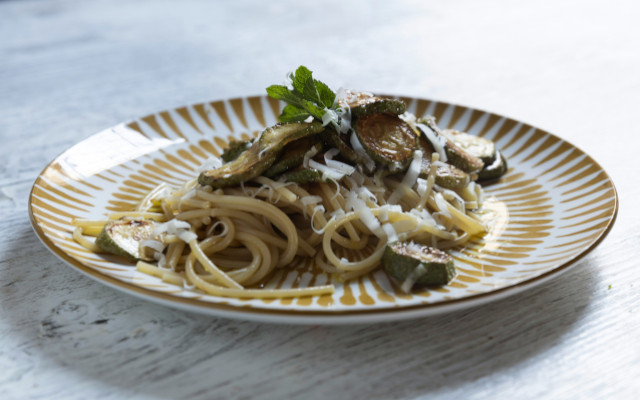
December 10, 2025 marks a historic date for Italy and for the world of gastronomy: the Italian cooking was officially registered in the Representative List of the Cultural heritage Immaterial of Humanity UNESCOThe decision of the Intergovernmental Committee of UNESCO, meeting in New Delhi, represents an unprecedented recognition: for the first time an entire culinary tradition national comes valued in its entirety, rather than limited to individual foods or supply chains (CNN, 2025; Euronews, 2025).
An unprecedented recognition
The candidacy ‘Italian cuisine between sustainability and bio-cultural diversity'(Italian cooking, between sustainability and biocultural diversity) is unique in itself as it expresses the union between culture and society, production and territories.
UNESCO recognition defines Italian cuisine as ‘a cultural and social mix of culinary traditions, a way of taking care of yourself and others, express love and rediscover one’s cultural roots’ (UNESCO, 2025).
The path to recognition
La candidacy, presented in 2020 and formally advanced in 2023, was promoted by the Collegio Culinario cultural association for Italian food and wine in collaboration with Casa Artusi, the Italian Academy of Cuisine and the magazine The Italian kitchenThe dossier, edited by jurist Pier Luigi Petrillo, professor of Cultural Heritage and Food at LUISS Guido Carli University, demonstrated the significant efforts made by communities over the past sixty years to preserve and transmit Italian culinary traditions.
2024 was the crucial year of the evaluation process, with the dossier being analyzed as ‘a cultural ecosystem difficult to define and for this very reason unique(La Presse, 2025). During the IX Week of Italian Cuisine in the World, dedicated to the Mediterranean diet and health, the candidacy received widespread promotion in global diplomatic and cultural venues. The first technical approval from UNESCO arrived in November 2025, confirming the solidity and cultural relevance of the Italian dossier.
The cultural and social value of Italian cuisine
UNESCO has highlighted how Italian cooking promotes ‘thesocial inclusionby promoting the well-being and offering a channel for theintergenerational learning permanent, strengthening the ties, encouraging the sharing and promoting a sense of belonginga’ (UNESCO, 2025). Italian culinary practice is rooted in anti-waste recipes and in the transmission of flavors, skills and memories through the generations.
As documented on the official UNESCO page, Italian cuisine represents a community activity that emphasizes intimacy with food, the respect for the ingredients and shared moments Around the table. People of all ages and genders actively participate, exchanging recipes, tips, and stories, with grandparents often passing down traditional dishes to their grandchildren.
The recognition also highlights how culinary practice helps to safeguard specific cultural expressionsand, including language and gestures, representing a means of connecting with family and community, both at home and in schools, through festivals, ceremonies and social gatherings.
Italy, world leader in UNESCO agri-food recognition
With the entry of Italian cuisine, theItaly reaches the quota 20 items subscribers on the UNESCO Intangible Heritage List, out of a total of approximately 800 elements in 150 countries. The country thus conquers the record world of recognition in the agri-food sector in proportion to the overall awards obtained (Food Service, 2025).
Among the UNESCO recognitions already attributed to Italy in the agri-food sector are:
the Mediterranean diet (2010), a transnational good extended in 2013 to Spain, Greece, Morocco, Cyprus, Croatia and Portugal;
the Pantelleria bush vine (2014);
the art of the Neapolitan ‘pizzaiuolo’ (2017);
truffle hunting and extraction (2021);
the traditional irrigation system (2023), shared with Austria, Belgium, Germany, Luxembourg, Holland and Switzerland;
the construction of dry stone walls in agriculture (2018), together with Croatia, Cyprus, France, Greece, Slovenia, Spain and Switzerland;
transhumance (2019), a good shared with Austria and Greece, extended to Albania, Andorra, Croatia, France, Luxembourg, Romania and Spain.
This concentration of awards testifies to the wealth and la diversity of the Italian agri-food heritage, rooted in a thousand-year-old tradition of respect for the land, biodiversity, and health.
The relationship with the Mediterranean diet
It is important to contextualise the new recognition of Italian cuisine within the broader framework of Mediterranean diet, already inscribed on the UNESCO List of Intangible Cultural Heritage in 2010:
the Mediterranean diet – recognized as transnational candidacy of Italy, Spain, Greece, Morocco, Cyprus, Croatia and Portugal – represents ‘a set of skills, knowledge, practices and traditions that range from the landscape to the table’ (UNESCO, 2024);
the recognition of Italian cooking stands out for its national specificity and for the emphasis on sustainability , bio-cultural diversity, elements that uniquely characterize the Italian approach to food preparation and consumption.
However, a paradox Significantly, while the Mediterranean diet is gaining international recognition, young Italians seem to be moving away from this tradition. According to the Waste Watcher International Observatory, only 8% of young between 18 and 24 years old consume 11-15 portions of vegetables per week, compared to 25% of those over 65. For fruit, the percentage drops to 9% between 25 and 34 years old, while it reaches 29% among elderly (Il Pais, 2024). This data raises important questions about the need to strengthen food education and the intergenerational transmission of traditional culinary practices.
The economic and cultural impact
The UNESCO recognition represents not only a cultural achievement, but also aeconomic opportunity extraordinary for Italy. As declared by Foreign Minister Antonio Tajani, in 2024 theItalian agri-food export reached 68 billion euros, with a further increase of 6% in the first eight months of the year (Adnkronos, 2025). According to Nomisma forecasts, Italian agri-food exports will grow by 5% in the first half of the year. 2025, surpassing for the first time the 70 billion euros (Food Service, 2025).
The studies conducted by the UNESCO Chair of the Unitelma Sapienza University of Rome, directed by Pier Luigi Petrillo, demonstrate thetangible impact of UNESCO recognitions on the territories. In Pantelleria, after the recognition of the agricultural practice of vine cultivation in 2014, the increase in tourists was 9,7%, up to 75% for the off-season. There has also been a 500% increase in the workforce in the sectorfarmhouse In ten years. After the art of Neapolitan pizza making was recognized, professional courses grew by 283% and accredited schools by 420% (La Presse, 2025).
The agri-food sector, with its diversified production, represents a pillar of theItalian economyIn 2024, the cocoa and chocolate sector alone produced 372.665 tons, with exports growing by 4,9%. Bakery products reached 1.463.994 tons for a value of 7,937 billion euros, vegetables (including juices and preserves) 1.384.093 tons, while frozen foods have exceeded one million tons (Food Service, 2025).
Sustainability and the fight against waste
A central element of UNESCO recognition is the attention to sustainability and fight against food wasteItalian cuisine has historically been characterized by ‘anti-waste’ recipes that enhance every part of the ingredients and promote conscious consumption of resources, in line with the United Nations Sustainable Development Goals (SDG 12).
UNESCO has recognized that Italian culinary practice reflects a deep respect for the ingredients and for territorial biodiversityLocal communities are involved in the preservation of agricultural varieties indigenous, techniques of traditional production and sustainable food systems that connect the producer to the consumer through short supply chains.
The international context
UNESCO has honored numerous gastronomic traditions since the establishment of the List of Intangible Cultural Heritage in 2008. Among the previous awards These include French gastronomy, Mexican cuisine, Arabic coffee (2024), the practice and ritual of Turkish coffee (2013), Malaysian breakfast culture (2024), Ukrainian borsch (2022), and the French baguette (2022) (Gambero Rosso, 2025).
However, as pointed out by Francisco Humberto Cunha, professor at the University of Fortaleza in Brazil and researcher for UNESCO, while there are other recognitions related to specific cuisines, such as the practices associated with Peruvian ceviche, ‘the case of Italy really the first with such a significant scope’ to cover the entire concept of a national cuisine (Washington Post, 2025).
Future prospects and challenges
UNESCO recognition brings with it both opportunities and responsibilities. As UNESCO itself emphasizes, inscriptions on the Intangible Cultural Heritage List place an additional burden on countries to safeguard their cultural treasures (CNN, 2025). Italy will therefore have to implement educational campaigns, valorization programs of food heritage and partnerships with the local communitiesThese measures should also strengthen efforts to protect the biodiversity and encourage the responsible consumption.
A particular challenge concerns thebalance between tradition and innovation. In the debate of the last year, there has been no shortage of tension between the need to preserve traditional practices and the risk of rigidifying traditions that have always been alive and evolving. As some critics have pointed out, there is a danger of crystallizing Italian cuisine into a static form, when instead its strength has always been in its ability to adapt and innovate while maintaining its roots firmly (La Presse, 2025).
Another significant challenge concerns the intergenerational transmission of culinary practices. According to data from the Waste Watcher International Observatory, 64% of Italians believe thatfood education in schools is the most appreciated measure to promote a healthy diet, a percentage that rises to 73% among the over 55s (Il Pais, 2024). However, young people between 18 and 24 years old show different preferences: 58% would prefer the adoption of Labels that can help in choosing more suitable products, while almost one in three young people (27%) propose taxing unhealthy foods.
Conclusions
UNESCO’s recognition of Italian cuisine confirms that Italy is not just “the country of good food,” but the custodian of an intangible heritage of universal value. It is celebrated a cultural system complex, based on tradition, sustainability and the fight against waste, biodiversity, cultural diversity, well-being and social inclusion, and a sense of community.
As underlined in the candidature dossier edited by Pier Luigi Petrillo, Italian cuisine is ‘an act of love’ Towards food, family, the land, and future generations. The challenge now will be to preserve and pass on this heritage to future generations, adapting it to social and environmental changes while maintaining its deepest essence.
References

Dario Dongo, lawyer and journalist, PhD in international food law, founder of WIISE (FARE – GIFT – Food Times) and Égalité.
Dining and Cooking