
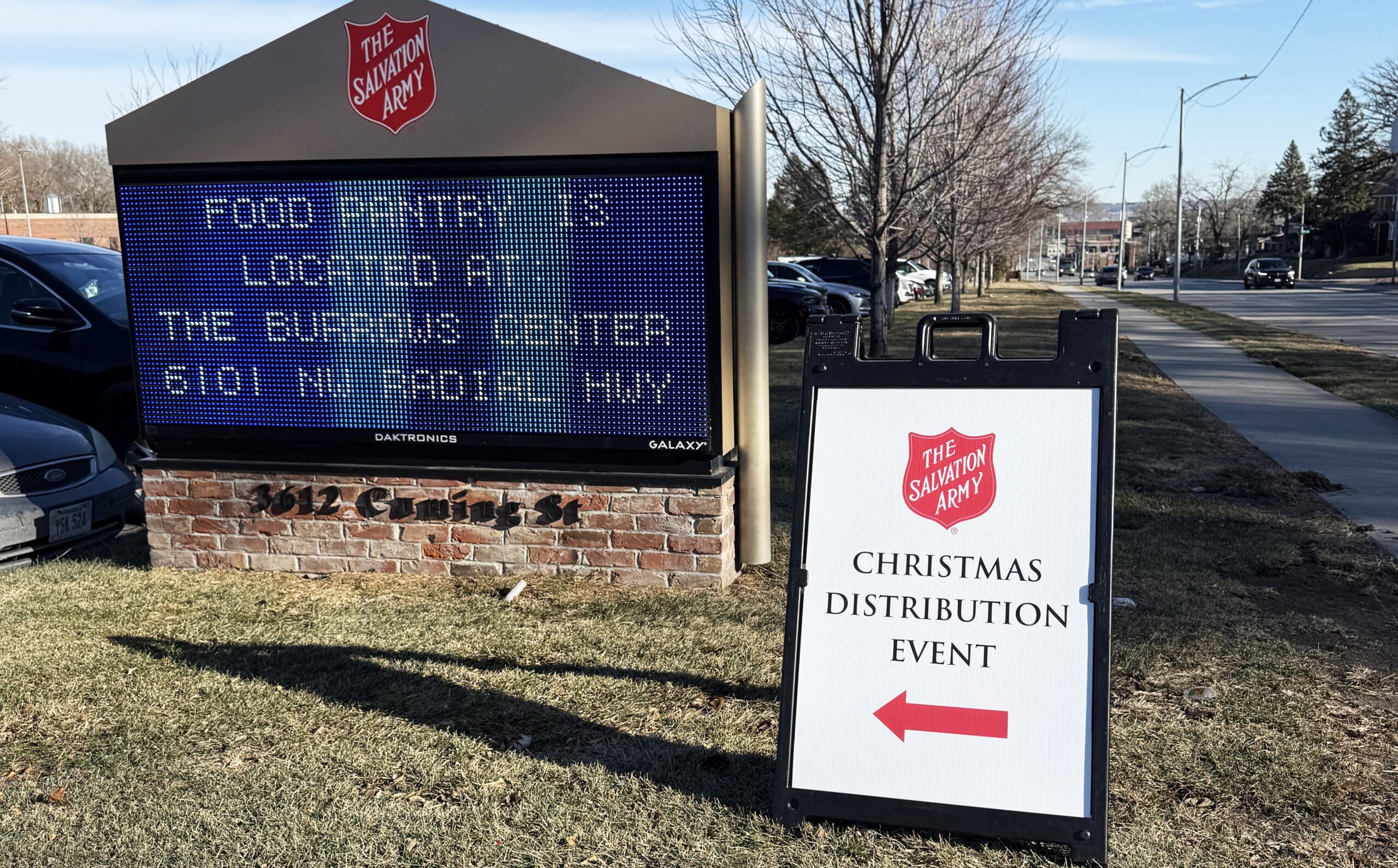
This winter may feel like Omaha’s harshest yet. Not only because local weather experts are forecasting cooler-than-average temperatures at the start of the new year, but also because of federal policy changes that may affect food security and housing stability for low-income individuals and families.
Those impacts are likely to be felt most by seniors, veterans, former foster youth, people experiencing homelessness, and immigrants and refugees.
Increased bureaucracy, reduced access, and uncertainty are prompting many local organizations to help fill in the gaps and reduce negative impacts on neighbors and fellow community members.
Whether you know someone looking for support or are seeking ways to offer it, the following resources are available this season and beyond.
Food Security
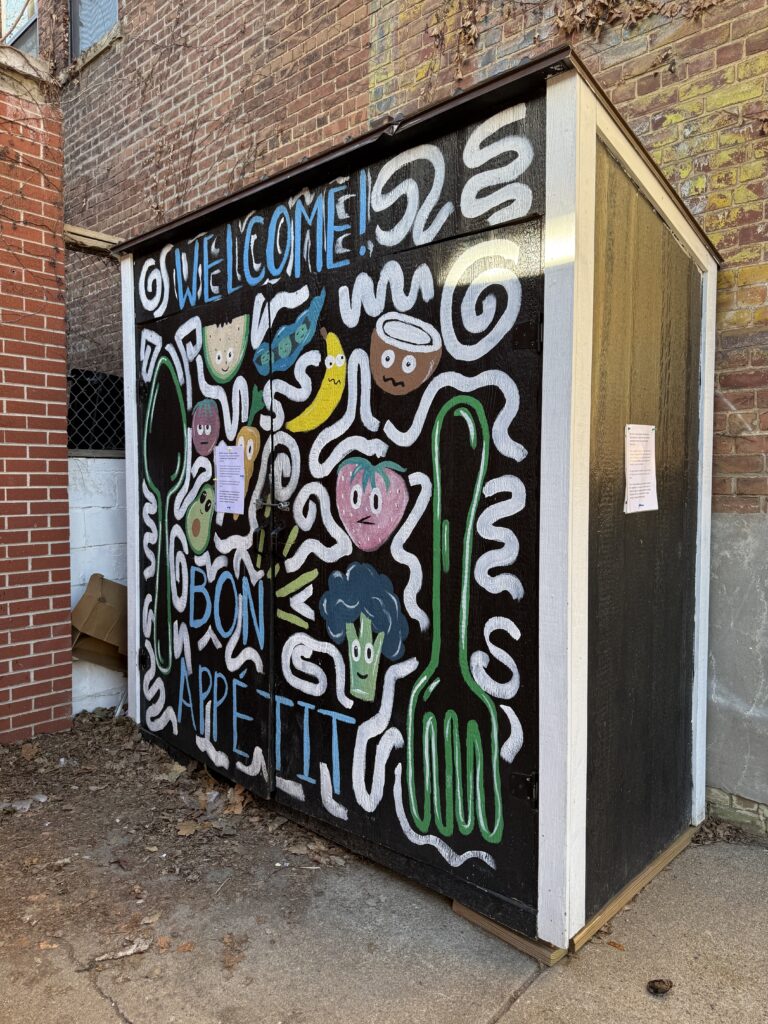 A community fridge operated by Saving Grace Perishable Food Rescue sits near 40th and Hamilton streets in Omaha, Nebraska, offering free access to fresh food for anyone who needs it. (Mikala Harden)
Saving Grace Perishable Food Rescue’s Community Fridges
Saving Grace Perishable Food Rescue is a local nonprofit that “rescues” excess perishable food from grocery stores, restaurants, and other vendors and delivers it to churches, charities, and shelters — saving it from the landfill and giving it a second life by donating it to people who need it.
One of their programs places community fridges in critical areas to provide easy access to fresh food, with volunteers monitoring cleanliness, removing expired items, and composting what can’t be used.
There are currently three fridges:
40th and Hamilton streets, on the south side of the inCOMMON building
40th and Seward streets, at City Sprouts
2915 Grant St., at the Charles Drew Health Center (opening this month)
Get Help: The fridges are open 24/7 to anyone who needs food. The fridges are located in shelters, but are not locked, so that anyone may pick up food at any time.
How to Help: Anyone with excess food — including restaurants, businesses, and individuals — can donate to a fridge, and Saving Grace also helps keep them stocked. The best items to donate are fruit, vegetables, proteins, dairy, and ready-to-eat meals. Alcohol and expired food should not be left in the fridge. Items should also be unopened, packaged, and include a date. Label food that is homemade or from a restaurant with the ingredients to help keep people with allergies safe.
No-cost Curbside Meals
For anyone experiencing food insecurity, the Siena Francis House distributes no-cost, curbside meals to any metro area resident in need.
Get Help: Call 402-341-1821 to learn more.
Food Bank for the Heartland
The Food Bank of the Heartland provides nourishing meals for thousands of people each month.
Get Help: Call the Food Bank’s SNAP/Food Resources hotline at 855-444-5556 for help finding food or view this interactive map to find a food pantry or meal provider nearby.
How to Help: Organize a food drive or make a donation from your personal pantry. Food donations are accepted Monday through Friday between 8 a.m. and 3:30 p.m. at 10525 J St. in Omaha. Donations should be non-perishable. Items in high demand include boxed meals, peanut butter, macaroni and cheese and other pasta, canned items like tuna or fruit and vegetables, cereal, pancake mix, and rice.
Resource for Students K-12
Food Bank for the Heartland also offers a BackPack Program, partnering with area schools — including 51 in the Omaha Public Schools district alone — to distribute packs of nutritious breakfasts and lunches to children once a week. Schools are provided with additional food bags for students to take home before winter recess.
Get Help: For additional resources for families with school-aged children, reach out to your school. Some schools have outside partnerships with community organizations, and school social workers and counselors can share additional local food pantry resources with families.
How to Help: Interested in supporting the BackPack Program? Contact the Food Bank’s development team.
The Heart Ministry Center’s Food Pantry
The Heart Ministry Center offers a free food pantry where community members have the ability to shop and choose from a selection of meats, produce, bakery goods, dairy items, and shelf-stable foods. Typically, when community members visit, they receive enough food for two weeks.
Restoring Dignity’s Feed a Family Program for Refugees
For many legally present refugees living in Nebraska who have lost access to SNAP benefits following recent federal policy changes, there is a local initiative providing hope.
Restoring Dignity’s Feed a Family program provides weekly groceries and grocery gift cards to refugee families deemed critically vulnerable.
Get Help: Caseworkers who would like to refer a family to receive support from the program can fill out this form.
How to Help: The cost to sponsor a family ranges from $90-$590 a week depending on household size.
Businesses, groups, and individuals can sign up to sponsor a family or multiple families.
To help provide grocery gift cards for refugee families, support the Family Support Fund. Grocery gift cards can also be dropped off to the second floor 3260 Davenport Street #215, Omaha, NE, 68131. Text before arrival: 402-370-9777.
Bluebarn Theatre’s Little Free Pantry
You’ve heard of a Little Free Library, but what about a Little Free Pantry? The Bluebarn Theatre, located at 1106 S. 10th St., is now stocking a year-round mini food pantry, calling it a “take what you need, leave what you can” effort. Organizers are encouraging donations of dry goods and individually packaged snacks, and asking donors to avoid cans and glass containers.
Cold Weather Outreach
Threshold CoC’s List of Warming Centers
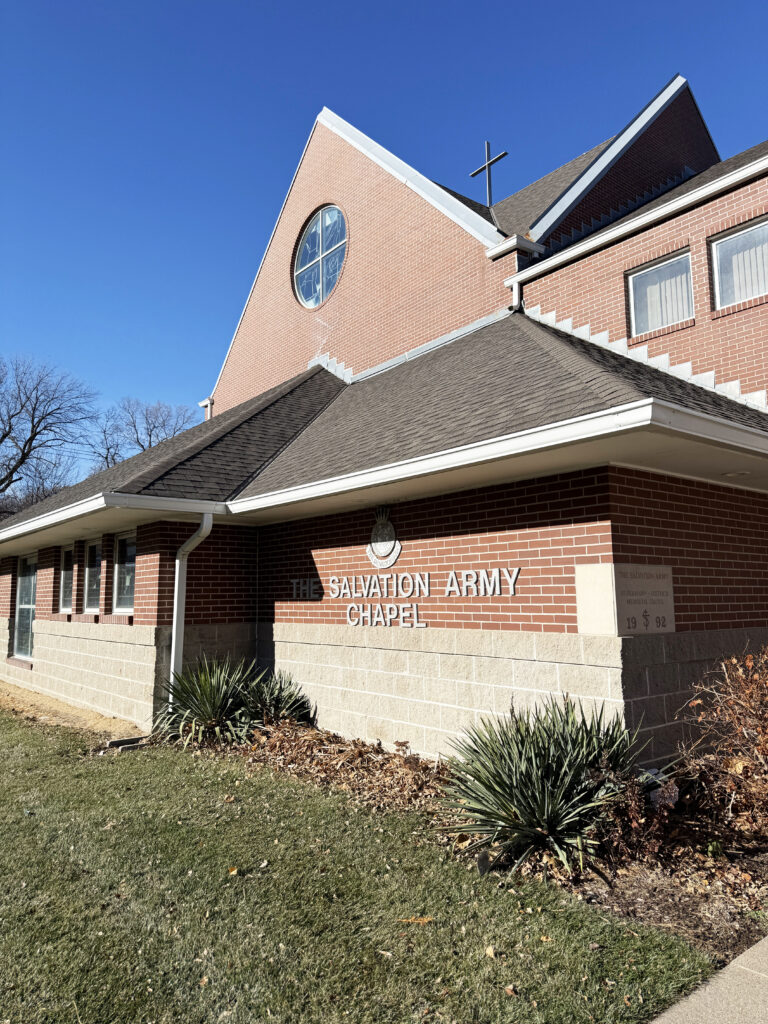 The Salvation Army at Heritage Place Renaissance Village, 3612 Cuming St., serves as one of Omaha’s warming centers during cold weather. (Mikala Harden)
Threshold CoC is a nonprofit that describes itself as “the collective voice of more than 100 homeless service providers and advocates in the Omaha-Council Bluffs Metropolitan area.”
Get Help: The organization has published a list of Warming Centers in the area that offer refuge from the cold, as well as a welcoming environment for those with nowhere else to go. Locations include the Open Door Mission, Siena Francis House, Heritage Place, Kroc Center, North Corps, and Youth Emergency Services.
How to Help: For those looking to help provide warmth and comfort this winter, all items purchased through Threshold CoC’s Amazon wish list will help unsheltered individuals and families stay safe and healthy on their journey back to housing.
Salvation Army’s Winter Night Watch
Five nights a week between December and February, the Salvation Army sends mobile food trucks across the city to distribute hot meals and beverages to anyone in need, as well as vital winter protection supplies like winter coats, gloves, hats, socks and blankets. Last year, they distributed more than 8,000 meals and hundreds of pieces of winter outerwear.
How to Help: For those looking to support this initiative, Winter Night Watch is in need of donated winter hats, gloves, socks and coats (especially men’s sizes XL, 2XL and 3XL). Call 402-898-5894 to arrange a drop off time.
Utility Assistance
Get Help: Low Income Home Energy Assistance (LIHEAP) is available through DHHS. If you currently have a shut-off notice or may be receiving one, call 402-595-1258 for assistance.
In the Omaha area, OPPD offers both short-term, emergency assistance and an ongoing bill discount program for income-eligible households.
Additional Support
Share Omaha offers a comprehensive list of used clothing resources for youth, women, and men. If you are donating to one of the accepting organizations, please ensure items are washed and in good condition.
Legal Aid of Nebraska offers free civil legal services statewide to help low-income Nebraskans facing issues like eviction, housing instability, or loss of access to vital programs and benefits, including SNAP, disability, and Medicaid or Medicare.
Monen Healthcare Clinic at Heart Ministry Center provides free, quality healthcare services to treat routine illnesses, alleviate pain, and perform testing for common ailments.
Get Help: Contact the clinic front desk at 402-932-4887.
OneWorld Community Health Centers offer comprehensive medical services for low-income and uninsured families, including sliding-scale fees and assistance programs. Their clinics serve thousands who may otherwise delay care due to financial ability.
Get Help: View clinic locations and request a ride to an appointment from an eligible area of town by calling 402-734-4110.
Charles Drew Health Centers also offer comprehensive healthcare regardless of ability to pay. Programs include affordable health insurance, a sliding fee discount program, and more.
Get Help: Call 402-451-3553 to speak to someone.
Transportation
Metro Transit offers a half-fare program to individuals who meet certain age or Medicare criteria.
Call 211
Residents are encouraged to call or text 211 for 24/7 help with emergency housing, utility assistance, additional food resources, transportation, and more.
As winter settles in, knowing where to turn — and how to help — can make all the difference for our community.
Dining and Cooking