
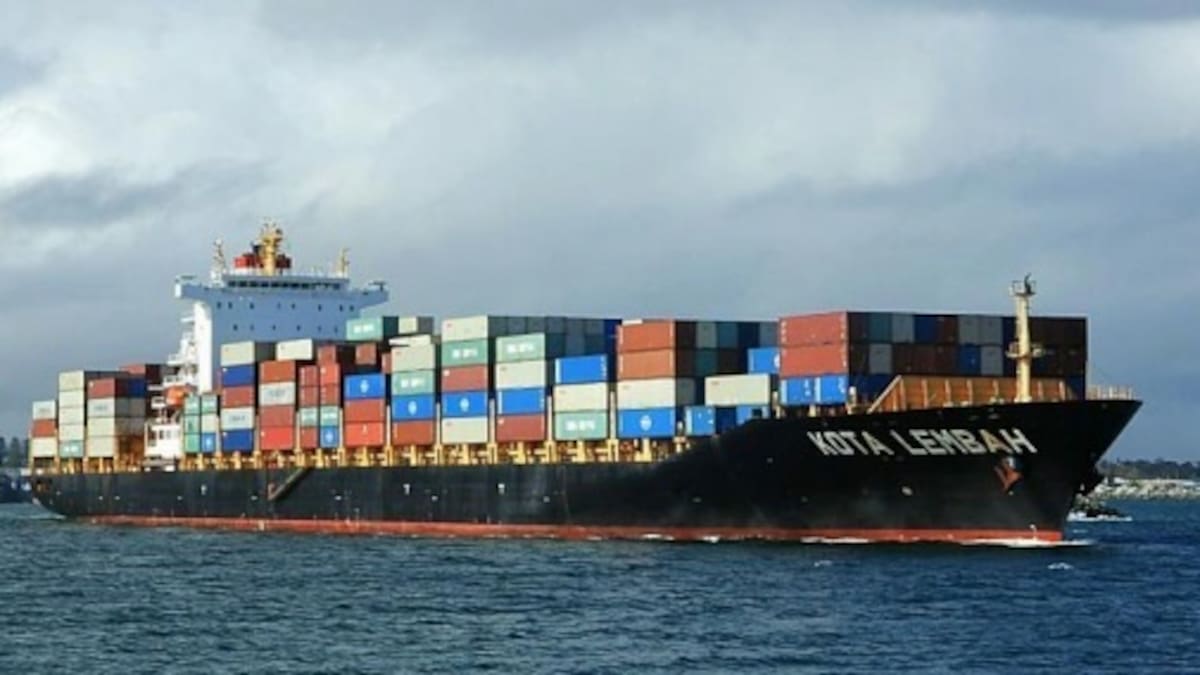
“It’s going to be helpful for diversifying our exports and it looks like it could be particularly helpful for our log industry.”
He said the lack of movement for dairy was realistic given the key role that dairy plays in Indian society.
Eckhold said the trade deal would go some way toward offsetting increased tariffs on New Zealand exports to the US imposed this year.
“It’s an example of where we need to take every possible step to diversify trade – opening up markets like India will play an important part in achieving that,” Eckhold said.
“It’s a helpful step. Could it be a bigger win? Absolutely, but I think sometimes you have to get what you can achieve.”
He said sheep meat, horticulture and the log trade looked to be the big winners.
The apple trade is expected to benefit from the new trade deal with India.
Horticulture big winner
Horticulture New Zealand (HortNZ) said the deal would pave the way for new export opportunities in a market with strong long-term prospects.
Under the agreement, apples will receive a 50% tariff reduction within a large quota.
Kiwifruit will gain duty-free access within a quota almost four times recent average export volumes, with tariffs outside the quota reduced by half.
Cherries, avocados, persimmons and blueberries will move to duty-free access over a 10-year period.
HortNZ chief executive Kate Scott said improved access to India would further diversify horticulture’s export portfolio and help drive the sector’s ambitions for growth.
“With India forecast to become the world’s third-largest economy, this FTA offers our growers and exporters an opportunity to build scale and value over time,” Scott said.
New Zealand Horticulture Export Authority CEO Simon Hegarty said the news was a welcome positive against the current backdrop of a range of significant challenges in exporting perishable products.
Local horticulture exports to India were dominated by apples (66%) and kiwifruit (30%) in 2025, and with both sectors included in the FTA, along with avocados, cherries, blueberries and persimmons, there was scope to grow the horticulture category, he said.
Dairy disappointing
Fonterra said the outcome for dairy was disappointing but not unexpected.
“It is disappointing that the negotiations with India were unable to secure any significant new core dairy access opportunities for New Zealand into the Indian dairy market,” Simon Tucker, Fonterra’s group director global external affairs, said.
“This outcome is, however, not a surprise given India’s long-standing sensitivities in relation to its dairy market.”
Some of New Zealand’s higher value dairy exports, worth about US$15,000-16,000 ($26,000–28,000) a tonne would see tariffs reduced.
However, there was no change to some of the cheaper milk powder exports, which tend to be priced at US$3000-4000 ($5200–6900) a tonne.
Wool exporters welcomed the new trade deal with India.
Wool and forestry
The trade deal would open up important new opportunities for New Zealand wool growers and wool-based manufacturers, Wools of NZ said.
“India is home to some of the world’s leading premium handmade carpet and rug manufacturers,” CEO John McWhirter said.
“Wools of New Zealand is already working closely with these producers to sell finished wool products into the New Zealand market.
“At the same time, we are partnering with Indian manufacturers supplying finished wool products to major European brand retailers.”
The New Zealand Forest Owners Association said the deal would offer new opportunities for Kiwi forest owners and wood processors.
“The New Zealand-India FTA is a big win for all New Zealand exporters, but especially those in the forestry space,” CEO Elizabeth Heeg said.
“Forestry is already New Zealand’s largest export to India, worth $126m, including $71m in log exports.”
Heeg said New Zealand enjoyed a reputation as a reliable, long-term supplier of premium wood products in India.
India had scale, strong demand for New Zealand wood products, and significant momentum, she said.
ExportNZ
ExportNZ said the conclusion of the between New Zealand and India is a significant step forward for Kiwi exporters.
Executive director Joshua Tan says many exporters have been looking at India for years as a potential market.
“The problem is that prohibitive tariff barriers, often 30-60%, and up to 150% for wine, have limited what businesses can realistically do in India,” Tan said.
“This new agreement begins to bring those barriers down, gives exporters more certainty and more options.”
Meat
For the meat trade the deal was a step towards unlocking new opportunities from a market with considerable long-term potential.
“This is a strategically significant milestone for New Zealand’s red meat sector,” Nathan Guy, independent chair of the Meat Industry Association, said.
“An FTA with India will unlock a promising market that has been constrained because of the 30% tariff currently on New Zealand sheep meat.
“In a global environment marked by rising protectionism, uncertainty and volatility, this agreement provides a foundation for the New Zealand red meat sector to realise opportunities in a market that has great prospects in the future.”
Wine
New Zealand Winegrowers said the FTA was a significant step toward unlocking one of the world’s largest and fastest‑growing consumer markets.
“The phased reduction of India’s wine tariffs and the inclusion of a most favoured nations (MFN) is a signal that the Indian market is opening up; this will encourage wineries to build their involvement in the India market over the coming decade,” CEO Philip Gregan said.
Under the FTA, India’s tariffs on wine will be reduced from 150% to either 25 or 50%, depending on the value of the wine, over 10 years.
Jamie Gray is an Auckland-based journalist, covering the financial markets, the primary sector and energy. He joined the Herald in 2011.
Stay ahead with the latest market moves, corporate updates, and economic insights by subscribing to our Business newsletter – your essential weekly round-up of all the business news you need.
Dining and Cooking