
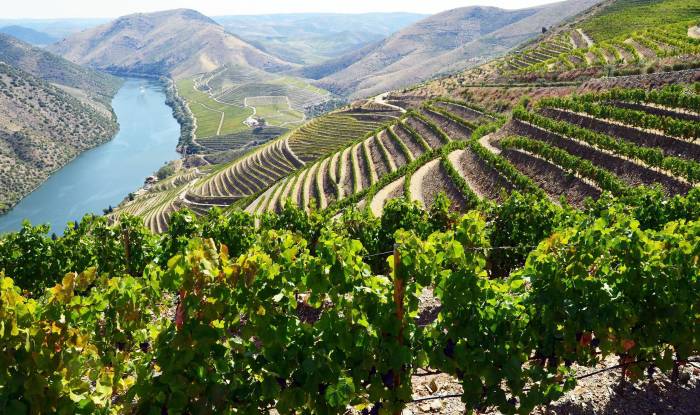
The 2025 grape harvest in Portugal is shaping up to be one of the most challenging in recent decades for the Douro, Alentejo, and Vinho Verde regions. As vineyards are closely monitored and the first white grapes are already being picked, viticulture and winemaking teams are expecting lower yields but see promising signs of high quality in the fruit.
This year’s growing season has been marked by unprecedented climate instability. While 2024 saw moderate conditions, 2025 brought extremes. December ended exceptionally dry, followed by a winter and early spring with unusual rainfall in January, March, and April. In the Douro region, March was recorded as the wettest of the century so far, which influenced budbreak in the last week of the month—consistent with the 30-year average.
However, this abundance of water did not last. From June through July, there was almost no rain and four heatwaves hit the region, one of them particularly severe. The Douro experienced a 34% deficit in accumulated precipitation. In early August, the region endured ten consecutive days with temperatures above 104°F (40°C), surpassing the previous record set in 2003 when there were seven such days. In Alentejo and Monção e Melgaço, temperatures did not reach these peaks but the lack of rain was also significant.
The impact on vineyards is clear: smaller berries and signs of quality. Water reserves from earlier in the season allowed for rapid flowering and generally good fruit set. However, persistent heat limited berry development, with grape sizes up to 30% smaller than average in the Douro—a reduction that could significantly affect total production volume.
Despite these challenges, early indicators point to healthy grapes and a normal phenological cycle. Maturation studies conducted by Symington teams since early August show that both red and white varieties are progressing well. The ongoing harvest of white grapes and close monitoring of reds support cautious optimism among specialists about this year’s winemaking potential.
At Symington properties across Douro, Alentejo, and Monção e Melgaço, preparations for harvest are moving quickly. Notable wineries like Quinta da Fonte Souto in Alentejo and Quinta do Sol in Douro have already started receiving grapes, while other specialized facilities are waiting for the main phase of harvest to begin.
Charles Symington, head of production and lead winemaker at Symington Family Estates, described this as a challenging vintage that tests both vineyard resilience and team expertise. He noted that despite lower yields, there is hope for surprising quality—especially among red varieties—if forecasts for milder temperatures and some rainfall in coming days hold true.
Dining and Cooking