
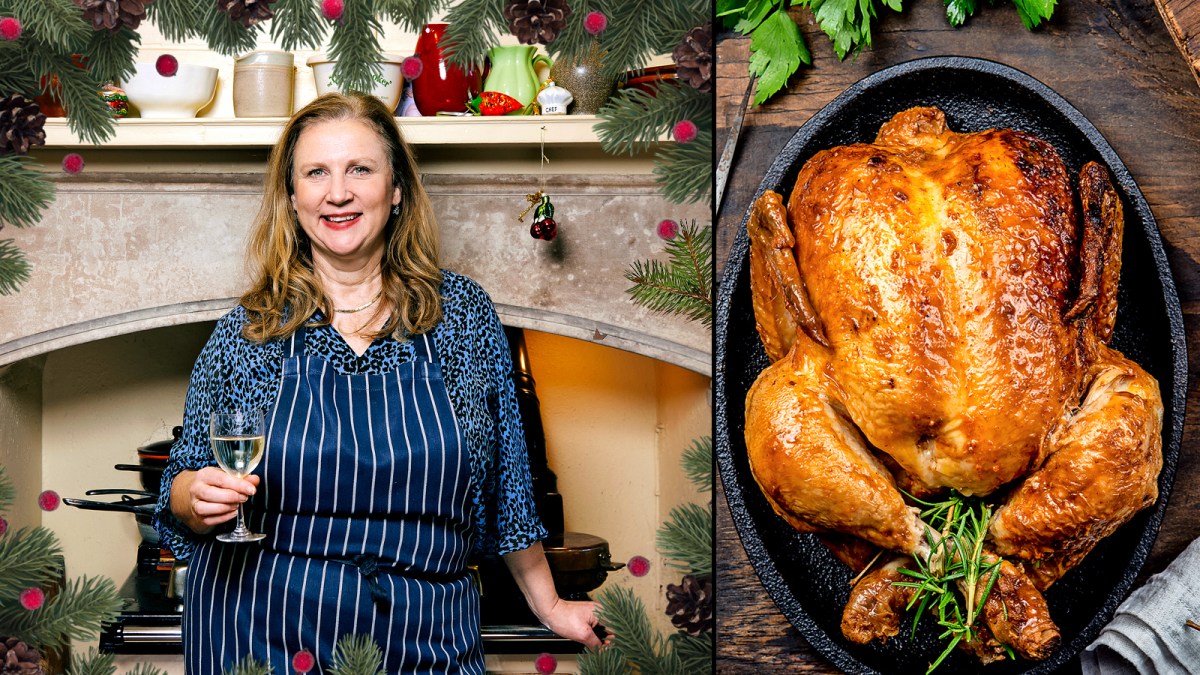
Angela Hartnett always knows when Christmas is around the corner and it has nothing to do with cheesy music playing in the shops or John Lewis adverts on the TV. “It’s white truffles,” the 57-year-old chef says. “They come into season in winter and you can’t get them any other time of year so the moment we have white truffles on the menu at Murano, I know Christmas is coming.”
It’s a busy time of year at her Michelin-starred restaurant in Mayfair, not least because one VIP guest always takes over the whole restaurant for an annual lunch party in December. Once that is done, however, the madness starts to subside and she is able to focus on her own Christmas preparations.
Ever since she was a child, celebrations have been lively, crowded affairs, with anything from 20 to 25 family members, plus a sprinkling of friends, sitting down to lunch. “We’re not a family that necessarily celebrates birthdays but at Christmas and Easter we always get together,” she says. “I’m not sure if it’s because we are Catholic or if it’s just because we all like eating, but we are a family who genuinely all get on.”
Apart from during Covid, when she hosted much smaller gatherings at her home in east London, lunch has always been held at Murano, which is suitably central and, of course, has the facilities to cope with such numbers. “I’m one of those people who, if you are cooking for five, you might as well cook for 20. It makes no difference to me. I mean, it’s only one day. I wouldn’t be so relaxed if they were coming to stay. Three days of breakfast, lunch and dinner would be much more of a challenge.”
It’s all down to the preparation and everyone one has their role — and not just her husband, Neil Borthwick, who is head chef at the French House in Soho.
“The day before, the family come and do the peeling and prepping while I stuff the bird. Then on Christmas Day my friend Adam and I will get to the restaurant at about 10am. Meanwhile Neil will walk the dogs, maybe give lifts to a few people if they need it, before joining us and mucking in. Trust me, no one is putting their feet up.”
The day will have started at a fairly leisurely pace. “We’ll probably get up at about 8.30am and I’ll have a cup of green tea but never breakfast. I don’t need it with all the food that’s to come and I’ll tend to pick at bits as I’m cooking.”
The restaurant manager will have organised the tables after the previous night’s service and Hartnett’s uncle does the decorations while her nephews make the seating plan. The aim is to sit down at about 1pm, at which point Borthwick will be put in charge of carving — not sexism, “just that he is much better than me”.
They normally take a break after the main course to open a few presents or perhaps this year to show Hartnett’s 36-month-old niece the decorations at Annabel’s in Berkeley Square around the corner. Then it’s back for pudding and cheese and some of Hartnett’s homemade mince pies.
• Read more recipes and tips from from our food experts
“There are two things I do make as gifts or treats. One is prunes soaked in brandy, which is a recipe I stole from Richard Bertinet, and the other is mince pies. I use Jocelyn Dimbleby’s recipe, where she adds orange zest to the pastry, which makes them really moreish.” The mincemeat recipe is one she got from her friend James, who got it off his friend Ben, who got it off his father. After all, Christmas is a time for sharing. “It’s the grated apple in it that makes them really special,” Hartnett says.
People will start to drift away at around 6pm, at which point, fortified perhaps by a gin and tonic, Hartnett will bring out the cards and play with her nieces and nephews. “Adam taught me to play this brilliant fast-paced game called Yaniv and now I’ve got half of hospitality addicted to it. My brother’s also recently taught me contract whist. I must practise that one. I haven’t mastered it yet and I always play to win.”

Spaghetti alle vongole is perfect for Christmas Eve
GETTY IMAGES
Angela Hartnett’s favourite festive tips and recipes
1. Kick off the festivities with a Swedish smorgasbord
We’re a bit like the United Nations in our family. As well as my Irish and Italian roots, my aunt’s family on my mum’s side are Swedish, so my wonderful Uncle Jonas always creates a smorgasbord plus beer and schnapps for our first get-together a few days before Christmas. He cooks a ham, makes meatballs, and we always start with cheese and crackers. My favourite thing, though, is the Jansson’s Temptation, with layers of potato, onion and sprats baked in cream. It’s so delicious I could eat it all the time.
2. Have a fish supper on Christmas Eve
There’s a strong tradition of Italian families having fish on Christmas Eve and I like to carry that on. I sometimes do spaghetti alle vongole as my nephew loves it, or we’ll all go for fish and chips. I like Fish Central in the Barbican or Kennedy’s in Farringdon. Proper traditional places.
Spaghetti alle vongole
Serves 4
Ingredients
• 300-350g spaghetti
• 2 tbsp olive oil, plus extra for drizzling
• ½ tsp deseeded and finely sliced red chilli
• 2 garlic cloves, finely sliced
• 500g small clams, cleaned and rinsed
• Splash of white wine
• 2 tbsp finely chopped fresh flat-leaf parsley
Method
1. Bring a large pan of salted water to the boil and cook the spaghetti for about 7-8 min, or according to the packet instructions, until al dente.
2. Meanwhile, heat the olive oil in a large deep frying pan over a medium heat. Add the chilli and garlic and cook for 3-4 min or until soft but not coloured. Add the clams to the pan along with the wine. Cover and cook over a fairly high heat for 2-3 min until the clams open. Remove from the heat, then pick out and discard any clams that have not opened.
3. Drain the spaghetti and add to the clams. Stir in the parsley and drizzle over a touch of olive oil if it looks a bit dry. Season to taste, season and serve immediately.
From Angela Hartnett’s Cucina: Three Generations of Italian Family Cooking, published by Ebury Press
3. Ditch the turkey
My favourite meat on Christmas Day is capon, a slow-grown cockerel, which I find more tender and flavoursome than turkey. You have to order them in, so it will be too late for this year, but otherwise use the biggest chicken you can find. We’ve been known to follow what Giorgio Locatelli does and bone out the capon, stuff it with prunes, nuts and sausage meat, and then roll and tie it, but more likely we will cook it the way Delia does her turkey. I smear the capons with lots of butter, add bacon to the breast, and sit it on lots of roughly chopped vegetables with lemon, rosemary and garlic all around. Then I add some wine and stock and encase the bird and tray in foil, making sure to leave an air pocket at the top so the bird steams. Then you uncover it and give it a quick hot blast at the end to brown the breast.
Roasted capon
Serves 8
Ingredients
• 2 unwaxed lemons
• 250g salted butter, softened
• A handful of thyme, leaves picked and finely chopped
• A handful of rosemary, leaves picked and finely chopped
• Whole capon, 4-6kg
• 2 garlic bulbs, halved
• 10 bacon rashers
• 2 onions, peeled and cut into quarters
• 2 carrots, peeled and cut into chunks
• 2 celery sticks, cut into chunks
• 200ml chicken stock
• 150ml white wine
Method
1. Zest the lemons, then cut them into quarters. In a bowl mix together the butter, herbs and lemon zest. Set aside while you prepare the capon.
2. Stuff the capon cavity with the quartered lemons, herb stalks and one bulb of garlic. Truss the capon legs together, if you like, with string. Pat the capon skin dry with kitchen paper, then spread the herb under the skin of the breast and over the legs.
3. Season the capon. Arrange the bacon over the breasts and legs.
4. Preheat the oven to 200C fan/gas mark 7.
5. Cut out two large pieces of tin foil, large enough to encompass the capon with a bit extra, and place in a large roasting tin in a cross shape with the excess foil overhanging. Tip the onions, carrots, celery, garlic and rosemary into the foil-lined tray and rest the capon on top, add the wine and stock then wrap the foil around to encase the capon leaving a large air gap.
6. Roast the capon for 40 min. Reduce the oven temperature to 140C fan/gas mark 3. Continue to roast for 2½ hours, unwrapping the foil and basting with the juices from time to time, then increase the oven temperature to 200C fan/gas mark 7 again.
7. Take the capon out of the oven, remove the foil and carefully drain off any surplus juices, keeping them for the gravy. Baste the bird, then remove the bacon and return the capon to the hot oven for about 30 min for the skin to brown and become crisp.
8. To check it is cooked, put a meat thermometer into the thickest part of the thigh — it should be 70C. If not using a thermometer, pierce the thickest part of the thigh with a small sharp knife. If the juices run clear and there’s no pink meat remaining, then the capon is cooked; if not, roast for a little longer, covering with foil if the capon is already brown enough.
9. Once cooked, remove from the oven, cover the capon and leave to stand for at least 60 min before carving.
• Angela Hartnett interview: ‘I won’t pretend I haven’t screamed in the kitchen’
4. Choose English fizz
My family are not big spirits drinkers but Neil and I and our friend Adam, who always comes early to help, might have a cheeky negroni before lunch. Then we’ll open a bottle or two of Sugrue, an English sparkling wine from the South Downs which rivals any champagne, and then with the meal it will be Italian wines. I like the reds from Piedmonte, so perhaps a barolo or barbaresco, and for white probably a friulano from the northeast.
5. Nice nibbles
I always like the idea of doing interesting nibbles and every year I start full of good intentions but then run out of time. So it will probably be olives, charcuterie and maybe some smoked trout on grilled sourdough. If I get up early enough on Christmas morning, I might make some parmesan sable biscuits but that’s a very big if. They are really simple, though. You just blitz together equal quantities of butter, flour and parmesan with a bit of seasoning, then roll them into a log, chill, cut into slices and cook for ten minutes in the oven. Perhaps I’ll make them tonight after doing 500 covers in the restaurant. Not.
6. Don’t go overboard on the sides …
If I could offer one tip this Christmas it would be that less is more. Don’t offer five sides, do three — but do them really well. We all know how to make roast potatoes by now, don’t we? You can argue about the merits of goose fat, duck fat or vegetable oil but, to be honest, I just use whatever I have to hand. I always do a Delia recipe for parsnips where you dust them in flour and parmesan before roasting them. They don’t come out overly cheesy, just with a lovely umami flavour.
7. … but do make a slaw
It’s always good to have something cold and fresh-tasting on the Christmas plate and this raw cabbage and beetroot salad is ideal. Alternatively Neil used to make a great white cabbage slaw at Merchants Tavern, with carrots, onions, fennel, jalapeño chilli and lime juice.
Red cabbage slaw
Serves 6-8 as a side
• 600g red cabbage, core discarded and finely shredded
• 2 raw beetroot, peeled and sliced into thin julienne
• 1 red onion, finely sliced
• 2 tbsp red wine vinegar
• A splash balsamic vinegar
• 100ml extra virgin olive oil
• 2 tsp Dijon mustard
• 2 red eating apples, halved, cored and finely sliced
• 25g parsley, finely chopped and leaves roughly chopped
• 50g walnut halves, roughly chopped
• 100g crème fraîche
Method
1. Put the red cabbage, beetroot and onion in a large bowl. Season generously with salt and toss with the red wine vinegar, balsamic vinegar, extra virgin olive oil and mustard. Cover the bowl with cling film and leave to marinate for at least six hours, preferably overnight.
2. Just before you’re ready to serve, toss through the finely sliced apple, parsley stalks and leaves, and walnuts. To finish add the crème fraîche on top.
8. The really useful ingredient: peperoncino flakes
I always buy peperoncino flakes, dried Italian chilli, when I go to Italy and I have loads in the cupboard. They add a nice kick to anything from the stuffing or gravy to the sprouts — not so much that it blows your head off but a little bit of chilli heat is good for your digestion and is especially good at pepping up any leftovers.
9. Make a veggie stuffing like my nonna’s
I inherited this from my grandmother, a vegetarian stuffing that you can cook alongside the capon or turkey. Basically it’s the same filling as you’d put in tortelli — ricotta, cooked spinach plus an egg to bind it. Instead of wrapping it in pasta, you seal it in buttered or oiled foil and cook it in the oven for 20 minutes or so.
10. The cheeseboard: choose Stichelton, not stilton
Being chefs, we are spoilt because we can call on our suppliers. I always ask Patricia Michelson of La Fromagerie to make up a box for me. I just tell her how many of us there will be. She always puts a comté in there, which is my all-time favourite, and I do like an unpasteurised Stichelton as opposed to stilton and a soft British cheese such as Tunworth. Neil’s favourite is Regalis, which is like a wax-coated roquefort. With those we’ll have crackers (I like Peter’s Yard sourdough ones), walnuts and mostarda di frutta, which is the Italian take on chutney. And I love Fortnum and Mason piccalilli. It’s brilliant stuff.
• Angela Hartnett’s classic Italian recipes, from risotto to gnocchi
11. Buy a decent Christmas pud
I never used to like Christmas pudding but I’ve come round to it — for one day a year only. My mum is the real connoisseur and in the past has even conducted unofficial taste tests. Richard Corrigan gave us one this year and my mum is a massive fan of his. There’s also one I made last year that has been sitting and maturing so we’ll have to see how it does. She’d have no qualms telling me if something wasn’t right.
My aunt will probably bring her famous zabaglione and we’ll have that at some stage too, not necessarily on Christmas Day but perhaps on Boxing Day. It’s just egg yolks, sugar, marsala and whatever other booze you have in the house, such as brandy or whisky (or both!) Poured over crumbled amaretti biscuits, it’s hard to beat.
12. Treat the chef to homemade florentines
Hartnett’s Florentines
HAARALA HAMILTON
There’s a running joke in the family after my cousin’s wife made the most fabulous florentines one year. My mum and brother especially kept going on about how amazing they were.
“These are so good, Angela, do you know how to make them?” Eventually I replied, “Hang on, I’ve cooked for 30 of you and you’re giving me a hard time about bloody florentines?”
I hope she brings some more this year, mind. I make mince pies but lack the energy to do florentines as well.
cafemurano.co.uk; muranolondon.com
Dining and Cooking