

This year’s “The World’s 50 Best Vineyards” list is not just a catalogue of beautiful estates; it is a global barometer of where wine tourism is heading and what visitors now seek from a vineyard experience.
On 19 November, in Margaret River, Western Australia, the 50 top visitable wineries in the world for 2025 were announced, in a ceremony organized by the 50 Best platform, the same organization behind the restaurant, bar and hotel lists.
The list is formed from the votes of more than 700 experts in wine and wine tourism, divided into 20 geographic zones. Each member votes for the estates they believe offer the most complete visitor experiences, not only in terms of wine but also architecture, gastronomy, landscape, and hospitality.

Vik: when the vineyard becomes a destination-experience
At the top of this year’s list is Vik (photo) in the Millahue Valley of Chile. The estate, founded in 2006 by Alexander and Carrie Vik, spans an enormous area of 4,450 hectares, 327 of which are planted with vines across 12 different microclimates. The striking hilltop winery, the design hotel overlooking the Andes, the focus on sustainable cultivation and the personalized wine tastings turn Vik into a “house of experiences.” Its recognition as World’s Best Vineyard 2025 and as “Best Vineyard in South America” makes it clear that Chile, and the New World in general, now plays at a different level on the global wine map.
The geography of the list: from Rheingau to Yamanashi
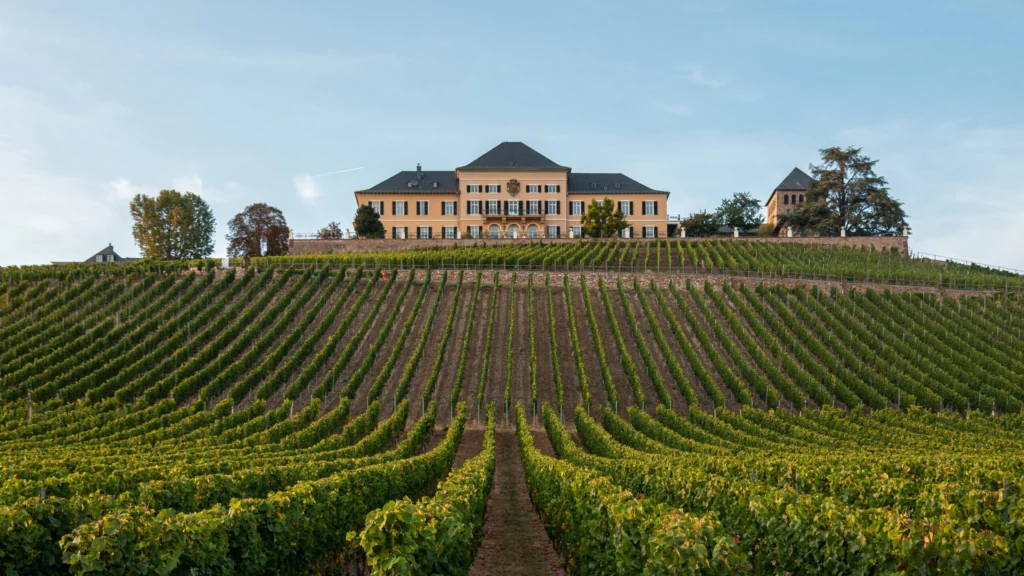
The top ten of 2025 resembles a small tour around the planet. In second place is Schloss Johannisberg (Rheingau, Germany – photo), a historic estate considered the world’s first Riesling winery and at the same time the “Best Vineyard in Europe.” In third place is Bodegas Ysios (Rioja, Spain), an architectural statement with a signature building, confirming Rioja’s strength as a wine tourism hub.

Fourth is Bodega Garzón (photo) in Maldonado, Uruguay, an integrated wine resort where Francis Mallmann shapes the fire-driven cuisine, changing the map of South American gastronomy, and completing the top five is Château Smith Haut Lafitte (Bordeaux, France), which combines grand cru classé wines with spa, art and fine dining, showing how traditional châteaux are repositioning themselves in the new era.
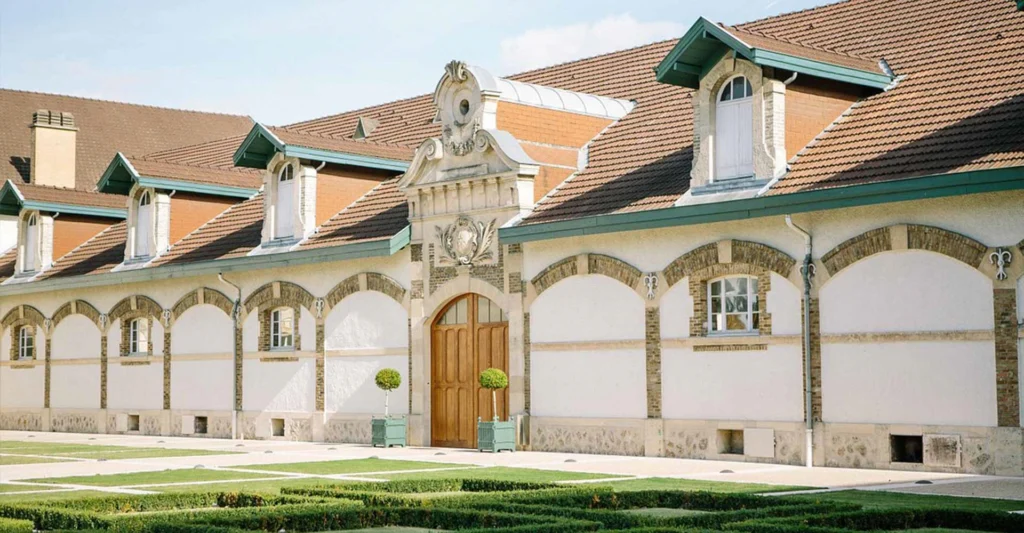
In the top 10 we also find Klein Constantia from Cape Town (No. 6 and Best Vineyard in Africa), Creation from nearby Hemel-en-Aarde, Maison Ruinart (photo), Château d’Yquem in Champagne and Sauternes, and Montes in Chile’s Colchagua Valley.
The distribution of awards by continent is also significant. The picture is clear: the top tier no longer belongs exclusively to the “old triangle” of France–Italy–Spain. South America, South Africa, California, New Zealand and Japan are shaping the narrative. From North America: Jordan Vineyard & Winery (California). From Asia: 98Wines in Yamanashi, Japan. From Australasia: Cloudy Bay in Marlborough, New Zealand.
How the list translates for the market
To understand what this list means for the market, we must look at its philosophy. The organizers of 50 Best clarify that what they evaluate are experiences: from modern architectural landmarks and historic protected cellars to family estates where the owners themselves conduct the tours.
This year’s selections reinforce three major trends:
All-in-one wine tourism.
The top destinations do not simply offer tastings. They combine hotel, destination restaurant, spa, art and outdoor activities. Vik, Garzón, Smith Haut Lafitte and Cloudy Bay are classic examples: you go for the wine, but you stay for the landscape, the cuisine, the lifestyle. At the same time, many estates in the list belong to regions that have integrated wine tourism into their core development policy – from Chile and Argentina to South Africa and New Zealand.
Sustainability and terroir as a “product.”
Estates such as Vik and Klein Constantia invest in biodiversity, protected zones and practices such as cover cropping, composting and gentle plant protection.
Narrative, history, identity.
The list favors estates with a strong story: Schloss Johannisberg with its 1,200 years of Riesling history, Maison Ruinart with its underground cellars, the estates of Douro or Tokaj with their legacy as historic sweet-wine regions. At the same time, 50 Best presents the list as a “passport” to wine destinations – making it a marketing tool for tourism boards, airlines and hotels.
Also noteworthy is the absence of a Greek estate from this year’s list, even though in the past Greek vineyards – mainly from Santorini – had appeared in the extended lists (51–100). For a country investing more and more in wine tourism, this absence is a warning sign: a more coherent strategy is needed, stronger international promotion, and above all complete visitor experiences that speak the language of 50 Best: gastronomy, architecture, history, landscape and hospitality in a unified narrative.
The list in detail
Dining and Cooking