
Here’s some spicy news.
“Spicy” is the most prolific word on menus besides vegetable and fruit, according to a survey by Dataessential, a market intelligence company for the food and beverage industry. In fact, 95.3% of menus now offer a spicy item, up from 91.6% 10 years ago.
Looking to the new year, the National Restaurant Association said that nostalgia, comfort, and “flavor escapism”—meals that offer bold, transportive tastes without the cost of travel—will define consumer desires in 2026.
“Consumers are seeking meals that deliver joy and familiarity without breaking the bank, and operators are meeting that ask with creative takes on comfort classics and sourcing local ingredients that make healthy choices easy,” Chad Moutray, chief economist for the National Restaurant Association, said in a statement.
The trade association’s “What’s Hot Culinary Forecast” also found that diners are craving fusions of past trends and modern flavors.
Familiar favorites are being reimagined with global influences, the association said, while wellness and affordability remain top of mind for consumers.
“The 2026 forecast highlights a restaurant industry that continues to adapt to changing tastes and economic realities,” Moutray said.
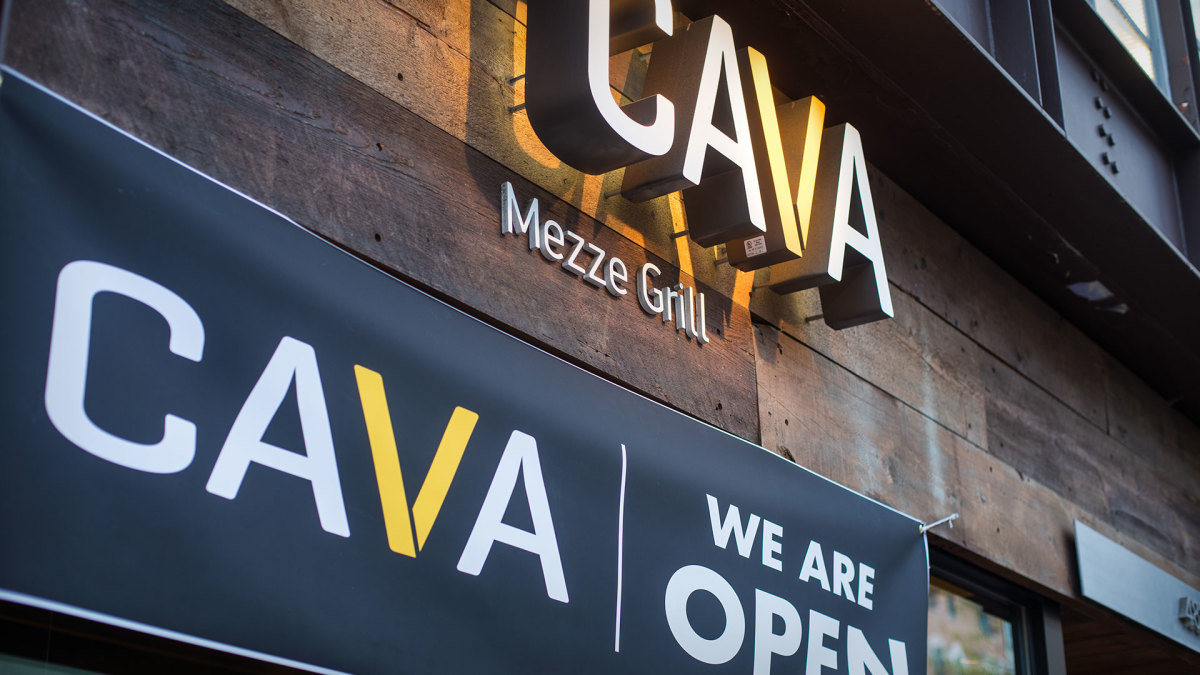
Brett Schulman, cofounder and CEO of the Mediterranean restaurant chain Cava (CAVA), said that “as the country has gotten more diverse, people’s palates have shifted.”
“They’re seeking bolder, more adventurous, spicier food,” Schulman told the consulting firm McKinsey in a recent interview.
“And with modern health and wellness trends, people are becoming more interested in what they’re eating, but they don’t want to compromise on taste and flavor.”
 Mediterranean food ‘can meet so many different needs,’ Cava’s CEO says.Cava
The beauty of Mediterranean food, Schulman said, “is that it can meet so many different needs.”
“It can be spicy, mild, salty, and sour,” he said. “It’s got all these different layers of flavors that are rooted in naturally healthy ingredients.”
More on restaurants:
Cava’s shares are down 51% from a year ago, but Truist recently initiated coverage of the company with a buy rating and $66 price target, saying it should remain one of the fastest-growing restaurant chains and noting multiple same-store sales and new store development drivers.
Nearly 75% of all restaurant traffic now happens off-premises—meaning that almost three out of four restaurant orders are taken to go, the restaurant association said in April, with Gen Z and millennials leading the way.
繼續閱讀
Schulman, however, believes “the demise of the dining room is greatly exaggerated.”
“There’s certainly been a shift to digital, and we’re well positioned to take advantage of it,” Schulman said. “We think it’s an “and”—great digital and physical experiences.”
“As technology continues to evolve—and in some ways replace—the way humans connect with others, especially with the advent of AI, people are really seeking to fill that void.”
Schulman said that the rise of the all-day café is “another indicator that people want to have this human connection.”
“Technology plays an enormous role in helping us become more efficient operators that can then invest in our team and our guests, which ultimately delivers our financial results,” he said. “It’s about using technology to enhance the human experience, not replace it.”
Jeremy Theisen, chief revenue officer of Hang, an AI-driven customer data platform, told QRS Magazine that “the big trend isn’t AI as a concept, it’s how smarter automation and intelligence are giving restaurants their time back.”
“Brands operate on razor-thin margins,” he said. “The technology that wins won’t be the flashiest—it will be the most effective at cutting complexity, streamlining labor, and quietly driving more business inside the four walls of the restaurant.”
The restaurant industry had some challenges in 2025, but there are reasons to be cautiously optimistic.
“Despite gusts of inflation, ongoing workforce issues and the looming effects of tariffs, total consumer spending on restaurant fare has continued to edge upward,” Bank of America said in its State of the Restaurant Industry 2025 report.
Related: AI growth strains electrical grid as tech companies expand operations
The firm said that as the rising costs of food and labor pushed up operating expenses across the industry, “corresponding price increases shifted consumer behavior in unexpected ways.”
Casual dining restaurants, like Cava, experienced traffic growth, while foot traffic at quick service restaurants (QSRs) like McDonald’s (MCD) declined, BofA said.
With rising inflation and labor costs, the prices at QSRs have risen to the point where casual dining is now viewed as a value because consumers are getting higher quality food than they would with a QSR menu item.
“It was something of a reversal from last year—where we saw some trading down to QSRs as consumers searched for value to offset the impact of inflation,” said Cristin O’Hara, head of Bank of America Global Commercial Banking’s Restaurant Group.
In 2026, BofA said that economic fragility is expected to continue to weigh heavily on consumer behavior, “with uncertainty about the potential impact of tariffs on costs, weak job growth trends and the specter of stagflation further complicating operators’ efforts at forward planning.”
The firm sees a boost in M&A activity in 2026 after three years of significant decreases, as well as a shifting workforce, with employees looking for such perks as flexible scheduling, opportunities for growth, a cultural connection, and benefits like tuition reimbursement or a health savings account
“While the appetite for dining out remains healthy, restaurant consumers are more selective than ever, and competition is fiercer,” BofA said.
“Standing out in a crowded marketplace demands delivering a differentiated value proposition as well as having the flexibility to consistently and continually adapt.”
Related: Quantum computing making big leap, analysts say
This story was originally published by TheStreet on Dec 23, 2025, where it first appeared in the Economy section. Add TheStreet as a Preferred Source by clicking here.
Dining and Cooking