
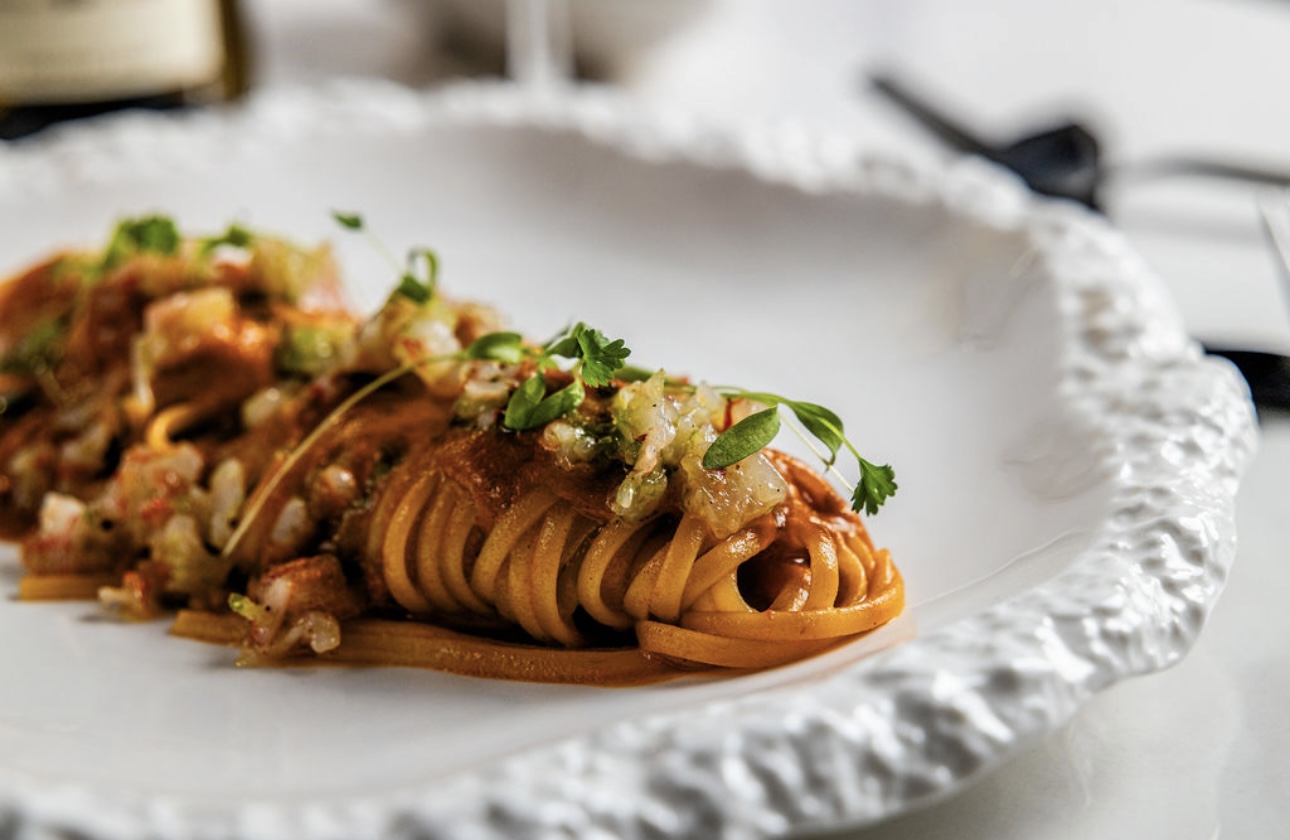
But now, Mongillo and Italian restaurateurs across the state are facing a challenge more dire than impressing the latest critic, or handling a spike in customers — a new and unprecedented tariff on Italian-made pasta.
The Commerce Department is set to impose a new 92% antidumping duty on a group of major Italian pasta exporters come January, prompting Italian pasta exporters to raise the alarm that Italian-made pasta may soon disappear from American shelves, according to reporting published last week in the Wall Street Journal.
The new tariff is in addition to the Trump administration’s 15% tariff on all exports from the European Union, and means Italian pasta exports will face a 107% tariff come January, one of the steepest charges for any good exported to the United States.
And while Strega makes most of its pasta fresh in-house, Mongillo said the new tariffs would affect his dry pasta, about a quarter of the pasta served at the restaurant, including the penne and spaghetti that feature in his popular Pasta e Patate dish and his acclaimed five-course tasting menu.
“They come to my place because I have a good-quality pasta, it’s just Italian grains,” said Mongillo, who also owned Strega Milford before it closed in the past year. “It is expensive, and they should not do that,” he said of the new import duties.
The tariffs target 13 large Italian pasta exporters, including Rummo Pasta from the Beneveto province, where Mongillo is also from. The restaurant uses the company for its higher-quality, slow-dried pasta, which he says gives it a distinctive bronze color.
The White House pushed back against Rummo’s characterization of the tariff as destructive for Italian pasta importers, saying it would ultimately protect American businesses.
“The administration has consistently maintained that the cost of tariffs will be paid by the foreign exporters who rely on access to the American economy, the world’s biggest and best consumer market,” White House spokesperson Kush Desai said in a statement to CT Insider.
For Mongillo, the confusion over new pasta tariffs is just the latest difficulty in the past two years, where a combination of trade protectionism and inflation has raised his costs upwards of 30% for some specialty goods like imported wines and flank steak, he estimated.
“Definitely for the tariffs they add to our costs, even in the last few months we have noticed that,” he said. “Something that was $100 and then in the last two years, it gets to $120 and now it’s $128. In the last month or two, the tariffs, they add another $8, but in the last two years, price increases add $20.”
In the past couple of months, Mongillo has also struggled to find staples to import that used to be common, including guanicale and fresh Neapolitan buffalo mozzarella, a change he ascribes to tariffs and a lack of protections for restaurants importing specialty goods.
And while Mongillo said he can pass some of the costs on to diners who expect a fine-dining experience at his six-table New Haven location, he wondered how businesses would cope with the constant economic uncertainty caused by fluctuating tariff orders and import prices.
“Who’s going to protect us?” Mongillo wondered. “But we are warriors, we will survive.”
Correction: This story has been updated to reflect Strega Milford has closed.
Dining and Cooking