
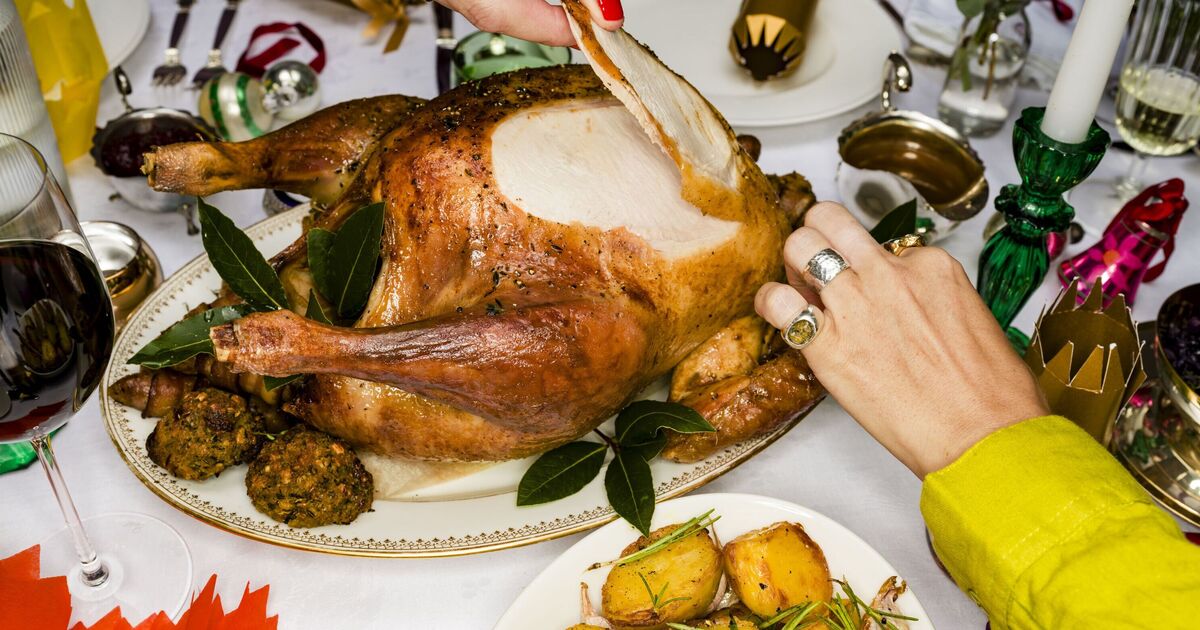
A food waste expert has described how one can keep their Christmas dinner in edible use until at least March. Whilst the big festive meal is now in the past for many, some of its leftovers lie as legacies of the food that was.
Many choose to devour their leftovers within a few days of the big meal, but some may still crave a turkey sandwich or a curry into the new year.
However, rather than splashing the cash and buying the meat again in the New Year, one food expert has suggested one very simple way to make your festive feast last a little bit longer.
Speaking on Channel 5’s Fresh vs Frozen at Christmas documentary, food expert Kate Hall talked about the benefits of freezing a turkey.
Providing some guidance, she said: “[The] really important thing to do is to slice it up or to put it into small pieces before we freeze it.
“If you do choose to use it in a cooked dish, if you want to make a turkey curry, you need to make sure that it is cooked until it is piping hot throughout.
“We can only thaw it and reheat it once. A lot of people might cook up a big turkey curry and then they’ll freeze the leftovers.”
Meanwhile, the programme’s narrator added: “Raw turkey can be kept in the freezer for up to a year but, once it’s cooked, it must be frozen within three days and should last three months in there.”
These experts aren’t the only ones to provide some food preservation and food waste reduction guidance.
Writing in the New York Times in 2023, Anna Perling and Katie Okamoto had a couple of suggestions of the best ways to preserve food for longer.
These included freezing the foods as quickly as possible, letting the food cool down before it’s frozen, leaving enough room for liquids, and freezing different kinds of food separately.
On the fourth point, they suggested it was important because different types of food freeze at different speeds. They explained: “Do this if you’re freezing a meal with several components that will freeze and thaw at different rates, such as chicken and broccoli. Packing components separately will reduce freezer burn and improve the quality of the reheated meal.”
Furthermore, they also recommended that the safest way to thaw frozen foods is not to throw them straight in the oven or microwave, but to put them in the fridge first.
As to why, they said: “It keeps the temperature below the danger zone (the temperature range in which dangerous bacteria can rapidly multiply).”
Dining and Cooking