
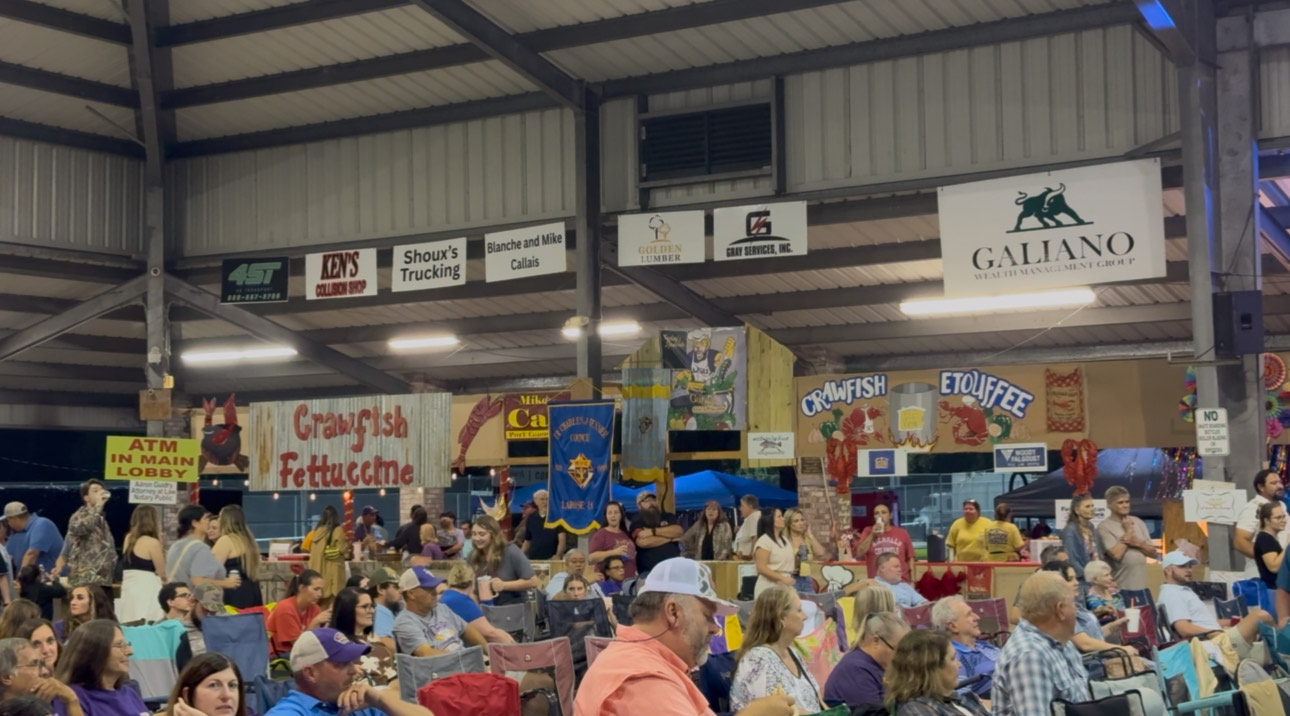
On a rainy fall weekend in Larose, the familiar smell of fried seafood, jambalaya, and fresh beignets drifted through the air as the French Food Festival made its return to the Bayou Civic Center grounds.
Families, neighbors, and visitors gathered for food, music, and fun, celebrating the culture woven into the fabric of Lafourche Parish.
For locals, the French Food Festival isn’t just another fall festival in October; it’s a reunion, a fundraiser, and a time to give back to the community.
The festival functions entirely through volunteers, and no one working the festival earns a dime. Every dollar spent outside of the actual fair ride activities goes directly to the community.
This festival stands out for its dedication to the success of the community and its people.
Few people understand that better than South Lafourche Parish native Ernie Savoie, who has spent decades perfecting the art of hand-building pirogues.
Savoie grew up learning the craft from his father, who learned it from the generation before him.
“When you get out of junior high, and daddy sees that you’re capable of doing carpenter work, your summer vacation is over, and you become a carpenter,” Savoie said.
Visitors and locals visited his display of pirogues set up inside the Bayou Civic Center to ask questions, share stories, and gather advice on how to repair their own family boats.
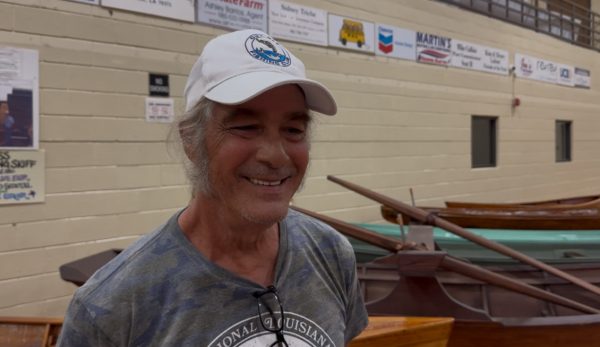 Ernie Savoie next to traditional Cajun boats
“Because of the tradition of being out in the marsh, you had to build your own pirogue if you wanted one, so that’s basically when I started building my own boats,” Savoie said. “It’s just passed down from generation to generation.”
The tradition spans back to the late 1800s, when families relied on narrow wooden boats to navigate the marsh, check traps, and travel the bayous long before the construction of paved roads.
Visitors touched cypress dugout pirogues crafted in the 1880s by Arsene Savioe Sr., Ernie’s great-grandfather. For Ernie, the French Food Festival is an opportunity to show younger families what his family history looks like up close.
The sense of responsibility to culture is felt throughout the festival, which began in the 1970s as a small community gathering.
Today, it features live music from local Cajun and zydeco bands, a painting contest showcasing regional artists, a popular live auction, carnival rides, and rows of homemade specialties found only in bayou kitchens.
From shrimp boulettes to crawfish fettuccine and the kind of fried seafood foreigners only hear about, families or organizations run each booth, proudly serving custom Cajun dishes.
One of those families belongs to Shane Richoux. Native to Lafourche Parish, Richouxs’ festival booth stays busy with its hungry regulars.
Richoux cooks the same recipes his family has passed down for generations. Dishes his grandparents taught his parents, which he now teaches his own children.
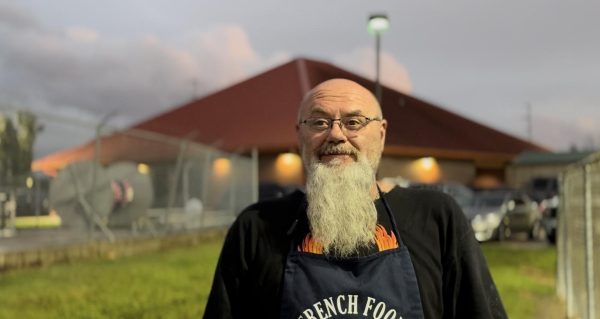 Shane Richoux (Photo by: Jennifer Marts )
“From my grandfather and grandmother, we learned how to cook, we’re family orientated, and we all come together,” Richoux said. “It’s about cooking, it’s about hospitality…and we learned our cooking heritage from many of the elders.”
As co-chair of the Fried Oyster, Shrimp and Fish booth, Richoux works side by side with his family every year. With the booth passed down from his grandparents, the family menu only continues to grow.
But for Richoux, it’s about more than cooking good food. It’s about the people he serves, the neighbors he sees every year, and the chance to keep Cajun culture alive.
“These festivals are all about family, these booths, and we help one another out,” Richoux said. “And it’s just a big community that our ‘chirren’ grew up here, we grew up here, and we just keep passing it on and on.”
That mix of family pride and community spirit plays a huge part in what keeps the French Food Festival standing strong. Every booth, every band, every activity relies on the volunteers.
Residents donate items for the auction, spend weeks preparing food, and work shifts long enough to qualify as workouts. High school students help with set-up and cleanup. Retired residents run the raffle tables with the same energy they might bring to a Mardi Gras parade.
Even the festival performers who fill the pavilion with two-steps and waltzes volunteer their time.
“We do this because it’s ours,” Savoie said. “It belongs to the community.”
The festival draws thousands each year, but the sense of closeness never fades. Children run across the pavilion and the park, overjoyed to get on the Ferris wheel or win stuffed animals.
Elders sit under the tent swapping old bayou stories. Couples dance like they’ve waited all year for the first band to play. Strangers become neighbors over a plate of seafood or a shared memory of a grandparent who spoke only French.
For a region that has weathered storms, land loss, and the pressures of upgrading, the festival reminds them of what remains through pride, food, and tradition.
And like most Cajun stories, this one comes back to family. Richoux said that every year, the festival becomes a way for generations of his own family to work side by side. His aunts, uncles, cousins, and kids handle the seasoning, run the lines, and cook from the heart.
“We’re just Cajuns, we help one another out, and the bayou is one special place…ain’t nowhere else to go,” Richoux said.
Savoie expresses the same sentiment and feels honored to be a part of this small community rooted in his heritage.
“I only hope that 40 to 50 years down the road, that we still have this place exist and maybe my kids are doing this, my grandkids are doing this, you know?”, he said.
The French Food Festival isn’t just a celebration; it’s living Cajun culture.
It’s a reminder that South Louisiana’s identity isn’t preserved in museums, but in the hands of people like Ernie Savoie and Shane Richoux. In the boats they build, the food they fry, and the stories they refuse to let disappear.
When the booths run out of food and the fair rides shut down, everyone who gave their time knows it’s not just for themselves, but for their neighbors. This selflessness ensures that the celebration of culture and family lives on in the bayou.
The Bayou Civic Center organizes the festival, but it’s the community that breathes life into it, year after year.
Dining and Cooking