
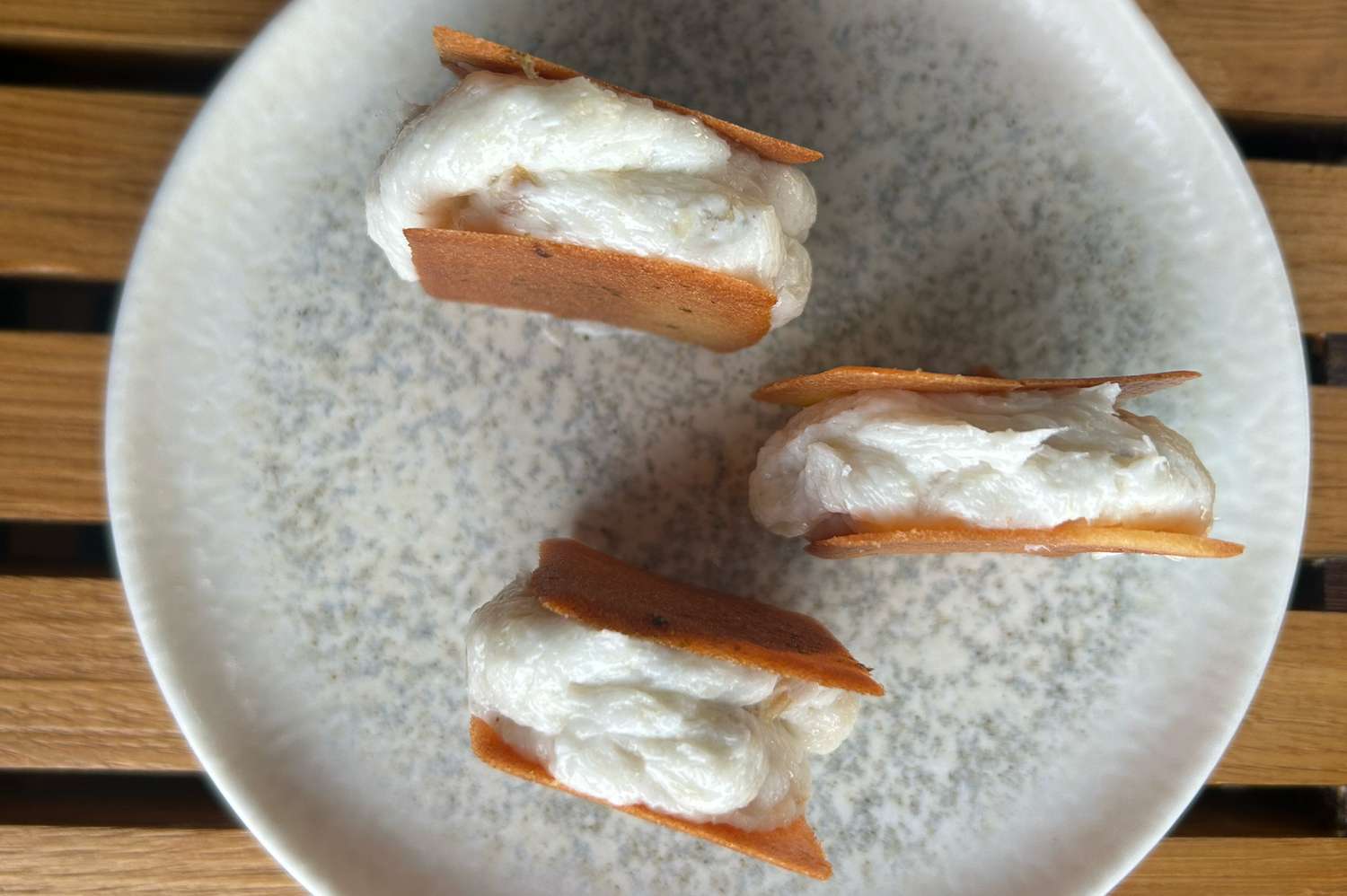
Since moving to Castelfranco Veneto this year, I’ve made the 45-minute train ride to Venice at least two or three times a month, sometimes just for a single bite: chef Daniele Zennaro’s wafer of baccalà mantecato at Algiubagiò. I’ve been to the restaurant six times now and have never left without ordering it. Once, when a friend was running late for dinner, I snuck in a small plate of two wafers and an Americano before she arrived. When they brought the dish to our table later, I pretended like it was my first time seeing it that evening with no shame.
I first tried Zennaro’s baccalà mantecato a few years ago and haven’t been able to stop thinking about it since. It dissolves on your tongue with the texture of impossibly smooth mashed potatoes or the creamiest tiramisu, only it’s whipped stockfish—one of the greatest bites I’ve ever had.
The wafer of baccalà mantecato from Algiubagiò.
Jenn Rice/Travel + Leisure
Venice’s culinary reputation speaks for itself: seasonal moeche (soft-shell crabs), schie con polenta (tiny gray lagoon shrimp on polenta), risotto di gò (risotto made with goby fish), risotto al nero di seppia (risotto with cuttlefish ink), and fegato alla Veneziana (thinly sliced liver with caramelized onions). Yet too many travelers stick to tourist-trap restaurants where pizza and pasta could be from anywhere. That’s absolutely fine, but if you leave without trying baccalà mantecato—my favorite—you’ve missed something essential to understanding these parts.
The story of baccalà mantecato begins with a shipwreck. In 1432, Venetian merchant Pietro Querini set sail from Crete bound for Flanders with 68 crew members. A violent storm destroyed their ship, and only a handful of men survived, eventually washing ashore at Norway’s Lofoten Islands. Rescued by local fishermen, Querini discovered stockfish (cod dried naturally in Arctic winds that could be transported without refrigeration) and brought it back to Venice.
The whipped preparation emerged in 18th-century Venice. The name “mantecato” refers to the vigorous beating that creates its mousse-like texture. Here’s where it gets confusing: In Veneto, “baccalà” means stockfish, while everywhere else in Italy, it refers to salt cod. The historic recipe calls for rehydrated stockfish, olive oil, bay leaves, lemon, salt, and pepper, although you’ll see garlic used in more modern recipes. The result is flavorful, simple, and served cold as cicchetti atop fried polenta or sliced bread, usually paired with white wine.
The frittella with baccalà mantecato from The Venice Venice Hotel.
Jenn Rice/Travel + Leisure
But as Zennaro told Travel + Leisure, many places cheat by adding cream or milk. You can taste the difference. The Dogale Confraternita del Baccalà Mantecato was founded in 2001 to preserve the authentic recipe, and Algiubagiò is on the recommended restaurant list.
The historic restaurant sits along Fondamente Nove, dripping in Murano glass from vibrant chandeliers to handblown glasses, and my favorite backdrop, the oversized, vibrant green algae glass by artist Davide Penso. Zennaro, who has led the kitchen since 2021, serves his baccalà mantecato as a delicate wafer he calls “unbeatable and immortal.” I couldn’t agree more.
Yes, the description, whipped dried fish, might sound unappealing, but that’s exactly why you need to try it. One bite of Zennaro’s wafer and you’ll understand why I keep making that roughly 45-minute train ride from Castelfranco, sometimes for nothing else. While Algiubagiò is my number one, you can also try Bar All’Arco, Osteria Ai Promessi Sposi, Bacaro Risorto (my newest favorite for cicchetti, with a great wine list), or Adriatico Mar. Or, peep Dogale Confraternita del Baccalà Mantecato’s full list of honored restaurants here. The salty, creamy baccalà is always best accompanied by a glass of wine or a spritz, but make sure the latter is made with Select Aperitivo, and not Aperol, in Venice.
For hotel design enthusiasts, Venice M’Art at The Venice Venice Hotel is one of my favorite addresses for lunch on the Grand Canal. Their frittella (fried donut bread) with baccalà mantecato smashed in the middle is perfect. Beyond taste, baccalà mantecato embodies Venice’s genius for turning a foreign product into something essential to its identity—a humble fisherman’s staple that’s remained one of the city’s best-kept secrets for centuries.
Dining and Cooking