
Key Takeaways
Oleo, also known as margarine, is a butter substitute made from plant-based oils.Oleo’s popularity surged in the United States during the Great Depression and World War II due to its cost-effectiveness compared to butter.Butter and margarine (oleo) have different ingredients, which can impact baking results.
Nearly every page of my grandmother’s butter-stained recipe notebook has the word “oleo” written in her thin, slanting cursive. Almost every recipe—from her mama’s homemade yeast rolls to her back-pocket chocolate cake—called for oleo. But what is oleo and why is it in so many recipes? I remember asking my mom what oleo was, and she said it was like butter. Turns out she was right on target. Here’s the story behind oleo.
What Is Oleo?
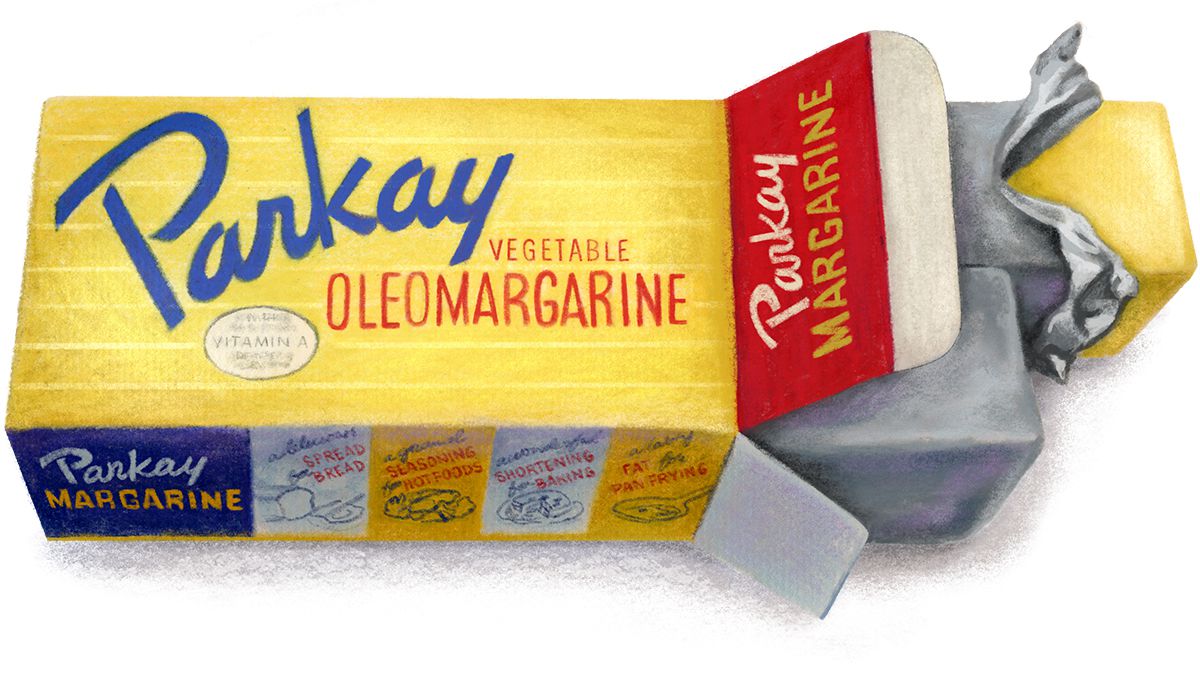
You may know oleo by its more modern (and original) name—margarine. Surely you’ve seen tubs of Country Crock or Fleischmann’s in the grocery store (or your grandmother sent you home with leftovers in one of their repurposed plastic tubs). Simply put, modern-day oleo/margarine is a butter substitute often made from plant-based oils.
Where Did Oleo Come From?
Ironically, we have the butter-loving French to thank for the creation of oleo. In the 1860s, French Emperor Napoleon III charged his country’s scientists with creating a cheap butter substitute for his armed forces. The resulting invention by Hippolyte Mèges-Mouries was originally named oleomargarine, from the Latin word oleum (olive oil) and the Greek word margarite (pearl), because early margarine was almost white in color (yellow dye was added by later entrepreneurs to make the spread look more like butter). When it came to the U.S., the Oleo-Margarine Manufacturing Company was born in New York. Oleo went in and out of style over the next 100 years, but it gained popularity during the Great Depression and later during World War II because it was cheaper than butter, which is probably why it made its way into so many of our grandmothers’ recipes.
What’s The Difference Between Oleo And Butter?
While butter and margarine, or oleo, have similar flavors and uses, they have different ingredients. Butter is a dairy product made from cream or milk. To make it, the cream is churned until it separates the fat from the milk. The separated fat is the spread we know as butter. It also contains water and milk proteins. Butter is sold in sticks.
Margarine has very little dairy. It’s typically made with vegetable, soybean, olive, or safflower oil; water; and butter flavoring. For completely dairy-free margarine, look for vegan versions. This comes in spreadable tub form or in sticks like butter.
Can You Buy Oleo Today?
While there’s not an actual oleo brand you can buy today, there are plenty of margarines available in most grocery stores. It’s sold in both sticks and in tubs (which as I mentioned earlier make great single-serving containers for leftover food).
What’s Better: Oleo Or Butter?
When it comes to baking and cooking, the Southern Living Test Kitchen will pick butter every time. We think it helps baked goods brown better, and we find the flavor to be superior to margarine. Spreadable margarine is also not recommended for baking because the texture and ingredients are different. It has more water than butter and can affect the moisture of your finished cake. But there’s no reason you can’t top a warm biscuit with a pat of margarine.
Healthwise, margarine is a better choice. Because they are made with plant-based ingredients, some margarines can be lower in fat than butter, which can be a wonderful option for folks who are watching unhealthy trans and saturated fats for health reasons.
What Can Be Substituted For Oleo?
If your grandmother’s recipe calls for oleo, you can make it the way Grandma did—with margarine. Or you can substitute butter or shortening in its place. Keep in mind that butter and margarine have different textures and ingredients that could affect the outcome of your baked goods if you stray from the original recipe.
The Bottom Line
I will never get tired of seeing the word “oleo” written in my grandmother’s handwriting, and I appreciate and honor the reasons why she used it—it made sense for her time. But as long as my heart is strong and my pocketbook is able, I’m going to stick with butter.
Dining and Cooking