
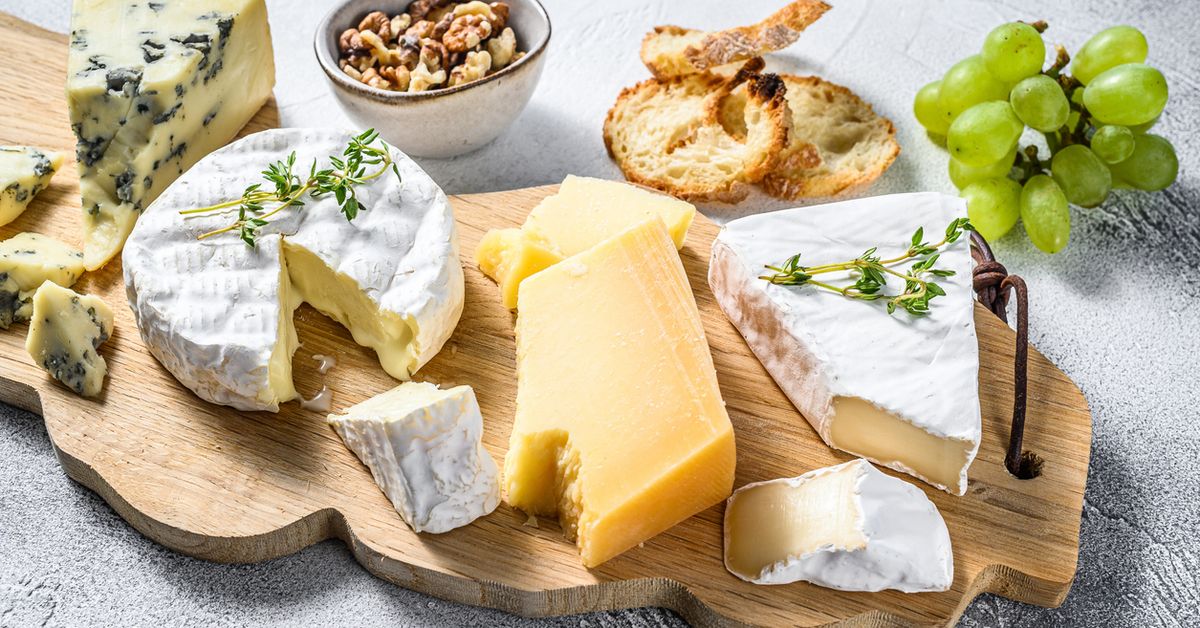
The Brie region of France’s iconic namesake is revered as one of the most beloved cheeses on the market.
The cow’s-milk product, characterised by its creamy interior and thin white rind, is an iconic and versatile charcuterie staple across the globe.
Closer to home, it’s considered one of the most popular features on Australian platters – but as it turns out, we may have been eating it wrong all along.
 Brie is a charcuterie staple, but we’ve been serving it completely wrong. (Prom Country Cheese)
Designed specifically to be eaten rind-on to enhance overall flavour and texture, brie has nevertheless been known to cop a bit of flack from cheese enthusiasts, with some labelling it as ‘bland’.
But according a trusted authority on the matter – Paris-based chef Mickaël Brigaudin –this is a common misconception, and is likely down to the way we are serving it.
Speaking to Parade, the Cagettes catering company co-founder revealed that one of the biggest mistakes people make with Brie is consuming it while cold.
“It is almost always served straight out of the refrigerator – a cold Brie hardens, loses its fragrance, does not release its aromas and tastes bland,” Brigaudin says.
READ MORE: Sneak peek at Kmart’s highly-anticipated autumn/winter homewares
READ MORE: The towel washing faux pas we’re all guilty of
 The cheese needs time to sit, rather than being served straight out of the fridge. (Getty Images/iStockphoto)
“The centre of the cheese needs to relax in order to develop its supple texture and its aromas of mushroom, cream and hazelnut.”
If the cheese is cut too early, he explains, it remains chalky in the centre, the aromas do not emerge and the flavour notes appear “flat”.
According to Brigaudin, Brie should be removed from cold storage and allowed to sit at room temperature for at least 45 minutes prior to eating, which gives its flavours and texture the chance to fully develop.
He says that if you’re a host on a time-crunch, the urge to microwave the cheese to achieve the desired affect may be tempting – but should be avoided at all costs.
For a daily dose of 9honey, subscribe to our newsletter here.
 But if you’re on a time crunch, there’s a method that can speed things up a touch.
Instead, the chef suggests adding a pinch of fine salt to the rind, and allowing the cheese to sit for 10 minutes.
The result is an amplified aroma, softened bitterness of the rind and intensification of the creaminess on the palate.
And as it turns out, there are a number of other factors that contribute to the taste of your brie, including the method in which it’s cut.
Slicing brie into wedges from the centre outward is reportedly essential, so that each piece contains both the creamy centre and an equal distribution of the rind.
 Contrary to popular belief, red wine should not be paired with brie. (iStock)
In short, this method ensures a balance of flavours with every bite.
Another element that can make or break Brie is the selection of accompaniments, and whether they’re neutral enough to allow its richness to shine.
Brigaudin says that a common mistake is pairing brie with overly sweet biscuits or red wine.
“Generally, cheeses are best enjoyed with white wine,” he revealed. “The acidity cuts through the fat.”
As a rule of thumb, it’s important to favour pairings that contrast with the richness and creaminess, such as fresh crusted bread, walnuts, fresh or caramelised pears and toasted nuts.
Sweet additions like honey or fruit preserves can also serve to enhance the cheese, rather than overpowering it.
FOLLOW US ON WHATSAPP HERE: Stay across all the latest in celebrity, lifestyle and opinion via our WhatsApp channel. No comments, no algorithm and nobody can see your private details.
Dining and Cooking