
No matter how you slice it, 2025 was a tough year for the California wine industry. Alcohol consumption declined, wineries went out of business and tariffs restricted the global export marketplace.
But! Each of those statements deserves an asterisk. New research suggests that the decline in consumption hasn’t actually been that big. While some wineries closed, many others opened new tasting rooms. And Congress could be sending monetary relief to offset the sales losses from tariffs.
It’s a known feature of human psychology – called negativity bias – that bad news tends to stick with us more than good news does. And so I suspect that many people who follow wine news may remember the negative headlines of 2025 (and granted, there were plenty) more saliently than the many positive ones. In fact, from where wine reporter Jess Lander and I sit, there were a lot of happy stories to cover on the wine beat this year.
For example: Balletto Vineyards’ baseball diamond became an unlikely source of hope and joy for its Santa Rosa community. More Napa Valley vineyards ditched glyphosate-based weed killers such as RoundUp. Wine bars in the Bay Area flourished, unexpectedly. One new trend suggested that a certain use of AI might be helping Wine Country tourism.
Allow me to jog your memory and take you on a good-news retrospective of the year in wine.
White wine took the spotlight
After deriding it for years, drinkers suddenly can’t get enough Pinot Grigio, including from California producers. An exciting new label unabashedly embraces rich Chardonnay. And Lodi – a region that Jess followed closely throughout the year – has “quietly transformed into a white wine gold mine.”
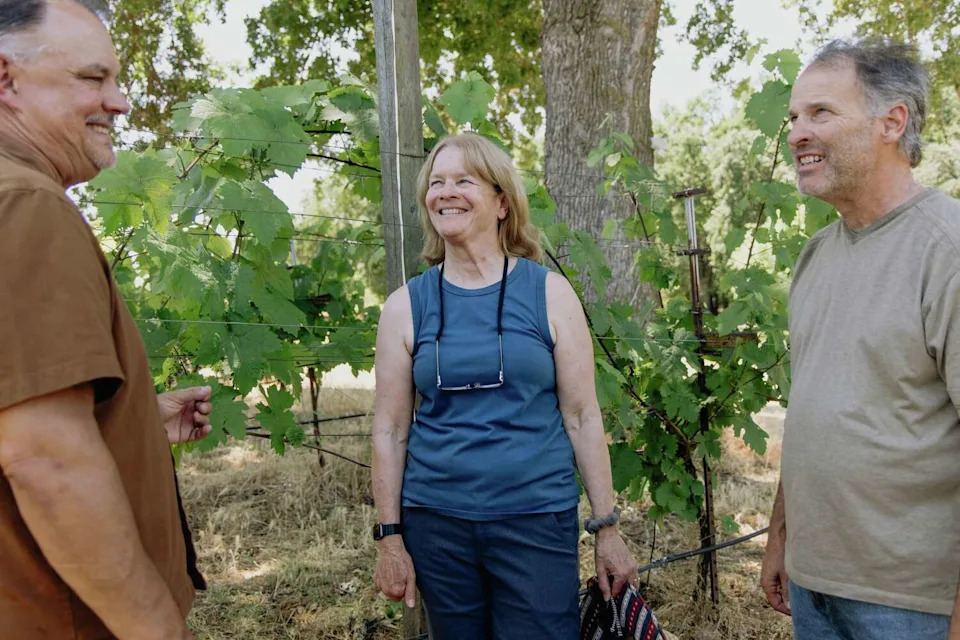
Phil Silver, Anne-Marie Koth and Brett Koth at Mokelumne Glen Vineyards in Lodi, the source of an unusual planting of Germanic white grapes. (Rozette Halvorson/For the S.F. Chronicle)
So many new tasting rooms debuted
And the best ones were mostly in Healdsburg! I was personally excited about that Sonoma County town’s new additions: Martha Stoumen, Marietta, Auteur, Cobb and Wayfarer. A new wave of co-ops, in which multiple wineries share a tasting room, brought some new energy to several Bay Area neighborhoods.
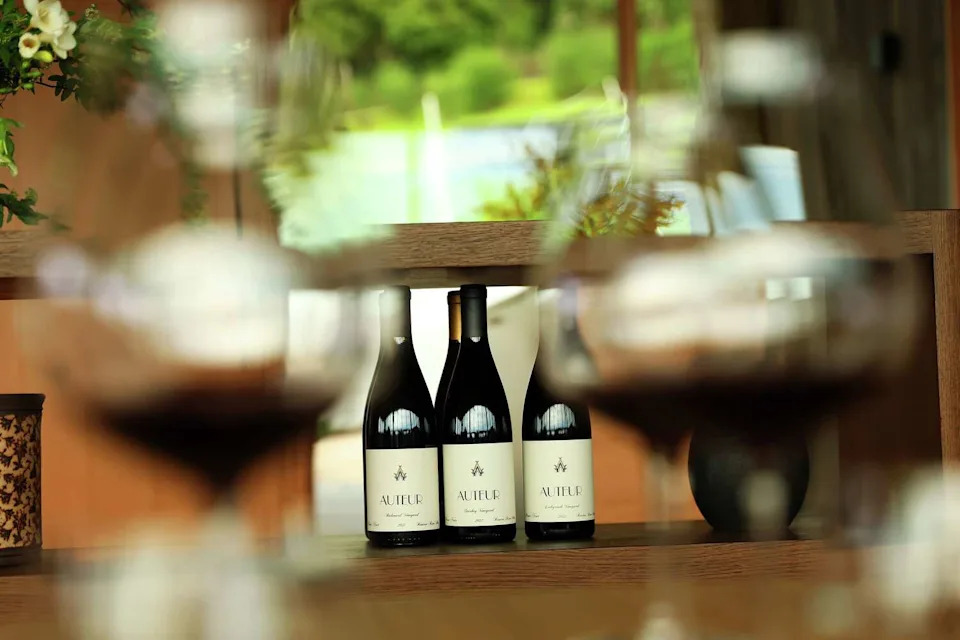
Auteur Wines opened a glamorous new tasting room in the outskirts of Healdsburg. (Scott Strazzante/The Chronicle)
Bargains abounded
This is (hopefully) the silver lining of any industry crisis: a deal for the consumer. Some wineries slashed tasting prices as low as $15 to attract more traffic, and it worked. Others, like Santa Rosa’s Hobo Wine Co., resisted the allure of raising prices and kept putting out extremely high-quality bottles for under $25. And in another win for consumers, the reservation-only model that has reigned supreme in Napa Valley since COVID began to shatter as more wineries went back to welcoming walk-ins.
There were some happy-ending acquisition stories
The most attention-grabbing winery sales of the year spoke to the severity of the industry downturn: Constellation offloading all of its cheap brands to the Wine Group, the Wine Group then offloading one of California’s most historic wineries, Simi, to a startup. But we also checked in this year on some quieter deals, brokered pre-2025, and found that the new owners were bringing to life inspired visions. That was the case with Calistoga’s Diamond Creek Vineyards, thriving under the ownership of Maison Louis Roederer; Healdsburg’s Michel-Schlumberger, where a new regime is revolutionizing the farming practices and shaping a long-overdue identity for the estate; and Sonoma’s Montecillo Vineyard, whose new owner is raising the profile of a long-overlooked site and creating a collaborative community of winemakers who buy its fruit.
California continued to make really good wine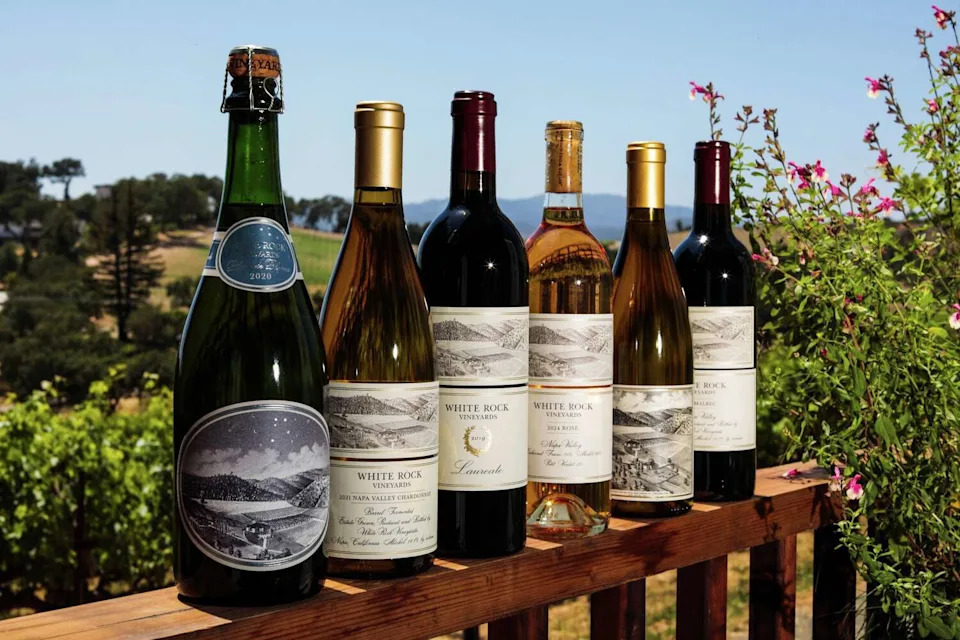
The wines of White Rock Vineyards, one of Napa Valley’s hidden gems. (Yalonda M. James/S.F. Chronicle)
Regardless of the economic climate, the state is brimming with talented, passionate winemakers who continue to release soulful wines that beautifully convey a sense of place. Producers such as White Rock in Napa, Marty Mathis in the Santa Cruz Mountains, Frog’s Leap in Napa and the tenacious winemakers of the Cucamonga Valley moved me this year. I can’t wait to discover more California wines in 2026.
This article originally published at It was a tough year for California wine – but here was the good news.
Dining and Cooking