
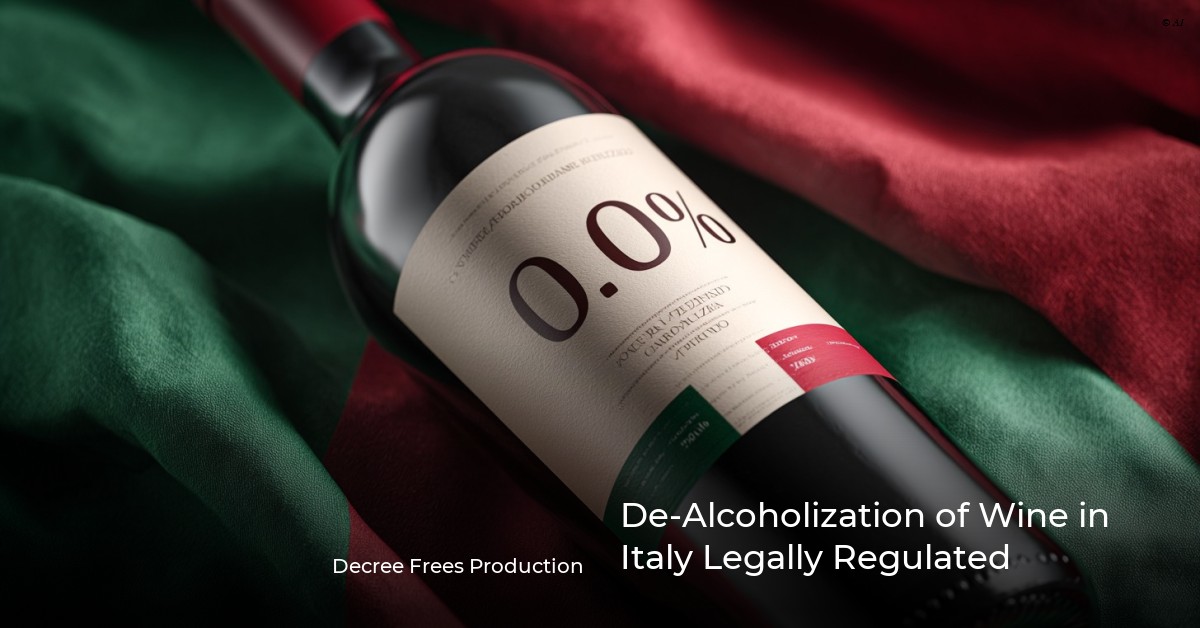
The de-alcoholization of wine is now legally regulated in Italy. This means its production is released. The Ministers of Agriculture and Finance have signed a decree that establishes the legal framework for excise duties, permits, and distribution for fully or partially de-alcoholized wines (“NoLo wines”). It also regulates approval, storage, administrative obligations, and transport regulations.
The agreement followed a long dispute. Italy refused to adopt the EU regulation that has been in effect since 2021, which allows de-alcoholized wine to carry the designation “wine”. As recently as November 2024, Agriculture Minister Francesco Lollobrigida stated: “I will fight until the end to ensure that this type of beverage cannot be called wine.” However, under pressure from the wine associations, he soon changed his position. The associations simultaneously emphasize the need to protect the identity of Italian wine. This also includes the designations of origin. It must be distinguished between wine and products obtained by the removal of alcohol to avoid ambiguities and not confuse consumers.
Industry associations estimate that the market for NoLo wines will grow dynamically in the coming years. Currently, the revenue of this category worldwide is around two billion euros and is expected to rise to 2.8 billion euros by 2028. In Italy, the segment increased from eight million euros in 2021 to 55 million in 2024. A growth of 60 percent is also expected for 2025.
(al; Image: AI)
More on the topic:
“Moderate Drinking” is Accepted in Society
Franken’s Largest Winery Plans De-Alcoholization Plant
New De-Alcoholization Technology Promises “Revolution”
Dining and Cooking