
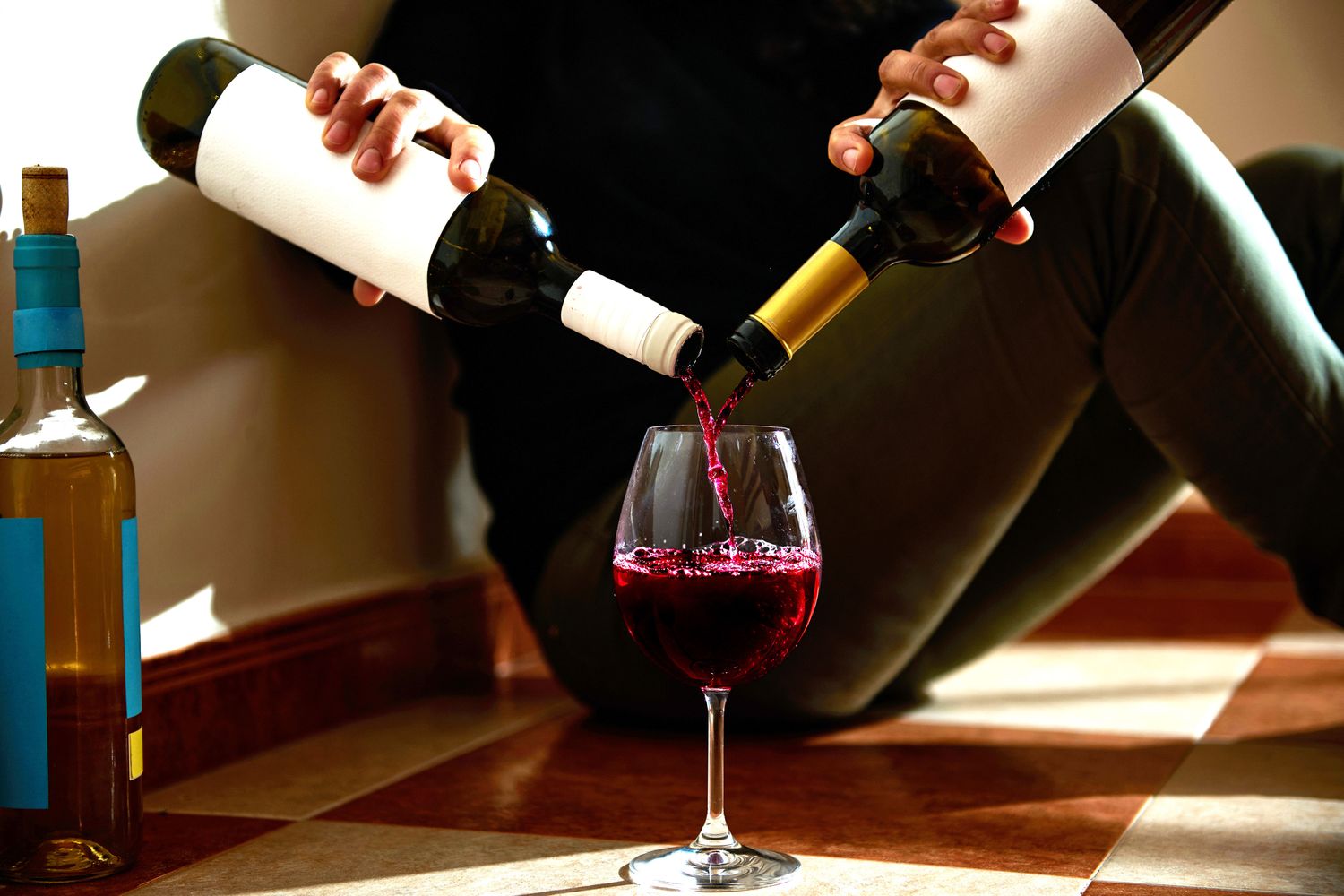
“What’s the vintage?”
It’s common to inquire about the year that the grapes were harvested for a particular wine. It’s a reflection of the sun, rain, heat, hail, sweat, and joys of that particular season.
It’s one of the oldest expressions of agricultural honesty. Yet increasingly, winemakers are asking: What happens when you blend some years together into a single bottle?
The concept isn’t new. Winemakers have long made multiyear masterpieces to maintain quality and house style. Champagne has blended across years for more than a century. Sherry, Madeira, and some Marsala lean on fractional blending for complexity and continuity.
Multivintage (MV) still wines blend harmonies and house styles while they emphasize specific years to add nuance and texture. The choice of vintages and ratios is up to the winemaker.
Often marked by terms like MV, assemblage, or edition numbers, they can promote transparency through vintage listings on technical sheets. This approach maintains a respect for terroir and also fosters creativity, adaptation, and innovation.
That philosophy shows up in some pretty established bottles like Spain’s Vega Sicilia, with its historic Único Reserva Especial. Napa’s Cain Cuvée is a 50-50 blend of two vintages. They blend across harvests sometimes in response to climate anxiety, but also because they believe it’s a tool of precision that can create wines that are more expressive and faithful to terroir.
A blending and bottling timeline for the NV12 Cain Cuvée.
Courtesy of Cain Vineyard & Winery
Blending to perfection
Think of MV wines as a music remix. Each vintage acts like a different track, reflective of its specific year. Brought together with intention, they reveal a more multidimensional view than can any single harvest.
A great remix retains the original tracks while it brings out layers you didn’t know were there. MV wines can do the same.
“Over the years, I have learned that a multiyear blend shows more of its character,” says Czech Republic winemaker Milan Nestarec, whose bottles have become cult objects far beyond his native Moravia.
Nestarec’s wines are specific to vineyard, and often, a variety. His Soleras wines are, not surprisingly, solera-esque in style, though the main difference is that vinification takes place in a single barrel.
Nestarec wine barrels.
Courtesy of Milan Nestarec
The goal isn’t to preserve a house style in the exact same way every year, he says, but to create depth, texture, and a dynamic expression of the vineyard across years.
Climate volatility has made that philosophy far more relevant. Some producers see MV wines not just as a response, but an opportunity.
“One of the more interesting projects I’ve come across is Robert Joseph’s collaboration with winemaker Vladimer Kublashvili in Georgia,” says Dr. Matthew Horkey, a social media wine content producer and a wine judge. “Their K’Avshiri line is multivintage white, rosé, and red, which offers a lot of complexity and consistency with every assemblage I’ve tasted.”
K’Avshiri means “coming together,” a nod to its blend of grape varieties, vineyards, winemaking methods, and vintages. The team prefers the term “assemblage” to emphasize transparency.
“Multivintage wines could be a great answer to counterbalance the variability of vintages,” says Horkey.
Multivintage wines in classic regions
In Italy’s Veneto region, Pasqua crafts a Garganega blend with a name that winks squarely at Champagne: Hey French, You Could Have Made This But You Didn’t. The wine’s fourth edition spans seven vintages.
Courtesy of Pasqua Wines
Riccardo Pasqua, the CEO, explains that the multivintage approach not only sparks curiosity, but it also provides winemakers with a practical strategy on how to adapt to climate conditions.
“Perhaps we will find ourselves talking more about the art of blending and winemaking,” says Pasqua. “These are not conflicting concepts, but terroir and winemaking are rather ones that can be integrated into the vision of the evolution of the wine industry.”
Not all multivintage winemakers are motivated by climate concerns. For many, it’s about quality, expression, and creativity.
From Italy’s Alto Adige region, Alois Lageder’s Löwengan Inedito II spans nine vintages of Chardonnay, from 2013 to 2021.
Alois Lageder’s Römigberg vineyard.
Courtesy of Alois Lageder
“For me, there are several aspects that make this approach both forward-looking and timeless,” says Jo Pfisterer, Lageder’s enologist. “One is the decoupling from time. The maturation process plays a crucial role in winemaking, yet it is often too short. In a multivintage blend, however, there are always components that have undergone an extended period of aging.”
Challenging convention with practicality
Pablo Prieto, winemaker at Viña Carmen in Chile, says its Vintages Blend aims to capture a fuller expression of Cabernet Sauvignon from Alto Jahuel in the Maipo Valley.
“There is a practical dimension, giving winemakers more flexibility to craft balance and consistency without compromising origin or character,” says Prieto. “In that sense, creativity and resilience go hand-in-hand.”
Prieto believes that consumers are increasingly ready to embrace wines that challenge the traditional hierarchy of single-vintage prestige.
“It will be fascinating to see how different terroirs interpret this approach and what new expressions of place and variety result from it,” he says.
Soleras wines from Milan Nestarec.
Courtesy of Milan Nestarec
So, is vintage wine going anywhere? Not at all. Wine lovers remain captivated by the distinct characteristics of each vintage. Many producers of MV wines also craft traditional single-vintage bottles. They celebrate the unique qualities of each harvest while exploring blending possibilities.
However, multivintage wines remind us that a bottle doesn’t have to represent just one year’s story. This creates a complex narrative of seasons, places, and visions that can result in something that feels both familiar and completely new.
Does this remix track with you?
Dining and Cooking