
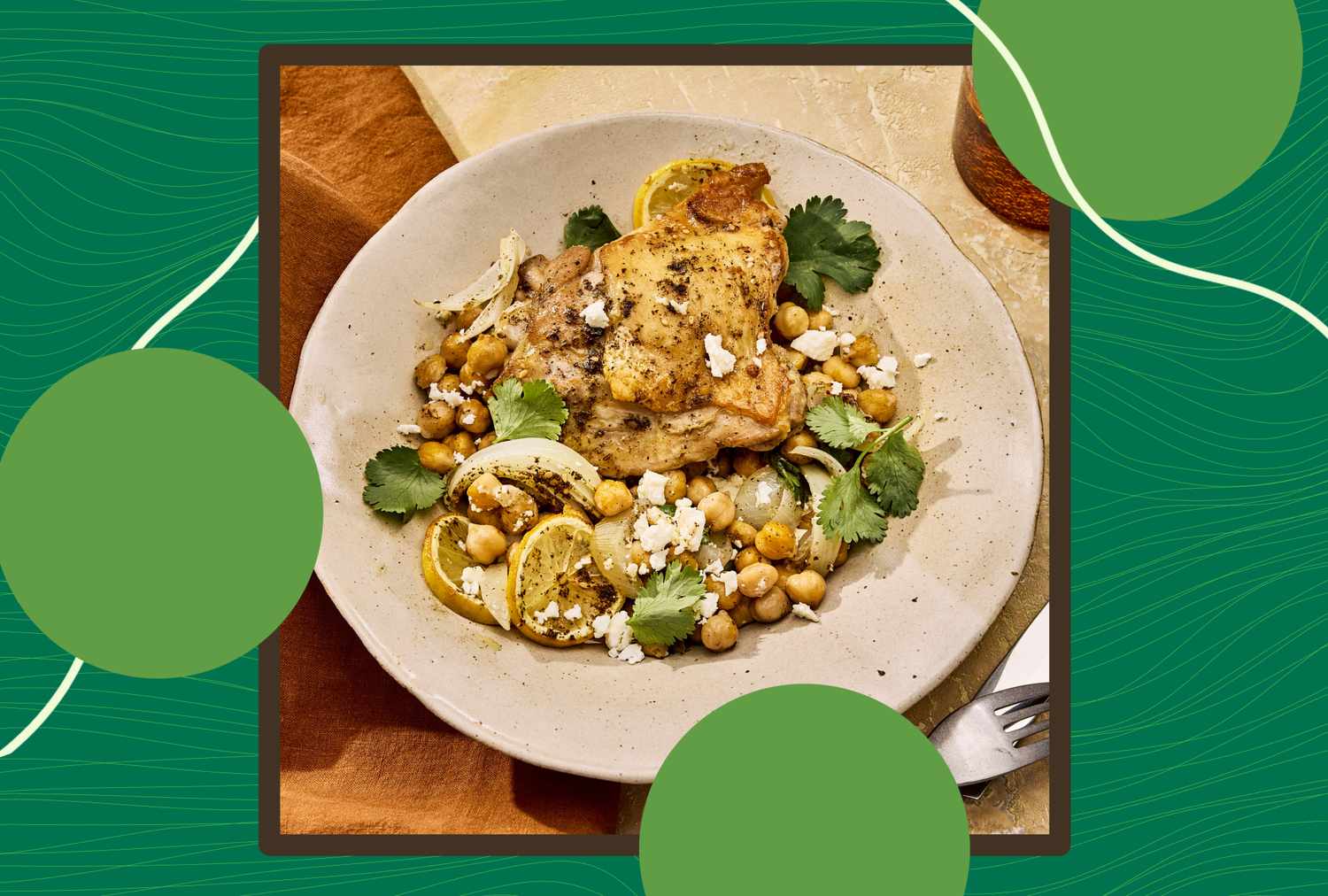
When a writer learned she had high blood sugar, she began searching for high-protein recipes.This simple, flavorful za’atar roasted chicken and chickpea recipe became one of her go-tos.Eating more protein and fewer highly processed carbs helped her lose 25 pounds.
Whenever your doctor says, “We need to talk about your blood work,” you know you’re in for a tough call.
I was in my mid-40s and feeling pretty good about myself. Was I a health fanatic? No. But I went to the pool several times a week. I happily cooked most of my meals from scratch. I genuinely liked all fruits and vegetables, and I certainly didn’t need to be lectured on the evils of ultraprocessed foods. What could possibly be wrong with my bloodwork? Was there a problem?
Turns out, there wasn’t a problem. There were several. Among them were low iron and high blood sugar. It seems that a combination of perimenopause and a growing habit of eating toast for dinner when I was on deadline wasn’t exactly working in my favor. My doctor’s recommendations included meals that met three requirements: high fiber, low sugar and high protein. I knew what that meant. Legumes, and lots of them. I can’t say I was all that enthusiastic.
I wasn’t against lentils, beans and chickpeas, per se. They’re easy. They’re budget-friendly. They’re nutritional superstars. They’re just so … sensible. Horribly sensible and terribly dull. I found myself recalling a lentil-and-sesame-seed cooking experiment that turned out to have the texture of sand, and I shuddered. My memories of a 12-bean potluck salad with zero seasoning were equally gloomy. As such, I set about my research with grim determination. Perhaps it’s no surprise that when I stumbled upon this EatingWell recipe for Za’atar-Roasted Chicken with Chickpeas, I felt a glimmer of optimism. It looked like a recipe with potential. It looked like a recipe with flavor.
And it was. I’m not exaggerating when I say that this recipe changed my life.
It’s a chickpea-forward recipe with so much going on that it made me forget about my legume ambivalence. It doesn’t taste like the kind of recipe you eat after your doctor calls to lecture you about your blood work. But it absolutely should be. A generous amount of lemon juice and za’atar spice blend makes things sing. Throw in some onions, garlic and fresh herbs, and you have an absolute powerhouse of flavors. The chicken ups the protein factor, providing an impressive 29 grams per serving. And everything comes together in minutes with no fuss. It’s so good that I habitually swipe my fingers across the empty pan afterward, scooping up the last little bits of the earthy, punchy, tangy sauce. And, best of all, it has me eating my chickpeas without complaint.
While I’d happily eat this meal prepared exactly the way the recipe says, it didn’t take long before I started putting my own spin on things. It’s endlessly flexible and such a great way to use up leftover veggies. In summer, I was loading my tray with tiny cherry tomatoes from my garden. In the fall, Brussels sprouts were added to the mix. With winter rolling in, the sweet, peppery flavor of parsnips became a welcome addition. No matter what I did, everything came together in less than 15 minutes of hands-on time. Then I didn’t have to do a thing until my timer dinged—perfect for when I’m so busy that I can barely look up from my work. And, for the first time ever, I actually started saving leftover chickpeas to eat the next day, usually for breakfast, in a quick hash and with a fried egg on top.
As much as I’d like to joke around and dismiss them, there is no denying that chickpeas and other legumes are precisely what I need right now. Cathy Richards, RD, wholeheartedly agrees. “As a registered dietitian, I often recommend chickpeas because they add satisfying protein, gut-loving fiber and a subtly nutty flavor to meals. They’re a simple, delicious way to boost both health and taste,” she says.
Legumes, like chickpeas, are also a food choice heartily endorsed by a myriad of health care organizations. That includes Diabetes Canada (in Canada, where I live) and the American Diabetes Association and the American Heart Association in the U.S. After all, chickpeas are rich in fiber (1 cup of canned chickpeas gives you nearly 10 grams). They’re also a low-glycemic-index choice, which is key for anyone grappling with blood sugar regulation. It doesn’t hurt that they also give you a little bit of iron, providing 8% of the Daily Value per cup.
OK, legumes. I’m starting to get the hype. Is there anything you can’t do?
Meal Plan to Try
30-Day High-Protein, High-Fiber Meal Plan for Weight Loss, Created by a Dietitian
I didn’t set out to lose weight. I’m lucky to have a doctor who cares about more numbers than just the ones on the scale. I was focused on making changes that would improve both my blood sugar and my iron levels. But those changes, including increasing my intake of fiber and lean proteins while cutting back on high-glycemic index foods, like white carbohydrates, align closely with tried-and-true weight-loss advice. As such, working this super-easy sheet-pan meal into my weekly meal rotation for the past year has helped me lose 25 pounds and counting.
However, I’m even more thrilled that my blood work has significantly improved. Best of all, these changes feel sustainable. This recipe feels like I’m nourishing myself, taking care of myself and finding what works for me, my health and my cooking style. Who would have thought that prosaic ol’ chickpeas would be at the forefront of that?
The Bottom Line
Finding out your blood sugar is high can come as a surprise. But small changes, like having a go-to quick, healthy recipe you love—like this easy roasted chicken and chickpea dish—can help you get things back on track. Combined with eating more lean protein and fewer highly processed carbs, it may even help you lose some weight.
Dining and Cooking