
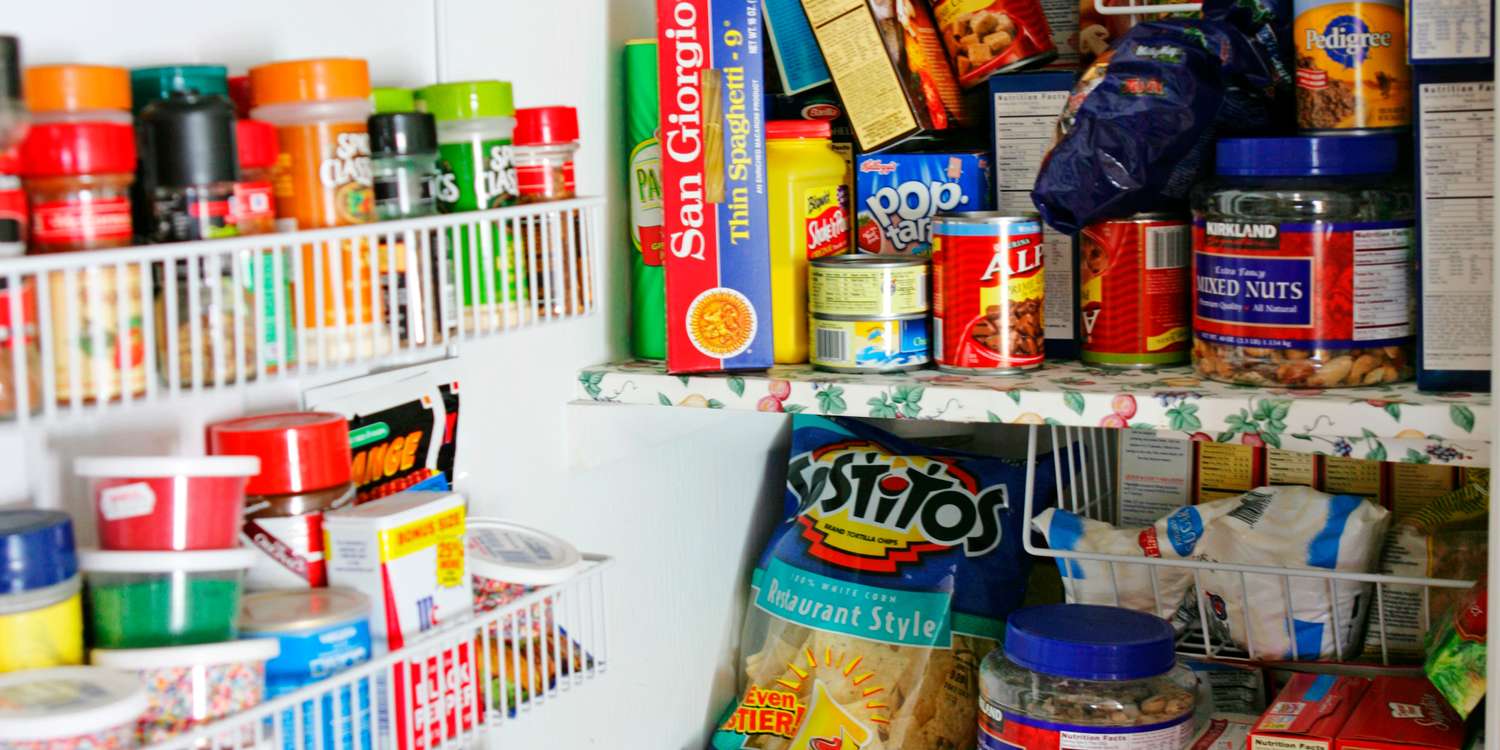
A well-stocked and organized pantry can act like your sous chef; equipping you with the essentials you need to pull together or put the finishing touches on snacks and meals. On the flip side, an overstuffed, cluttered, sparse, or expired-product-filled pantry can be a serious burden—and feels daunting for even the most talented home cooks to overcome. Let’s just order takeout, shall we?
With so many options available for condiments, canned goods, and other shelf-stable products, it can be challenging to know where to start—and how to edit our current collection. To help us do that, we asked professional chefs to reveal their menu MVPs; a shortlist of essential pantry items they swear by and use most often. The products ahead can be your “everyday chef tricks,” believes Robbie Felice, chef and partner at the Italian- and Japanese-inspired restaurant pastaRAMEN. Each is widely available, affordable, and allows you to whip up a meal even when you have nothing else in the house.
“I gravitate toward brands and ingredients that reflect the way I want to cook and how I want to take care of people. My pantry is really just an extension of that: a small, thoughtful collection of things that help me feed the people I love,” says chef and cookbook author Andy Baraghani.
Our Panel of Pantry-Stocking Chefs
David Arciniega, executive chef and beverage director at Thompson San Antonio – Riverwalk in Texas
Andy Baraghani, a New York City-based chef and the author of “The Cook You Want to Be: Everyday Recipes to Impress”
Miguel Bautista, executive chef at Perry Lane Hotel in Savannah, Ga.
Maycoll Calderón, executive chef and owner of Cuna at The Standard East Village in New York City
Erin Clarke, a Milwaukee, Wis.-based recipe developer and the author of “Well Plated Every Day”
Robbie Felice, chef and partner of pastaRAMEN in Montclair, N.J.
Erin Fouhey, culinary director for Harrah’s Las Vegas, The LINQ Hotel, and Flamingo Las Vegas
Yumna Jawad, the Grand Rapids, Mich.-based CEO and founder of Feel Good Foodie and the author of “The Feel Good Foodie Cookbook: 125 Recipes Enhanced with Mediterranean Flavors”
Tito Marino, executive chef of Indaco in Charleston, S.C.
Kari Shaughnessy, owner and executive chef of Hayward Restaurant in Carlton, Ore.
9 Best Pantry Stapes, According to Chefs
Mustard
Cookbook author Erin Clarke says that “Dijon mustard is the quiet hero of my kitchen. It gives body to vinaigrettes, depth to pan sauces, and quick personality to marinades and glazes. I even add it to cheesy sauces. You can’t taste it directly but it gives that something ‘extra.'”
Baraghani is a big fan, too, and calls Maille’s Dijon Mustard a “nonnegotiable” for all of those uses, and to spread on sandwiches or rub on a roast chicken before it goes into the oven.
Dijon makes for a versatile and crowd-pleasing addition to your collection. Prefer honey mustard? Simply mix equal parts Dijon mustard with honey, and voila: you just saved yourself extra shelf space.
Salt
Kosher salt is key for cooking and baking. But for a gourmet finishing touch—that costs just a few cents per pinch—the chefs recommend flaky sea salt. Maldon and Jacobsen both get the pro seal of approval.
“I use it constantly on grilled meats, vegetables, salads—anything that needs that little pop of crunch and clean salinity. Keep it in an airtight container so the flakes stay crisp,” suggests Perry Lane Hotel executive chef Miguel Bautista.
Not only does it lend a lovely crunch, beautiful visual appeal, and salinity, but flaky sea salt also “enhances the natural flavor of every ingredient it touches,” adds Maycoll Calderón, executive chef and owner of Cuna at The Standard East Village. (No wonder we adore a few flakes atop chocolate chip cookies and ice cream!)
Olive Oil
This heart-healthy fat is truly an everyday staple for Calderón, Felice, Clarke, and Bautista. Especially since Felice has Italian heritage, he finds this to be “a non-negotiable. Olive oil is essential for me; my Italian side insists that every dish should be finished with a drizzle. Whether it’s fish, meat, or pasta, a good olive oil ties everything together.”
Clarke advocates for investing in two different types. For high-heat cooking, she prefers a “budget-friendly workhorse” like Kirkland Signature from Costco. “It is a fantastic value, tastes clean, and I don’t feel precious about using it for roasting, sautéing, and sheet pan meals.” For more uncooked uses, such as salad dressings, drizzling on soup, serving with bread, or finishing cooked meat or vegetable dishes, try a fruity, aromatic extra-virgin olive oil. Bautista is a big fan of Grove & Vine and Graza.
Vinegar
By now, we’ve covered salt and fat. It’s about time we made our way to acid, which is what vinegar adds to your arsenal. If you ask Felice, vinegar is extremely underrated among home cooks, and is often “the secret ingredient that wakes a dish up without calling attention to itself.”
Bautista and Calderón are part of the vinegar fan club, too, and believe you can’t go wrong by adding sherry, red wine, rice, balsamic, or calamansi vinegar to your cabinet. Look for Brightland, Whole Foods Market 365, Acid League, or Gustiamo brands to round out your selection.
“I reach for these a few times a week to brighten up sauces, salads, pickled onions, and any dish that could use a little ‘pop,'” Bautista says. Or try it for braises, better-than-bagged potato chips, or even chess pie (trust us!).
Canned Tomatoes
Deemed a “weeknight lifeline” by Clarke and celebrated by Baraghani as “something I use constantly,” canned tomatoes are a fast and budget-friendly way to savor a taste of summer any time of year.
“For diced, I reach for fire-roasted for the extra touch of built-in flavor. A good San Marzano-style crushed tomato is always in my pantry too. You can quickly turn them into pasta sauce, soup, shakshuka, chili, or a quick braise. A splash of olive oil and a little vinegar at the end wakes up the flavor,” Clarke says.
As for the brand, you have a few excellent options. Cookbook author Yumna Jawad swears by Mutti and Cento, and Baraghani stocks Bianco DiNapoli. No matter which label you champion, look for a brand that tastes bright and fresh, and aim to rotate the cans to the front as you invest in new ones, following the restaurant-beloved “first in, first out” philosophy, Jawad suggests.
Beans
While you’re adding cans to your cart, Clarke, Jawad, and Erin Fouhey, culinary director for Harrah’s Las Vegas, The LINQ Hotel, and Flamingo Las Vegas, say you should certainly snag beans. In particular, all three adore chickpeas, “a pantry superstar because they offer protein, fiber, and texture all in one,” Clarke says. (Eden and Whole Foods 365 both offer consistently delicious options, Jawad tells us.)
Versatile enough to be the star of the show or a satisfying side, according to Fouhey, Jawad likes to make the most of her garbanzo beans in soups, grain bowls, sheet pan dinners, falafel, and dips like hummus. To celebrate them in their own glory, roast a batch of crispy chickpeas to snack on by the handful. Or for a quick, no-cook sandwich filling, follow Clarke’s lead and mash garbanzo beans with Greek yogurt, avocado, lemon juice, and Dijon (coming in clutch again already!).
Tahini
The ultimate, creamiest, dreamiest hummus recipe relies on another pantry staple: tahini. A favorite of Jawad and Kari Shaughnessy, owner and executive chef of Hayward Restaurant, this sesame seed paste is “one of the most versatile Mediterranean pantry staples I always keep stocked,” Jawad notes.
She uses tahini often—try Ziyad, Soom, or Seed + Mill—for dressings, sauces, drizzling over roasted veggies, and quick hummus bowls and sandwiches. As for Shaughnessy, she swears by adding a spoonful or a scoop to baked goods for extra depth. Tahini brownies, anyone?
Grains
You can turn any protein and vegetable into a veritable feast if you add a grain, Clarke tells Allrecipes. Rice, quinoa, and pasta are all musts in the home pantry of Tito Marino, executive chef of the Italian restaurant Indaco. That’s because “having these on hand makes figuring out a quick family dinner easy,” the dad of two says.
For rice and quinoa, you can’t go wrong with regenerative-minded Lundberg Family Farms, Clarke explains. She likes to cook big batches of their grains to showcase in grain bowls and stir-fries this week, then freezes one-cup batches so she can reheat them later on in a matter of minutes.
If you prefer pasta parties, Jawad points us to De Cecco, Barilla, Rao’s noodles, which are available in a wide variety of shapes and act as excellent vessels for pomodoro, Alfredo, and beyond.
While you’re going with the grain, consider tossing a bag each of farro, grits, couscous to your cart as well, Marino recommends.
Wine
Admittedly, this might be stored in your wine fridge or cellar if you have one, but for Baraghani, a good bottle of red wine is such a key ingredient that he keeps a bottle or two within close reach. (In a cool, dry, and dark place, like a low shelf in his pantry. He’s particularly fond of Robert Mondavi Winery’s Cabernet Sauvignon, but any red in the $20 to $30 range makes for a respectable host gift—and a hero ingredient, even if you don’t really enjoy drinking it by the glass.
“A bottle of red comes out anytime I’m hosting, bringing a gift, or winding down after a long shoot. I’ve been making a cauliflower Bolognese for years. It starts with a classic sofrito, then I add the cauliflower, lots of tomato paste until the mixture gets jammy, then I deglaze the pan with a splash of red wine to give the sauce a deeper, almost meaty backbone without weighing it down,” Baraghani reveals. When temperatures dip during fall and winter, he adds that this is prime time for braising short ribs. (Please save us a serving, Andy!)
Dining and Cooking