
The first of January arrived on a Thursday this year, and maybe you were able to eke out an extra day off yesterday, or knock off a few hours early. This weekend, in any case, carries the vibes of the last holiday breathing room before we dive into a new year in earnest on Monday. I’m planning to make these two days as big and slow as possible. If you’re anywhere close to a similar mindset, I have an ideal book recommendation for you.
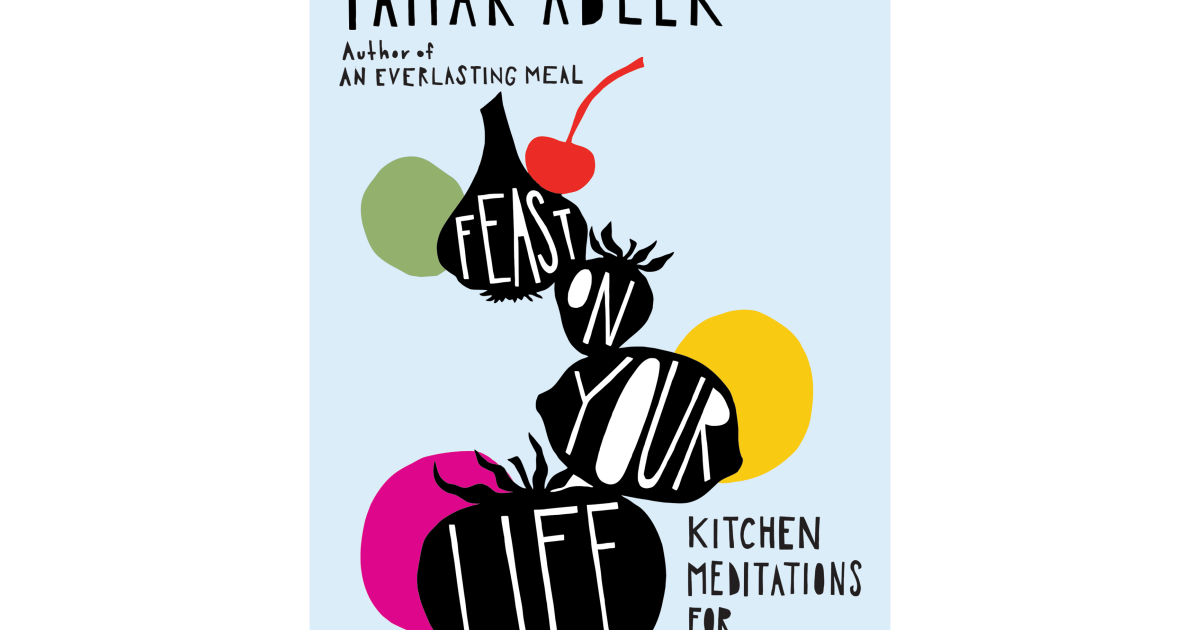
Feast On Your Life
Tamar Adler has fashioned a life between the page and the stove, working as an editor at Harper’s and also spending time in the kitchens of two giants in American dining culture: Chez Panisse and Gabrielle Hamilton’s now-closed Prune in Manhattan. I’m among many writers who properly fell for Adler’s writing, an uncanny feat of lyricism and practicality, with the publication of her 2011 book of essays about home cooking called “An Everlasting Meal,” inspired by M. F. K. Fisher’s seminal “How to Cook a Wolf.”
I’m looking again at my copy of “An Everlasting Meal,” the receipt still inside reminding me I purchased it at Square Books in Oxford, Miss., in October of that year. The chapter names alone can draw in a reader: “How to Teach an Egg to Fly,” “How to Snatch Victory from the Jaws of Defeat,” “How to Drink to Saints.”
In early December, Scribner published Adler’s newest title, “Feast On Your Life: Kitchen Meditations For Every Day.” She lays out its impetus straightaway in the introduction: “In the fall of 2023, I faced crippling depression. It wasn’t the first time. … My husband suggested that I start documenting what delighted me. That night, I wrote a list and, for the first time in weeks, found some respite.”
The practice became fortifying, and then more specific: She began keeping a daily record of delights involving her expansive cooking life. (Around the same time she also began a Substack newsletter, where she dispenses advice, called “the Kitchen Shrink.”) As with most of us who choose food-centric lives, the act of eating, and thinking and writing about eating, becomes about much more than feeding ourselves.
Adler structures the book as a year-long diary, the chapters divided into months with an entry for each day. Sometimes a punchy line or two, sometimes a story or trail of memory or inquiry that drops you into the thick of her life.
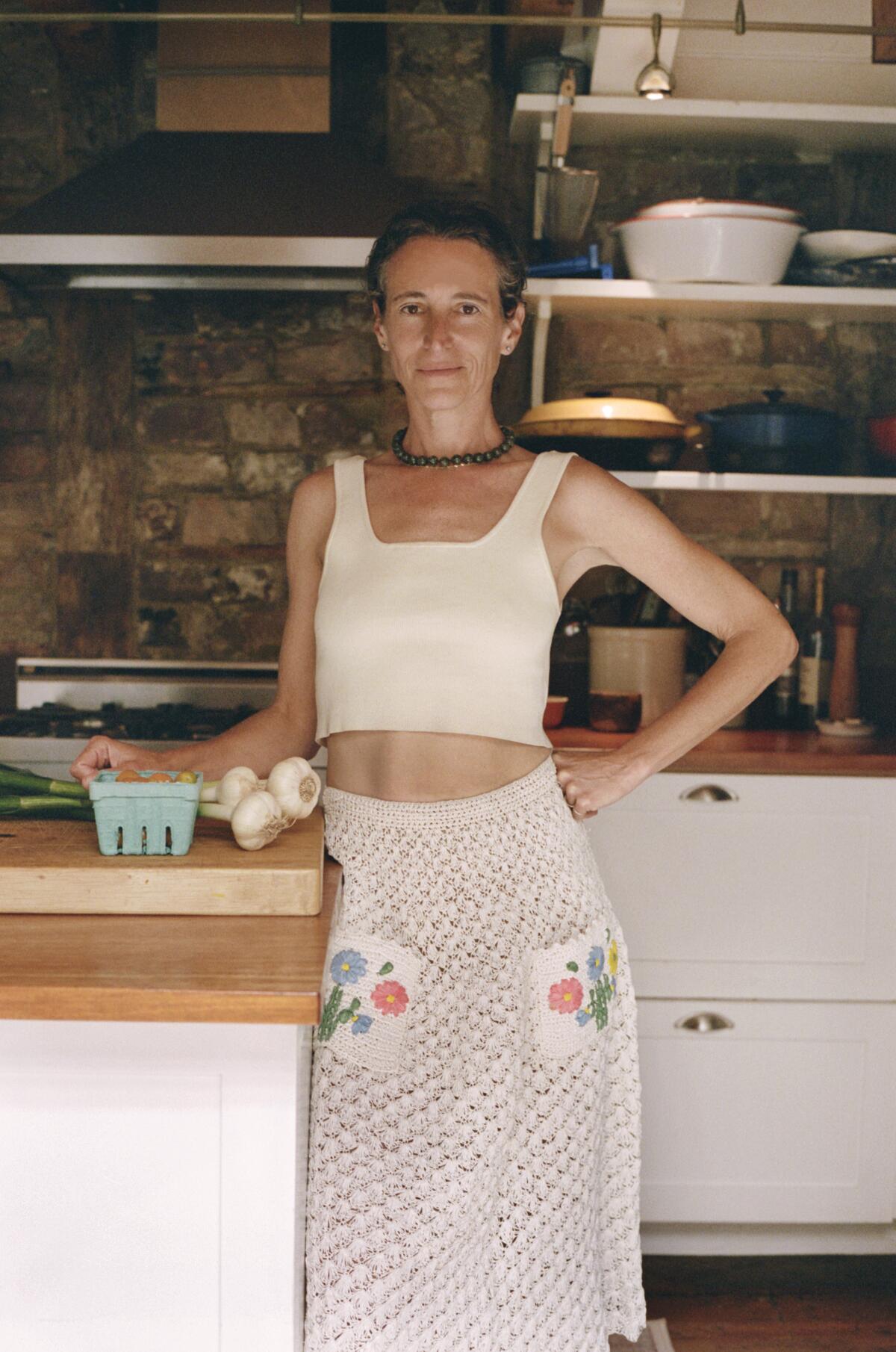
Tamar Adler
(Georgia Hilmer)
It’s been small, potent joy, after picking up a copy of “Feast On Your Life” at Now Serving LA earlier this week, to follow along with Adler as she kicks off the book in January: the good luck foods of New Year’s Day (non-negotiable to this Southern-born Angeleno); her son Louis playing with Legos and considering braising meat; words (“egg, pudding, milk, soup, crockery, child, pot”) that she loves.
We’re having a rainy, gloomy week in Los Angeles. I skip ahead in the book to passages about warmer months. For June 13 she starts: “There’s a mulberry tree on my street whose dark, inky berries taste like the ocean — or, more precisely, like an organism that has lived a salty life, like an oyster or a whelk. The mulberries from this tree are, miraculously, just as delicately sweet as they are saline.” Alder lives in New York’s Hudson Valley. I think of the California mulberry season, including the tapered, black-red varieties that come earlier in summer from the Pakistan mulberry trees.
A few pages later, for June 30: “At the fish stand at the farmers’ market was a stout blond woman with red cheeks, who was the oyster-shucking champion of somewhere or other. … I became more heartened with each one I ate.” My mind jumps to the times I would start a swing-through of the Hollywood Farmers Market by downing a half-dozen of the tiniest specimens from the Oyster Boys. They no longer operate and I miss them.
This is the book’s great potency. As a human and a writer, Adler finds her grounding by paying exceptionally close attention, and her easily consumed examples nudge the reader to do the same.
Ever the instructor, she has suggestions on how to read the book: “‘In bits each day’ is my first guidance. Or: ‘All at once.’ … Read it under a tree. At the table. At a coffee shop. Alone in a restaurant.” She keep going but I stop at that one. I’m haphazard about New Year’s resolutions, but one I might keep is to eat more meals solo at restaurant bars, with Adler’s book in hand.
The Year in L.A. Restaurants
Last week The Times published a very sobering story from Food reporter Stephanie Breijo on the state of the restaurant industry in Los Angeles. The gist: For many operators who thought it couldn’t get much more difficult than 2024, 2025 proved worse. Breijo outlines the topline causes: the January fires, the immigrant raids and downtown curfew, tariffs and inflation and an 8% decline in international summer tourism, according to California’s tourism board.
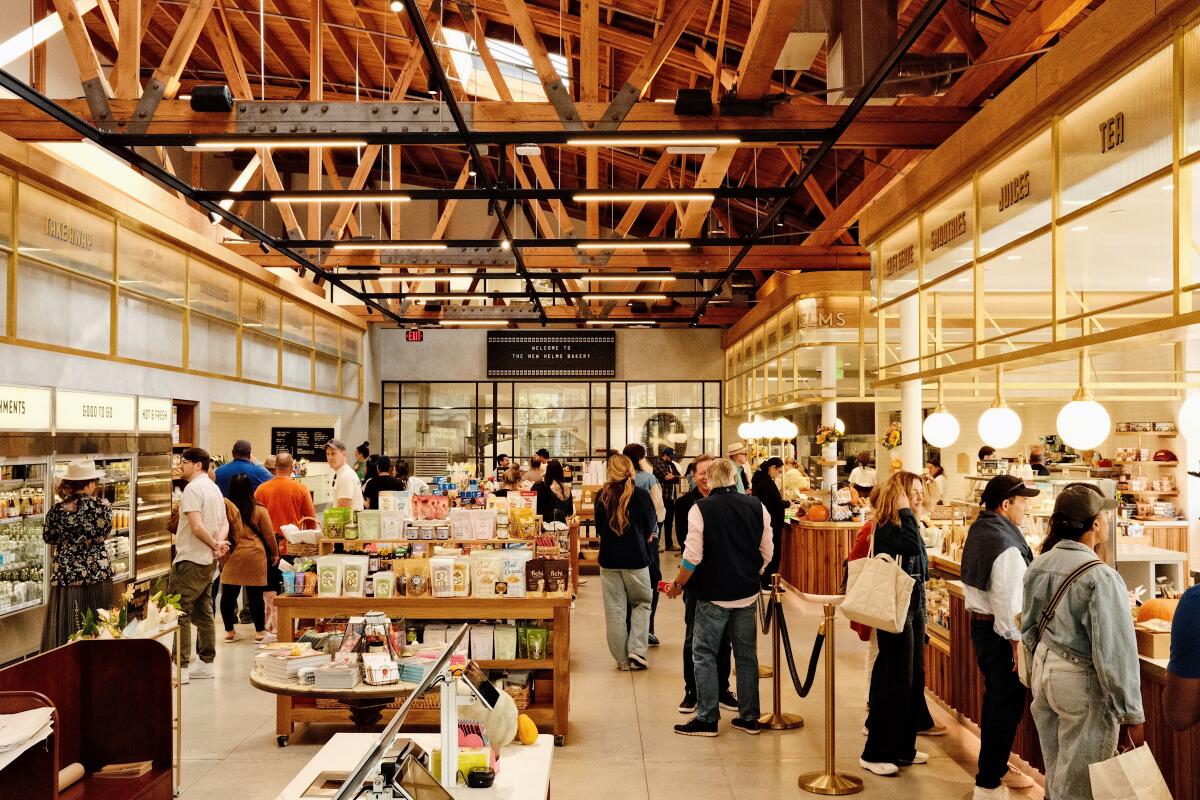
Helms Bakery in Culver City recently closed after reopening in November 2024.
(Stephanie Breijo / Los Angeles Times)
It’s a painful, important read, punctuated by chefs and owners across the city that Breijo interviewed. One that guts me is from Sang Yoon, who announced he was closing the Helms Bakery complex he revived a year ago, before he could open the planned full-service restaurant called Dinette.
“It feels like L.A. really lost a couple steps,” Yoon said to Breijo. “Late-night is gone. People are closing earlier. … It just doesn’t feel right. I grew up here, and it’s probably the weirdest it’s felt in my whole life. And I’ve been through a lot of weird.”
This week, Breijo continued the reporting with a list of notable restaurants that closed in 2025. There are more than 100.
You’re reading Tasting Notes
Our L.A. Times restaurant experts share insights and off-the-cuff takes on where they’re eating right now.
By continuing, you agree to our Terms of Service and our Privacy Policy.
Also …
Dining and Cooking