
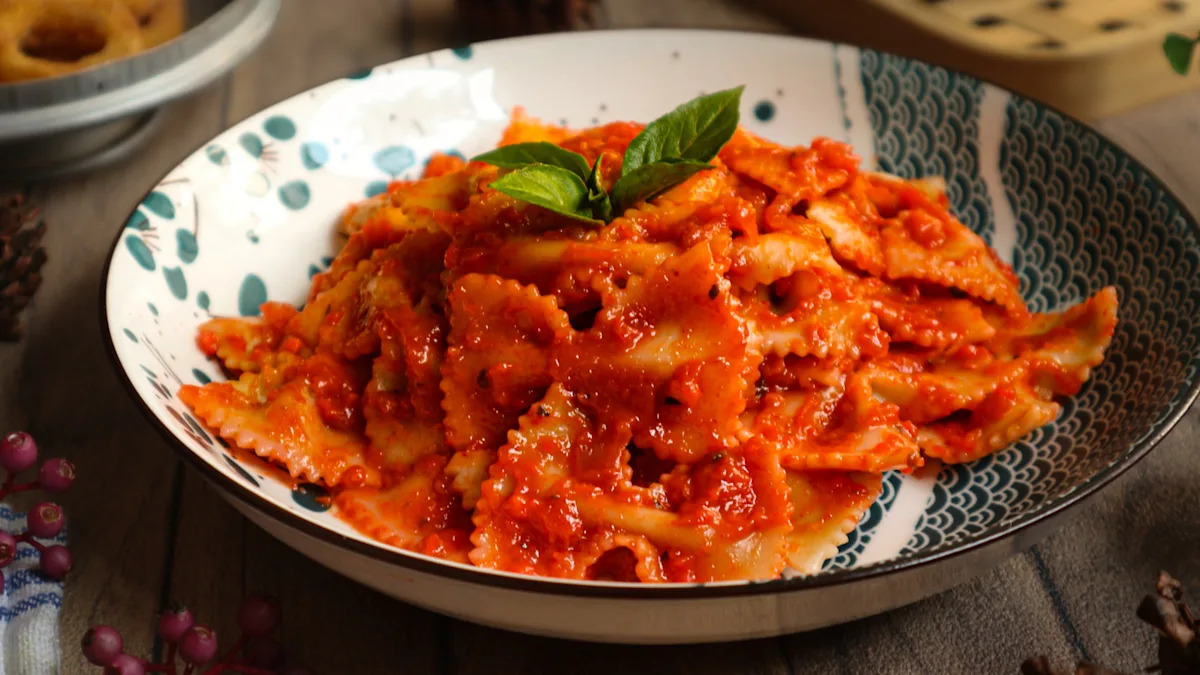
Few things are as simple yet delicious as a homey marinara sauce. This staple is traditionally a blend of olive oil, perfectly ripe tomatoes, garlic, and herbs. While many Italian-American versions add onions for sweetness, the magic lies in how these few ingredients combine to become the perfect topping for pasta or a mouthwatering dipping sauce — but one ingredient can give it a little more edge. Balsamic vinegar has several unexpected uses in the kitchen, and to find out why it’s perfect for top-tier marinara, Food Republic spoke with Shawna Clark, recipe developer and founder at Healthy Foodie Girl.
Dark and intensely flavored, balsamic vinegar is an Italian condiment made from cooked grape must (juice, seeds, skins, and stems of crushed grapes) that’s fermented and aged for several years in wooden barrels, where it develops its characteristic sweet-and-sour profile. Balsamic and tomatoes are not an unconventional pairing — they’re frequently found together in the classic Italian Caprese salad, for example. When paired with marinara, “A small amount adds depth, balance, and a subtle sweetness that rounds out the acidity of the tomatoes,” Clark explained. “It doesn’t make the sauce taste sweet or vinegary when used correctly.”
According to Clark, the key to perfectly pairing the two foods together is restraint. Balsamic vinegar is also an acidic ingredient — adding too much can overwhelm the tomatoes and throw the sauce off balance, and even alter its color. “I recommend starting with ½ to 1 teaspoon per 28-ounce can of tomatoes,” she advised. Of course, taste preferences differ, so you can adjust accordingly, but only after sampling it first.
Read more: You’re Making The Same 10 Mistakes When Cooking Eggplant Parmesan
How to add balsamic vinegar to your marinara sauce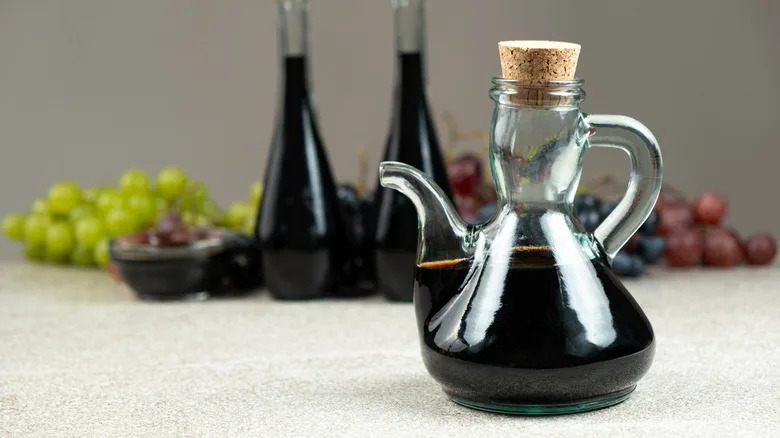
Balsamic vinegar in a glass jar – Garna Zarina/Shutterstock
When making marinara sauce, timing is key for balance. Saute garlic and onion early, just until fragrant; simmer tomatoes long enough (but not too long) to soften their acidity; add dried herbs early and fresh ones at the end. According to Shawna Clark, when balsamic vinegar is part of the mix, when you incorporate it is just as important as the other ingredients.
“If you add balsamic early in the simmer, it mellows out and integrates seamlessly into the sauce, contributing depth rather than a sharp note,” she told us. For a brighter, more pronounced flavor, she recommends adding it right before serving, when its acidity and sweetness remain more distinct. If you’d prefer a more intense, concentrated sweetness, consider using a small amount of balsamic glaze instead.
Not all balsamic vinegar is created equal. For a high-quality sauce, you have two main choices: balsamic vinegar of Modena IGP, which is balanced and perfect for simmering, or traditional balsamic vinegar (DOP), a pricier luxury aged for at least 12 years. While both add incredible depth, DOP is so concentrated and expensive that it is best used as a final drizzle rather than stirred into the pot. Avoid cheap “balsamic-style” vinegars; these are often just wine vinegar with added caramel or sweeteners, lacking the complex flavor that only true aging and craftsmanship provide.
Want more food knowledge? Sign up to our free newsletter where we’re helping thousands of foodies, like you, become culinary masters, one email at a time. You can also add us as a preferred search source on Google.
Read the original article on Food Republic.
Dining and Cooking