
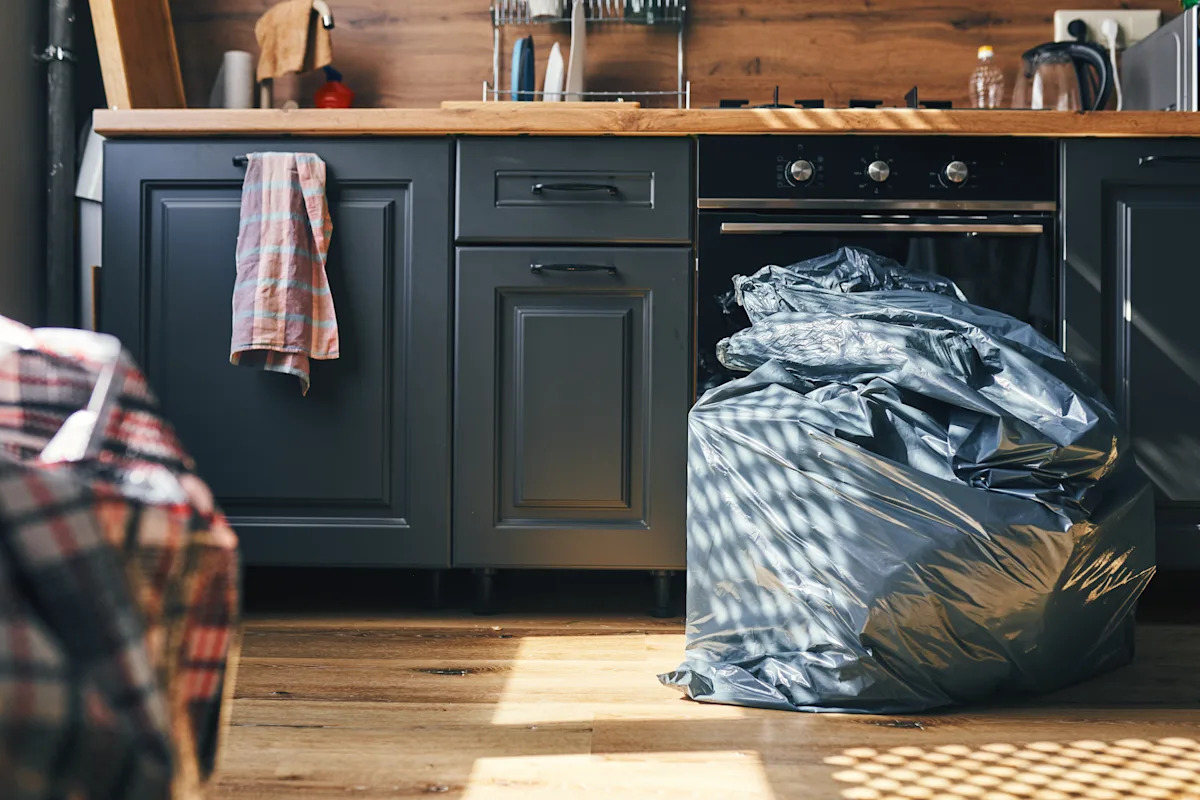
The idea of discarding items often causes discomfort, especially as rising costs and waste become more prevalent. This list is not about chasing trends or clearing shelves for novelty, but taking a careful look at what has quietly accumulated in kitchens over time and deciding whether those items are still safe or necessary.

Image credit: Shutterstock
Kitchens tend to collect objects that fade into the background. These changes are gradual, which makes them easy to ignore. Kitchen clutter can compromise food safety and basic hygiene. A periodic review helps prevent that drift without encouraging unnecessary spending or waste.
1. Old sponges
Kitchen sponges are designed for short-term use, but they often stay far longer than intended. Their porous structure traps moisture and food particles, creating an ideal environment for bacteria. Even regular rinsing does not reverse that process once the sponge breaks down.
If a sponge smells after rinsing, feels slimy, or no longer holds its shape, it has reached the end of its life. Keeping it around does not save money if it increases the risk of spreading bacteria across counters and dishes.
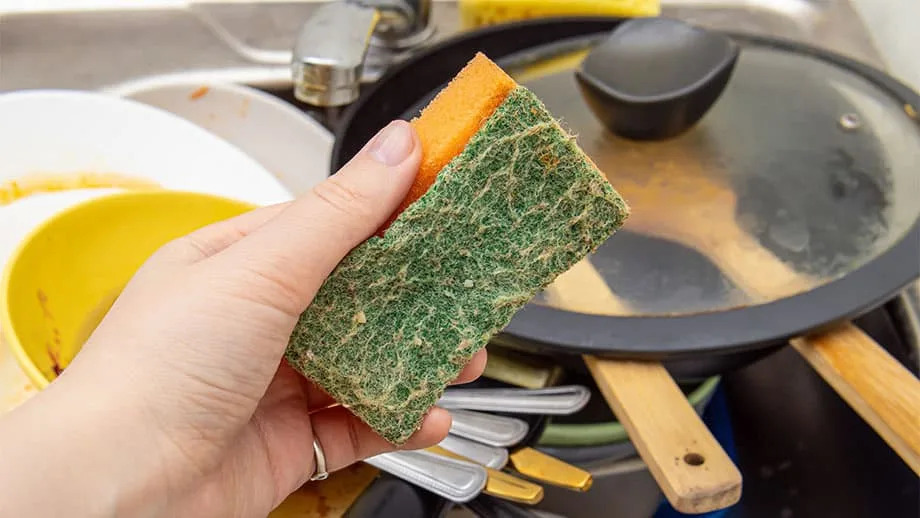
Photo credit: Shutterstock
2. Worn cutting boards
Cutting boards are essential tools, but they are not permanent ones. Deep knife grooves create spaces where bacteria can hide, especially in plastic and softwood boards. Once those cuts become widespread, proper cleaning becomes difficult.
A board that rocks on the counter or shows dark stains that do not wash out is no longer safe to use. Replacing a damaged board is a practical step, not an aesthetic one.
3. Long-forgotten freezer meat
Freezers extend the shelf life of food, not indefinitely. Meat packages buried for years often suffer from freezer burn and loss of texture. Labels fade, bags tear, and the original purchase date becomes a guess.
According to the USDA, freezer meat stays safe almost indefinitely, but if you’re never going to eat it, it’s just taking up space and making it harder to manage the food that is actually being used.
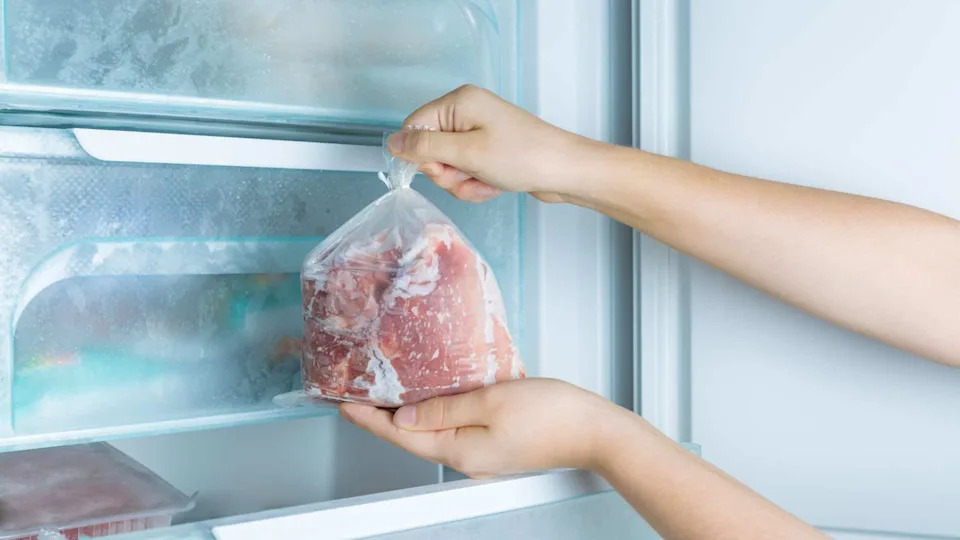
Photo credit: Canva Pro
4. Expired pantry staples
Dry goods can seem harmless long after their dates have passed, but time affects flavor and safety. Old flour can develop off-odors. Spices lose potency. Baking powder and yeast stop performing as expected.
Expired items also create clutter that slows down everyday cooking. Clearing them out makes room for pantry staples that will actually be used and reduces the risk of a recipe failing due to an ingredient losing its function.
5. Broken cookware
A pot with a loose handle or cookware with deep scratches can pose a safety risk during cooking. Nonstick coatings that are peeling or flaking should not be used. Cracks in enamel or warped bases affect heat distribution and control.
Holding onto broken cookware rarely leads to repair. It just leads to frustration or accidents during busy meals. Removing it clears space and reduces risk.
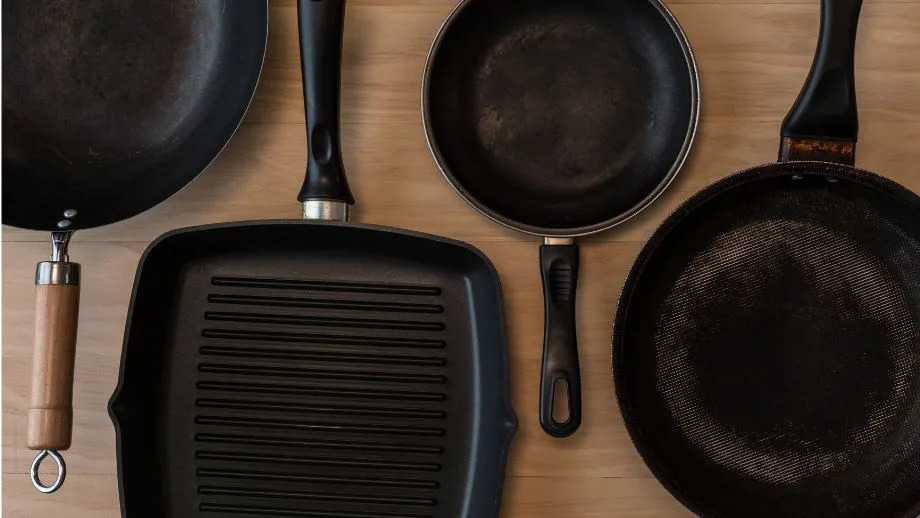
Photo Credit: Canva Pro
6. Old plastic containers
Plastic food containers break down over time, especially when exposed to heat and repeated washing. Stains and lingering odors indicate that the material is degrading.
Containers without matching lids also tend to pile up, taking up space without providing functionality. Keeping only containers that seal properly and remain in good condition makes food storage more reliable and reduces waste from spills or spoiled leftovers.
7. Mystery condiments
Refrigerator doors often become storage for half-used bottles that no one remembers buying. Condiments may last longer than fresh foods, but they are not immune to spoilage or flavor loss.
If a label is unreadable or the smell is off, the item has overstayed its welcome. Clearing out these bottles makes it easier to see what is actually available and prevents accidental use of spoiled food.
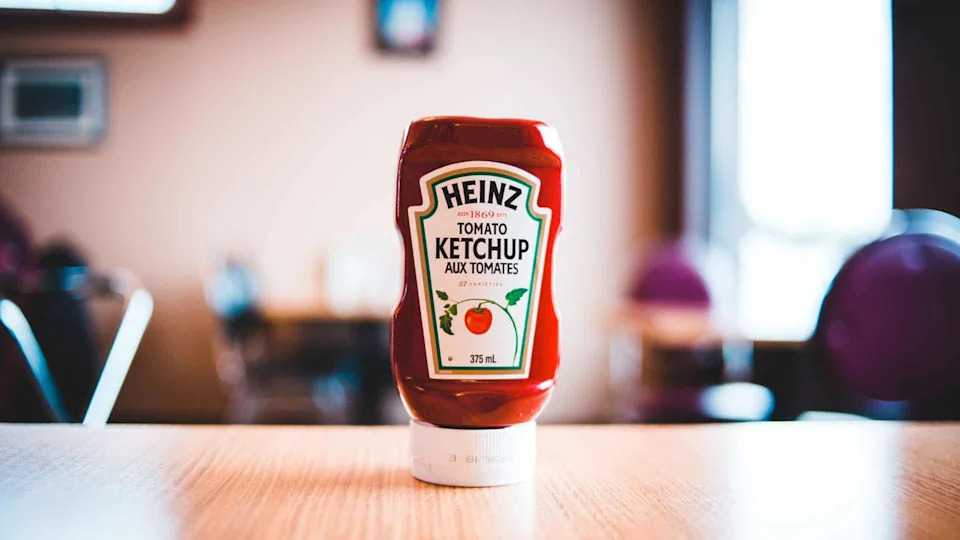
Photo credit: Canva Pro
8. Chipped dishes and glassware
Small chips in plates or glasses can seem harmless, but they create sharp edges that can cut hands or lips. Cracks also weaken the structure, increasing the risk of breakage during washing or use.
Keeping damaged dishware often happens out of habit, not need. Removing it helps prevent injury and keeps cabinets from becoming crowded with items that require extra care.
9. Old cleaning tools
Dish brushes and cleaning cloths wear down just like sponges. Frayed bristles and worn fibers reduce effectiveness and can spread dirt rather than remove it.
Cleaning tools are meant to support hygiene, not undermine it. Replacing them when they lose function helps maintain a cleaner kitchen without increasing chemical use or effort.
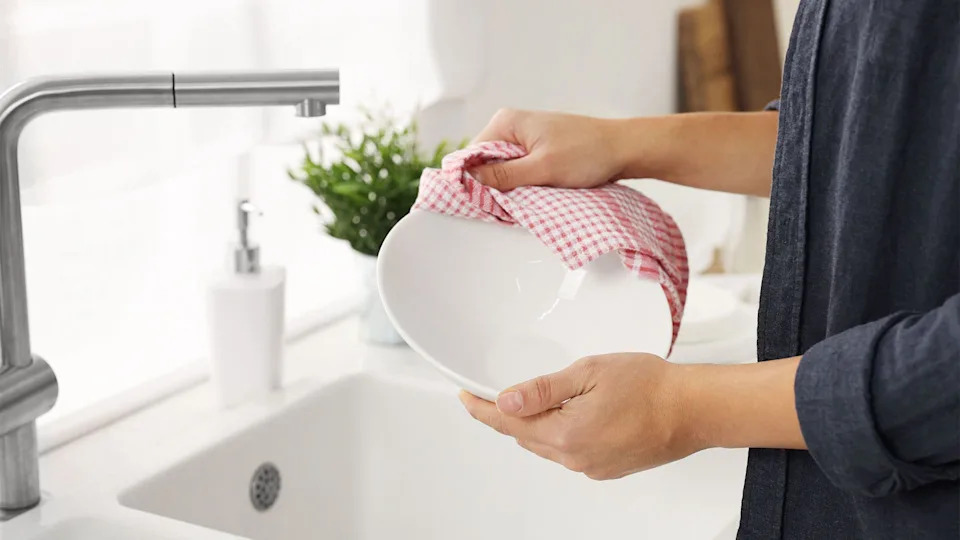
Image credit: Shutterstock
10. Unused gadgets
Many kitchens contain appliances or tools that were bought with good intentions but never became part of regular cooking. They collect dust and make storage feel chaotic.
If a gadget has not been used in years and no longer serves a specific purpose, it may be better to remove it. Letting go of unused tools creates space for what actually supports daily cooking.
A practical reset
Throwing something away should not be automatic or driven by a calendar year. The goal is not minimalism for its own sake, nor is it replacing items that still work. A review helps kitchens operate more effectively and supports safer food preparation.
Looking closely at what is expired or no longer useful is an act of maintenance, not wastefulness. It reduces clutter and makes everyday cooking more efficient. It also prevents duplicate purchases when existing items are buried or forgotten.
A careful sweep of the kitchen can serve as a reset grounded in practicality rather than trends. The focus is not on having less, but on keeping what still earns its place.
Dining and Cooking